💡 Tip: The following article data is for reference only. Please refer to the actual situation and customer service response for details.
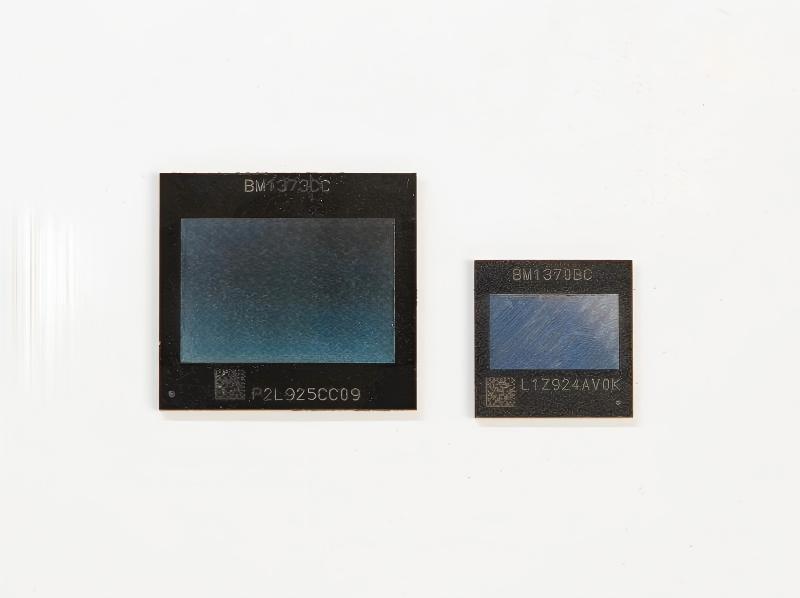
BM1373 Chip is the next-generation ASIC chip launched by Bitmain, utilizing advanced 3nm process technology, specifically optimized for the SHA-256 algorithm (Bitcoin mining). A single chip can provide an astonishing hash rate of approximately 2.5 TH/s, with energy efficiency directly reaching 10 J/TH.
It originates from the core design of the Antminer S23 series motherboard, aiming to break through the limitations of Solo Miners like Bitaxe, Nerdaxe, and Zyber. Compared to the previous generation BM1370 chip, energy efficiency improves by approximately 33%, potentially making it the most competitive single-chip mining solution in 2026.
What is an ASIC Chip?
ASIC stands for Application-Specific Integrated Circuit. This thing is completely different from the CPUs and GPUs we usually use. A CPU is an all-rounder that can do anything. ASICs are not designed for browsing the web or gaming; they are geniuses born for the single task of "mining" 🏃.

The internal structure of an ASIC chip is extremely streamlined, with no redundant design. But how is it actually implemented?
Answer: It directly burns the complex algorithm for verifying Bitcoin transactions (SHA-256) into the hardware circuitry. This is like someone building a house step by step with Lego bricks (general-purpose computing), while an ASIC is directly a pre-formed, perfectly shaped mold for the house (dedicated circuit).
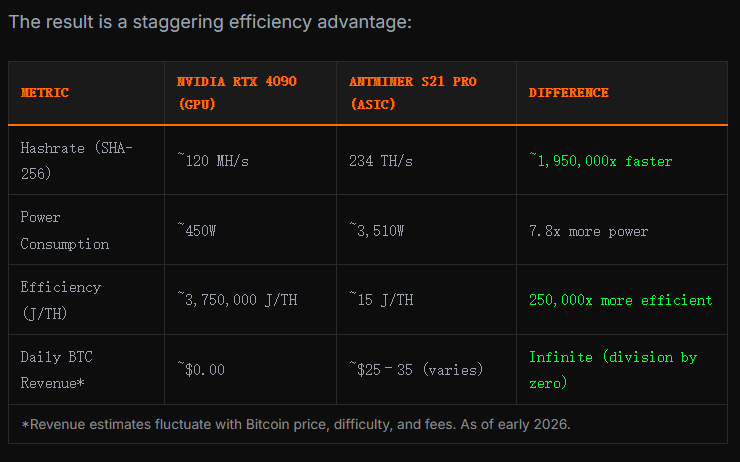
An analysis article from 2024 (data as of early 2026) points out that Bitmain's Antminer S21 Pro ASIC miner (BM1370 chip) has an energy efficiency of approximately 15 J/TH (joules per terahash) for the Bitcoin SHA-256 algorithm, while a top-tier consumer GPU (like the NVIDIA RTX 4090) has an energy efficiency of about 3,750,000 J/TH for the same computation. This means ASICs are approximately 250,000 times more energy efficient than GPUs.
Bitcoin Timeline: ASIC Mining Vs. GPU Mining
| Year | Event | Impact on GPU Mining |
|---|---|---|
| 2009–2010 | CPU mining era. Anyone with a computer could mine. | GPUs not yet used |
| 2011 | GPU mining software released. AMD cards dominate. | Peak GPU mining era begins |
| 2012 | FPGAs appear — first custom hardware for Bitcoin mining. | GPU mining starts losing ground |
| 2013 | First SHA-256 ASICs ship (Avalon, Bitmain Antminer S1). | GPU mining becomes unprofitable |
| 2014–2017 | ASIC efficiency improves rapidly (28nm → 16nm). | GPU Bitcoin mining functionally dead |
| 2018–2023 | GPU miners pivot to altcoins (ETH, etc.). Ethereum goes PoS in 2022. | GPU mining loses its last major chain |
| 2024–2025 | Bitcoin at 3.125 BTC block reward, hashrate over 800 EH/s, 5nm ASICs. | ASIC dominance is absolute and permanent. |
| 2026 | Block found probability increases, hashrate exceeds 1000 EH/s, 3nm ASIC chips enter production. | ASIC Miner energy efficiency ratio enters single digits for the first time. |
Three Major Chip Classifications
| Chip Type | Role | Performance in Bitcoin Mining | Key Certification Reference |
|---|---|---|---|
| CPU (Consumer) | All-round Butler | Extremely low hash rate, approx. 0.0001 GH/s | Complies with general computing standards (e.g., x86 instruction set) |
| GPU (RTX 4090) | Math Expert, good at parallel computing | Average hash rate (approx. 100 MH/s), poor energy efficiency, high electricity cost | Complies with OpenCL/CUDA general computing frameworks |
| ASIC (BM1373 chip) | Extreme Genius in a Single Direction | Extreme hash rate (single chip can reach T level), extreme energy efficiency 10 J/T, current best choice for mining | Requires FCC/CE radio and safety certifications |
🔥 Turning Point: 2025 World Digital Mining Summit (WDMS 2025) (May 26-27, 2025, Las Vegas), Bitmain released the ANTMINER S23 Hyd. with energy efficiency as low as 9.5J/T, marking the entry of mining machines into the "single-digit energy efficiency ratio" era!
Specifications & Performance
The core data of the BM1373 ASIC Chip are three: 3nm, 2.5 TH+/s, 10 J/TH. This data set is the result of Bitmain's technology transfer from the Antminer S23 Hyd mining machine motherboard, equivalent to installing a sports car engine into your modified car.
- 3nm Process Technology: This is the ceiling of the current semiconductor industry. Transistor density is approximately 70% higher than the previous generation 7nm chip, meaning more "switches" can be packed into a fingernail-sized area, computing faster with less leakage. TSMC's Q1 2025 financial report shows its 3nm process improves performance by about 15% and energy efficiency by up to 30% compared to 5nm.
- ~2.5 TH/s Hash Rate: TH/s stands for trillions of hash operations per second. What does 2.5 TH/s mean? The number of attempts it makes in one second would require about 2500 of today's top gaming graphics cards (RTX 4090) working simultaneously to match.
- ~10 J/TH Energy Efficiency Ratio: This is the most critical metric, meaning it consumes only 10 joules of energy per trillion hash computations. The smaller the number, the more power-efficient.
🔥 Practical Scenario Assumption:
Assume you use it to build a BTC Miner similar to the NerdQaxe++ Remastered, integrating 4 BM1373 chips on the board. Then:
➡️ Total Hash Rate ≈ 4 * 2.5 TH/s = 10 TH+/s
➡️ Total Power Consumption ≈ 10 TH/s * 10 J/TH = 100 W
⚡ The BM1373 chip is not some future technology; it is the most efficient "hash rate density block" you can get your hands on right now. This data essentially gives your personal miner a hash rate close to that of an early small professional mining machine, but with energy efficiency several generations ahead. Don't forget, with careful design of air or water cooling, the size and heat of this thing can be managed in a home environment, and power consumption can be further reduced.
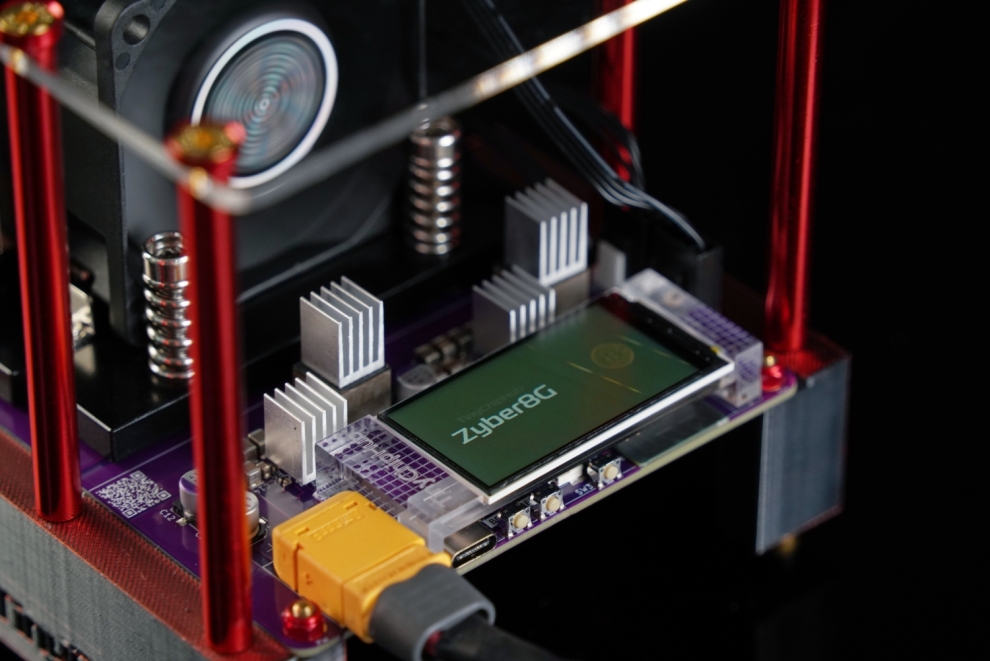
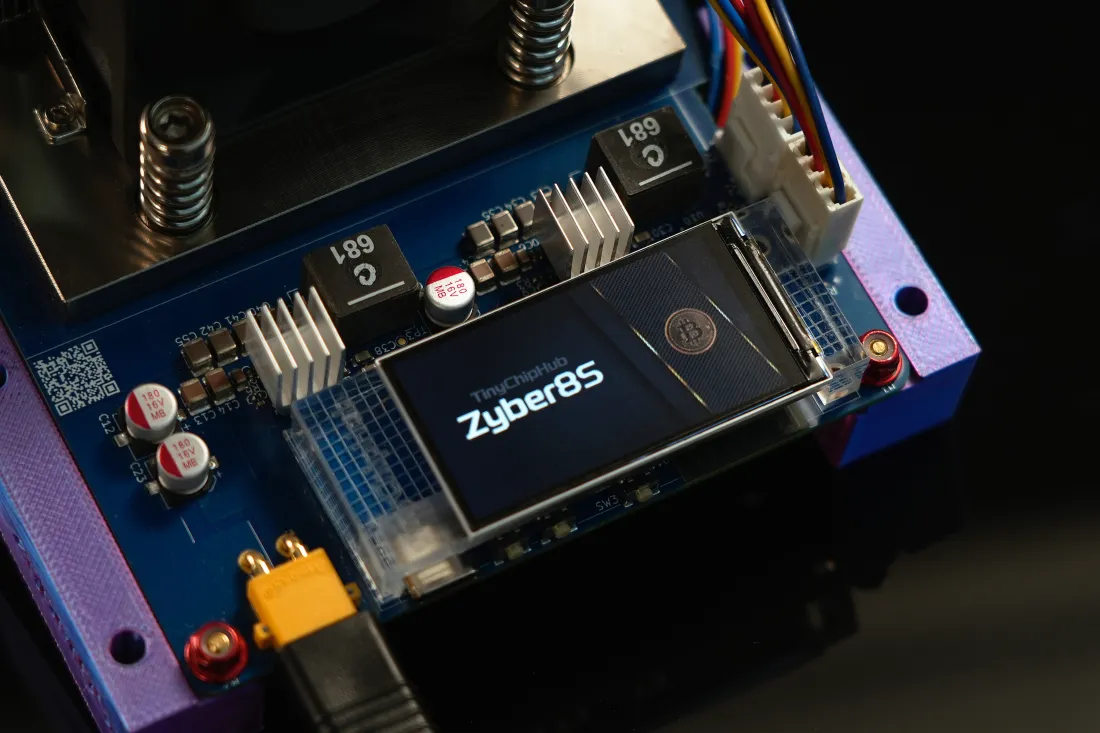
TinyChipHub's test report (2026.05) found that the above hash rate data is already comparable to the Zyber 8G standard version (8 bm1370 chips). Of course, the current Zyber 8G Premium (starting at $559, plus 5%+ KOL platform discount) is still worth investing in because the new BM1373 chip, mining machine, and subsequent testing issues are not yet stable enough, while the Zyber 8G Premium has already undergone overclocking and 7x24-hour stable operation tests. No matter how strong the hash rate, it's useless if temperatures can't be controlled — which is why Solo Miner players generally value chassis airflow design and heatsink quality.
Comparison: BM1373 Chip Vs. Earlier Chips
Many people think chip upgrades are like iPhone upgrades — "incremental improvements." But the BM1373 chip's transition from 5nm to 3nm is more like a "power revolution" compared to previous chips.
The most common misconception is: "Newer chips just have slightly higher hash rate numbers." Completely wrong! For individual miners, energy efficiency ratio and heat control are far more important than peak hash rate. Because you don't have industrial-grade cooling and power supply systems.
The two most core advancements are: More power-efficient and higher hash rate. The 3nm process significantly increases transistor density, allowing more computing power in the same area. Chip heat generation is also correspondingly reduced, easing the burden on cooling systems.
Comparison Data Table
|
Parameter
|
BM1366
|
BM1368
|
BM1370
|
BM1373
|
|---|---|---|---|---|
|
Process Technology
|
5nm
|
5nm (same generation as Antminer S21)
|
Latest Bitmain FinFET (5nm variant)
|
3nm
|
|
Single Chip Hash Rate
|
400-500 GH/s (0.4-0.5 TH/s)
|
500-700 GH/s (0.5-0.7 TH/s)
|
~1.2 TH/s
|
~2.5 TH/s
|
|
Single Chip Power Consumption
|
~12W
|
~12-18W
|
~15-18W (estimated, based on 1.2TH/s @ 15J/TH)
|
~25W
|
|
Energy Efficiency Ratio (J/TH)
|
~27 J/TH
|
~17.5 J/TH
|
~15 J/TH
|
~10 J/TH
|
|
Main Application Mining Machines
|
Bitaxe Ultra/Hex
|
Bitaxe Supra/ Supra Hex, Zyber 8S
|
Bitaxe Gamma/GT, NerdQaxe++, Zyber 8G
|
Zyber Blanc...
|
For Solo Miners, the chip is one aspect; firmware compatibility is even more critical. The appeal of the BM1373 chip is largely due to its excellent performance, but issues like PCB boards and firmware still exist.
➡️ However, do you see the balance point? From BM1370 to BM1373, the hash rate doubled, but the energy efficiency ratio (J/TH) decreased by 33.33%! This means generating the same hash rate produces significantly less heat. The 3nm process allows for lower core voltage, making the chip "cooler." Subsequent issues will gradually be resolved over time.
So, upgrading isn't about showing off specs; it's about allowing you to control stronger hash power with smaller physical and thermal costs.
Applications of Solo Miners
The emergence of the BM1373 chip has raised the cost-performance ratio of Solo Miners another notch, which is definitely the biggest gift for consumers in 2026. Spending the same electricity cost for higher hash rate naturally increases the probability of hitting the jackpot. For tinkerers and players who seek control, this is probably the most attractive SHA-256 chip solution currently available. For the BM1373 chip, this is destined to be a milestone breakthrough. ❄️
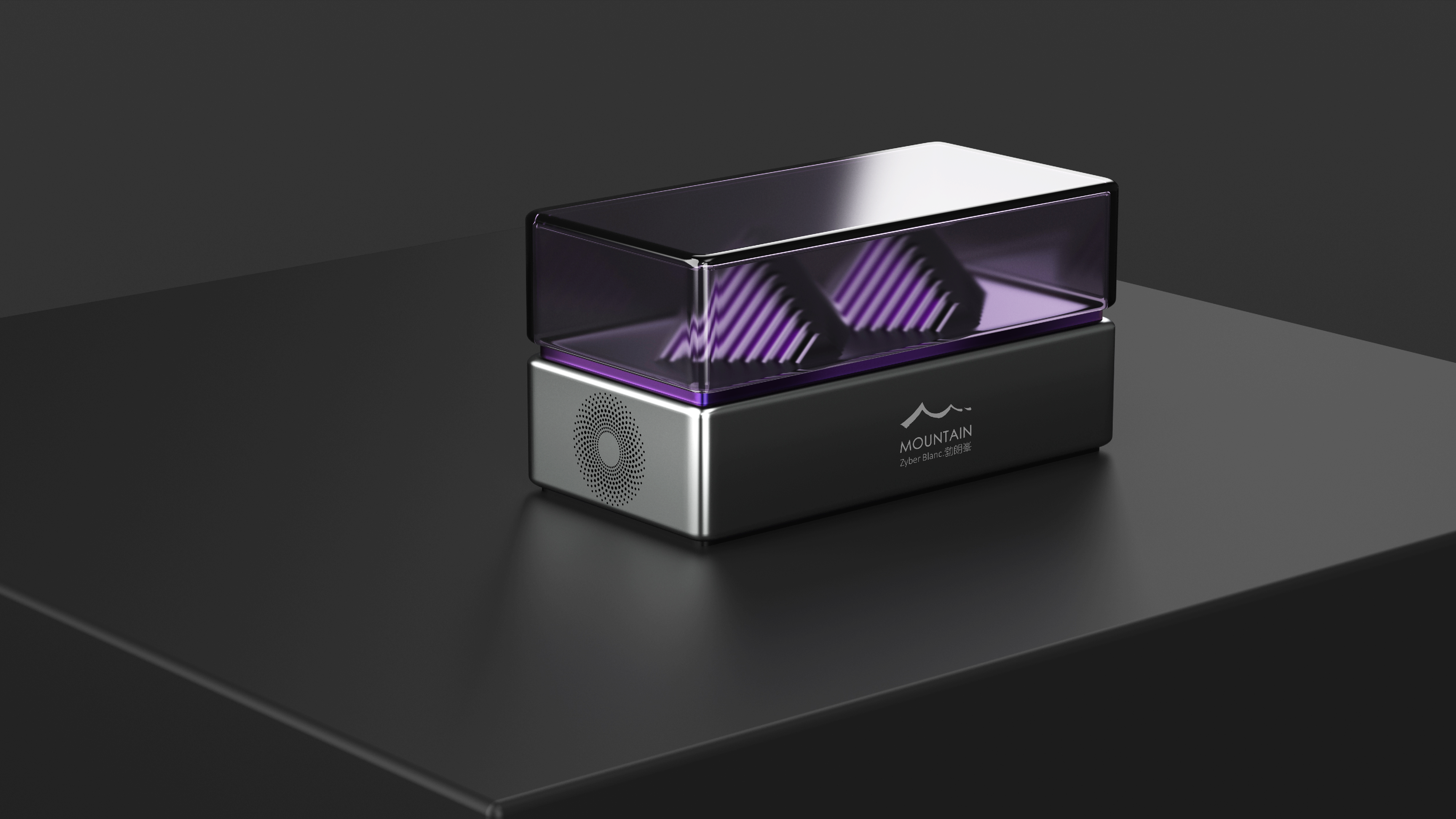
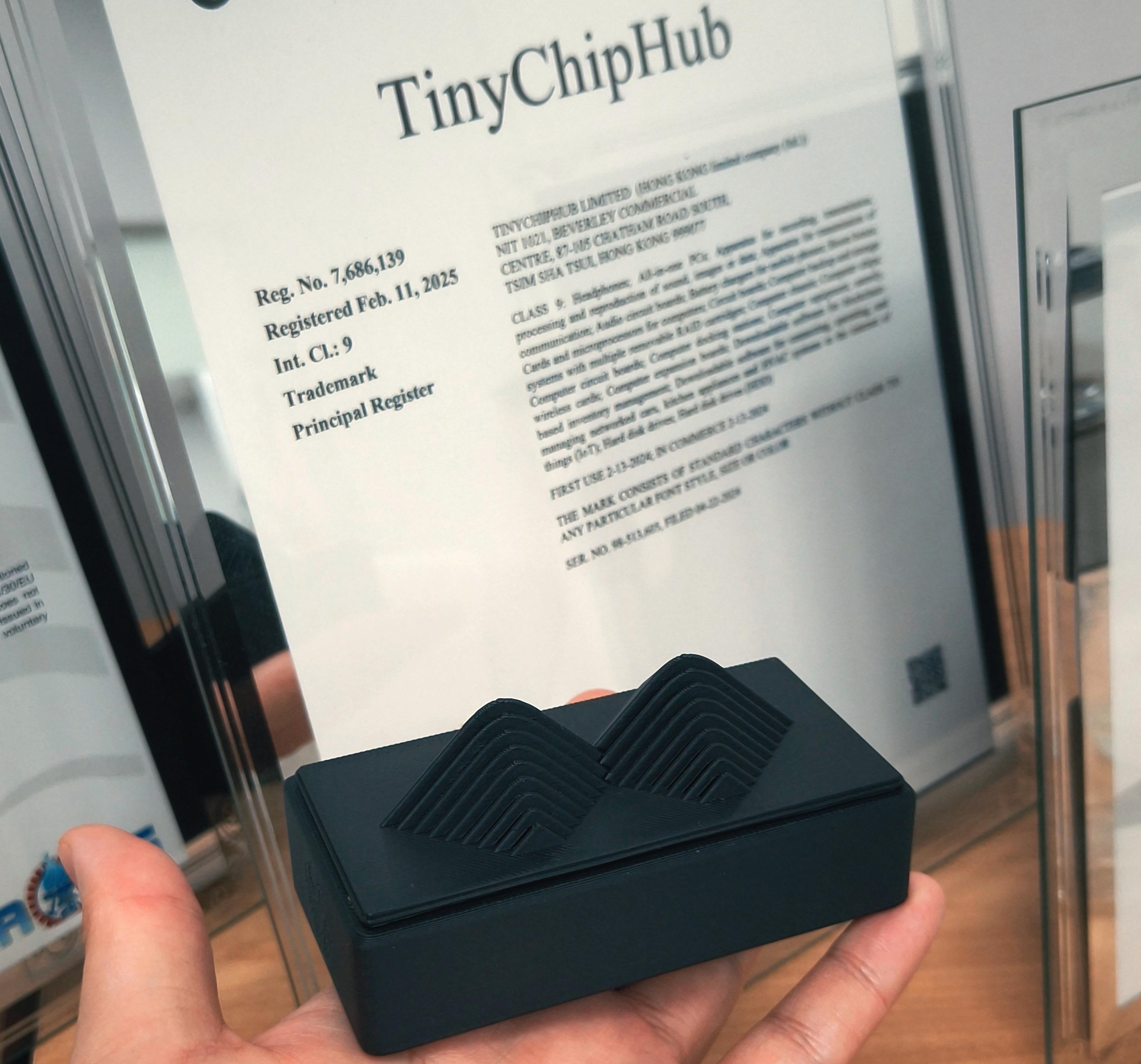
Solo Miner means not sharing rewards with a mining pool, going solo to try your luck. This has become extremely popular lately, and the reason is, of course, directly for Block Found, which rewards a whole block with a reward of 3.125 BTC — over $200,000.. The most direct application scenario for the BM1373 chip is as the world's first BTC Solo Miner based on a single BM1373 3nm ASIC chip already developed by TinyChipHub — Zyber Blanc.
- TCH's All-New DIY Design: This product features an ultra-compact 100×50×50mm enclosure!
- Mining Performance: Hash rate up to 2.5 TH/s, power consumption as low as 20W, energy efficiency ratio stable at 8–10 J/TH (compared to BM1370 chip first-generation products, cost reduced by approximately 33%).
- TCH Full-Stack R&D (Hardware + Software): Based on TinyChipHub's completely independent TCH hardware and software platform — from underlying drivers to the control interface.
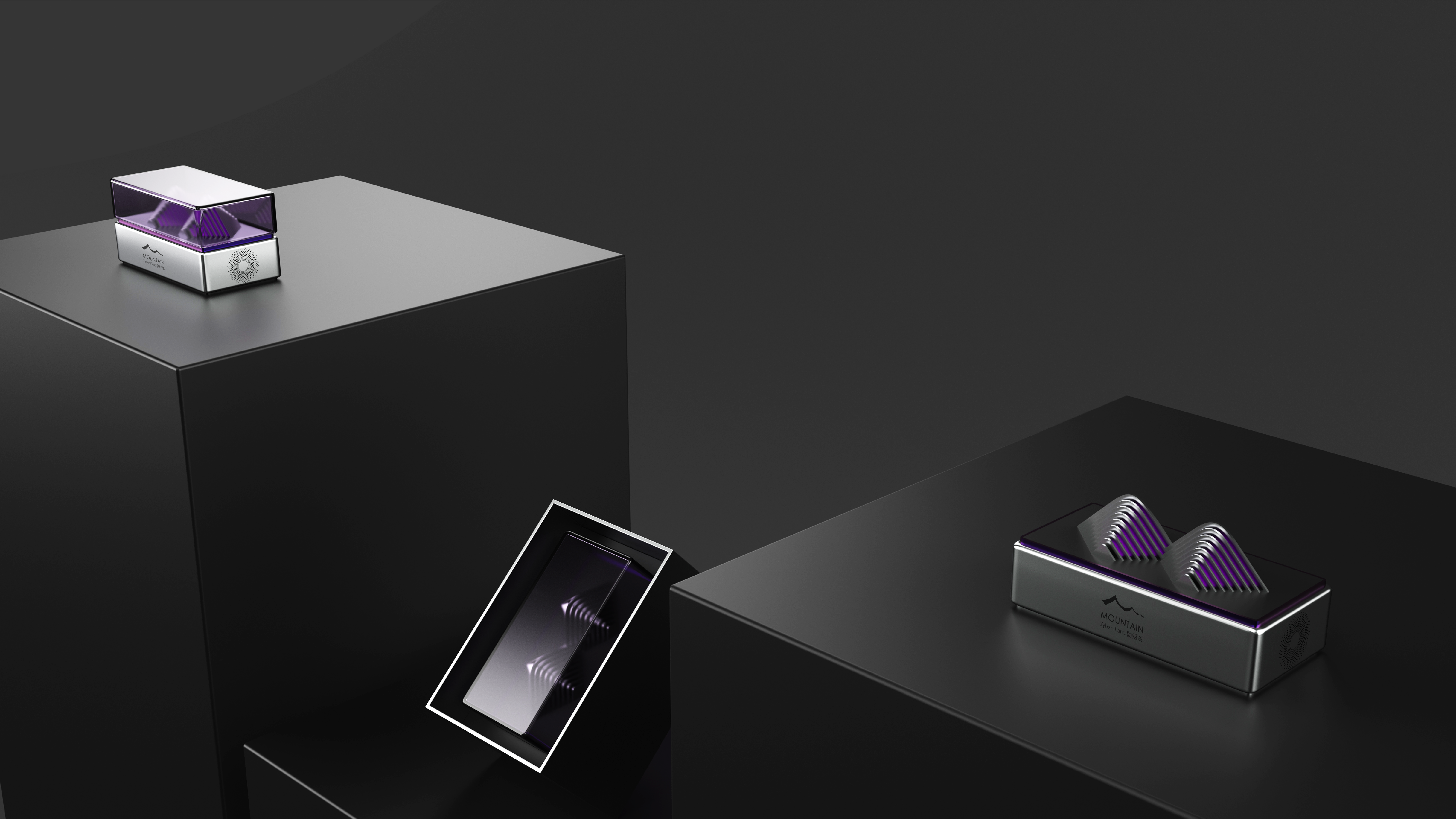
🎯 The key point: Playing Solo Miner is about creation, not just profit. You have complete control over the device, contribute to Bitcoin network decentralization, and enjoy the geeky lottery experience of "the next hash collision might hit the jackpot."
Therefore, the significance of BM1373 for single-machine mining is providing technical feasibility and experiential disruption. It transforms "mining alone" from an idealistic act full of tragic heroism into a tangible geek experiment supported by cutting-edge hardware. Your opponent is no longer the electricity bill, but the global hash rate network and your luck — that in itself is thrilling enough.