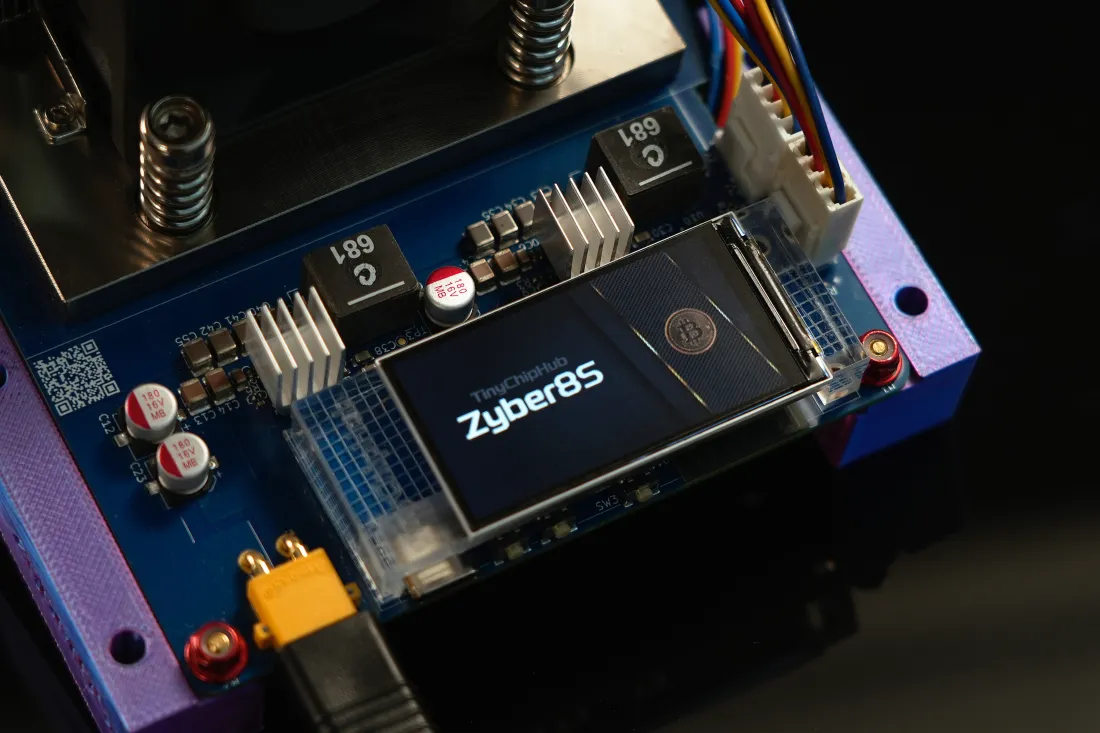
If you are using the Zyber 8G and considering upgrading to the Zyber 12G, the real criteria for judgment are not "bigger numbers," but higher hashrate, more stable operation, and greater overclocking headroom. By increasing the number of BM1370 ASIC chips, upgrading to an 8-layer PCB design, and pairing it with a 450W Mean Well PSU, the home miner can achieve up to approximately 16+ TH/s of performance while retaining more flexible tuning headroom.
1、BTC Back to $80,000
Bitcoin is approaching the $80,000 mark once again. For home miners, what truly matters is not the price itself, but the renewed market focus on "hardware efficiency" and "hashrate competition." Many beginners, upon seeing BTC rise, will immediately search for more powerful miners, but experienced miners typically look at the device lifecycle first.

Upgrading small miners is never about chasing hype; it's about finding a new balance after changes in the hardware environment! Device design must also comply with basic safety standards, such as power protection, circuit isolation, and relevant certifications like CE/FCC. A home environment is not a professional mining farm—stability, safety, and ease of maintenance are the true core of the user experience.
At the end of August 2026, as BTC approaches the $80,000 mark again, one of the most discussed questions in the community is: Can old devices keep up with the hashrate competition of the next-generation BM1373 miners?
The answer: Usually lies in three areas: chip count, thermal design, and power supply headroom.
According to CoinDesk's August 2026 Market Watch, the market is currently highly focused on the next phase of hashrate changes. Such price fluctuations will drive more individual users to re-examine their mining rig configurations. Bitcoin has risen by approximately 25% over the past month and is currently冲击ing the $80,000 mark after a sharp rebound.
Ryan Lee, Chief Analyst at Bitget Research, expects Bitcoin to fluctuate between 74,000 and 81,000 in the near term! Meanwhile, Hashdex CIO Samir Kerbage stated that a sustained break above 83,000 could push the price to 100,000, due to historically thin trading volume in the 80,000 to 90,000 range.
2、Drops 10% ! BTC Mining Difficulty
In June 2026, the Bitcoin network experienced a negative difficulty adjustment of nearly 10% (specifically 10.09% to 124.93T). This adjustment marked the 11th largest downward correction in Bitcoin mining difficulty history, pushing the mining difficulty to its lowest level since 2026.
When many miners see "BTC Mining Difficulty drops 10%," their first reaction is: do all devices suddenly become stronger? Not really. Difficulty adjustment is merely a signal of changes in network competition; what truly affects the home mining experience is whether the device has sufficient flexibility.

If BTC price can usher in a substantial and sustained recovery, it will inevitably attract miners to bring idle rigs back online; conversely, if prices remain sluggish, or if the trend of "mining farms transforming into AI computing centers" continues to gain momentum, this lost hashrate may permanently leave the Bitcoin network. Therefore, the real reasons for the sharp drop can be summarized as follows:
- Falling prices compress profits: Since June, Bitcoin prices have pulled back significantly (declining by approximately 15%), falling to the range of about 61,500 to 63,800, squeezing miners' profit margins.
- Miner shutdown wave: Due to hashrate going offline and slower block generation leading to deteriorating returns, some operators were forced to shut down unprofitable, inefficient miners, resulting in a decline in network hashrate (AI wave absorbing massive hashrate) and block generation times stretching to 15.6 days (far exceeding the 14-day target).
- Automatic rebalancing mechanism: Bitcoin automatically adjusts difficulty every 2,016 blocks to maintain an average block time of 10 minutes. Therefore, the reduction in hashrate triggered this nearly 10% negative adjustment.
3、Zyber 12G Vs. Zyber 8G
Many customers who previously purchased the Zyber 8G have asked me one question: "Where exactly does the Zyber 12G upgrade?" This question is actually quite representative. Unlike large-scale mining farm procurement, home miners focus more on three core aspects when upgrading: whether the hashrate improvement is significant, whether the machine is more stable, and whether there is higher overclocking (OC) headroom.
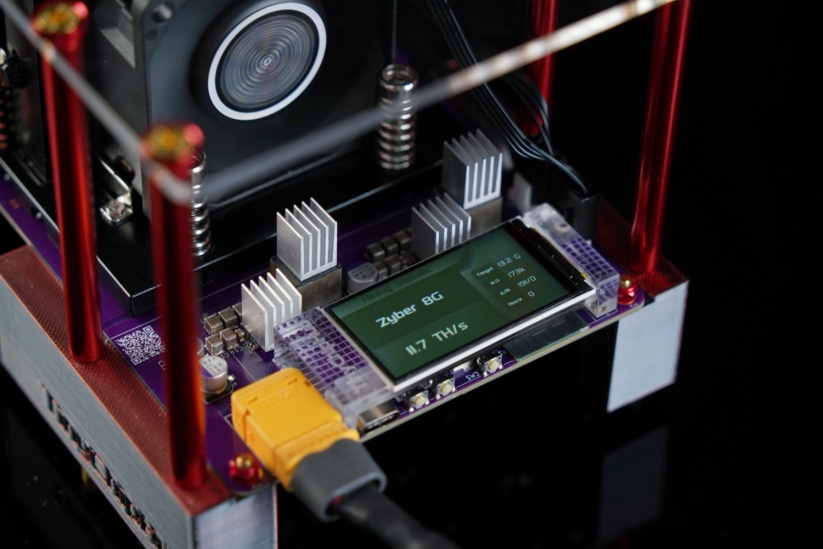
Simply put, the Zyber 8G is a mature and stable small ASIC device, while the Zyber 12G is more like an enhanced version that further unlocks performance on the existing platform. It doesn't completely change the product logic, but rather strengthens it for high-frequency operation scenarios.
| Item | Zyber 8G | Zyber 12G |
|---|---|---|
| ASIC Architecture | BM1370 Chip x 8 | BM1370 Chip x 12 |
| PCB Design | 6-layer PCB | 8-layer PCB |
| Operation Focus | Stable Home Hashrate | High-Performance Home OC Platform |
| Expansion Headroom | Limited | New PSU provides higher OC headroom |
| Max Hashrate | 10 Th+/s | 16 Th+/s |
In reality, small miners should pay more attention to long-term hardware adaptability. The BM1370 ASIC chip adopts an architecture specifically optimized for the SHA-256 algorithm. In actual test environments, the operating frequency of a single chip, voltage stability, and cooling efficiency all affect the final performance. The design logic of the Zyber 12G revolves around this third point. It's not simply about increasing the default hashrate, but about giving users more room for adjustment.
- Step 1: Check the ASIC chip performance to confirm the core device architecture.
- Step 2: Inspect the PCB and power supply design to determine if it supports long-term operation.
- Step 3: Understand the firmware support scope to see if the device has tuning headroom.
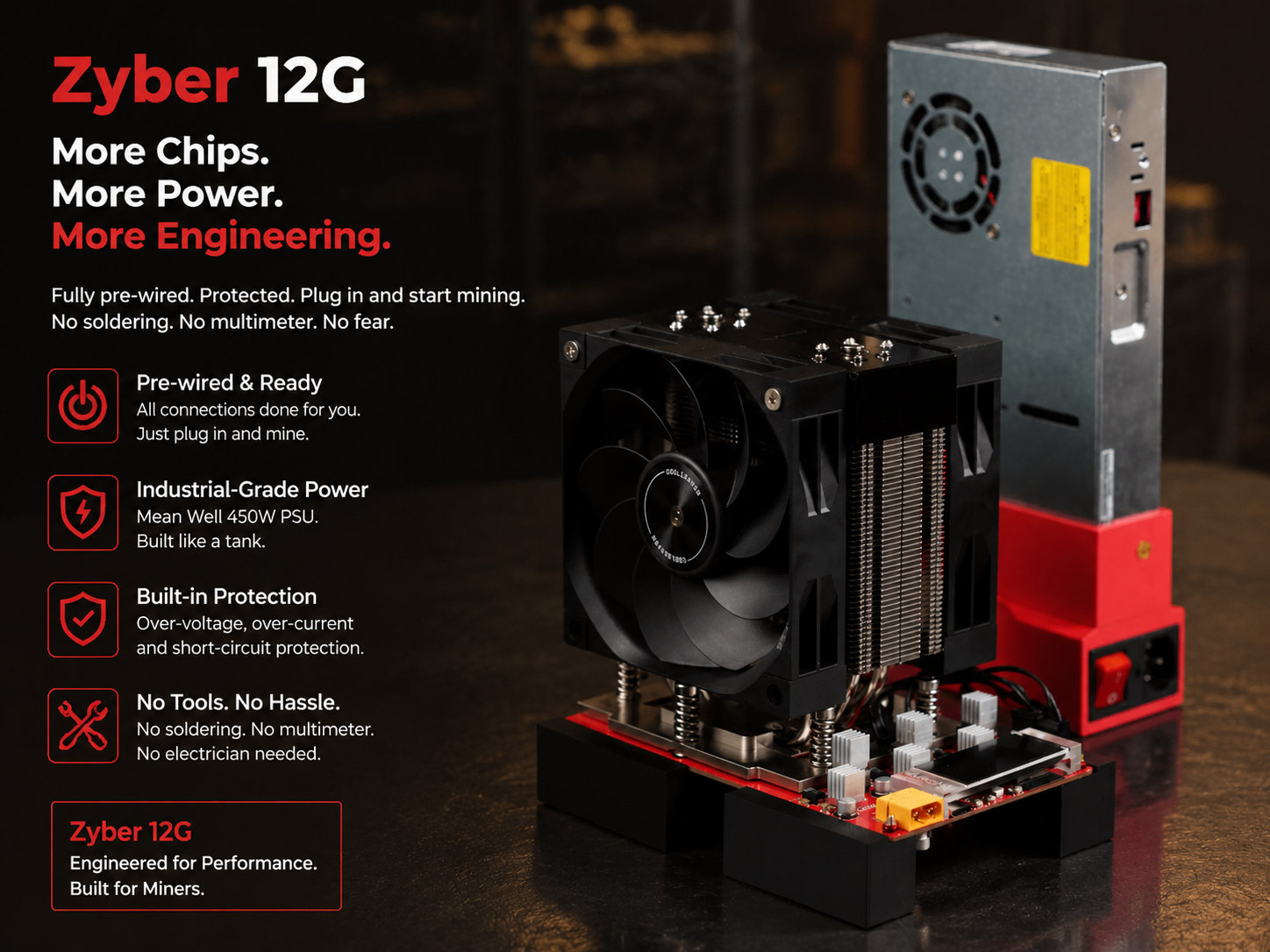
Many home miners, when first encountering ASIC chips, believe that "higher hashrate is always better." This is not entirely correct. An excellent small miner is more like a modified car. A bigger engine is just the beginning; the chassis, cooling, and wiring are equally important. But if you are already familiar with the miner's backend, want to further explore the performance of the BM1370 chip, or hope for a device with a longer lifecycle, the Zyber 12G will be more suitable.
4、450W Mean Well PSU:More OC Headroom
If the ASIC chip is the brain of the miner, then the power supply is its heart. When upgrading, many home miners only focus on the number of chips, overlooking a critical question: Does the power supply have headroom?
The purpose of the Zyber 12G + 450W Mean Well PSU is to provide more ample and stable operating headroom, keeping the device stable under high loads. The keyword here is not "higher wattage," but "Headroom."
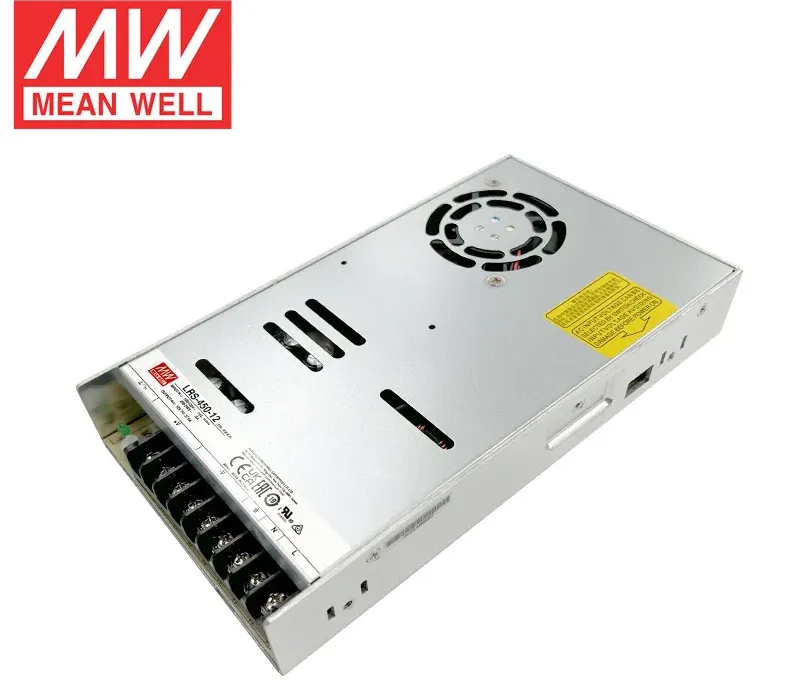
Question: What is power supply headroom?
Simply put: Running a device at full load long-term is like running a marathon every day. If the equipment is just enough, it can get the job done; if the equipment has extra capacity, it can handle sudden stress. The same applies to overclocking ASIC chips.
| Item | Standard PSU Solution | 450W Mean Well PSU |
|---|---|---|
| Power Delivery | Basic operational needs | Higher power headroom |
| Stability | Suitable for default mode | Suitable for high-load operation |
| Application Scenario | Daily mining | OC tuning & testing |
| Protection Design | Basic protection | Industrial-grade PSU solution |
Mean Well power supplies are one of the common brands in the global industrial power supply field, with products widely used in automation equipment, communication devices, and industrial control systems. In Mean Well's 2025 technical documentation, multiple industrial power supply products emphasize over-voltage protection, over-current protection, and short-circuit protection designs—all crucial factors for the long-term operation of home electronic devices.
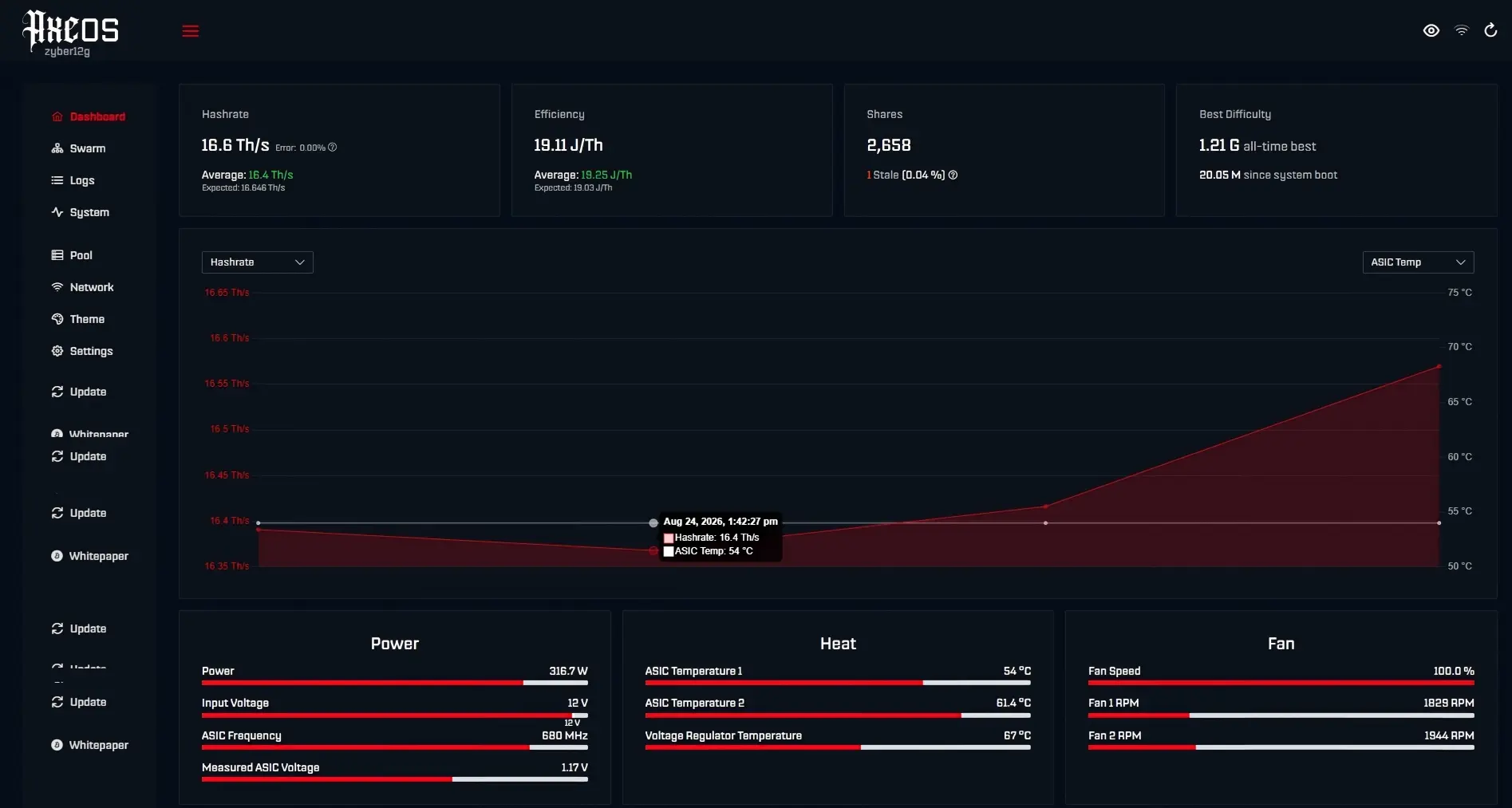
For Zyber 12G users, the 450W PSU brings changes mainly in three aspects:
- 🔥 More stable voltage output.
- 🔥 Greater frequency tuning headroom.
- 🔥 Higher power supply headroom, preventing operational fluctuations caused by insufficient power.
Under these conditions, stable power delivery is crucial for maintaining chip frequency. For home users in North America, Europe, and other regions, small miners are increasingly becoming personal technical devices rather than traditional mining farm industrial miners. Users want to see data, adjust parameters, understand chip status, and own their own Bitcoin computing device. The 450W Mean Well PSU provides not just electricity, but a critical safety margin for the Zyber 12G to explore higher performance modes.