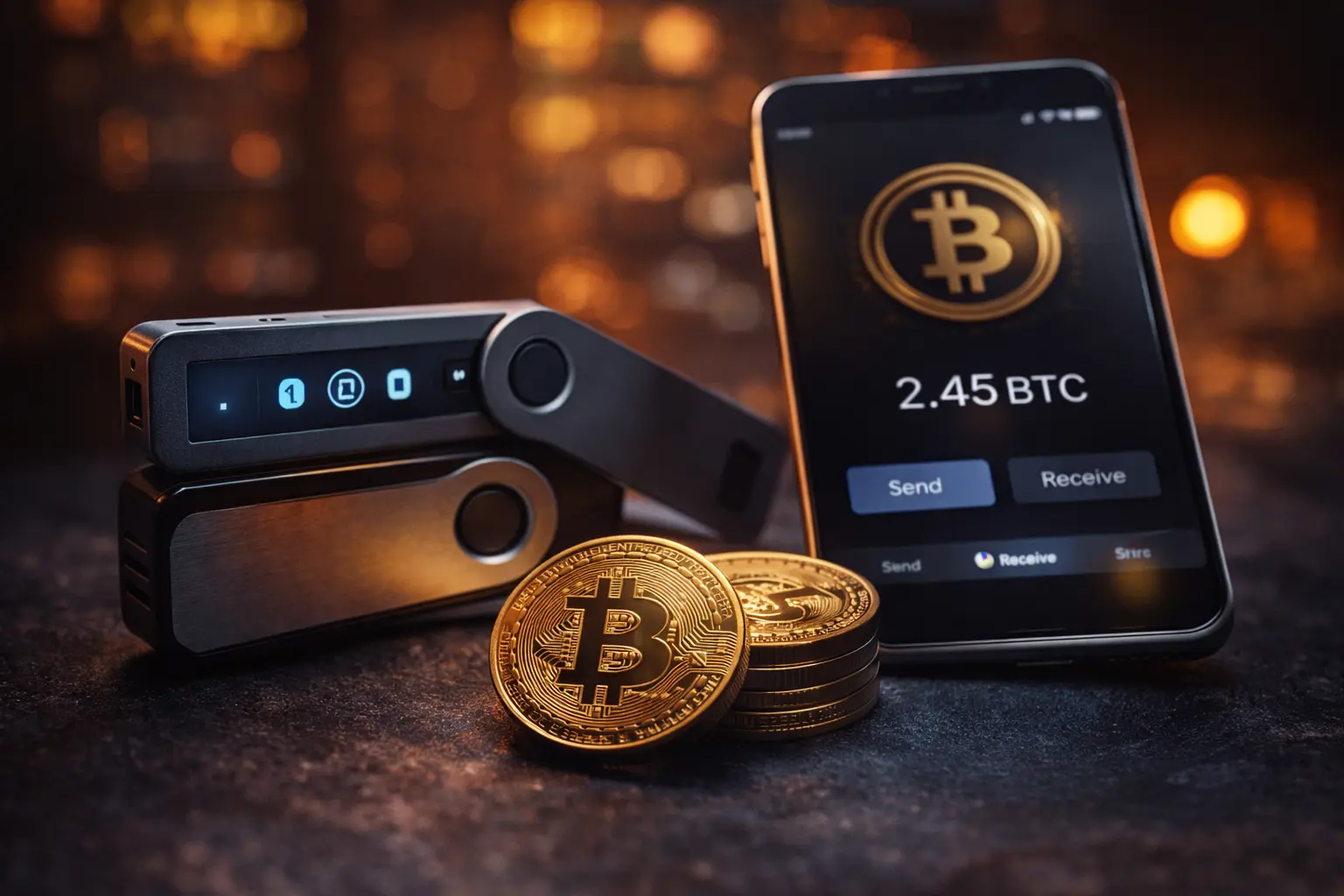
A Seed Phrase is the core password for recovering control of crypto assets. For Home Miners, it typically consists of 12 or 24 English words generated via the BIP39 protocol to restore a Bitcoin wallet.
Even if the wallet device is damaged, as long as the correct Seed Phrase is stored offline, you can re-access your addresses in any wallet supporting standard protocols. Currently, mainstream hardware wallets generally adopt 128-256 bit entropy protection mechanisms, and securely storing your mnemonic is more important than choosing a wallet brand.
1. What Is Seed Phrase?
A Seed Phrase is not an ordinary password, but a "root key" that unlocks control over your digital assets. Many new Bitcoin mining users think ASIC miners directly produce BTC, and wallets are just tools to display balances. In reality, wallets don't store actual Bitcoin; they store the keys to access the blockchain ledger. Simply put, after an ASIC Miner completes its computation tasks, the block rewards need to enter a Bitcoin address, and the control authority behind that address comes from the private key. The Seed Phrase is the human-readable version of that private key.
The core point is: It is randomly selected from a preset word list of 2048 words. A 12-word combination yields roughly 2^128 possibilities, making brute-force cracking physically infeasible. According to the NIST SP 800-90B random number standard, a true random source is key. Many beginners think saving it in phone notes is fine—that’s handing over your sovereignty.
- Mnemonic: Root key, manages unlimited derived addresses.
- Transaction Password: Front-end barrier, can be reset if lost.
- Keystore File: Encrypted shell, useless without the mnemonic.
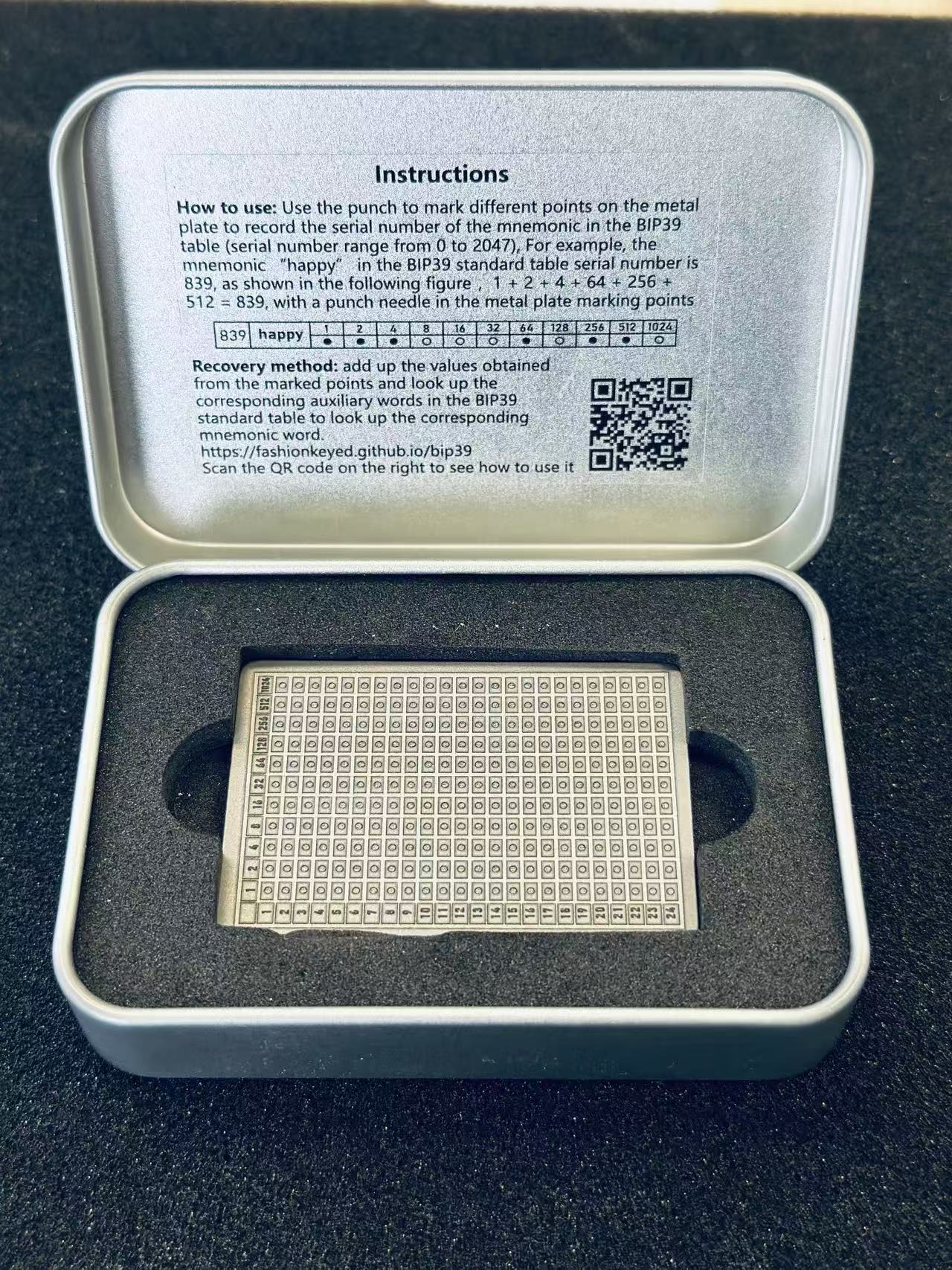
The industry currently mainly adopts the BIP39 standard. For example, a 24-word Seed Phrase corresponds to 256-bit random entropy data. This design allows humans to record complex keys while maintaining a high security level.
| Item | Technical Description | Common Specs |
|---|---|---|
| Seed Phrase Length | BIP39 Protocol | 12 / 18 / 24 English words |
| Security Level | Random Entropy Generation | 128-256 bit |
| Application Scenario | Wallet Recovery | Bitcoin, Ethereum, etc. |
In a home mining environment, many users place small miners, control boards, and wallet devices in the same workspace. But there's a hidden risk: miners can be reflashed, wallets can be replaced, but once a Seed Phrase is leaked, control may be permanently transferred. Based on the Bitcoin Improvement Proposal BIP39 standard design, mnemonics have become the foundational solution adopted by most hardware wallets.
❄️ For Small Miners, the Seed Phrase is not just a "savings password," but the core identity credential maintaining your device ecosystem.
- Miner Replacement: No need to recreate wallet
- Device Damage: Quick recovery
- System Upgrade: Maintain address continuity
- Multi-device Management: Unified wallet control
✅️Security Reminder: Never save your Seed Phrase as a screenshot, upload it to the cloud, or copy it into chat apps. A seemingly convenient action can become your biggest security breach.
2. How Does a Seed Phrase Work?
The core of how a Seed Phrase works is converting simple words into complex keys via algorithms. Users see 12 or 24 words, but the wallet internally performs cryptographic calculations.
The whole process is roughly divided into three stages:
- ➡️Generate Random Entropy: The wallet device creates base data via a secure random number generator.
- 🔥Convert to Mnemonic: Maps binary data to English words according to the BIP39 protocol.
- 💪Generate Private Key: Calculates the seed via PBKDF2 algorithm, then generates wallet addresses.
For example, when a home miner first boots up a hardware wallet, the device may display 24 English words. This process is usually completed entirely offline, requiring no internet connection.
| Process | Technical Protocol | Function |
|---|---|---|
| Random Generation | Secure Random Generator | Create initial data |
| Mnemonic Conversion | BIP39 | Easy manual backup |
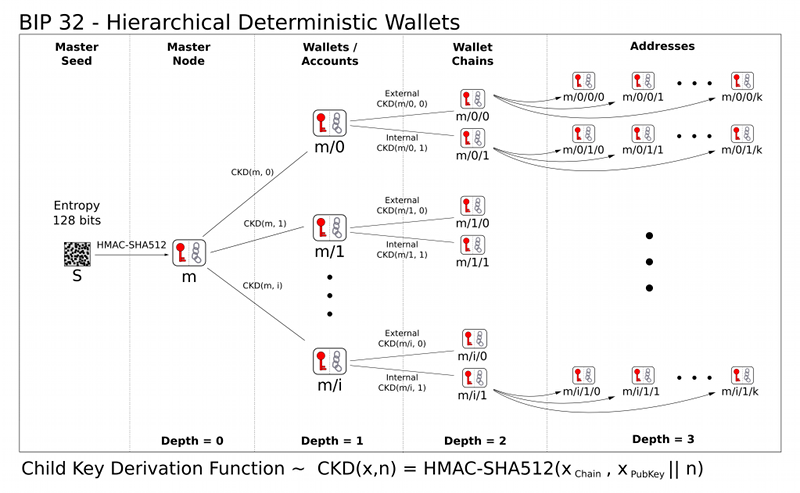
| Address Generation | BIP32/BIP44 | Create hierarchical wallet structure |
Many miners enjoy running their own ASIC gear, such as small BM1373 Miners or low-power Solo Miners. They focus on hashrate, chips, and system compatibility, but easily overlook the wallet security chain. In fact, the miner is just a computation device; the wallet manages permissions.
A simple comparison🔥 :
- Software Wallet: Convenient, but online long-term
- Hardware Wallet: Slightly slower ops, but isolates critical data
- Paper Backup: Low cost, but needs environmental protection
For home mining users, the biggest value of a Seed Phrase is control separation. Miner does the work, wallet holds the identity—don't manage them together.
3. How to Secure Seed Phrase?
Protecting your Seed Phrase is essentially protecting your wallet's recoverability. Many users think setting a complex password is enough, but the real key is how you store the mnemonic.
Common mistakes by home miners:
- Saving as phone photo
- Copying to computer text files
- Sending to friends "to test"
- Storing on internet-connected devices
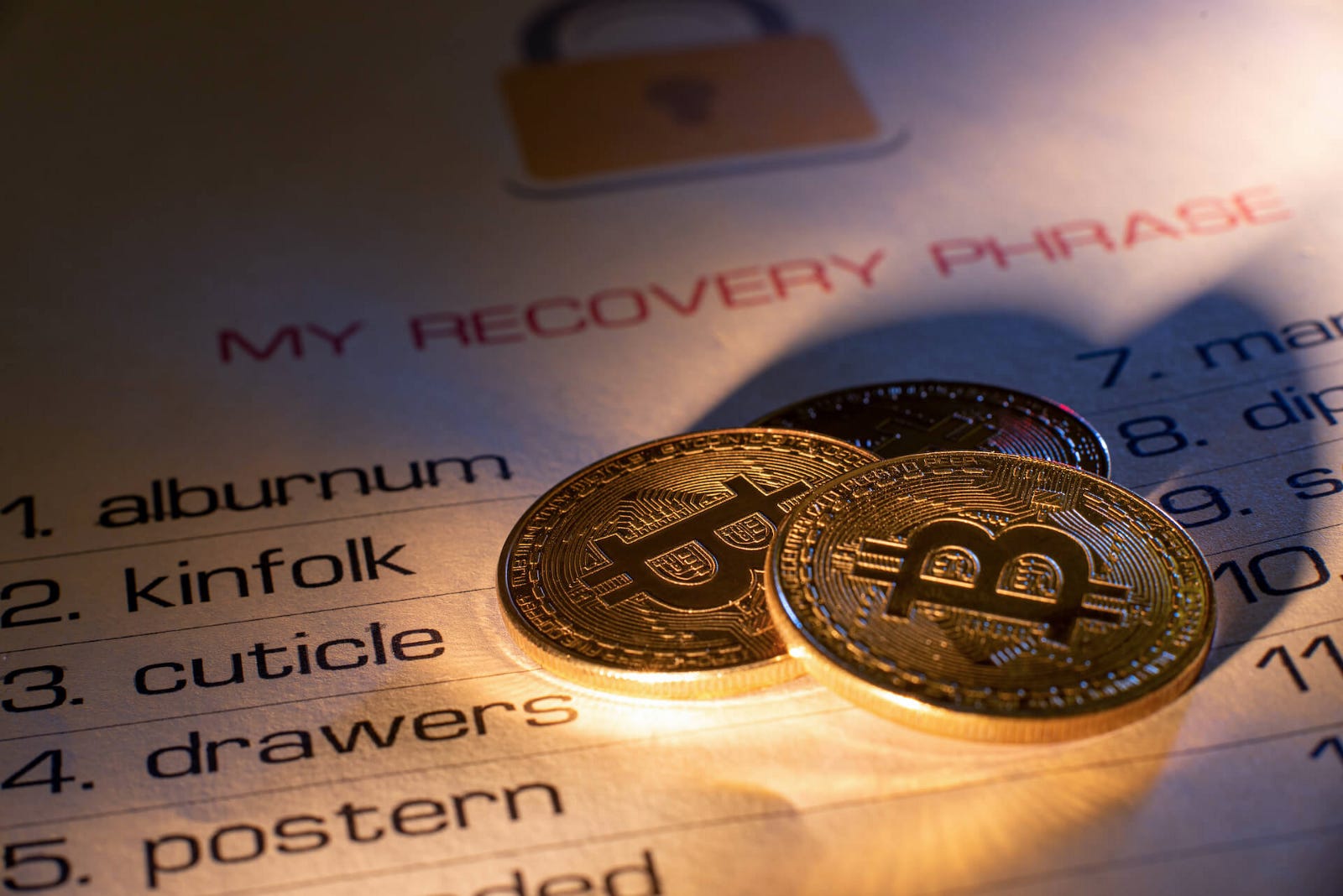
A more robust method is physical isolation:
- Generate the Seed Phrase in an offline environment during initial device setup.
- Use a Metal Backup Plate to record the word order.
- Store in a safe, fireproof, and moisture-proof location.
- Periodically check backup integrity.
| Storage Method | Security Level | Suitable Scenario |
|---|---|---|
| Phone Screenshot | Low | Not recommended |
| Paper Record | Medium | Short-term backup |
| Metal Backup | High | Long-term storage |
In most recent hardware wallet-related incidents, human error and accidental leaks remain primary issues—not algorithmic cracking. This is why many pro miners adopt "cold storage" principles. Cold storage isn't complex tech, it's a habit:
- ❄️ Generated offline.
- ❄️ Not saved online.
- ❄️ Not entered carelessly.
Regarding security certifications, check CC EAL levels, secure elements (SE), and open-source audit status when choosing wallets. For example, some hardware wallets use CC EAL5+ grade secure chips to improve physical attack resistance.
4. Crypto Wallet for Mining: Coldcard Vulnerability
Hardware wallets are not absolutely secure devices; real security comes from correct usage.
Coldcard is a hardware wallet mainly used by ideological retail Bitcoiners for cold storage. It recently suffered an exploit; while the loss only barely cracks the top 20 crypto thefts of all time, it is unprecedented for self-custody hardware wallets.
Let's look at the background:
Cause & Vulnerability Origin: On March 17, 2021, Coldcard's manufacturer Coinkite upgraded the firmware to use a new Random Number Generator (RNG) for entropy insertion during key generation. Due to a software bug, the new RNG implementation was faulty, causing the device to silently fail during key generation and fall back to a catastrophically insufficient separate entropy source. The resulting private keys lacked sufficient entropy to defend against attackers recreating them via computation.
Outcome: Attackers have been executing attacks since at least the early morning of July 30, 2026, systematically regenerating Coldcard seeds and sweeping on-chain funds.
Tracking & Response: Beyond Waves 1, 2, and 3, with help from victim reports, Galaxy Research identified at least 33 additional attacker footprints. It cannot yet be confirmed if these waves/footprints belong to the same or different attackers, but it is highly confident multiple attackers exploited the Coldcard vulnerability.
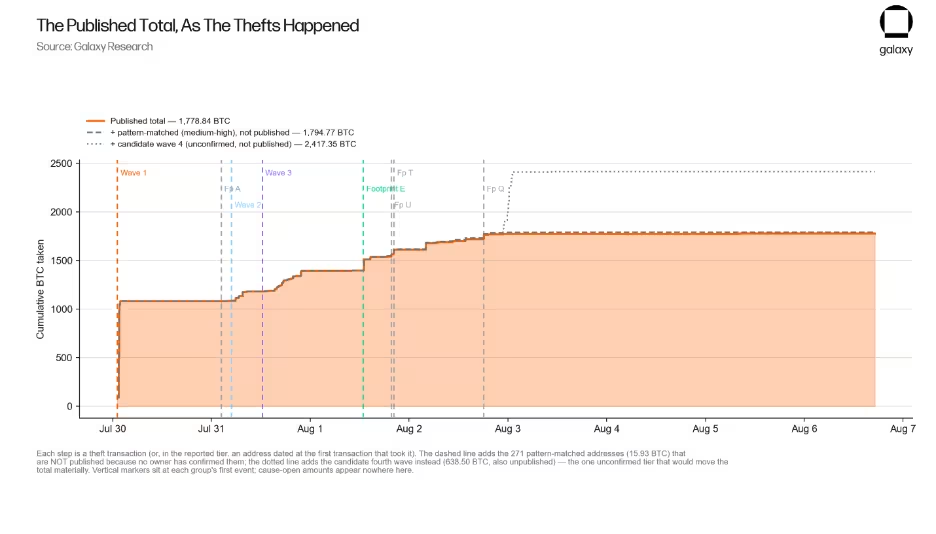
To date, confirmed losses involve at least 8,600 addresses with 1,778.84 BTC (approx. $112.7M) stolen. This incident highlights safer self-custody methods, with multisig emerging as the clear winner.
| Risk Type | Attack Condition | Protection Method |
|---|---|---|
| Phishing Attack | User inputs mnemonic proactively | Reject third-party requests |
| Supply Chain Risk | Abnormal purchase channel | Buy from official channels |
| Physical Attack | Long-term device access | Use secure chip devices |
For home miners, choosing a wallet shouldn't rely solely on brand. Pay attention to:
- Native Bitcoin feature support
- Offline signing support
- Transparent security design
- Long-term community validation
Many miners love tinkering with firmware, nodes, and systems—testing pools and control schemes. This spirit of exploration is great, but wallet environments demand caution. For users running ASIC Miners, Solo Mining gear, or Home Mining Kits, a stable wallet management workflow is often more important than fancy features.
Remember one rule: A Seed Phrase is not for sharing; it is the only control link between you and your wallet.