💡 Tip: The following article data is for reference only. Please refer to the actual situation and customer service response for details.
Using a home miner, it might take years to mine a full Bitcoin (1 BTC) by yourself. This is because the Bitcoin network produces a new block on average every 10 minutes (currently rewarding 3.125 BTC), and your home miner's hash rate is only a tiny fraction of the global total. A more practical approach is to join a mining pool. Based on your contributed hash power, you could earn a steady daily income ranging from 0.0001 to 0.001 BTC, which is like collecting fragments of Bitcoin in a "slow and steady" stream. Of course, there's always the chance to directly win a 3.125 BTC block—after all, such miracles happen from time to time in the Reddit community!!!
Understanding Bitcoin & Blocks🔍
The essence of mining is participating in a globally synchronized mathematical competition where the winner gains the right to record transactions and receives the Bitcoin reward. It's not about digging in the dirt but maintaining a super-ledger called the "blockchain."
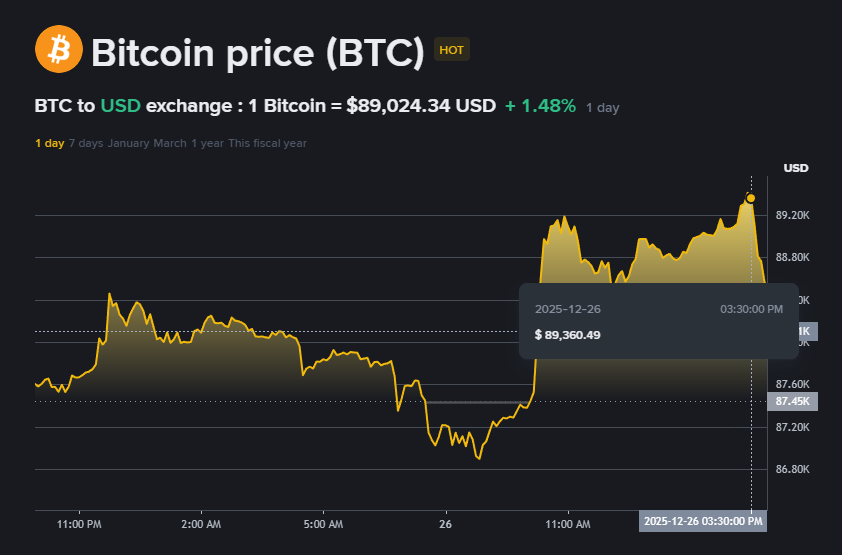
You can think of the Bitcoin network as a global lottery draw happening every second. A winner is drawn every 10 minutes (creating a new block), with the prize being the current reward of 3.125 newly minted Bitcoins (1 Block ≈ 3.125 BTC ≈ $276,885.31 USD, estimated at market price as of 2025-12-26). Your miner is your ticket number generator. A higher hash rate means you can generate more ticket number combinations per second, naturally increasing your chance of winning. That's why everyone is after miners with higher hash rates—to "scratch" more "lottery tickets" per unit of time.
🛠️ Introduction to Related Parameters
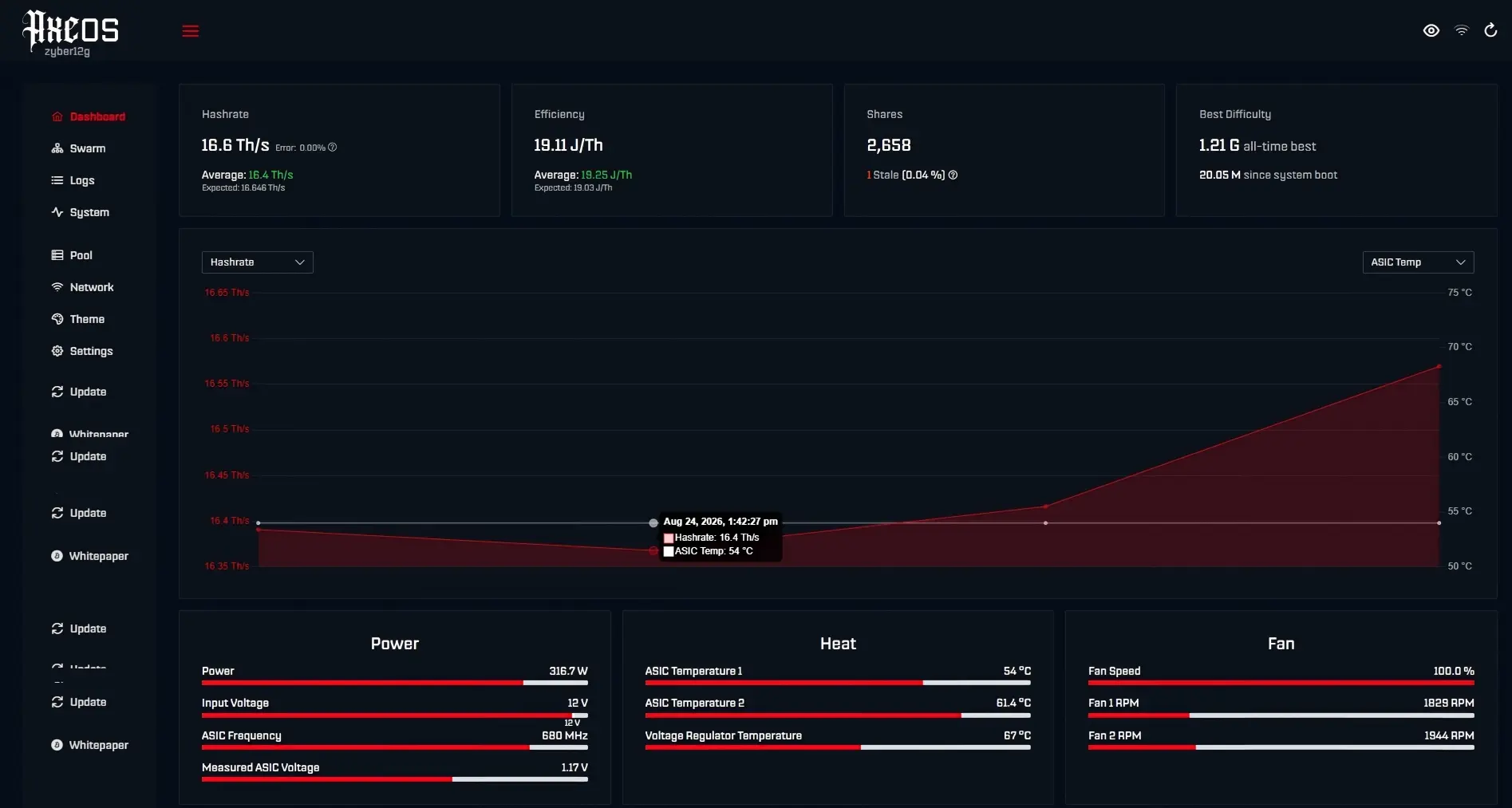
- Hash Rate: Measures your miner's "ticket-scratching" speed, measured in H/s. Home-grade ASIC miners typically range from 1 to 300 TH/s (able to attempt 1 to 300 trillion hash calculations per second).
- Proof of Work (PoW): The rules ensuring fair competition. The miner must find a hash value meeting specific conditions, which requires massive computation and cannot be cheated.
According to 2023 data from the Cambridge Centre for Alternative Finance, the Bitcoin network's annual electricity consumption is approximately 121 TWh, comparable to the yearly usage of a medium-sized country. The sheer energy scale of this competition itself proves the height of its security barrier. Products like the Zyber 8G Premium from TinyChipHub, with a hash rate of 10 TH/s to 13 TH/s, require core chips to pass strict CE and FCC certifications to ensure stability and safety within complex home electrical grid environments.
⛏️How to Mine Blocks
Modern mining has evolved from "lone prospector gold digging" to "crowdsourced collective collaboration." Individual miners join pools, merging their hash power into a "collective brain" to receive stable "fragment" income instead of chasing the slim chance of "winning the jackpot alone."
The process goes like this: your miner connects to a pool server (like F2Pool, ViaBTC) → the pool assigns you a small piece of computational work (a "share") → you compute this share with full power and submit the result → the pool combines the hash power of millions of global miners to collectively tackle the 10-minute block prize → when the pool successfully mines a block, it distributes the reward to you based on the proportion of "shares" you submitted relative to the pool's total hash power. This way, even if your hash power is only 0.001% of the network, you can see daily earnings, making the experience much more tangible.
| Stage | What Your Miner is Doing | Analogy |
|---|---|---|
| 1. Listening & Acquiring | Gets the list of pending transactions and block header information from the mining pool. | Receiving a "test paper" filled with numbers. |
| 2. Frenzied Calculation | Continuously changes the nonce and performs SHA-256 hash calculations on the block header until a value meeting the difficulty target is found. | Frantically trying answers until stumbling upon the "lucky number." |
| 3. Submission & Verification | Submits the found valid "share" to the pool. The pool verifies and records your contribution. | Handing in your paper after finishing each small question; the teacher (pool) records your usual grade. |
| 4. Receiving Rewards | After the pool mines a full block, it pays you Bitcoin based on your proportion of "usual grades." | The class (pool) wins a championship, and you get a bonus based on your usual grades. |
🔥Technical Detail: Each "share" you submit is itself a valid hash value, but its required difficulty is lower than the network's target difficulty. This proves you are indeed working honestly. Different mining pools reported in 2023 that independent miner devices across multiple platforms submitted an average of over 200 billion valid shares daily—a direct reflection of the decentralized network's vitality.
🚀Picking Different Mining Rigs🏎️
Choosing a miner isn't about picking the "best" one, but the one "most suitable for your current scenario," involving a multi-dimensional balance of performance, power consumption, noise, heat dissipation, etc.
Don't be fooled by flashy hash rate numbers! A 350 TH/s mining beast might sound like a jet taking off and require a specialized three-phase industrial circuit. For home users, the "hash rate to power consumption ratio" (J/TH) is more important than absolute hash rate. A smaller number means the miner uses less electricity per unit of hash power generated, leading to lower long-term operating costs. For example, Machine A: 100 TH/s, 3000W power; Machine B: 110 TH/s, also 3000W power. Clearly, B is more efficient.
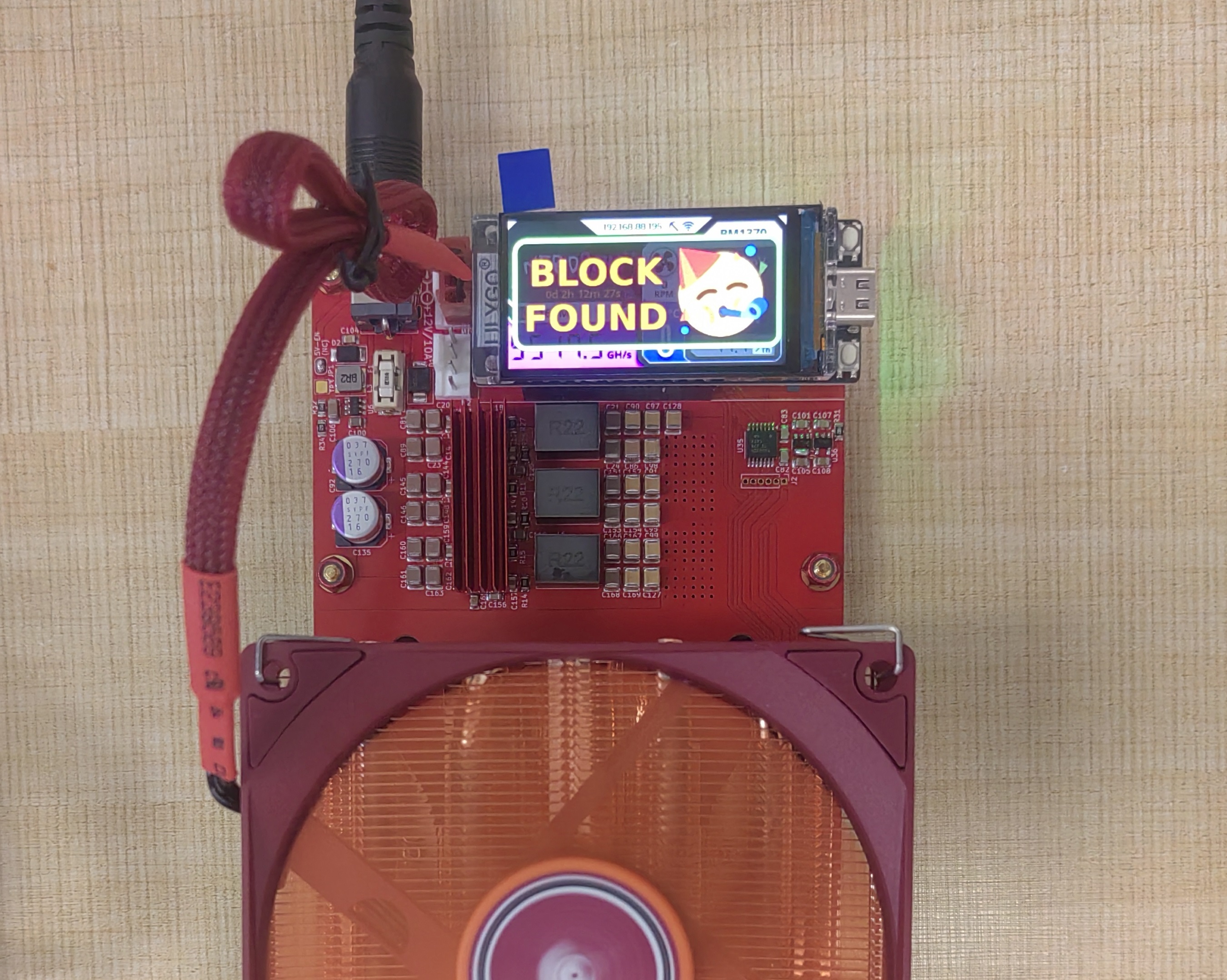
💪Practical Comparison: Let's look at the difference between popular home miner models from TinyChipHub and miners from other brands:
| Model | Overclocked Hash Rate | Power Consumption | Hash Rate to Power Ratio | Noise Level | Suitable Scenario |
|---|---|---|---|---|---|
| NerdQaxe++ Remastered | 6+ TH/s | 95W | 15.83 J/TH | <45dB | Home use, quiet as a library, plug-and-play |
| Other Versions Miner | 100+ TH/s | 3000+W | 30.50 J/TH | 75+dB | Industrial three-phase power, cannot run in apartments |
See the difference? The Other Versions Miner has higher efficiency but also much more noise. If your apartment has poor sound insulation, neighbor complaints might force you to shut down early. Additionally, don't forget about firmware and cooling modifications. Many miners install third-party firmware like Axe OS+, which can optimize algorithms and potentially improve energy efficiency by 5%-15%. A Q1 2024 after-sales report from a Bitcoin miner manufacturer indicated that machines receiving official maintenance and cleaning showed 40% lower average hash rate decay compared to unmaintained ones.
❄️Core Tip: Heat dissipation is the lifeline of home mining. A miner running consistently overheated (chip temperature exceeding 85°C) will see its lifespan drastically shortened. Ensure your mining room has a strong air intake and exhaust system to create airflow. Remember, these machines are "iron workhorses" running 24/7.
📈Bitcoin Market Trends?
Bitcoin mining is no longer a "plug-in and earn" lazy game but a dynamic "adaptive" technical project requiring strategy adjustments. Market volatility and changes in network difficulty directly determine the "combat effectiveness" of your miner.
The Bitcoin network adjusts its difficulty every 2016 blocks (approximately every two weeks). If global hash power increases, the difficulty adjusts upward, meaning your same miner will produce fewer coins, and vice versa. This means your daily earnings today might be completely different from next week's. For instance, a difficulty adjustment in April 2024 surged by 4.94%, instantly giving all miners a slight "productivity" discount.
- Trend One: Compliance and Clean Energy. In parts of Northern Europe and North America, using surplus hydro or wind power for mining has become mainstream. If your miner can obtain an "Energy Star" or local green energy certification, you might get lower grid rates. This isn't just about saving money (we're not talking about electricity bills), but about a more sustainable mining lifecycle.
- Trend Two: Accelerated Equipment Iteration. The energy efficiency ratio of new miners keeps improving, forcing older models to exit the market prematurely. According to CoinShares' 2023 Mining Report, over 30% of the network's hash power came from new-generation miners released within the previous year.
🏃♂️ Don't just focus on the coin price. Pay attention to the trend of global hash power growth, new product roadmaps from miner manufacturers, and the energy policies in your region. The excitement of mining comes from personally experiencing and participating in every heartbeat (difficulty adjustment) and evolution (hard fork) of this global decentralized network as a node. When you hear the hum of your miner's fan, you know it's synchronizing with countless other machines from Texas to Siberia—this feeling of global connectivity and control feels more real than just watching account numbers fluctuate. Remember, the core goal of mining is to acquire Bitcoin and optimize this process through technical means, not to engage in price speculation.