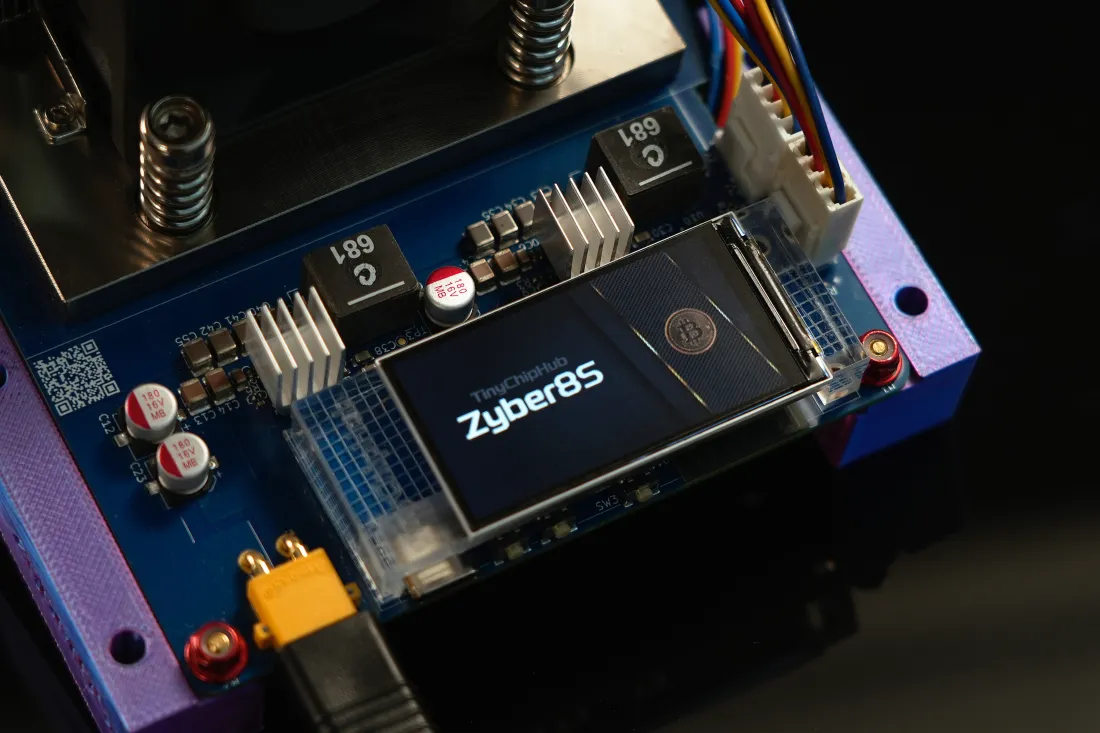
Always active! Run a Bitaxe Gamma (approximately 1.2 TH/s nominal hashrate) at home for solo mining, with Public Pool being one of the most popular pools currently, featuring 0% fees, MIT open source license, no KYC, direct Bitcoin address connection, and support for both Stratum V1 and V2. Note that the pool itself does not charge any fees.
As a community service project, Public Pool charges no fees for either its hosted or self-hosted versions. And 98% of the block reward (including the base block subsidy and transaction fees) is sent directly to your configured Bitcoin address. According to Public Pool's open-source configuration, the remaining 2% will be automatically allocated as a Donation to the developers of this open-source project, supporting the continuous iteration and maintenance of the Bitaxe hardware and Public Pool software ecosystem.
Who owns Public Pool.io❓️
Public Pool is an open-source Bitcoin solo mining ecosystem created by Benjamin Wilson, a prominent contributor to the Open Source Miners United (OSMU) community and the Bitaxe project. The complete code for this pool resides on GitHub (benjamin-wilson/public-pool), licensed under MIT, and written using NestJS and TypeScript. This makes Public Pool one of the most convenient self-hosting solutions for solo miners.
It operates in two modes:
- Hosted: A fee-free service hosted at web.public-pool.io, running on a single server located in the United States (public-pool.io:21496 or :3333, TLS port 4333).
- Self-Hosted: Software that miners can host themselves on their own hardware for complete autonomy. A self-hosted instance runs wherever your hardware is located and connects to your own Bitcoin node to construct block templates.
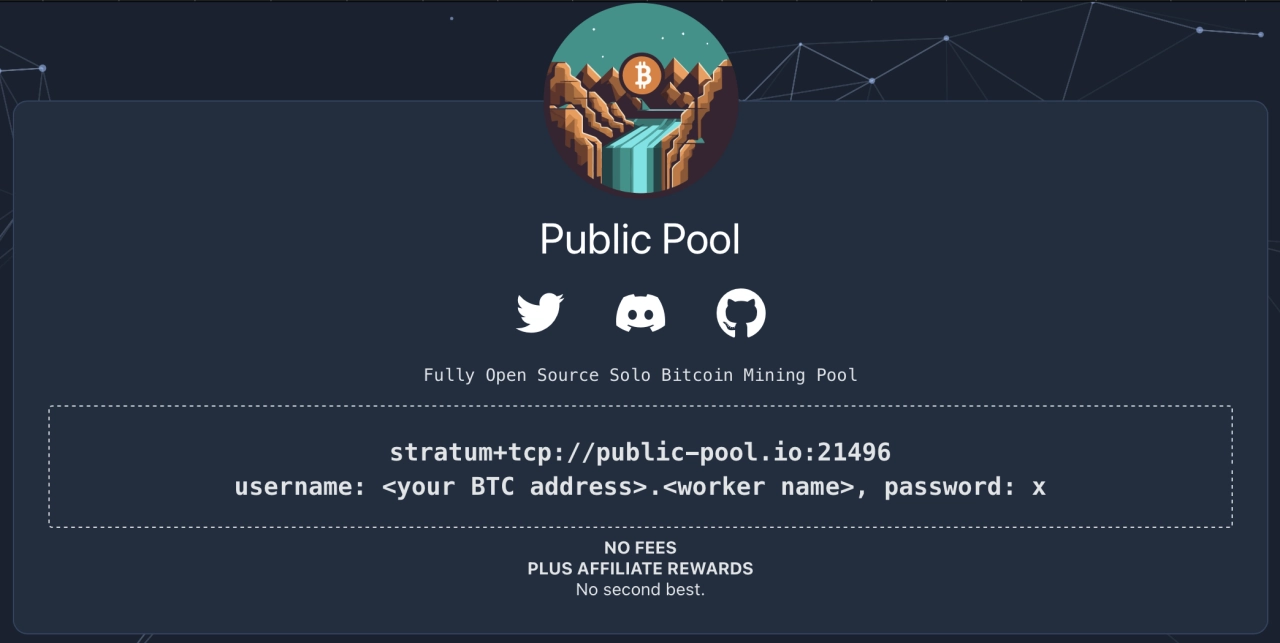
The origin of Public Pool? "Minimalism" and "Transparency". Their core operational philosophy is to let miners retain the full value of block rewards. Its backend architecture aligns with this philosophy, taking a highly decentralized route with no complex KYC processes, no email registration required; you only need a Bitcoin address to start pointing hashrate there.
What reassures me most is that Public Pool supports self-hosted node connections. You can point it to your local Bitcoin Core full node, keeping block validation entirely in your own hands, making it ideal for miners who prioritize sovereignty, zero fees, and self-hosting capabilities.
👉 Evaluation Metrics: Solo Mining Pool
Many people stare at the zeros looking for profits, but in the world of Solo Mining Pools, the "rejection rate" is the true devil. For every 1% increase in rejection rate, your already minuscule chance of finding a block is directly eaten away by the pool at the protocol level.
Evaluating whether a solo pool is excellent is definitely not about how high its historical block find rate is (that's purely luck), but rather comprehensive factors like its node response speed and network latency. Solo mining is essentially a global broadcast "zero-sum game". Whoever synchronizes a valid hash to the nearest full node within 200 milliseconds gets a chance to stamp their signature on the next block height. Directly consider the following points, especially for a simple evaluation of each pool, without being too complicated.
- Fee Structure: What percentage of the block reward do you actually get?
- Open Source Status: Can you audit the code and truly verify payouts to the corresponding address?
- Server Location: How many endpoints are there? Does geographical proximity reduce the probability of stale shares?
- Self-Hosting Extension: Can you run the pool software on your own hardware?
- Block Discovery: How many independent blocks have been found?
- Registration Requirements: Is the pool anonymous?
- Minimum Hashrate Requirement:Can low-hashrate devices like the Bitaxe Gamma connect?
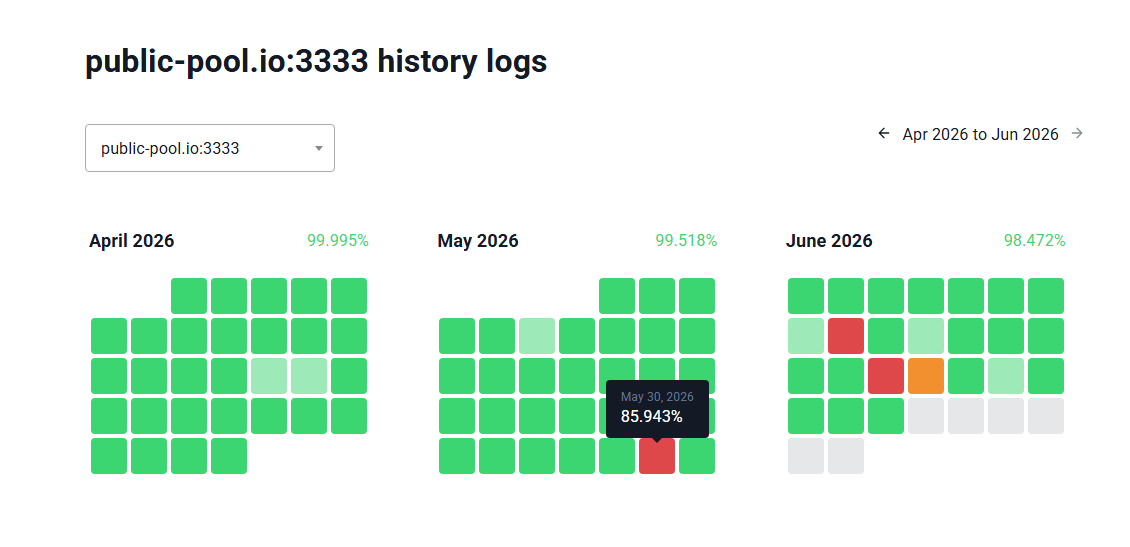
Why mention these metrics here? Because from April to June 2026, there were multiple incidents where small miners could not connect to public-pool.io and could not perform hashing operations, causing a wave of hashrate anxiety!
- I set up 3 nerdqaxes connected to public-pool.io, but they don't show ping values or packet loss, only "n/a". Is this normal? This happens with any other pool I've used.
- I have a Nerd Octaxe, NerdQAxe++ and three NMminer miners, and they all stopped working, unable to connect to public-pool.io.
- Anyone else having issues with public-pool.io? I've been using it for weeks, usually the online dashboard works fine, but now it won't load.
This sounds different from the pool issues everyone else is experiencing. Of course, some are miner setup problems, others are just official maintenance/power outages. Even though the dashboard page keeps spinning, the pool generally still accepts share submissions from miners. These small mining pools can sometimes go down for several hours when pushing updates or experiencing server downtime. As long as your miner isn't showing errors, you might still be earning rewards even if the user interface isn't displaying.
CKPool Vs. Public Pool Vs. AtlasPool
Comparing the three pools side-by-side reveals clear differences. CKPool is the veteran, created by Dr. Con Kolivas in 2014, closed-source but stable for a decade, with a 2% fee and mature ecosystem. Public Pool is the newcomer, launched around 2023, MIT open-source, 0% fees, no KYC, deeply tied to Bitaxe hardware. AtlasPool follows the Stratum V2 route, 0% fees but closed-source, focusing on protocol upgrades.
| Comparison Item | CKPool | Public Pool | AtlasPool |
|---|---|---|---|
| Launch Date | Around 2014 | Around mid-2025 | End of 2025 |
| Fee | 2% | 0% | 0% |
| Open Source License | Closed Source | MIT Open Source | Closed Source |
| Stratum V2 | Not Supported | Supported | Supported |
| Self-Hosted Node | Not Supported | Supported (Local Bitcoin Core) | Not Supported |
| KYC Requirement | None | None | None |
| Code Auditability | Not Auditable | Fully Auditable | Not Auditable |
If you care about transparency and autonomy, Public Pool is the only option that simultaneously satisfies "open source + self-hosting + V2 protocol".
CKPool wins on a decade of stability. Slush Pool also built its user base through long-term reputation, but the closed-source path always feels like a barrier for tech enthusiasts.
AtlasPool boasts advanced protocols. Operated by notable contributor Matt Weinberg, it utilizes a unique global deployment method via a technology called BGP Anycast. This allows broadcasting the address (solo.atlaspool.io) through over 100 Points of Presence (POPs) globally. Miners are routed through the nearest POP, then connected to one of eight global servers. Anycast technology significantly reduces latency and improves service availability (uptime).
👍Quality Contribution: In November 2025, Matt Weinberg discovered three scam mining pools and published concrete evidence, causing a stir in the solo mining community. This research led to the addition of a scam pool detection feature in AxeOS v2.13.0.
Suitable Users🚀
Ultimately, Public Pool isn't for everyone. The current Bitcoin network hashrate is around 700-1100 EH/s. Using a 500 GH/s Bitaxe Ultra for solo mining gives you a probability so small it's negligible, and that's precisely the charm of solo mining: you're playing for that tiny lottery-winning probability. The hardware cost for a Bitaxe Gamma + Public Pool + local Bitcoin Core node setup is about $50-$150, incredibly low compared to professional industrial miners costing thousands of dollars.
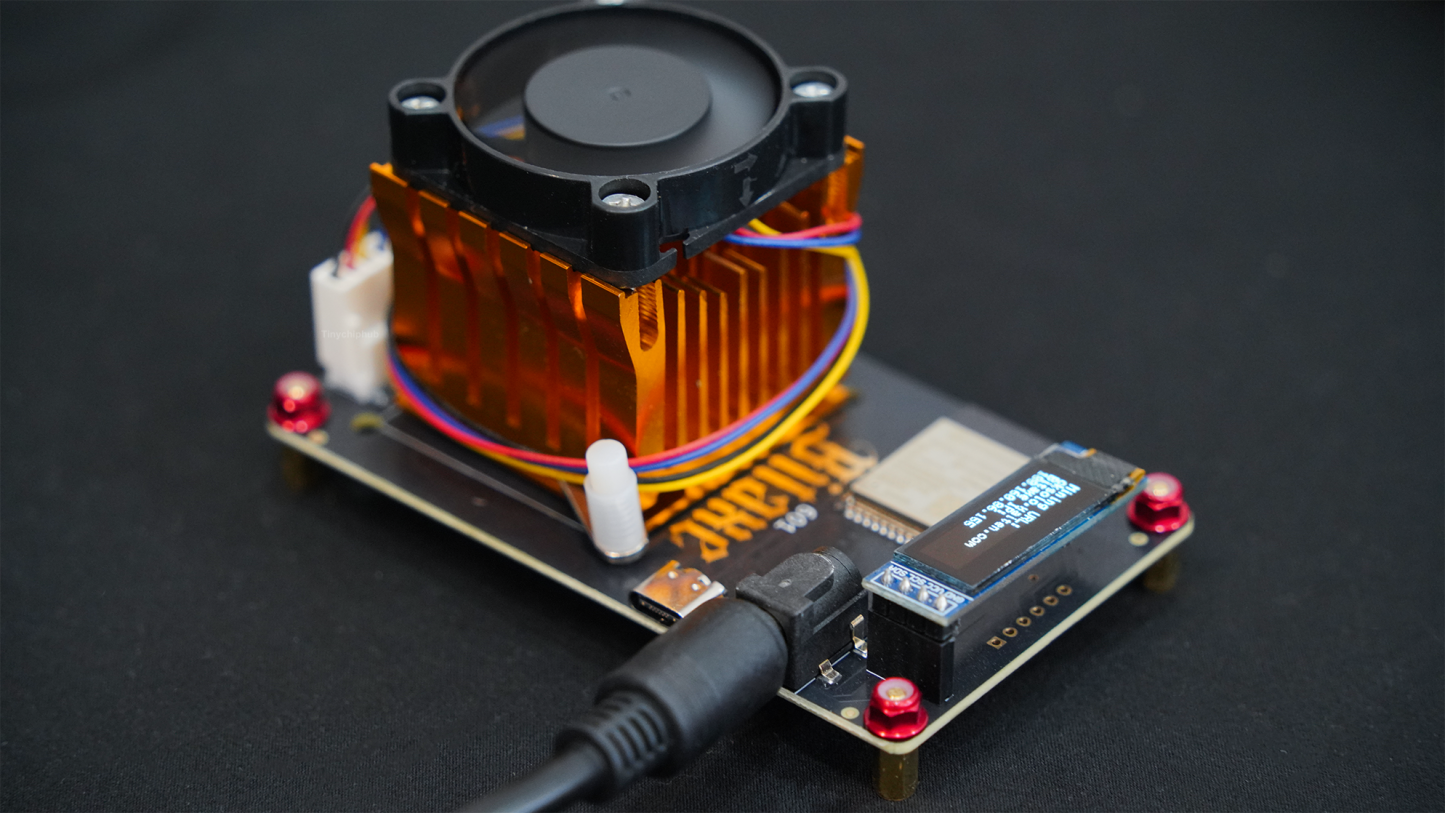
People suitable for Public Pool io:
- Home Mining Enthusiasts: Those with Bitaxe Ultra/Gamma wanting to experience the thrill of solo block discovery.
- Tech Researchers: Those who enjoy building their own Bitcoin Core full nodes and relish the feeling of "my node, my rules".
- Decentralization Advocates: Those who believe in the MIT open-source license and code auditability, rejecting black-box trust.
These geeks pursue the absolute sense of control that comes with "technological sovereignty". In today's environment rife with cloud mining scams, Public Pool's unique approach of not holding funds or offering loans provides immense peace of mind. The process might be painful, but if, by that one-in-a-million chance, you hit the jackpot, the feeling of your self-assembled miner packaging that 3.125 BTC reward is completely unparalleled.