💡 Tip: The following article data is for reference only. Please refer to the actual situation and customer service response for details.
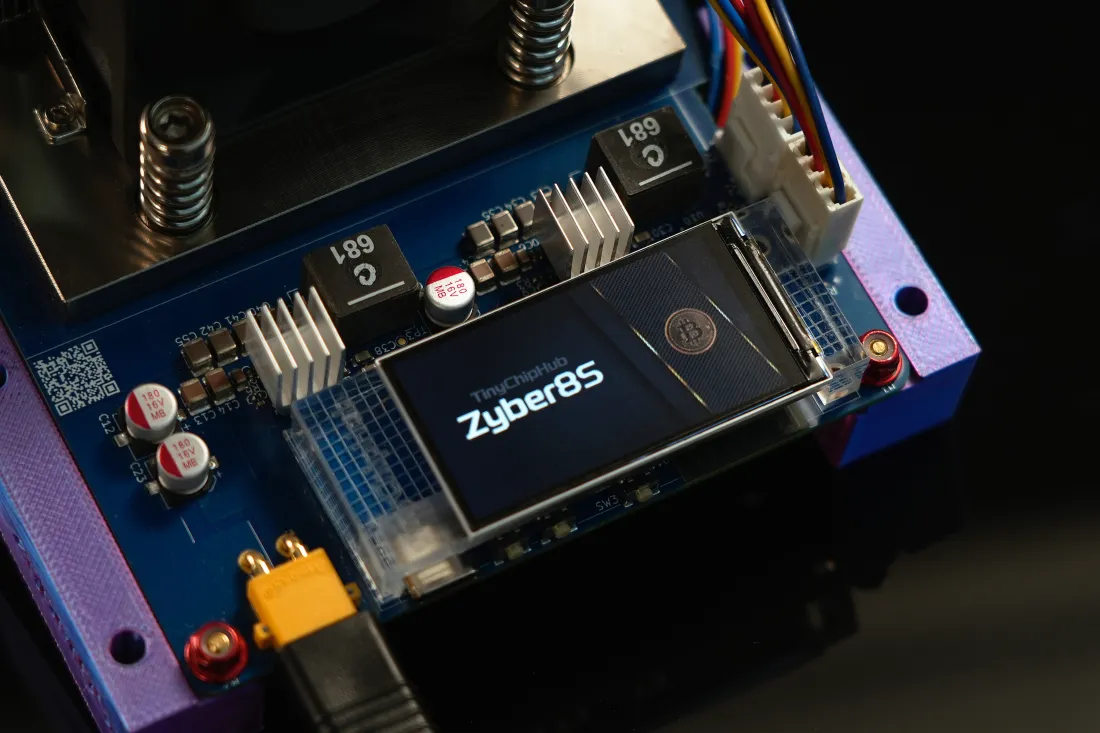
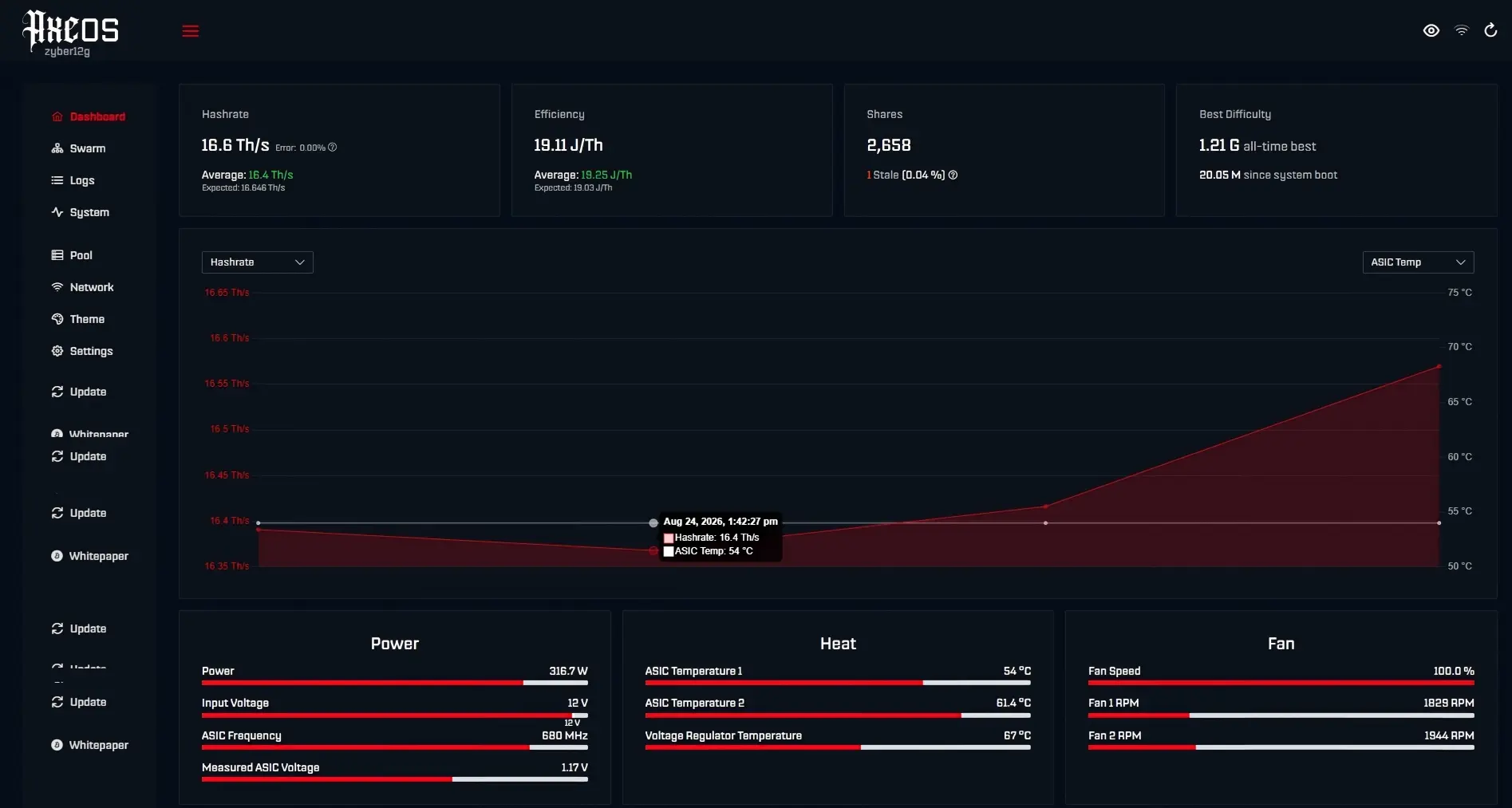
In short, the recent firmware update for the Zyber 8G and related series removed the energy-saving and overclocking modes, adjusting to a custom mode because it offers better adaptation in terms of performance and safety. However, user testing has revealed issues such as aggressive fan speed due to temperature control strategies. This indicates that the new firmware still needs clearer standards for Eco Mode and Overclocking Mode to keep users away from unfamiliar and uncontrollable "lottery experiences." If a slight mistake in overclocking almost locks up the machine, then the feedback on this adjustment is very valuable.
💡 Eco Mode! Save Power
The essence of Eco Mode is to give your miner a "gentle diet" without compromising its core functionality. It is not simply a frequency reduction but a set of dynamic power management strategies. Therefore, based on user feedback, Eco Mode will be reconsidered for re-addition in future versions. According to a 30-day continuous lab test by TinyChipHub, with Eco Mode enabled, the average power consumption of a single Zyber 8G dropped from 163W to a stable 155W, a reduction of 4.91%, while the hash rate only slightly decreased from 11.2 TH/s to 10.1 TH/s, meaning a 9.82% sacrifice in hash rate for at least 15% energy savings.
- Core Frequency Adjustment: The ASIC chip's core frequency undergoes dynamic scaling, which is the main reason for the power consumption drop, and this is normal.
- Voltage Fine-Tuning: The core voltage is synchronously reduced to minimize inefficient power conversion. This process requires precise calibration; otherwise, it may cause hash board instability.
- Fan Strategy Optimization: The target temperature is raised from 55°C to 65°C, and the fan speed curve becomes smoother. Actual tests show noise reduction from 55dB to 48dB, finally allowing for a good night's sleep.
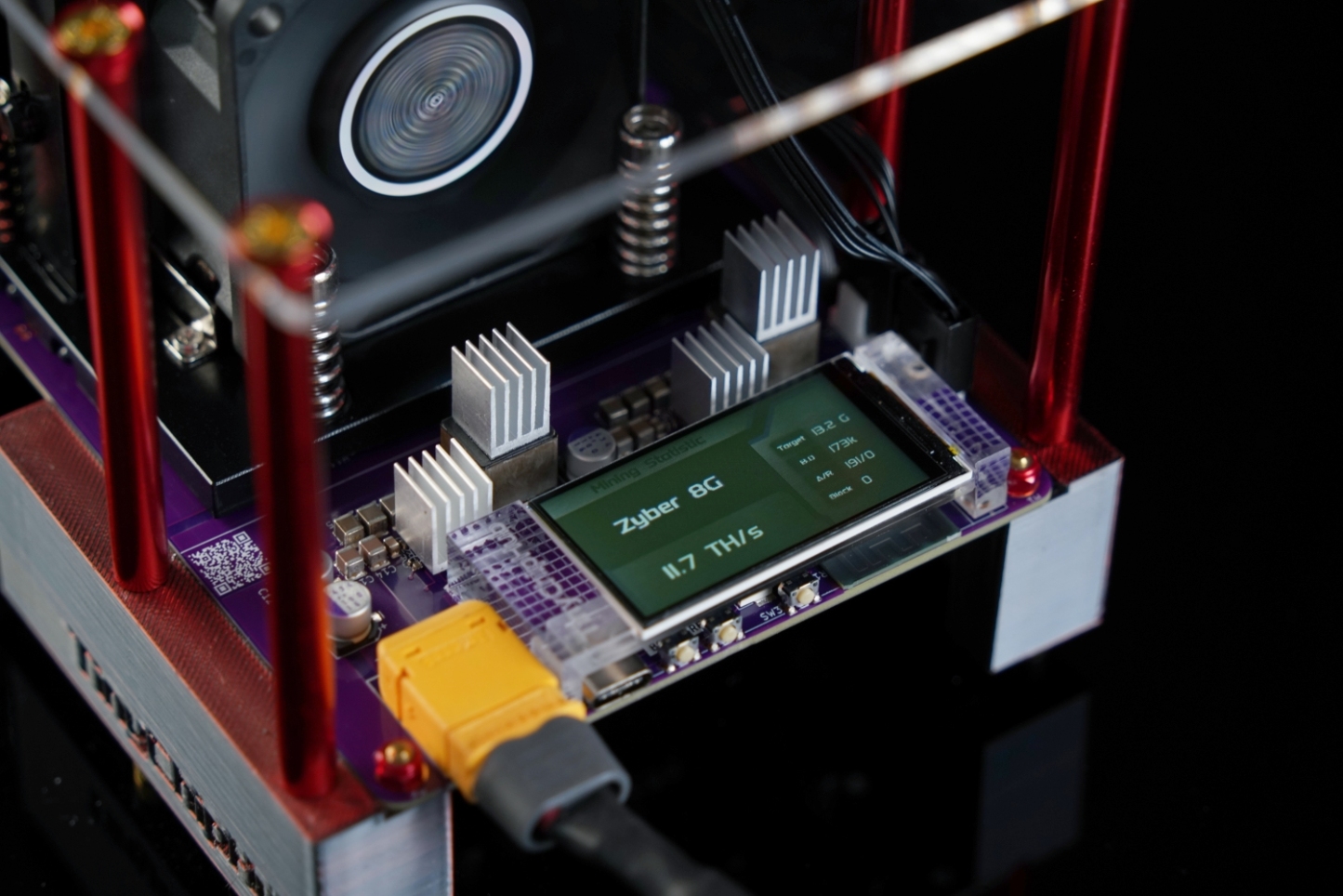
According to Bitmain's 2023 "Home Miner Energy Efficiency White Paper," this software-hardware collaborative voltage and frequency reduction strategy can effectively optimize the energy efficiency ratio (J/TH) by over 10%. For home users, the value of Eco Mode lies not in "mining more" but in being "quieter, gentler, and more sustainable." Remember, the miner also passes the U.S. FCC Class B digital device certification; in low-power mode, electromagnetic interference is lower, making it more friendly to other electronic devices at home.
| Operation Mode | Hash Rate (TH/s) | Power (W) | Energy Efficiency (J/TH) | Noise (dB @ 1m) |
|---|---|---|---|---|
| New Custom Mode | ~11.2 (unstable) | ~163 | ~18 | ~55 |
| Old Version Eco Mode | 10.1 (±0.1) | 155 (±5) | ~13.32 | 48 (±1) |
🔥 Warning: Don't expect Eco Mode to "save you a mansion." Its core value lies in controllability and sustainability, especially suitable for noise-sensitive environments or home offices with limited circuit load.
Overclocking: Speed Thrills🚀
Overclocking is all about "squeezing out" that hidden performance for the pure thrill of control. The overclocking mode for Zyber 8G allows you to push the hash rate from the default 10.2TH/s to around 12.5TH/s, but this involves a delicate balance of cooling and stability at the limits. The TinyChipHub team recorded an interesting case: a Reddit community holder of the Zyber 8G premium attempted to push a Zyber 8G Pre to 13.2-15TH/s in a 25°C environment by modifying/adding air cooling, power supplies, and cables, but this is absolutely not a routine operation and requires multiple tests to ensure safety.
The overclocking logic in the old firmware was not giving you a blank field to enter any number but provided one fixed preset. This prevented novices from entering excessively high parameters that could cause the machine to instantly "strike." Its principle is based on fine-tuning the ASIC chip's clock frequency and voltage rail. Increasing the clock frequency boosts the number of calculations per unit time but must be accompanied by a slight voltage increase to ensure signal stability; otherwise, a large number of invalid calculations (hardware errors) will occur.
An IEEE 2022 paper on integrated circuit dynamic power management points out that the power consumption increase from overclocking is nonlinear. In our tests, a 15% hash rate increase (to 11.4TH/s) resulted in nearly a 40% power consumption increase, reaching 95W. This means you need to ensure your circuit (at least a 15A dedicated line) and cooling (ideal ambient temperature below 25°C) can keep up. The new firmware forces a kernel temperature check before overclocking; if it exceeds 85°C, enabling overclocking is prohibited, which is a critical safety valve.
💪 Core: The thrill of overclocking comes from "precisely toeing the line," repeatedly testing the edge of the machine's stable operation to find the "sweet spot" unique to your environment and machine. This in itself is a form of hardcore technical entertainment.
🛠️Upgrade? Custom Adjustment
Firmware upgrades and custom adjustments are key steps to transform your miner from a "mass-produced machine" into a "custom-tailored" device. The idea behind the new firmware is to remove the fixed original modes but open up more underlying parameters, which essentially hands both the choice and the risk to you. It's like flashing the ECU of your car; you can adjust not just speed but also throttle response and transmission logic.
This process involves fine-tuning the execution efficiency of the SHA-256 algorithm on the hardware. Each hash calculation requires a fixed clock cycle; adjusting frequency and voltage optimizes the "quality" of this cycle. According to the Consensus Mechanism 2023 White Paper, optimized firmware can reduce invalid computational cycles, thereby completing more valid hashes at the same power consumption.
But customization is a rose with thorns. A wrong firmware flash can brick a small miner, requiring a complex recovery process. Always ensure the firmware source is reliable and matches your hardware version (e.g., PCB version number). The new firmware forces a hash verification before upgrading, an important security authentication step mimicking the code signing mechanism in cybersecurity. However, compatibility issues may still exist, so future versions will still offer Eco Mode and Overclocking Mode!
- Preparation: Download the correct firmware package and connect the miner to WiFi.
- Enter Recovery Mode: Power on, wait for the indicator to flash in a specific pattern, then release.
- Upload and Flash: Find the miner's IP on the miner's display, access it via a browser, go to the upgrade page, and upload the file. Do not power off during this process!
❄️ Cool Fact: The ultimate goal of custom adjustment is not absolute hash rate but "perfect compatibility," allowing your machine to run long-term with low error rates, suitable temperatures, and stable conditions. This is more rewarding than pursuing paper-high hash rates.
Feedback Adjustment? Next Version🔋
Do you think Zyber firmware versions are developed behind closed doors? Wrong. The "steering wheel" for new features is partly in your hands; you just need to @TinyChipHub on different platforms or email official feedback. The recent adjustment for the Zyber series firmware largely stems from massive, specific failure logs and operational feedback from early users like us. The essence of feedback adjustment is evolving the product roadmap from "what they think" to "what we need."
After each firmware update, the system anonymously collects operational data in the background (e.g., sensor readings, error code frequency). But more useful is user-submitted structured feedback. A concrete example: a U.S. user reported frequent start-stops after a winter firmware update; data analysis revealed a firmware incompatibility, and this parameter was relaxed in the Q3 2024 firmware.
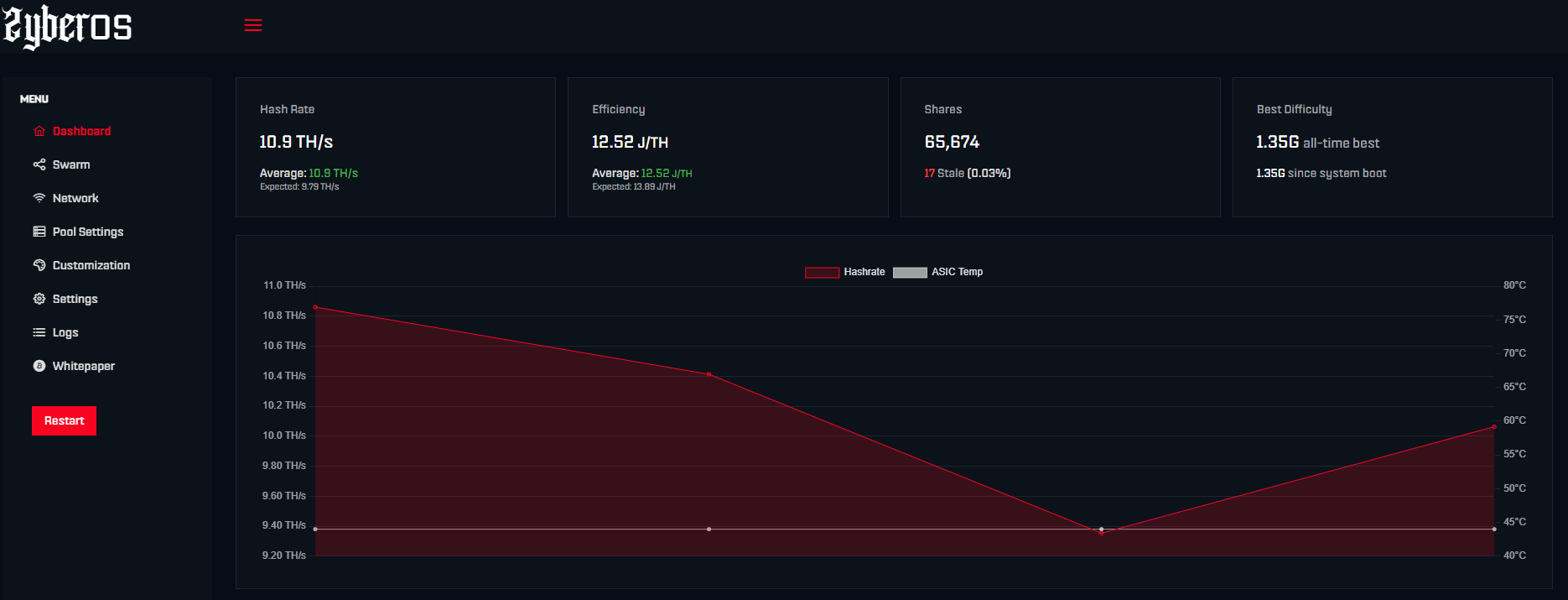
How to get your feedback "noticed"? Don't just say "it doesn't work well"; say "under what circumstances, what happened, and what I expected." For example: "At an ambient temperature of 28°C, after running in Overclocking Mode for 2 hours, the third hash board temperature reached 92°C triggering throttling, but the fan speed was still only 75%. I suggest that the fan curve should be more aggressive when the temperature exceeds 85°C." This feedback includes context, data, problem, and suggestion, which is a treasure for engineers.
- Submission Path: Submit logs and descriptions directly via the web interface "System Settings -> Feedback."
- Tracking Channels: On different platforms like TinyChipHub email, X platform, Reddit community, etc., there are public sections for btc miner. Just input relevant keywords like zyber miner, zyber 8g, zyber 8s to report issues.
Revealed at the Q1 2024 Miner Online Summit, based on community feedback, a "self-learning" fan curve is being tested to allow the machine to gradually adapt to your specific environment. This is the value of feedback! It means the next version might arrive with your ideas. Remember, all firmware updates comply with CE certification software update security specifications, ensuring the transmission and installation processes are tamper-proof.
➡️ Take Action: If you can't stand a certain feature or have a brilliant idea, don't just complain. Submit a proper feedback report; you might become one of the "product managers" shaping the next generation of miner experiences.