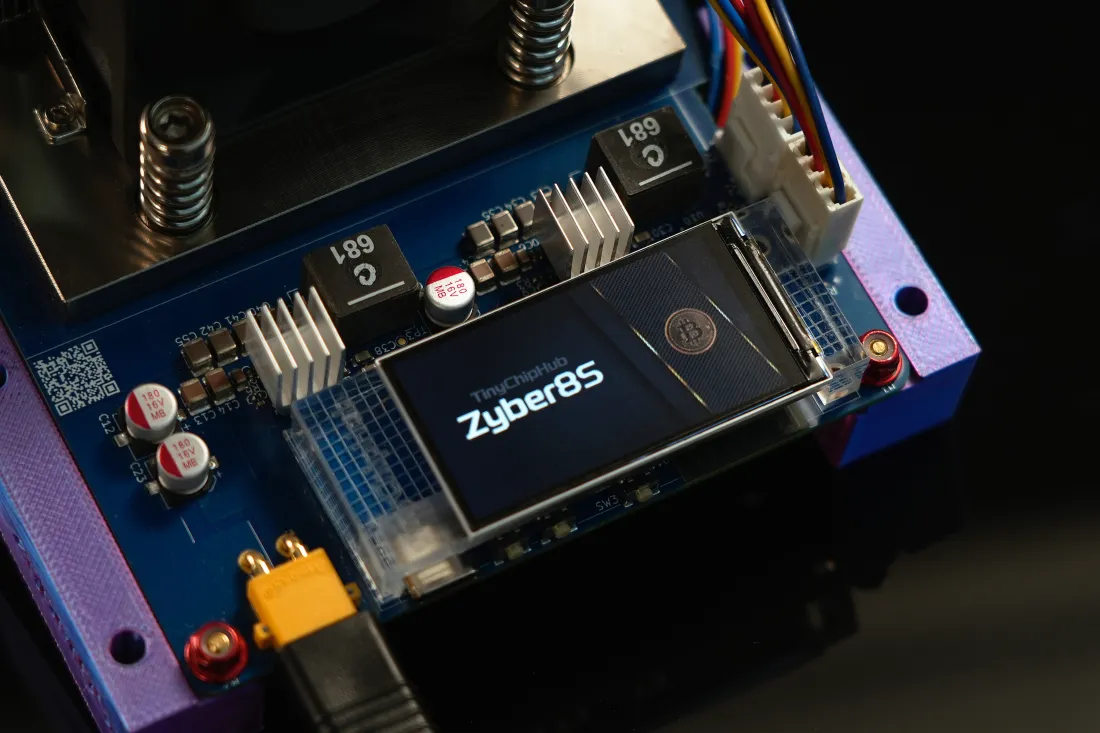
Every USB Bitcoin miner is essentially a "SHA-256 hash collision machine." It frantically tries 4 billion Nonce values, seeking just one digital fingerprint where the block header hash falls below the current target (with at least 76 binary leading zeros). Under the iron curtain of 140±5% T difficulty, this is like skipping stones across the 1000 EH ocean of total network hashpower—but the mathematical rules are cold and fair. It's like playing a multi-billion-fold lottery scratch-off; every single hash is a ticket in the global raffle of Proof of Work!
What is SHA-256 ❓️
SHA-256, short for Secure Hash Algorithm 256-bit, is a member of the SHA-2 family. SHA-2 was designed by the U.S. National Security Agency (NSA) and published by the National Institute of Standards and Technology (NIST) as a series of cryptographic hash functions.SHA-256 takes an input (or "message") and returns a fixed-length byte string, typically a 256-bit "digest."In essence, SHA-256 is a digital fingerprinting tool for data. It finds primary applications across various domains, from password security and digital signatures to blockchain technology, where it forms the foundation of Bitcoin's Proof-of-Work system.
🔥Core Characteristics
- Deterministic:The same input always yields the same output—input unchanged, output forever identical.
- Avalanche Effect:Changing a single character results in a drastically different output.
- Preimage Resistance:It is computationally infeasible to reconstruct the original input from the hash output.
- Collision Resistance: It is infeasible to find two different inputs that produce the same hash output.
- Fixed Length:Regardless of input size or length, the output is always 256 bits.
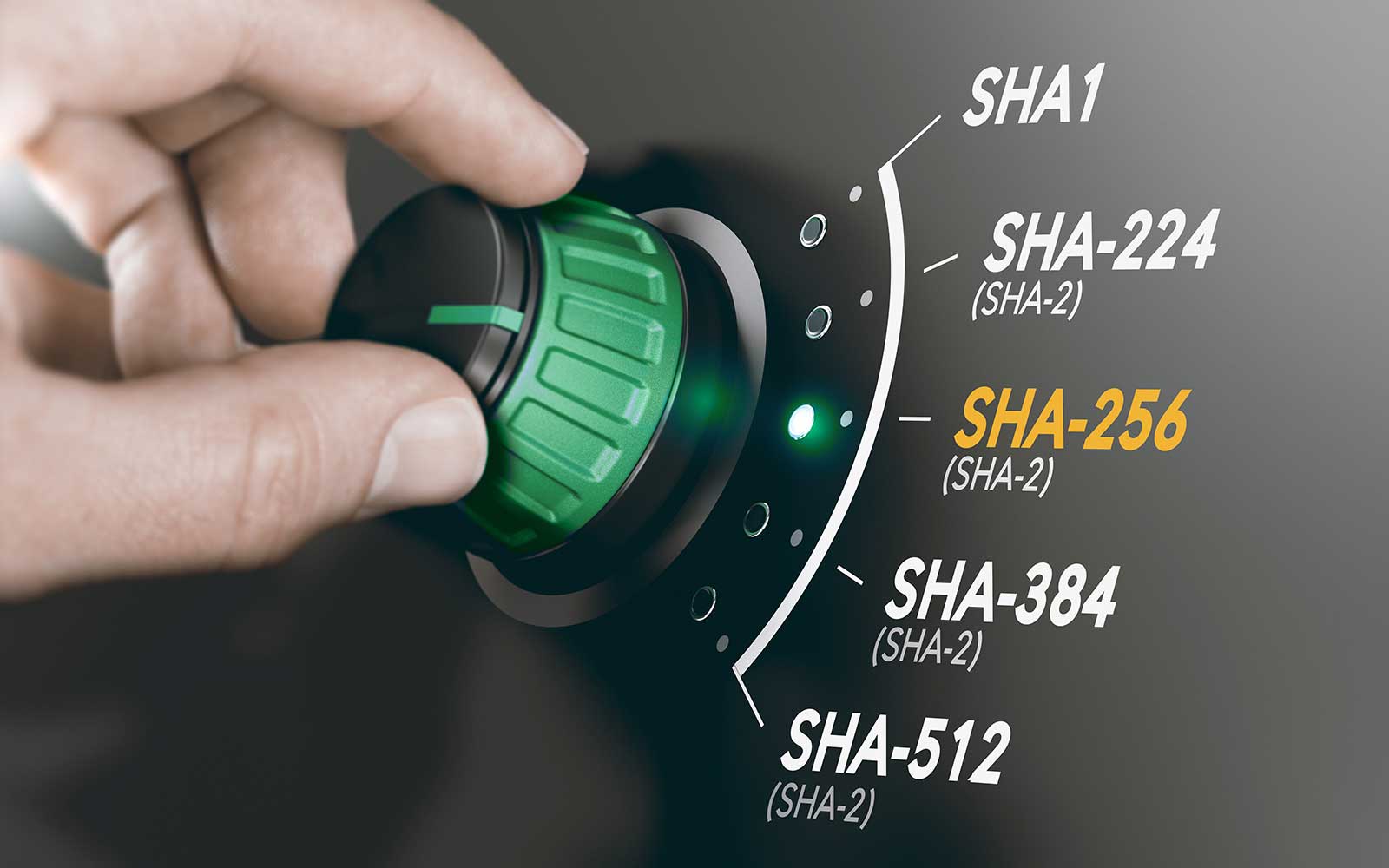
Why SHA-256? Breaking it down from "Why-What-How," its collision resistance has been battle-tested by the cryptography community for over a decade. As noted in the features above, no practical attack capable of forging hashes exists to this day. When the NSA released it in 2001, it was designated as a secure hash standard.
Take USB miners as an example: They are essentially thousands of parallel hash engines within an ASIC chip, fetching jobs from a mining pool using the Stratum V2 protocol. When you plug in a USB miner, the system begins performing double SHA-256 on the block header (Version + Previous Block Hash + Merkle Root + Time + Difficulty + Nonce). The GekkoScience Compac A2 V2 utilizes dual BM1370 chips, delivering 600 GH/s stock, overclockable to 1 TH/s, with power consumption under 20 watts. Meanwhile, those $15 NerdMiner clones on Amazon use an ESP32-S3 general-purpose microcontroller without any ASIC—efficiency roughly equivalent to solving calculus with an abacus.
Quick Primer: What is a USB Bitcoin Miner?
A USB Bitcoin miner is a compact, low-power cryptocurrency mining device that connects to a computer or USB power supply and performs SHA-256 Proof-of-Work calculations on the Bitcoin network.Once plugged in and configured, these devices submit hashes to the network in an attempt to solve blocks, following the exact same process as industrial-scale mining farms—just at a much faster relative pace. USB miners have gained popularity because they require no specialized setup, dedicated power infrastructure, or deep technical knowledge; just plug in a USB cable. This makes them an accessible entry point into Bitcoin mining.
Finding Target? "Zero Point" of Hash
"Mining," mathematically speaking, is the search for a Nonce that produces a hash value less than the Target. This target is determined by the network difficulty. At a difficulty of 144.4T, the target value approximates 0x0000000000000000011b9e…, meaning the hash must begin with a long string of zeros. We in the mining community jokingly call this the "Hash Zero Club." The difficulty adjustment on February 19, 2026, which jumped 14.73%, effectively whacked the "winning probability" for all USB miners once again. Note, however, that the target is not a fixed number of leading zeros, but rather the requirement that the hash value numerically be less than an extremely small 256-bit number. Data from CloverPool indicates the current target is on the order of 2224.
Target Calculation Workflow
- Assemble block header data.
- Insert Nonce (random number).
- Compute double SHA-256 hash.
- Compare against the target difficulty threshold.
- Fail? Nonce +1, repeat.
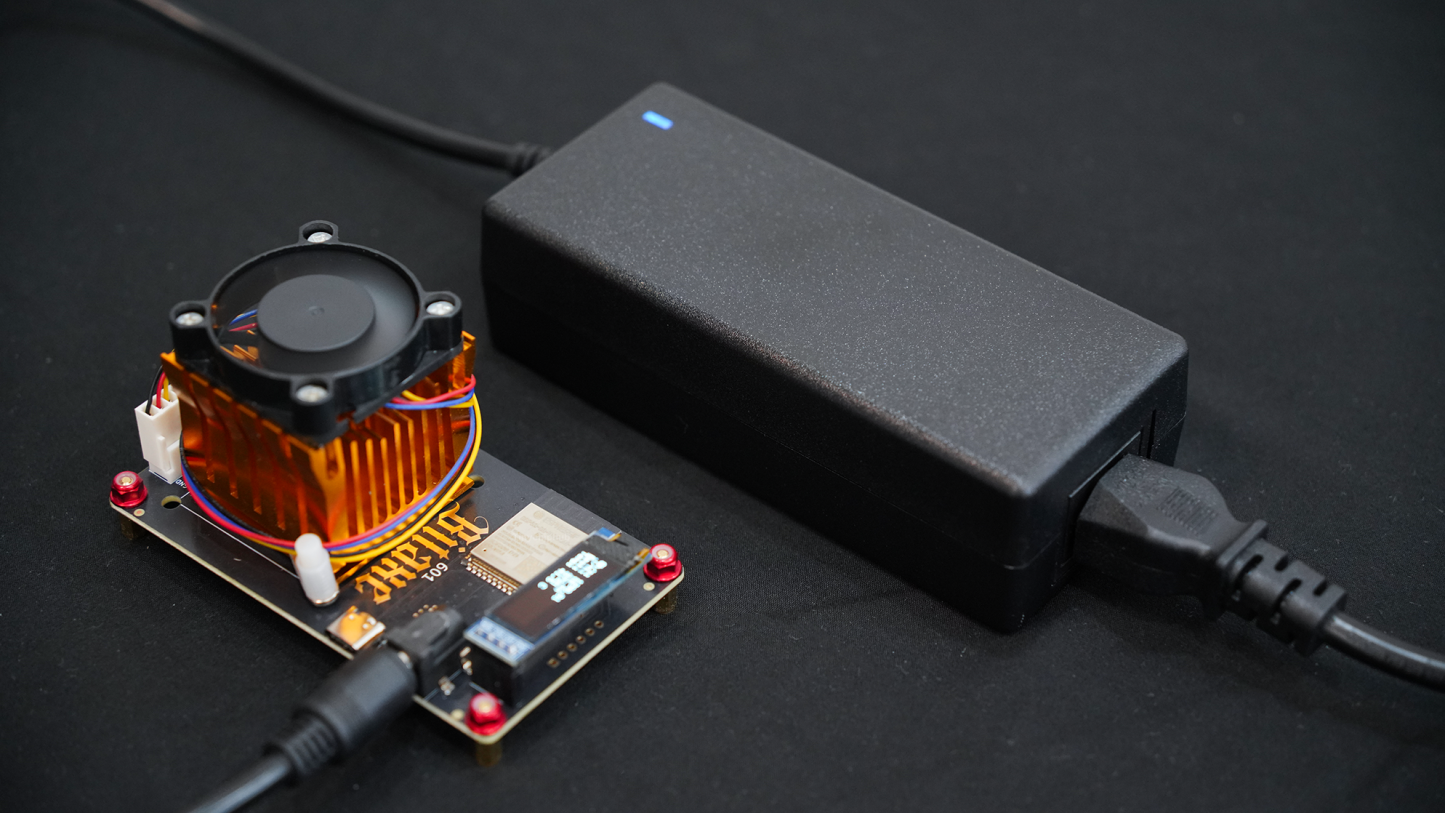
Suppose you have a GekkoScience Compac A2 V2 (Dual BM1370 @ 600 GH/s). It calculates 600 billion hashes per second. However, the total network hashrate is 1000 EH, equivalent to one million 1 TH/s machines roaring simultaneously. Each attempt you make has a probability of hitting the target ≈ your hashrate / total network hashrate ≈ 0.0000000006. Don't despair just yet; this precisely illustrates the elegant design of PoW: Extremely low probability yet absolute fairness—any hashrate has the chance to participate in the "lottery." For comparison, the Bitaxe Gamma 602 (1.2 TH/s) has a mathematical expectation of ~95,129 years to find a block, while an ESP32 NerdMiner (1 MH/s) faces 114 million years. The difference lies purely in the ability to approach the "zero point."
- ➡️ BM1370 Chip (15 J/TH): Bitaxe Gamma, Compac A2 uses this. Released in 2024, efficiency improved 22% over previous generation BM1366.
- ➡️ BM1366 (S19 XP Era): Used in Disruptor USB, 300 GH/s @ 8W, two generations behind BM1370.
- ➡️ ESP32-S3 "Non-ASIC": 78 KH/s ~ 1 MH/s, 1W power draw. Suitable only for educational demonstrations; do not expect it to hit the target zero.
- ➡️ Dynamic Target Adjustment: Recalibrated every 2016 blocks (approx. two weeks) based on block time to maintain a 10-minute average interval.
🔐PoW: BTC Security
Proof of Work (PoW) exists not for individuals to earn coins, but to secure the ledger. Whoever computes the answer first wins the right to record transactions and collect the block reward. This mechanism makes tampering with historical records physically impossible. Therefore, Proof of Work is Bitcoin's ultimate security barrier, and USB miners represent a single brick within this distributed fortress.
Many believe PoW is merely "wasted electricity," but its core function is to construct an immutable ledger using physical computational power. Want to rewrite a past transaction? You would have to redo all SHA-256 work from that block onward and surpass the accumulated hashrate of the main chain. According to the Cambridge Centre for Alternative Finance 2026 report, the Bitcoin network consumes approximately 140 TWh annually, yet over 58% comes from renewable sources. The few watts consumed by a USB miner are practically negligible.
Assume you wanted to alter a transaction in block 500. You would need to recompute the SHA-256 hashes for every block from 500 up to the current height, and you must do so faster than the combined total of every other honest miner on the network. The cost of such hashrate would run into tens of billions of dollars, not to mention securing the electricity, space, and cooling. For home miners, the USB device in hand acts as a capillary in this vast security net.
MIT's Digital Currency Initiative has noted that PoW remains the only Byzantine Fault Tolerant solution battle-tested in real-world conditions. Running these humming bitcoin solo miner units in the TinyChipHub lab effectively provides redundant backup for node networks across North America and Western Europe. While a single unit is insignificant, when thousands of USB miners hum away next to routers in different homes, they constitute a counterbalance to the centralizing power of large mining pools. This is not just technology; it is a vote of technological citizenship.
⚠️ Core Insight: PoW security is directly proportional to the total network hashrate. More devices equate to a higher cost for a 51% attack.
Hashrate => Ultimate Guarantee
Hashrate equates to a sense of security. For USB miner enthusiasts, watching those fluctuating numbers is the ultimate testament to hardware sovereignty. It's not a guarantee of profit, but proof of participation in humanity's largest computational experiment. Hashrate is the miner's sole voice. Whether you run a USB stick or an immersion-cooled farm, the network only recognizes numbers. Hashrate is the vote; higher values signify greater contribution to network consensus and a better chance of being the first to cross the finish line.
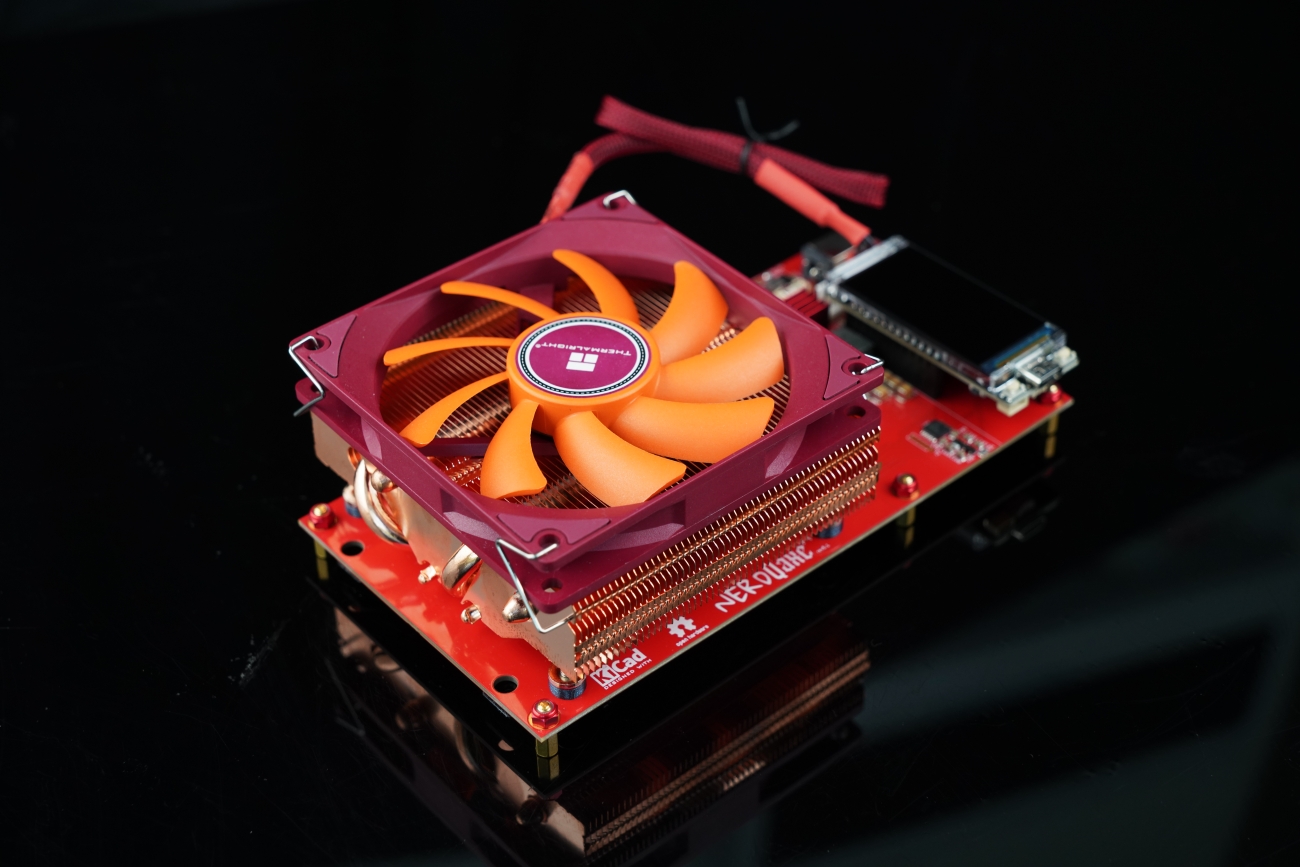
I specifically included the GekkoScience Compac A2 V2 because it is one of the few recent USB miners featuring dual BM1370 chips, with a total cost around $140. In comparison, the Bitaxe Gamma offers double the hashrate at a lower total cost, includes built-in Wi-Fi and the AxeOS web backend, and is arguably a better choice. This is the harsh reality of Hash-per-Dollar efficiency. In small-scale mining circles across Texas and California, the Bitaxe Gamma has practically become standard equipment. Meanwhile, Disruptor's offering, based on the two-year-old BM1366 chip, commands $599.99 for a 4x bundle yet delivers total hashrate equal to a single $105 Gamma. No comparison needed; the numbers speak for themselves.
| Model / Chip | Typical Hashrate | Total Cost of Ownership (w/ Accessories) | Hash Efficiency (GH/$) | Chip Generation |
|---|---|---|---|---|
| ESP32 NerdMiner (Non-ASIC) | 78 KH/s ~ 1 MH/s | $25 ~ $60 | ≈ 0.000016 GH/$ | ❌ Non-ASIC |
| Block Erupter (Legacy ASIC) | 336 MH/s (0.000336 TH/s) | $99~$110 | ≈ 0.003 GH/$ | 2014 Legacy |
| GekkoScience Compac A2 V2 (Dual BM1370) | 600 GH/s (OC to 1 TH/s) | $140 | ≈ 4.28 GH/$ (Stock) | Latest (15 J/TH) |
| Disruptor USB (BM1366) | 300 GH/s | $149.99 | ≈ 2.00 GH/$ | 2022 (S19XP) |
| Bitaxe Gamma (BM1370) | 1.2 TH/s (1200 GH/s) | $98~$125 | ≈ 9.6 ~ 12.2 GH/$ | Latest (15 J/TH) |
| NerdQaxe++ Remastered (Quad BM1370) | 5.2 TH/s (OC to 6+ TH/s) | $359+ | ≈ 16.7 GH/$ | 15.83 J/TH |
The security of the Bitcoin protocol is directly proportional to the total honest network hashrate. When you operate a USB ASIC miner—even at just a few hundred GH/s—you are actively contributing to the network's decentralization. Especially in North America and Western Europe, home miners using open-source firmware (like AxeOS) can prevent malicious firmware backdoors. The Bitaxe Miner project is maintained by the OSMU community, with all code auditable on GitHub and verified via RISC-V Secure Boot. This level of transparency forms an invisible line of defense against 51% attacks!