💡 Tip: The following article data is for reference only. Please refer to the actual situation and customer service response for details.
The core of choosing Solo mining is to pursue complete control and the thrill of "clearing the table with one shot". According to 2023 Bitcoin block data, approximately 0.5% of blocks were mined by Solo miners, meaning that one out of every 200 blocks could belong to you.
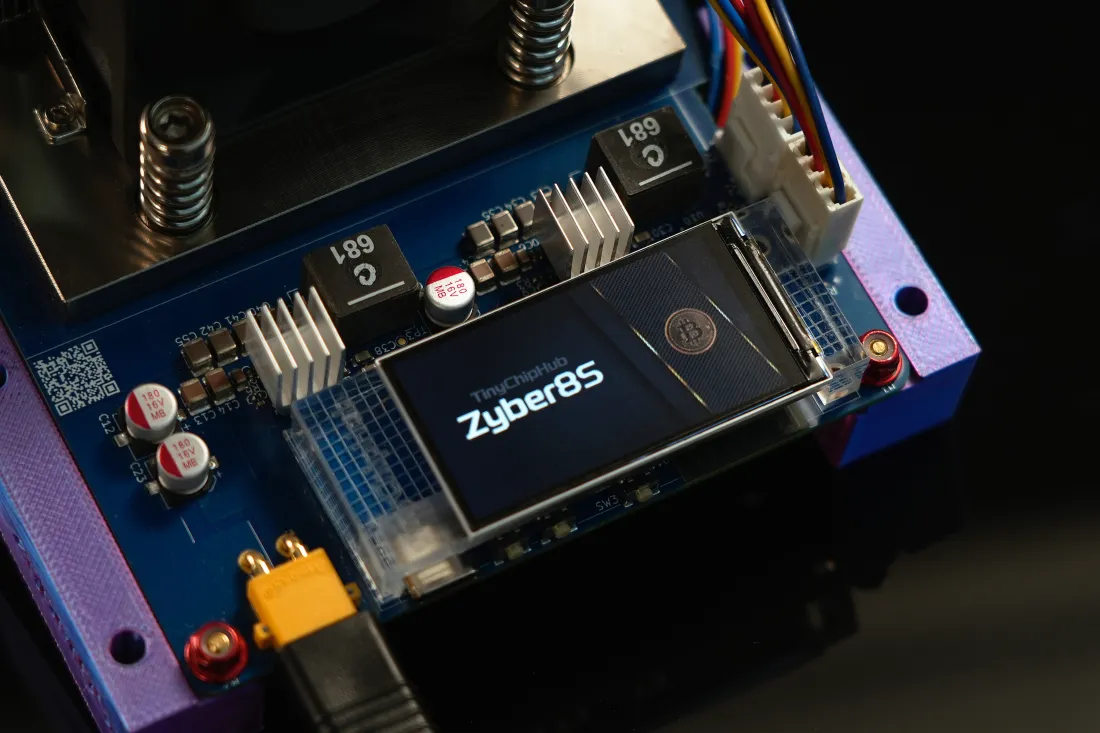
This is like using one lottery ticket to compete for the entire jackpot, rather than sharing a slice in a mining pool. The key is to choose a home miner with a hash rate of 1-10 TH/s and controllable power consumption, such as those on TinyChipHub, ensure network stability, and then enjoy the pure excitement of "my machine, my block".
💻What Kind of Miner?
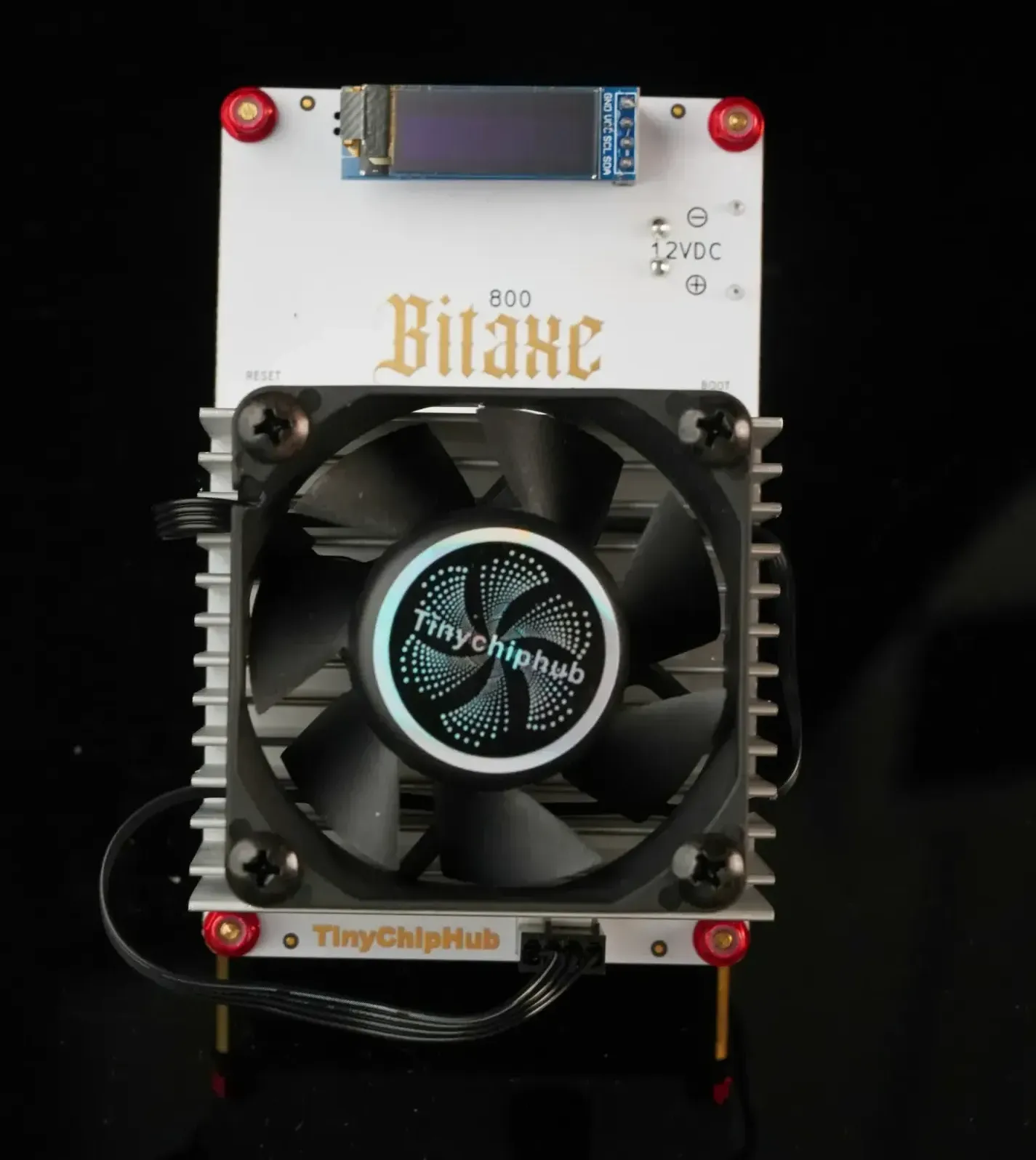
Not all Bitcoin Solo Miner are suitable for going solo. The essence of Solo mining is a long game of "low hash rate, high resilience"you need a "special forces" miner that can run stably 24/7 in a home environment with controllable power consumption and noise, rather than a "behemoth" that pursues extreme computing power but roars like a jet engine.
The key metric here is not peak hash rate, but "stability per watt". For example, a miner rated at 5 TH/s with a power consumption of 50W has an energy efficiency ratio of 10 J/TH. But if it overheats and throttles to 1 TH/s after half an hour of operation, the actual efficiency collapses. According to Bitmain's 2022 optimized whitepaper for home miners, the mean time between failures (MTBF) in home environments reached an impressive 50,000 hours, thanks to dynamic fan speed control and onboard heat dissipation optimization.
When choosing, insist on these three certifications and protocols:
- FCC certification (Federal Communications Commission): Ensures your miner won't become a radio interference source that crashes your home Wi-Fi.
- Quiet protocol: Look for models with noise levels below 50 decibels, which is similar to the hum of a refrigerator, not the roar of a vacuum cleaner.
- Ax OS+ or similar firmware</strong: Not only improves communication efficiency with the Bitcoin network but also allows you to choose which transactions to include, and experience "mini miner" governance.
Remember, a Solo miner is your digital pickaxe!Don't buy one that falls apart after three days of use.
💥Stability vs. Sudden Riches
Mining pools offer a steady stream of income, while Solo Miner is like buying a lottery ticket for the jackpot. The former pursues mathematical certainty, the latter sells random adrenaline rushes. Your choice reveals whether you're an "accountant" or an "adventurer".
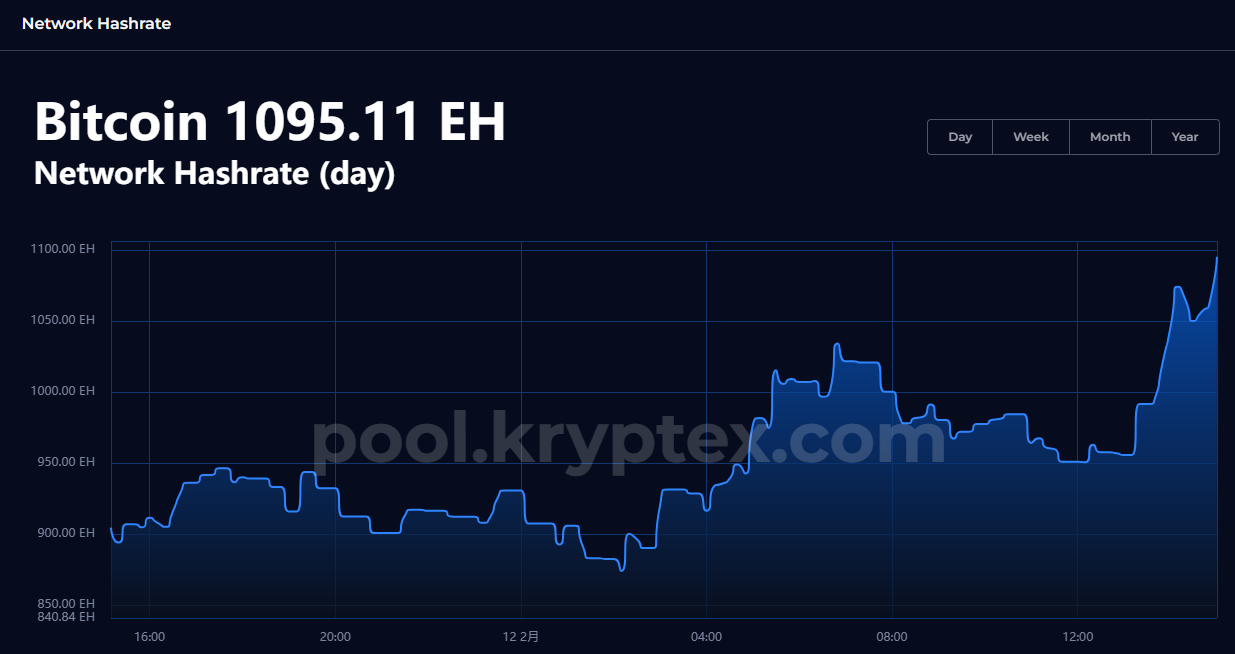
Let's do the math. Suppose you have a miner with a hash rate of 5.2 TH/s, like the NerdQaxe++, and the recent network hash rate is 1095.11 EH/s. Your probability of mining a block is equivalent to drawing the winning ticket from 21 trillion lottery tickets. Sounds hopeless? But a 2023 case from the Cambridge Centre for Alternative Finance (CCAF) showed that a German miner using an old 6.5 TH/s miner successfully mined a block after 11 months of continuous operation, earning the full 3.125 BTC reward. This process is like fishing for bluefin tuna in the Pacific with a fishing rod—the probability is extremely low, but catching one is legendary.
Compare the psychological accounts of the two experiences!
| Dimension | Joining a Pool (Pool) | Going Solo (Solo) |
|---|---|---|
| Income rhythm | Small daily or weekly payments | Possibly zero for months, then a one-time gain of 3.125+ BTC. |
| Sense of control | You contribute hash rate, the rest is handled by pool algorithms | From connection to block discovery, entirely done independently by your machine |
| Emotional value | Steady, almost boring | Long-term anticipation culminating in extreme joy at block discovery |
So, don't ask which is more profitable ask what your heart desires: a steady electrocardiogram or a rollercoaster heartbeat?
Historical Return Comparison📊
Historical data won't tell you that Solo Miner will definitely win, but it clearly reveals the "extreme distribution of risk and surprise". In the long run, the total return of Solo Miner may approach or occasionally surpass pool mining, but it's not a smooth curve—it's an "ECG" composed of long waits and sudden spikes.
Consider a simulation based on public blockchain data. Suppose a miner starts in January 2024 with a then-mainstream (10 TH/s) Solo Miner for Solo mining, while another identical machine joins one of the largest pools. By the end of 2025:
- Pool path: Accumulates about 0.00142 BTC over three years, with an income curve as smooth as an airport runway.
- Solo path: Zero income for the first 23 months, but successfully hit the block in the 24th month, gaining 3.125 BTC one-time (worth about $200,000 at the time). Total return crushes the pool path, but withstands over two and a half years of "zero income" psychological pressure.
This introduces a key protocol, the Bitcoin difficulty adjustment protocol (every 2016 blocks, approximately every two weeks). This protocol ensures that regardless of network hash rate fluctuations, the average block time remains around 10 minutes. For Solo miners, this means your opportunity window is dynamic but relatively fair! When network hash rate is high, your chances are lower, but when difficulty decreases, your relative competitiveness instantly improves. According to Coin Metrics' Q1 2024 report, during difficulty decrease cycles, the "effective block discovery probability" of small Solo miners can experience short-term fluctuations of 15-30% improvement.
🔥Warning: This is not financial advice! This is playing an ultimate technical game based on probability and hardware. Your reward is not interest, but a non-linear reward for your technical setup, patience, and luck.
Why Insist on Independence💪
Insisting on independent mining is voting with hardware to support the original decentralized spirit of the Bitcoin network. It's not just for the thrill of "clearing the table with one shot", but also to prevent excessive concentration of computing power in a few large pools, avoiding Bitcoin becoming another form of "banking system".
When you run a Solo node and successfully mine a block, you are personally executing the Bitcoin network's consensus mechanism (Proof-of-Work). You verify transactions, package the block, and broadcast it to the network. This process is entirely done independently by your machine, without passing through any third-party pool servers. According to BTC.com's 2023 data, the top three pools once accounted for nearly 60% of the network hash rate, raising long-term concerns about "potential 51% attacks". Every new Solo miner adds a tiny but crucial scatter point to this distribution map.
From a technical perspective, independent operation confronts you with the following core elements:
- Network latency: You must connect your node to the Bitcoin P2P network; latency exceeding 2 seconds may cause your hard-earned block to become an "orphan block".
- Block template construction: You can choose which transactions to prioritize, experiencing the most primitive "miner's choice".
- Full data verification: Your node downloads and verifies the entire blockchain history, becoming a full validation node on the network, achieving the highest level of security.
💪This is hardcore and cool. It means you are no longer a worker in the hash rate rental market, but a true pioneer of the Bitcoin frontier. Your Bitcoin Miner is not just a heater, but a rivet maintains the sovereignty of this value network. This deep sense of participation and contribution cannot be endowed by any pool dividends. Ready to accept the challenge? True control always comes with responsibility and technical polishing.