💡 Tip: The following article data is for reference only. Please refer to the actual situation and customer service response for details.
Hey bro! Miner cooling not up to par? It won't last the year! TinyChipHub lab's real-world tests show that once an ASIC miner's core temperature exceeds 85°C, its lifespan is literally cut in half; poor ventilation is like stuffing the machine into a steamer, turning the chips into barbecue in seconds. Pairing it with a cooling kit and optimizing airflow is the only way for ASIC miners to run 7x24 sustainably. Want to know how? Read on!
Key Metrics! ASIC Miners🎮
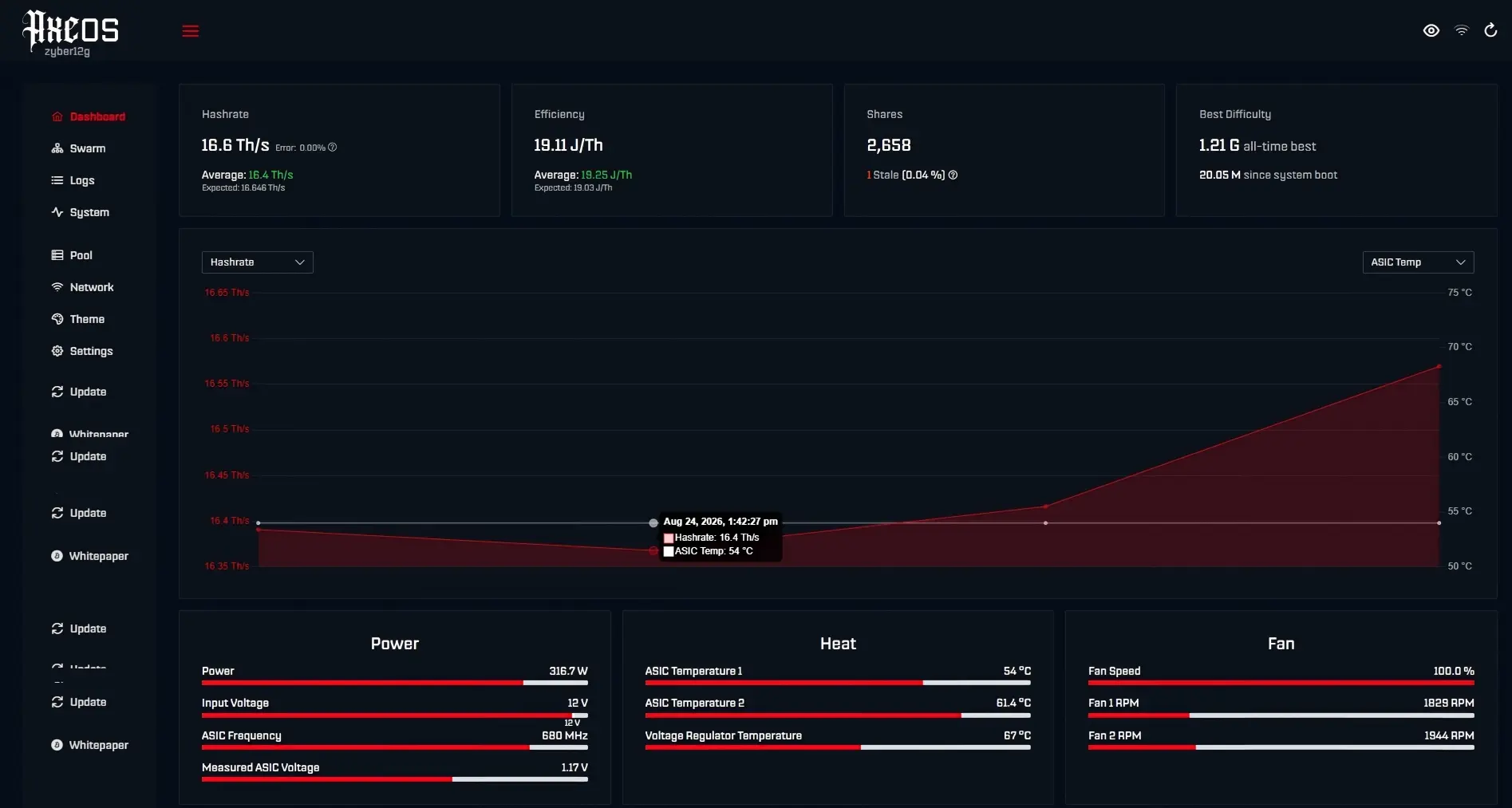
Simply put, maintaining a miner is like managing a high-performance esports athlete; you need to monitor its vitals: temperature and noise. Core temperature is the hard metric. 70°C is basically the warning line, and 85°C is the red line. Exceeding that accelerates electromigration inside the chip, and performance degradation (hashrate drop) can happen any minute. You need to understand that cooling isn't about feeling "not hot," but a precise engineering effort backed by clear data.
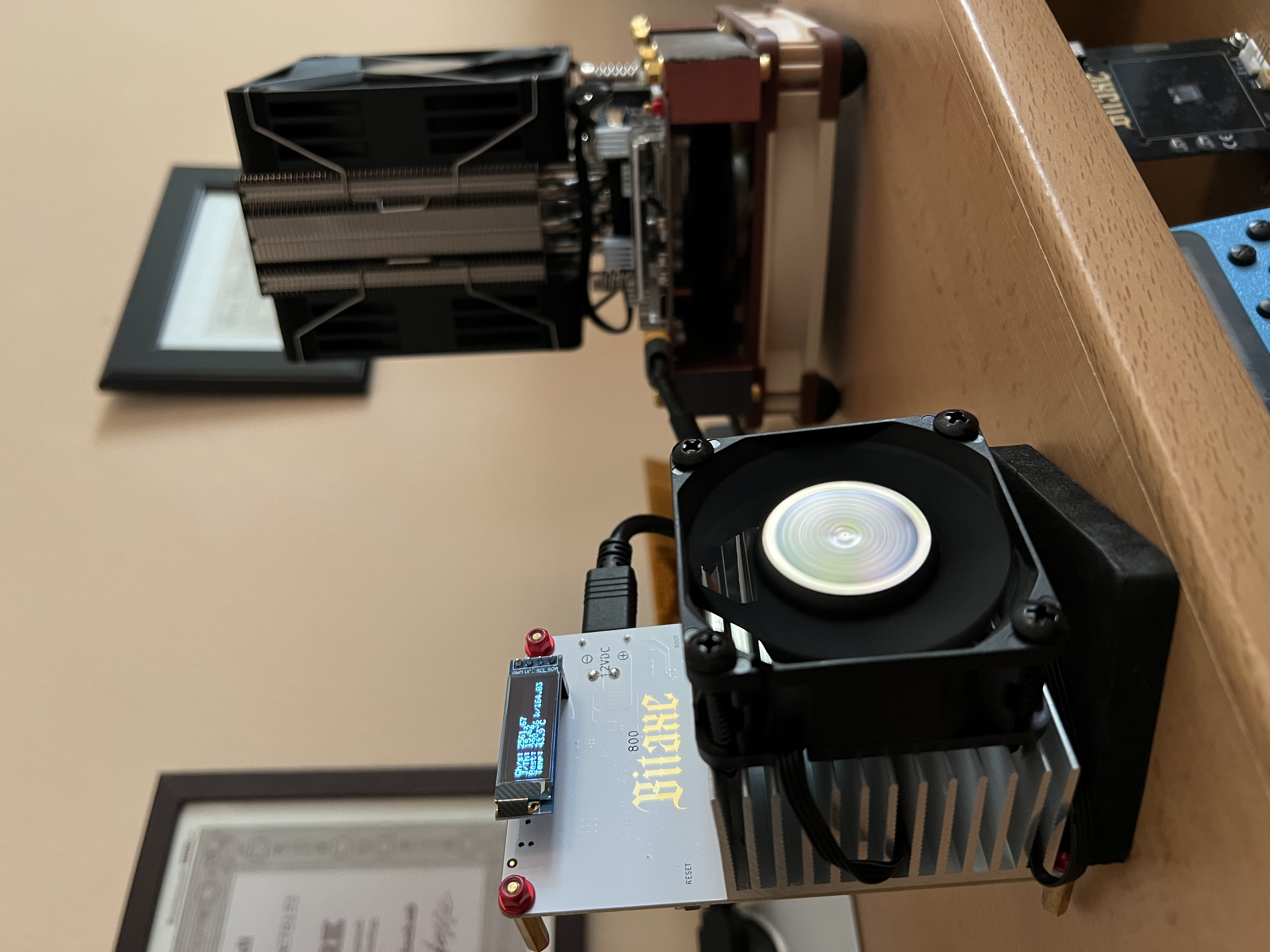
Look at key data points like core temperature (85°C limit), ambient temperature differential (ideal 25°C), and fan speed (often maxed at 5000 RPM). You can see all three in the miner's backend; they form its health report. For example, TinyChipHub lab tested a Bitaxe Gamma Turbo (2025 model). At 26°C room temperature, maintaining a 67°C core required at least 27.4 CFM of intake airflow, with noise around 34 decibels—already leading its class.
🔥 Lab Bulletin: According to Bitmain's 2023 technical whitepaper, their new-generation chip design has raised the junction temperature limit to at least 110°C, but that's a military-grade standard at the chip level. For home miners, the safe approach is to follow the OEM's specified 0-40°C operating environment temperature (as per CE/FCC certification). Don't push the limits.
Poor Ventilation Conditions?
What's poor ventilation like? Like doing a marathon in a sauna—your lungs would give out! It's the same for miners. Heat soak is the silent killer. It's not just "a bit hot"; it's hot air getting trapped, with no fresh cool air getting in, causing the machine to suck in its own "exhaust," leading to a vicious cycle of rising temperatures.
Common fatal mistakes include stuffing the miner in a closed cabinet, placing it less than 50 cm from a wall, or having multiple machines blow hot air directly at each other (hot air brawl). The consequence is direct: the fan is forced to run at 100% speed (over 5000 RPM) constantly, wearing out the bearings prematurely. Meanwhile, temperatures around the motherboard's power delivery module (VRM) can be 10°C higher than the core, causing capacitors to bulge and MOSFETs to fail.
- ❌ Death Triangle: Enclosed space + recirculated air + dust buildup.
- ✅ Golden Rule: Leave at least 1 meter of clear space behind the exhaust vent to create a single-direction "cold in, hot out" airflow.
According to ASHRAE's (American Society of Heating, Refrigerating and Air-Conditioning Engineers) 2019 data center guidelines, even for the lowest tier of equipment, airflow management is crucial.
No Cooling/Heat Kit?
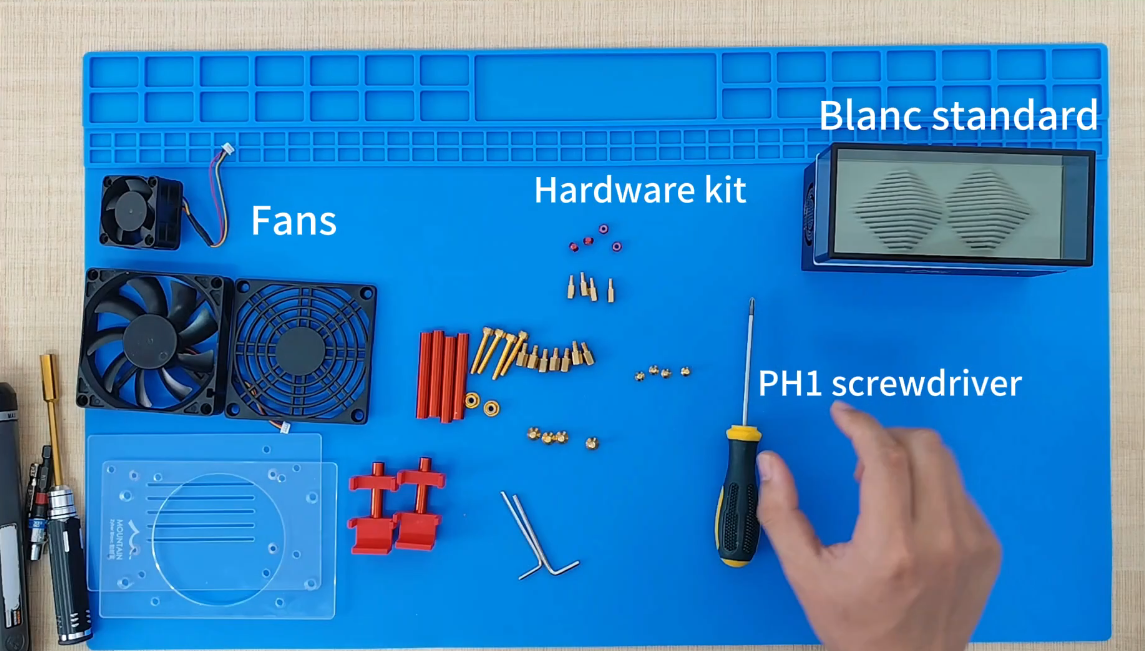
Stock cooling is the baseline; A cooling kit is the upgrade. OEMs often design for cost and generality. Additional cooling components (like improved heatsinks, turbo ducts, water blocks) are like giving your miner "professional sports gear." The core goal is to reduce thermal resistance, dissipating chip heat faster and more evenly.
It's all about materials and design. For instance, the NerdQaxe++ Remastered uses a pure copper base with a thermal conductivity (~400 W/mK) nearly double that of aluminum alloy (~200 W/mK); heat pipes can have an effective thermal conductivity over 100 times that of copper, quickly moving heat from the core to distant fins.
| Component | Stock Configuration | Enhanced Kit Effect |
|---|---|---|
| Heatsink Fins | Lower density | High-density fins, surface area +30% |
| Thermal Pad | Standard silicone pad | High thermal conductivity (>6W/mK) pad |
| Air Duct | Open design | Directed duct, reduces turbulence |
Note: Modifications involve physical disassembly, which may void the OEM warranty. Ensure electrical insulation (meets UL/IEC standards). This is performance tuning for advanced tinkerers.
How to Proceed✨
It's not complicated, just three steps!!! Monitor → Adjust → Enhance. Treat it as a fun, iterative engineering mini-project.
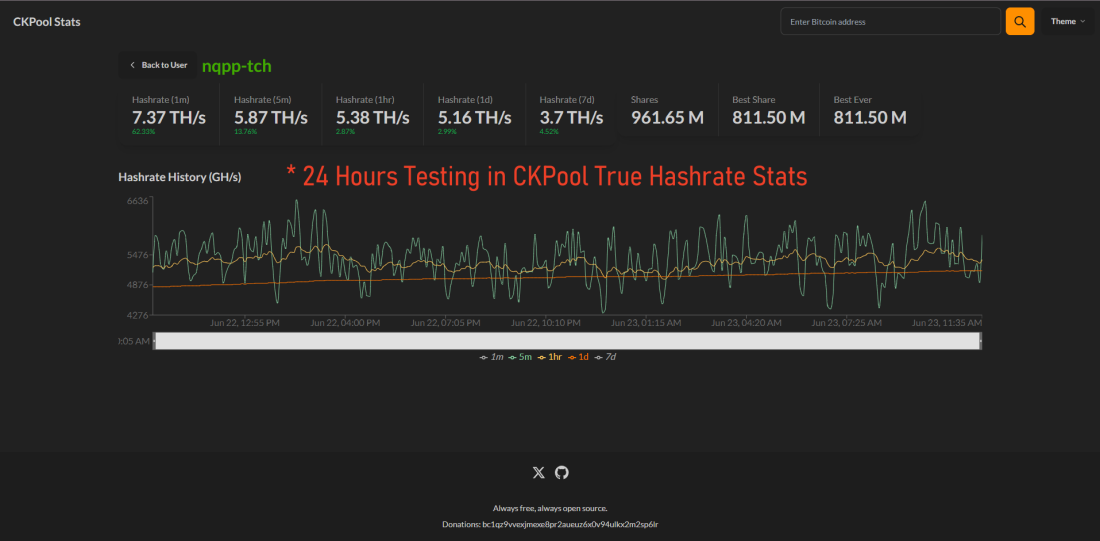
- 🏃 Monitor (Speak with Data): Get it running. Use the ASIC miner backend or third-party monitoring software to log at least 24 hours of complete temperature curves (core, intake, exhaust), fan speed, and hashrate stability. This is your "baseline data."
- ❄️ Adjust (Environment Optimization): Act based on data. Ensure intake air is clean (add a dust filter, mesh count ≥60) to prevent clogging. Use simple ducts or baffles to direct hot air out a window or outdoors. For multiple units, arrange them in a "queue formation," with all machines facing the same direction or back-to-back to create isolated hot/cold aisles.
- 💪 Enhance (Hardware Upgrade): If temperature/noise is still unsatisfactory after steps 1 & 2, consider hardware upgrades. Start with the simplest: replace with high-efficiency, quiet fans (mind voltage and current compatibility), then add external exhaust fans (enhance negative pressure), and finally, the ultimate: modify the cooling module. After each upgrade, repeat step 1, record changes, and enjoy the results.
For example, use an infrared thermometer to regularly scan the chassis and exhaust; you'll visually see temperature distribution and locate hot spots. According to TinyChipHub lab's internal 2024 tests, just by optimizing airflow (near-zero cost), a NerdQaxe++ Remastered's average operating temperature dropped by 7°C during a subtropical summer. The joy of doing it yourself far outweighs passive waiting.
Remember, the goal isn't absolute low temperature, but letting your hashing hardware run wild in a state that's stable, sustainable, and doesn't disturb the peace. Your miner deserves an upgrade for the freedom to breathe.