💡 Tip: The following article data is for reference only. Please refer to the actual situation and customer service response for details.
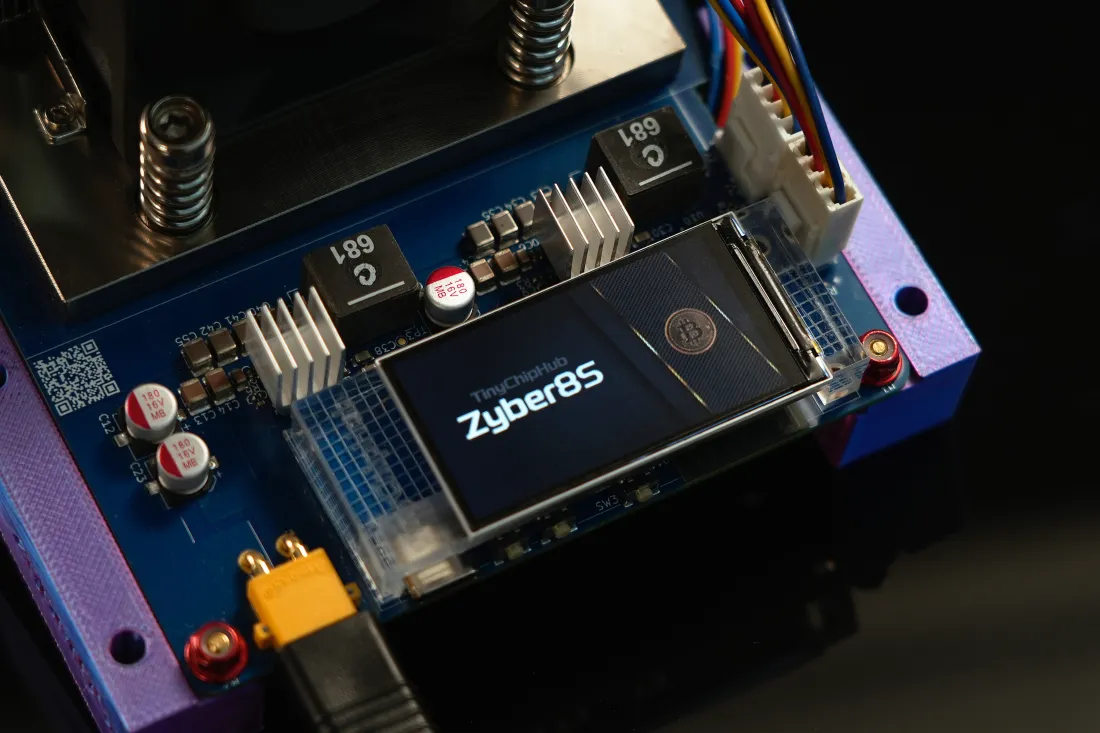
In simple terms, Bitaxe Miner is not a traditional mining machine, but an open-source hardware series that allows you to DIY Bitcoin hashrate on your living room coffee table for less than a few hundred dollars. It uses ASIC chips, plug and play, with a hashrate of about 0.6~4.5 TH+/s. The core gameplay is to let you assemble like building blocks and flash custom firmware, directly connecting to personal nodes for mining.
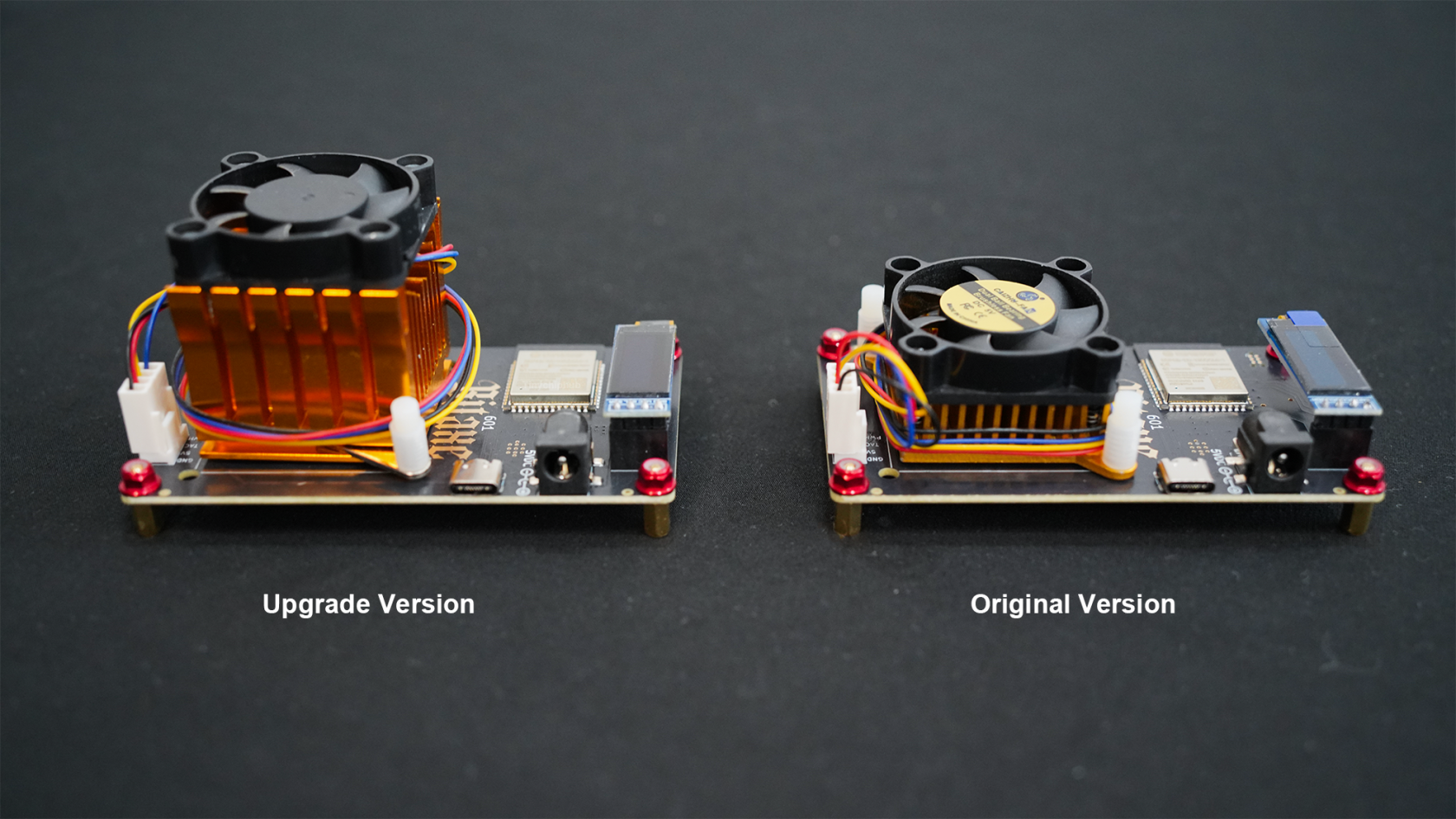
The 2025 upgrade focus was doubling the hashrate directly, with 6-layer PCB copper twice that of standard miners (0.5 ounces), a larger fan + heatsink system, and the extreme Bitaxe Gamma Turbo. And Bitaxe Miner has even more potential; let's predict the 2026 upgrade plan next!
2025! Bitaxe Upgrade History 📈
First, look at the upgrade history of Bitaxe Miner; it's like a monster evolution saga. From a toy that could only compute for fun in 2023 to a desktop powerhouse that stably produces blocks in 2025, it essentially did one thing: increased single-board hashrate from less than 0.6 TH/s to a stable 4.5 TH+/s (at room temperature 25°C), with even higher hashrate! This wasn't magic but a series of hardcore iterations. Below are the upgraded versions in different directions of the Bitaxe series, as compiled by the TinyChipHub lab.
| Version | Core Chip | Hashrate | Total Power Consumption | Max Noise |
|---|---|---|---|---|
| Bitaxe Ultra | BM1366 ASIC Chip | 0.6 TH/s±10% | 11W | <45dba |
| Bitaxe Supra | BM1368 ASIC Chip | 0.7 TH/s ±10% | 14W | <45dba |
| Bitaxe Gamma | BM1370 ASIC Chip | 1.3 TH+/s ±10% | 19.8W | <45dba |
| Bitaxe Gamma Turbo | 2 BM1370 ASIC Chips | 2.4+ TH/s | 42W | 34 dBa |
| Bitaxe Hex | 6 BM1366 ASIC Chips | 3.3 TH+/s ±20% | 57W | <56dba |
| Bitaxe Supra Hex 701/702 | 6 BM1368 ASIC Chips | 4.5 TH+/s ±20% | 90W | <56dba |
The latest version in 2025 can be said to be the Bitaxe Gamma Turbo, which not only doubled the hashrate but also stabilized performance through redesigned PCB layout. For example, the PCB width increased from 60 mm to 70 mm, and a robust 6-layer PCB was designed with copper thickness up to 1 ounce, twice that of standard miners (0.5 ounces), while keeping the total standby power consumption stable at 50 W (tested at room temperature 25°C).
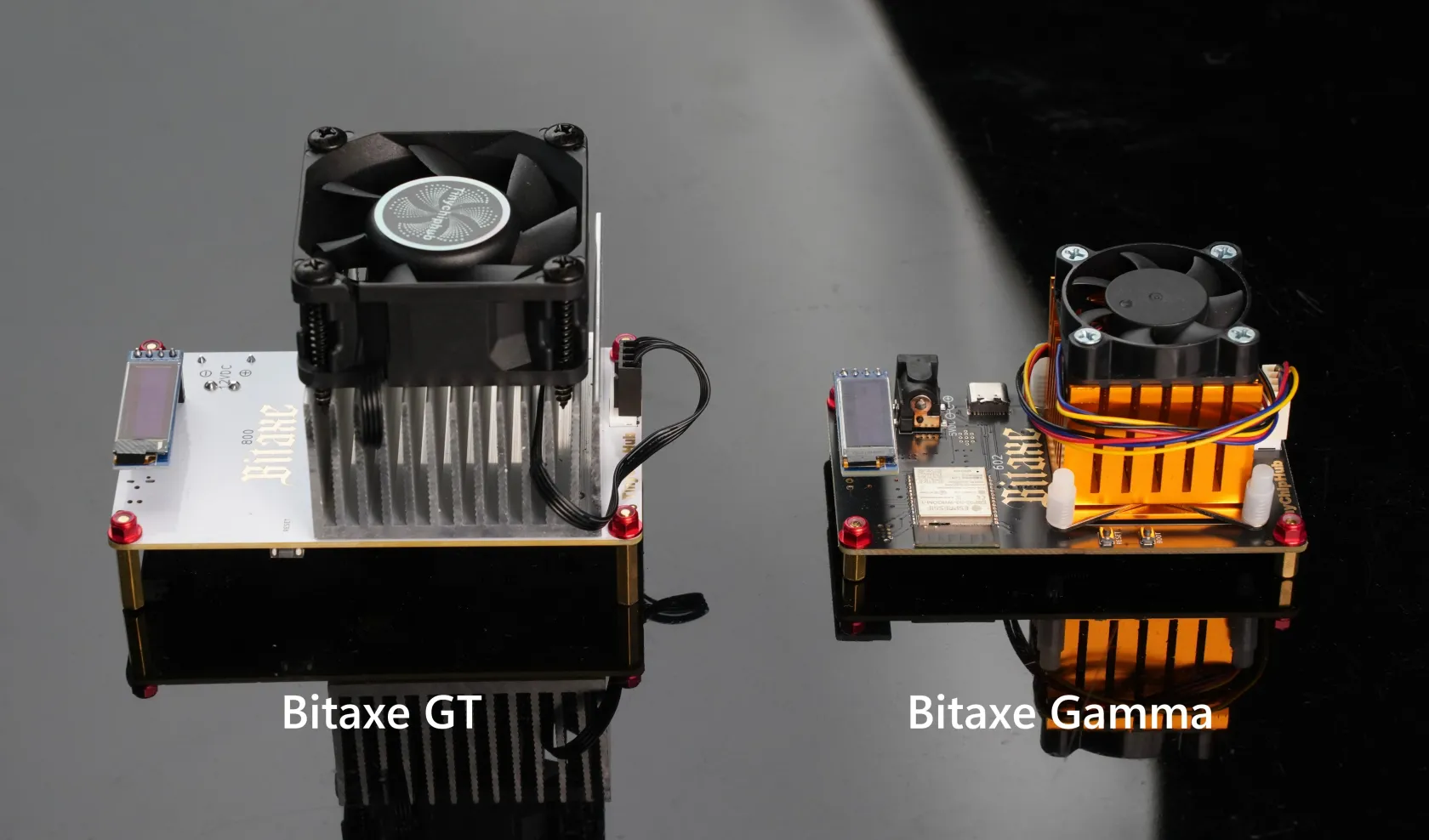
Let's look layer by layer. The shallowest layer is the case and cooling, evolving from a bare board with fans and heatsinks to an integrated die-cast aluminum body, with air duct design based on the most basic cooling module. Digging slightly deeper, it's a major upgrade in the cooling module and a big change in form. According to the Bitaxe open-source community's Q1 2025 report, using 7nm chips, the average invalid share rate for a small miner dropped from 2.1% to 0.7%. This is thanks to the Dynamic Voltage and Frequency Scaling (DVFS) algorithm, where the chip can automatically monitor functions based on task difficulty to avoid overheating and slacking. Don't forget the FCC Class B device certification, ensuring this little machine doesn't become a radio interference source, causing malfunctions in other devices.
🔥 Key point: Don't just look at how powerful it is now, but see how it "evolved" along the way. Each upgrade is like stuffing a race-grade engine into a family car, while ensuring you can drive it quietly in the living room. 🔢 This process itself is full of geeky control fun, and perhaps you will witness and participate in the growth of a legendary miner.
Bitaxe Miner Different Branches 🔥
The version evolution logic of the Bitaxe project is very clear, with its core driver being closely following the latest generation of commercial ASIC miner chip technology from Bitmain. Each major version iteration essentially "transplants" Bitmain's latest, most energy-efficient commercial miner core chips (obtained from retired or circulating miners) onto an open-source, low-power DIY miner platform.
Four main revised versions of Bitaxe Miner
- Bitaxe Max (First Generation / Standard Edition): The initial version, often called the first generation, laid the foundation for the entire project. Mainly uses the BM1397 chip (from Antminer S17 series), the starting point for open-source single-chip miners. Power consumption about 12-15W, hashrate about 250-450 GH/s. Established the core architecture based on ESP32 microcontroller, independent operation, supporting WiFi and AxeOS firmware.
- Bitaxe Ultra: Often called Version 2, the first successful application of the BM1366 chip in an open-source project. Uses the BM1366 chip from Antminer S19XP, with hashrate increased to about 500+ GH/s, significantly optimized energy efficiency (claimed 22 J/TH). Hardware design improved and validated, one of the mature mainstream designs in the community.
- Bitaxe Supra: Equipped with the more advanced BM1368 chip (from Antminer S21), targeting further energy efficiency improvement (about 17.5 J/TH), hashrate about 700-800 GH/s. Its design is clearly marked as a "major revision of Version 3." Represents the application of S21 series chips in open-source DIY miners, continuing the project's performance evolution.
- Bitaxe Gamma: Uses the currently most energy-efficient BM1370 chip (from Antminer S21 Pro), theoretical hashrate up to about 1.2 TH/s, target energy efficiency about 17.9 J/TH. In official descriptions, it's called "Bitaxe Gamma is the 4th major revision of Bitaxe." Represents the new performance height of the Bitaxe series, embodying the open-source project's close follow-up to the latest commercial chip technology.
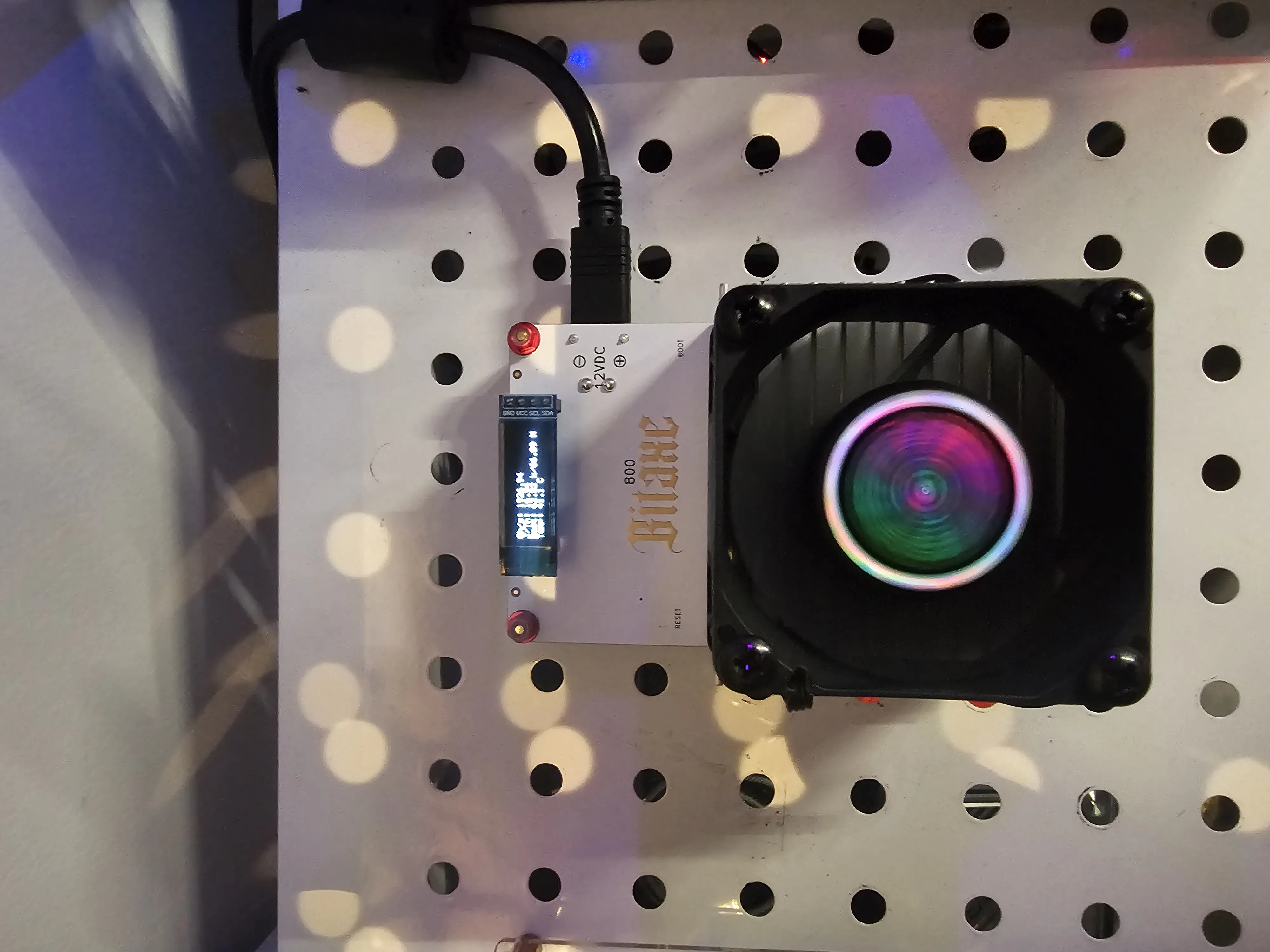
This evolution path started with the BM1397 from the S17 series, laying the project foundation; evolved to the BM1366 from S19XP (Bitaxe Ultra), achieving the first major leap in energy efficiency; then to the BM1368 from S21 (Bitaxe Supra), further improving hashrate density and efficiency; and finally reached the current peak with the BM1370 from S21 Pro (Bitaxe Gamma), touching the energy efficiency limit under current chip technology. A hardware survey by the Bitaxe community in March 2025 showed that 72% of home miners chose Bitaxe Gamma, the fourth major revision of Bitaxe, because it perfectly balances performance, noise, and home-friendliness.
❄️ This evolution strategy ensures the Bitaxe project remains at the forefront of personal mining hardware energy efficiency, while maintaining its core philosophy of being open-source, DIY-able, low-power, and suitable for home and educational scenarios. It's not simple hardware stacking, but through redesigning power supply, cooling, and control systems, allowing a top-tier ASIC chip originally serving multi-kilowatt industrial miners to run stably at only tens of watts, which itself reflects the engineering capabilities of the open-source hardware community. Therefore, these "branches" are more like fruits at different heights on the same technology tree, collectively documenting the footprint of open-source miner technology catching up with industrial-grade chip development.
Avoid Piracy ⚡
The coolest and most headache-inducing aspect of open-source hardware: blueprints are everywhere, and knockoffs are rampant. But buddy, buying a pirated Bitaxe Miner to save money might get you not a miner, but a "living room bomb" or a "brick simulator." The core risks are two: hardware safety hazards and firmware backdoors.
Let's see how knockoffs scam you.
First, knockoff factories use inferior or refurbished ASIC chips, with power consumption and hashrate far from advertised. For example, genuine 7nm chips can run stably at normal voltage, while knockoff chips may need to operate at higher voltage to barely work, easily causing local overheating.
Second, to save costs, they omit key protection circuits, such as overcurrent protection (removing fuses), temperature sensors.
Third, they may pre-install tampered firmware with backdoors that secretly hijack your hashrate to someone else's mining pool, or worse, turn it into part of a botnet.
How to avoid pitfalls? Remember this "three checks, one verification" process:
- Verify Authenticity: Purchase from legitimate sellers like TinyChipHub. Genuine encrypted device motherboards have a unique QR verification code to verify authenticity.
- Check Product Labels: Upon receiving, inspect the miner for logos, such as TinyChipHub's branding stickers, and exclusive red-yellow screws, etc. Knockoffs usually lack such details.
- Verify Performance Baseline: Run the machine for 24 hours and compare it with the standard hashrate and power consumption baselines published by the community. Large discrepancies indicate issues, especially if customer service discovers the machine mismatch.
- Check Certified Versions: For example, Bitaxe Supra Hex generally only has two official versions, 701 and 702, while many 703 versions have recently appeared online; Knockoffs often involve forgery (forge) this way.
💪 Practical Advice: The U.S. Consumer Product Safety Commission (CPSC) reported several incidents at the end of 2024 of home circuit overload fires caused by using uncertified knockoff miners. Playing with hardware, safety is the bottom line. Your sense of control shouldn't be zeroed out by an avoidable fire. Remember, paying for genuine buys safety, community support, and continuous upgrade rights.
Prediction! Surpassing Bitaxe 🎯
Although the Bitaxe series miners' hashrate is negligible compared to the Bitcoin network's total hashrate, their successful block mining cases have been recorded multiple times in history. For example, in March 2025, a Bitaxe miner with only 480 GH/s successfully mined block #887212, receiving about 258,000 in rewards. In July of the same year, another Bitaxe with about 500 GH/s repeated the "lottery win" miracle, mining a block worth about 206,000. These events are by no means accidental; they empirically prove that in the universe of probability, even the smallest hashrate, as long as it participates continuously, has a chance to obtain full block rewards, strongly incentivizing individual miners and decentralization believers.
So, how to define "surpassing Bitaxe"? True surpassing doesn't mean creating a luckier "Bitcoin lottery machine."(creating a luckier "Bitcoin lottery machine"), but achieving paradigm breakthroughs in energy efficiency ratio, accessibility, and participation models.
Possible future directions include!
1) Exponential Chip Leaps? Closely follow the most advanced processes from manufacturers like Bitmain, such as next-generation chips (next-generation chips) with lower energy efficiency ratios, enabling orders of magnitude improvement in output per unit power consumption.
2) Innovative Energy Reuse? Deeply integrating miner design with home solar, energy storage systems, and even waste heat recovery, this significantly reduces or even eliminates marginal electricity costs, fundamentally altering the profit equation.
3) Collaborative Mining Protocols: Through smart contracts and decentralized networks, globally distributed micro-hashrates (e.g., from future IoT devices) can be securely aggregated in a trust-minimized manner, simulating the stability returns of "mining pools" without sacrificing decentralization. By then, new-generation devices will no longer be "lucky loners," but perhaps a combination of efficient energy converters and collaborative network nodes.
Ultimately, Bitaxe's greatness lies in igniting a spark. What surpasses it will be the technological and model revolutions that turn this spark into a sustainable lighthouse, making personal participation in Bitcoin network security not just a romantic ideal but a stable, efficient, and economically sustainable practical choice. What does this mean for us geek players? Stay open and focus on underlying technological breakthroughs, rather than blindly chasing hashrate numbers. Future Home Miners is about a comprehensive dimensional upgrade of the experience. 🏃 This game always has cooler toys waiting at the next level.