💡 Tip: The following article data is for reference only. Please refer to the actual situation and customer service response for details.
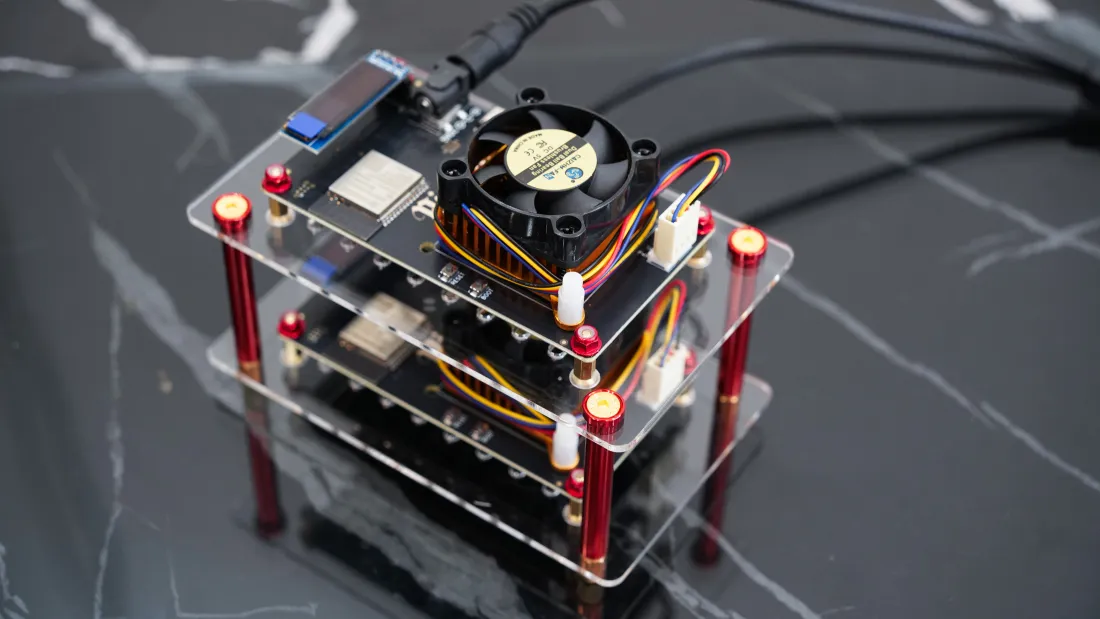
The probability of a Bitaxe Gamma 601 solo mining a Bitcoin block is roughly equivalent to being struck by lightning! It's extremely low, but not zero. The hashrate of this Solo Miner is 1.3 Th+/s ±10%, while the current global network hashrate exceeds 1000 EH/s. It's like using a water pistol (Bitaxe Gamma 601) to fight the entire ocean (the Bitcoin network). But don't close the page just yet! This is precisely the ultimate thrill of solo mining: you're not buying stable output, but a continuously valid "technical lottery ticket" with a chance to win a jackpot of several hundred thousand dollars.
🛠️Device Hashrate Analysis
The figure 1.3 Th+/s ±10% is essentially the "lowest combat power" in the Bitcoin mining world of 2024. However, the technological density and energy efficiency behind it can impress many veteran miners.
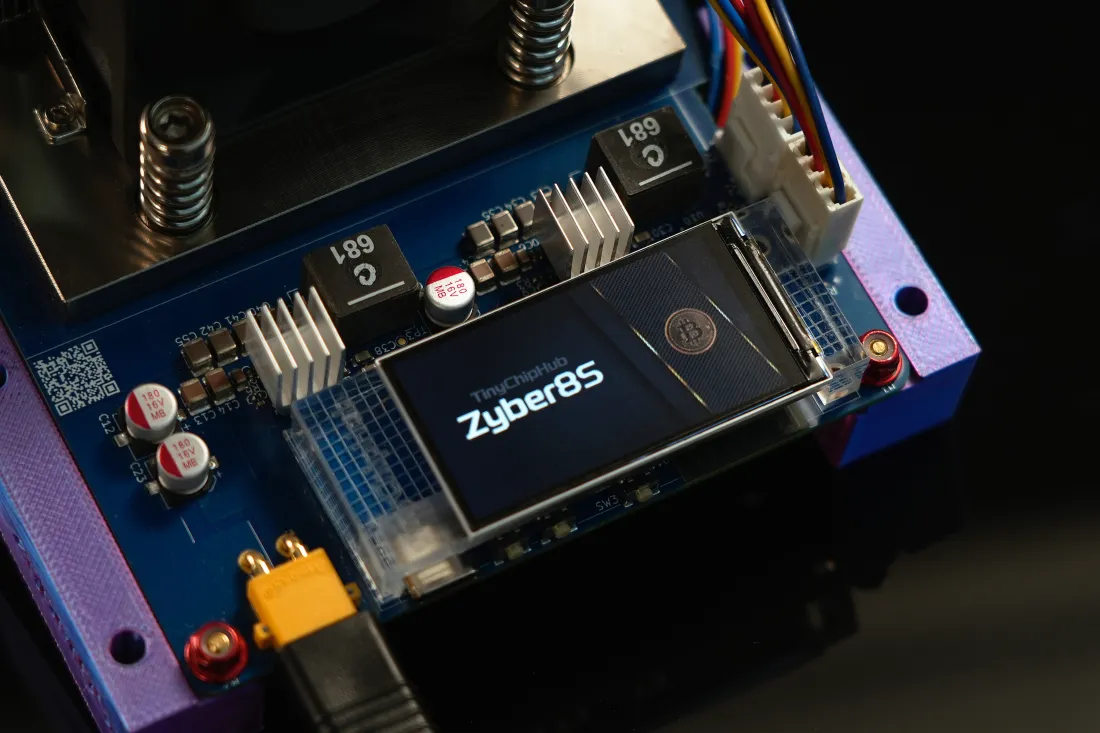
Why is that? We need to break it down. The Bitaxe Gamma 601 uses the BM1370 chip, built on TSMC's 7nm process, with an energy efficiency of about 17.9 J/TH. What level is this? For comparison: the Zyber 8G has an energy efficiency of 18 J/TH, but its hashrate is 10 TH/s, ten times that of the Bitaxe Gamma. So, the "energy efficiency per unit" of the Bitaxe Gamma actually touches the edge of mainstream industry miners, but it compresses total power consumption and size to the extreme. Its peak power consumption is only about 21.7W, and it can run on a common 5V-6A power supply.
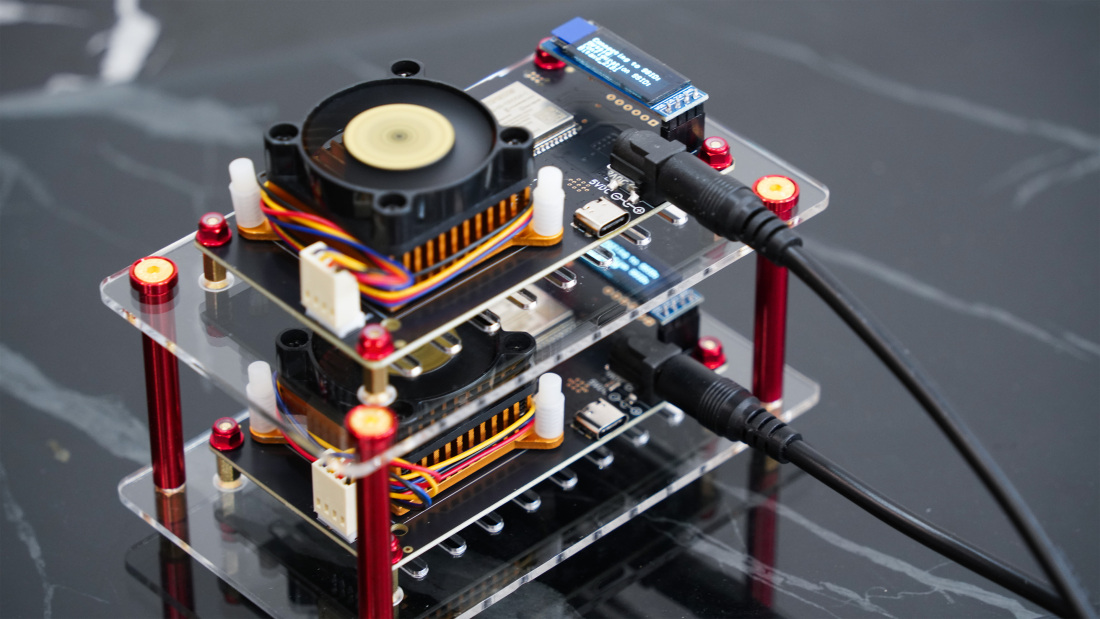
Here, we must insert a key data comparison table for clarity:
| Device Model | Hashrate | Peak Power | Energy Efficiency (J/TH) | Core Chip |
|---|---|---|---|---|
| Bitaxe Gamma 601 | 1.3 Th+/s ±10% | ~21.7W | ~17.9 | BM1370 |
| Bitaxe Gamma Turbo | 2.4+ TH/s | 50 W | 19 | BM1370 |
| Zyber 8G | 10 Th+/s ±10% | 163 W | 18 | BM1370 |
See? From the perspective of chip technology and energy efficiency architecture, the Bitaxe Gamma is not a "toy"; it's a proportionally miniaturized "regular army." Its design goal is not to compete with mining farm giants on output, but to give you an experience of complete control: you can compile firmware, adjust frequencies, and monitor the temperature of each chip yourself, just like tuning a high-performance motorcycle engine. According to the Bitaxe open-source community's test report from March 2024, some enthusiasts can stably push the hashrate above 1.5 TH/s through overclocking and optimized cooling. This is like upgrading your water pistol to a water cannon—still no match for the ocean, but you'll have more fun playing with it yourself.
Network Difficulty Impact📈
Network difficulty is a "ruthless time dilator." It adjusts every 2016 blocks (approximately two weeks) with the sole purpose of ensuring that miners worldwide average one block every 10 minutes. This means that when the global network hashrate skyrockets, your personal probability of winning a block is wildly diluted.
Let's do some brutal math. Assume the current network difficulty is 125.87 T, and your hashrate is 1.3 Th+/s ±10%. Your average expected time (theoretically) to mine a block is: Difficulty * 2^32 / Your Hashrate. Plugging in the numbers, it's approximately (125,870,000,000,000 * 4,294,967,296) / 1,300,000,000,000 ≈ 415,784,949 seconds. Converted to years? Over 13.18 years. Yes, you read that correctly—"years."
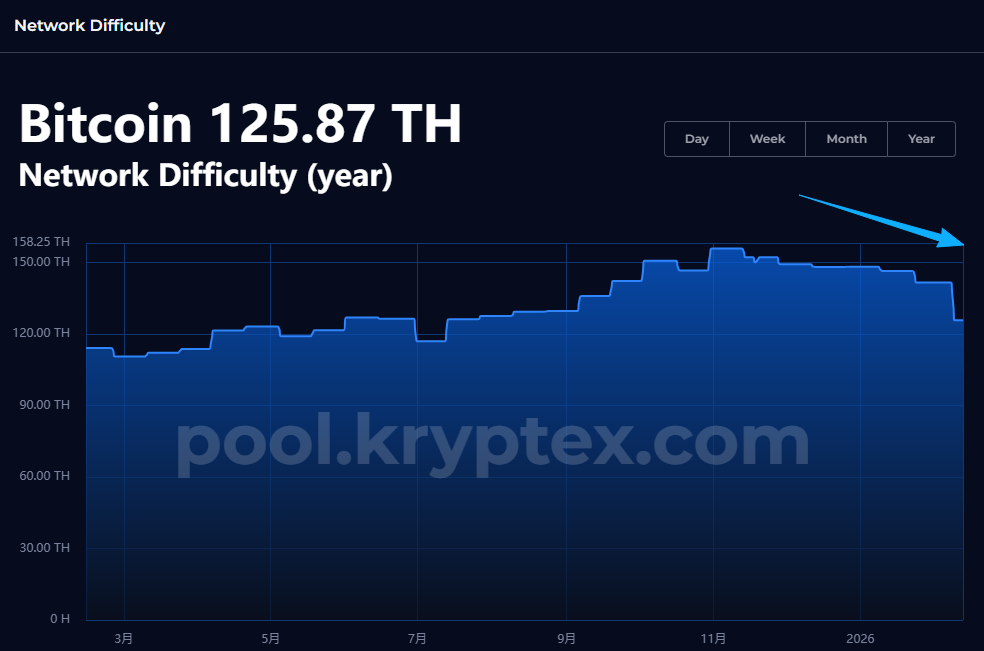
But is that the whole truth? Of course not! Network difficulty is dynamic, and Bitcoin price and energy costs directly cause hashrate migration. For example, when the price fell below $60,000 in February 2026, the global network hashrate plummeted by 12.55% within 7 days (data source: Kryptex). At that moment, your "relative share" increased. So, playing solo mining is a bit like surfing; you're waiting for that "hashrate trough."
- Opportunity Window: Events like the Korean ghost Bitcoin incident (2026) and Bitcoin falling below $60K have caused short-term, sharp fluctuations in hashrate.
- Your Strategy: Keep an eye on the Bitaxe Gamma dashboard. When you see the global hashrate turn downward for several consecutive days, that's the moment you are psychologically "closest" to a block reward. Although the mathematical probability is still minuscule, the brain-pleasing thrill of "I might hit the jackpot at a historical low" is something pool mining can never provide.
Remember, you're not fighting a static probability; you're playing a heart-pounding game with a giant, dynamic system driven by global energy prices, geopolitics, and the chip supply chain.
Mining Probability Revealed🔍
Setting aside complex formulas, let's use a more intuitive analogy to understand the probability. Think of your Bitaxe Gamma 601 as a lottery ticket.
- Jackpot Amount: Currently, a block reward is about 3.125 BTC, which is roughly $218,750 at $70,000/BTC.
- Your Lottery Numbers: Every second, your miner can randomly generate about 1.3 trillion different "hash numbers" (1.3 Th+/s ±10%).
- Draw Frequency: A global draw (finding a block) happens every 10 minutes.
- Winning Rule: Any one of your "hash numbers" must be "smaller" (more compliant with the target value) than all the numbers generated by all miners worldwide in the same second.
Feel like there's a chance? Let's introduce a devastating fact: the total number of "tickets" generated globally per second exceeds 1,000 quintillion (1000 EH/s). Your 1.3 trillion numbers account for only about 1.3 quadrillionth of that. Yes, with each draw, your chance of hitting the jackpot is even much lower than that ratio.
So why do people still enjoy it? This involves the psychological concept of "the illusion of control." In pool mining, you receive, say, 0.00001 BTC daily, like a boring salary. In solo mining, your backend income is always 0, but your brain remains in a state of mild excitement—"the next second could be the jackpot." You control the entire mining process, from connecting to your own full node to broadcasting the transaction yourself (if you miraculously hit the jackpot). This sustained stimulation from "possibility" is the real source of "mining addiction" for many hardcore enthusiasts. During this time, you can also relieve stress with some EDC toys. Emotions are peculiar; an excellent geek keeps their emotions within a calm range at all times. As Bitcoin Core developer Greg Maxwell once quipped: "Solo mining is the ultimate test of whether you truly believe Bitcoin is a 'probability currency.'"
⚠️Risk Analysis?
Risks? The biggest risk is that you haven't been discouraged after reading the first three topics and instead want to try it even more! Alright, let's get practical!
Technical Risk Checklist (You'll likely encounter these)
- Hardware Overclocking: Although power consumption is low, running a 7nm chip at full load for extended periods, especially with excessive overclocking and poor cooling, can easily lead to failure! For example, the Bitaxe Gamma and Bitaxe GT are already optimized to the limit. If you overclock a Bitaxe Gamma without the cooling conditions of a Bitaxe GT, the only result is a burnt chip!
- Network Orphan Blocks: Even if you miraculously mine a block, if network latency is high, your block might become an "orphan" and not be accepted. You must ensure low network latency and connect to a responsive Bitcoin full node.
- Configuration Hell: Bitaxe is an open-source project. You need a certain level of Linux and command-line knowledge. Updating firmware, configuring pools (if you chicken out later and want to join a pool), and debugging connection errors are routine.
Psychological Risks (This is the main event)
You will go through the following stages: 1) Excitement Phase: Successful setup, stable hashrate, feeling optimistic about the future. 2) Doubt Phase: Running for a week with zero earnings, starting to question life choices. 3) Superstition Phase: Beginning to believe in "lucky configurations," like rebooting the miner at 3 AM UTC. 4) Zen Phase: Forget about it; treat it as a 21.7-watt electronic hand warmer and a network faith totem.
Therefore, before purchasing a Bitaxe GT or Bitaxe Gamma, ask yourself three questions: Can I treat it as an educational tool to learn Bitcoin mining principles? Can I withstand a year or even longer of "zero income" in exchange for a pile of technical experience? Will I feel anxious seeing that big "0" in the backend? If your answers are Yes/Yes/No, then congratulations, you are precisely the target customer for this kind of "technical lottery ticket." Have fun, and good luck! Although luck is pretty much useless here, one must have dreams. What if lightning does strike?