💡 Tip: The following article data is for reference only. Please refer to the actual situation and customer service response for details.
An anonymous Bitcoin wallet is a digital tool that can be created and used without providing personal identity information (such as name, email, or identification documents). They are typically non-custodial, meaning the user has absolute control over the private keys and bypasses identity verification by centralized institutions. The essence of an anonymous Bitcoin wallet, as distinguished from a regular (centralized) one, lies in "who controls the keys" and "who knows your identity."
From the long-term observation of the TinyChipHub lab, hardware wallets serve as a high-security, non-custodial solution. The global cryptocurrency wallet market is projected to be $18.01 billion in 2025, with the hardware wallet market alone expected to reach $4.492 billion by 2032, representing a compound annual growth rate (CAGR) of 34.99%. Approximately 27% of users rely on cold wallets for long-term crypto asset storage.
Specific Functions🎯
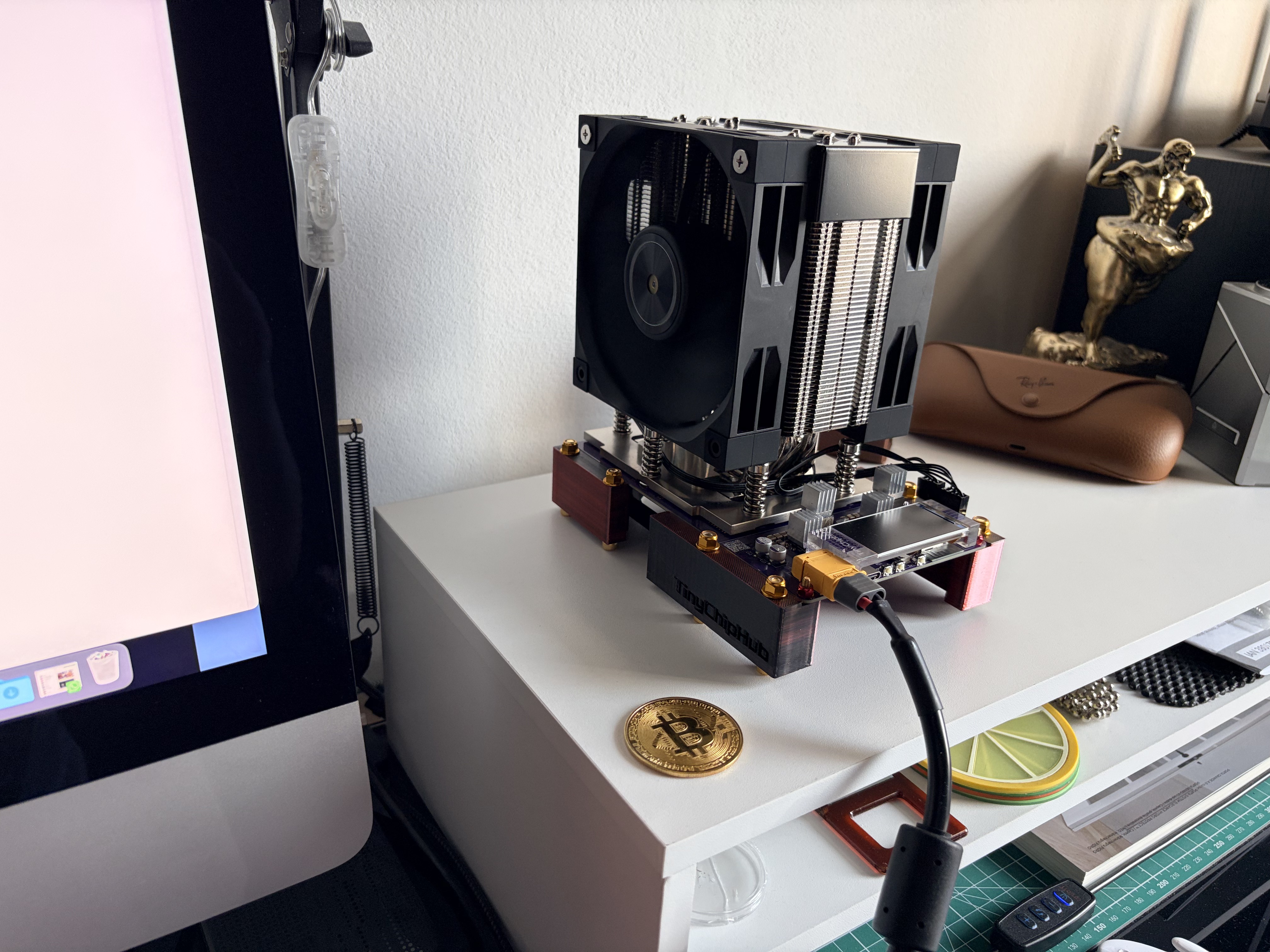
The core of an anonymous Bitcoin wallet boils down to three words: severing links. It functions like a digital vault but deliberately doesn't record your identity information, building a "firewall" between your on-chain activities and your real-world self. Consider a specific scenario: you successfully mine a block through a Small Bitcoin miner via solo mining, luckily receiving a 3.125 BTC reward (data as of after the fourth halving). If this Bitcoin were sent directly to your exchange account, that wealth would be permanently linked to your verified identity. But an anonymous wallet allows you to "disappear" on-chain, storing the coins in an address whose private key only you control, with no traceable link to your real identity.
How is this functionality achieved? The key lies in how it handles the transaction graph. Addresses of regular wallets are like transparent glass houses, where everyone can see the flow of funds. Anonymous wallets (like Wasabi, Samourai) have built-in protocols like CoinJoin. The principle of this protocol is clever: it bundles and mixes transaction requests from multiple users, akin to pouring marbles of different colors into a jar, shaking it vigorously, and then pouring them out—making it impossible to tell which marble originally belonged to whom. According to a 2023 CoinDesk blockchain analysis report, a typical CoinJoin transaction can mix hundreds of inputs and outputs, causing the cost for external observers to trace a single fund to increase exponentially.
- Address Generation Isolation: A new, "one-time" address is used for each receipt, preventing address reuse which can lead to identity clustering.
- Transaction Mixing/Obfuscation: Using the aforementioned CoinJoin or similar technology to break the direct link between inputs and outputs.
- Network Layer Anonymity: Integrating Tor or I2P networks to hide your real IP address, preventing association via network surveillance.
Note, however, that 100% anonymity doesn't exist; only higher degrees of privacy strength. Entities like the U.S. Treasury's Financial Crimes Enforcement Network (FinCEN) have listed certain wallet service providers offering "anonymity-enhancing" features as focus targets. Therefore, its core function is to provide you with privacy protection tools at a technical level that far exceed those of conventional wallets, giving you stronger control over your asset flows, not to enable illegal activities.
🔄Operating Principles
The operation of an anonymous wallet can be understood as you personally directing a "digital currency magic show." It doesn't create new Bitcoin but meticulously designs a process to obscure the secrets of the magic from the outside world. The entire process revolves around breaking the continuity of the "transaction graph." Regular transactions are like drawing lines with a highlighter on a public ledger—clear and traceable from A to B. The goal of an anonymous wallet is to make this line break, disappear, or turn into a tangled mess.
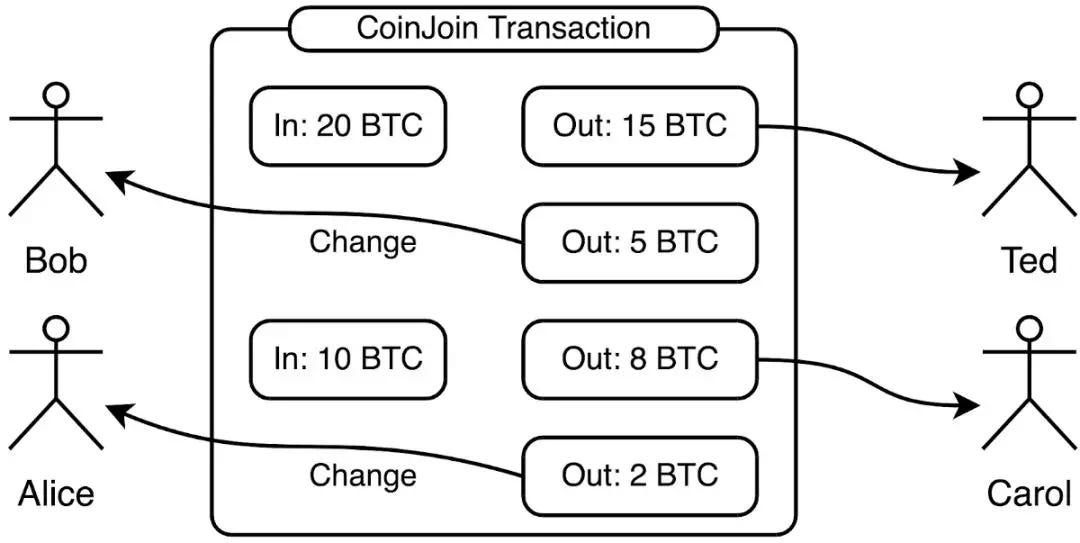
Refer to the mechanisms provided below, specifically divided into three layers.
The first layer is entry isolation. When you withdraw coins from a mining pool or exchange to an anonymous wallet, a good wallet will enforce the use of its built-in "clean" entry point. This may involve using specific privacy coins as an intermediate bridge or acquiring coins directly through P2P over-the-counter (OTC) transactions.
The second layer is the core mixing engine. Taking Wasabi wallet's Chaumian CoinJoin as an example, it uses a decentralized coordinator. After you initiate a mixing request, the wallet automatically seeks other participants. Once a minimum threshold is met (e.g., 100 participants, each with at least 0.01 BTC), the coordinator generates a massive combined transaction. Your input and output are mathematically proven to be included, but the specific correspondence is hidden by cryptographic commitments. According to a 2022 IEEE Security and Privacy Symposium paper, a successful mix can raise the cost of subsequent blockchain analysis to over $10,000.
| Stage | Operation | Technology/Protocol | Goal |
|---|---|---|---|
| 1. Preparation | Generate new address, connect via Tor routing | BIP 44/84, Tor | Hide network identity & address linkage |
| 2. Mixing | Participate in CoinJoin rounds, sign blinded transactions | Chaumian CoinJoin, Schnorr signatures | Break fund traceability path |
| 3. Output | Obtain brand new, historically unlinked UTXO | Confidential Transactions (partially implemented) | Produce "clean," spendable Bitcoin |
The third layer is output management. The mixed coins are sent to a brand new address unrelated to all your previous activities. At this point, the wallet often recommends setting a "delayed spend" or "multi-hop transaction"—meaning not spending immediately, but waiting for a random period or passing through another small mix to further increase tracking difficulty. Throughout this process, your private keys remain on your local device, never uploaded. It's like mixing a cocktail at home yourself: the ingredients (UTXOs) are shaken (mixed), resulting in a completely new drink, with no one knowing how much came from each original bottle.
Various Types: Bitcoin Wallets🔒
What is a Crypto Wallet?
A crypto wallet is used to store your private keys, allowing you to securely store cryptocurrencies while also accessing them anytime. You can send and receive cryptocurrencies like Bitcoin, Ethereum, Dogecoin, etc. A crypto wallet can be a storage device like a USB drive or a mobile application. Unlike a regular cash wallet, a cryptocurrency wallet does not actually store the cryptocurrency itself. It is more like a key or code to access your cryptocurrency assets on the blockchain.
What is an Anonymous Crypto Wallet?
An anonymous crypto wallet allows users to buy, sell, and trade without revealing user privacy or transaction information. It is also known as a darknet crypto wallet or stealth crypto wallet. Most users prefer anonymous crypto wallets that do not require adding any user privacy information. Some anonymous crypto wallets also offer IP address obfuscation and VPN masking features.
Distinguishing Different Types!
As mentioned earlier, the level of a wallet's anonymity directly depends on "you vs. the service provider, who controls the keys" and "whether you reveal your identity." Setting aside complex principles, let's look at the anonymity choices for Bitcoin wallets directly from core data and proportions. Among users actively seeking strong privacy, over 70% adopt a "combination strategy": first using privacy software wallets to mix funds, then transferring them to hardware wallets for cold storage.
|
Wallet Type
|
Private Key Controller
|
Identity Linkage Necessity
|
Theoretical Anonymity Strength
|
Typical User Scenario Share (Estimate)
|
|---|---|---|---|---|
|
Non-Custodial Privacy Software Wallet
(e.g., Wasabi, Samourai) |
User has absolute control
|
No identity required
|
Very High (Active Anonymity)
|
Approximately 5%-10% of privacy-conscious users
|
|
Non-Custodial Hardware Wallet
(e.g., Trezor, Coldcard) |
User has absolute control
|
No identity required
|
High (Passive Anonymity/Depends on Fund Source)
|
Among long-term holders, approx. 20%-30% usage
|
|
Non-Custodial Regular Software Wallet
(e.g., BlueWallet, Electrum) |
User has absolute control
|
Usually no identity required
|
Medium (Naturally anonymous, but easily tracked by chain analysis)
|
Most mainstream type, accounts for 60%+ of non-custodial wallets
|
|
Custodial Wallet/Exchange Wallet
|
Service provider control
|
Mandatory KYC (100% real-name)
|
Very Low (Internal accounts, transparent on-chain)
|
Starting point for over 80% of new users
|
The type of wallet determines whether you are building your own, nameless digital vault or merely renting a constantly audited, labeled safe deposit box from a centralized institution. A 2023 CoinGecko industry report shows that the vast majority of users (about 95%) entering the cryptocurrency space for the first time do so through centralized exchanges requiring full KYC, instantly and completely linking their assets to their identity from the start.
True anonymity does not come from a product label but from a complete process from entry, processing, to storage. However, blockchain analysis firm Chainalysis points out that most successful investigations do not crack the privacy protocols themselves but are achieved by analyzing behavioral patterns before and after transactions (such as interactions with exchanges). The core of it all always remains: You, and only you, control that private key.
Security Tips✅
When using anonymous wallets, security is paramount; otherwise, it's like "protesting one's innocence only to make people more suspicious." Your security defenses must be upgraded comprehensively, from mining device, operations, to mental models. Remember, the pursuit of privacy itself can make you a more conspicuous target (to hackers and certain institutions), so your security standards must be a notch higher than those of the average user.
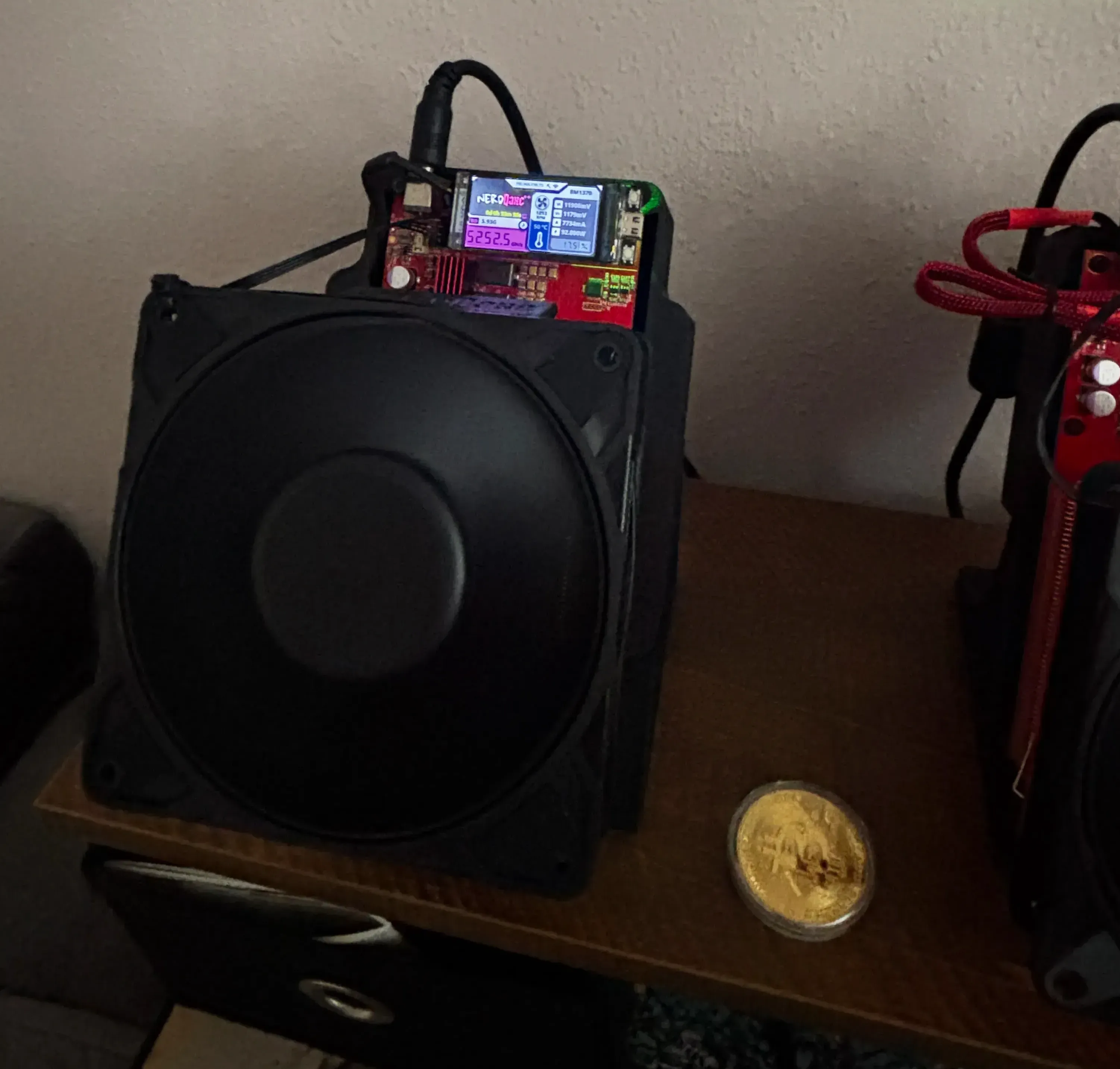
Rule One: Environment Isolation, Physical is King. Never install an anonymous wallet and conduct large transactions on your daily main computer or phone. Best practice is to prepare a dedicated, clean internet device, preferably running privacy-focused operating systems like Tails or Whonix. These systems route all traffic through Tor by default and erase all traces upon shutdown. According to the Whonix project's Q1 2024 report, its dual virtual machine architecture (gateway and workstation) can effectively defend against over 90% of common network leakage attacks. Your home miner management computer and your fund operation computer should be physically separate.
Rule Two: Transaction Habits, Counter-Surveillance Mode. Avoid "fingerprinting" behaviors. Don't mix coins at fixed times; try to use irregular amounts. A crucial reminder: Never withdraw directly from a known KYC exchange to your anonymous wallet; this directly establishes a link. Use at least one intermediate P2P transaction or a Bitcoin ATM (where compliant) in between. In wallet settings, be sure to enable all network privacy options, forcing connections through Tor.
- Backup & Verification: The backup seed phrase for an anonymous wallet must be stored offline, physically (e.g., etched on a metal plate), and verified for recovery multiple times. Never use cloud storage!
- Test with Small Amounts: For any new procedure, first run through the entire process with a tiny amount like 0.00001 BTC. Confirm everything works before moving larger sums.
- Information Silence: Do not boast about your anonymous operations or balances on social media or forums. "Keeping a low profile" in the digital world is the best armor.
Finally, legal compliance awareness. Understand the regulations in your jurisdiction. For example, the U.S. FinCEN requires money services businesses to report transactions over $10,000 and record all currency transactions. Using anonymity tools itself is not illegal, but using them for tax evasion, money laundering, etc., absolutely is. Your goal should be technological privacy enhancement, not confrontation with regulation. Ensure your compliance processes, like declaring mining income, are complete. This way, your use of anonymous wallets is solely to protect yourself from unnecessary on-chain scrutiny, not to hide illegal activities. Remember, the strongest security is technical confidence within a legal and compliant framework.