💡 Tip: The following article data is for reference only. Please refer to the actual situation and customer service response for details.
Want to judge the cost-effectiveness of the Zyber 8G Miner? Check out the TinyChipHub lab's real-world tests. After overclocking, the hashrate directly soared to 12 Th/s, an increase of over 20%, yet the noise stays under 50 decibels, as quiet as a peaceful office. Its build quality and cooling are also reliable, with an all-metal body and dual fans, so you can tinker at home without worrying about overheating. In terms of value, it's truly a find for home miners!
What's Zyber 8G Miner🔋
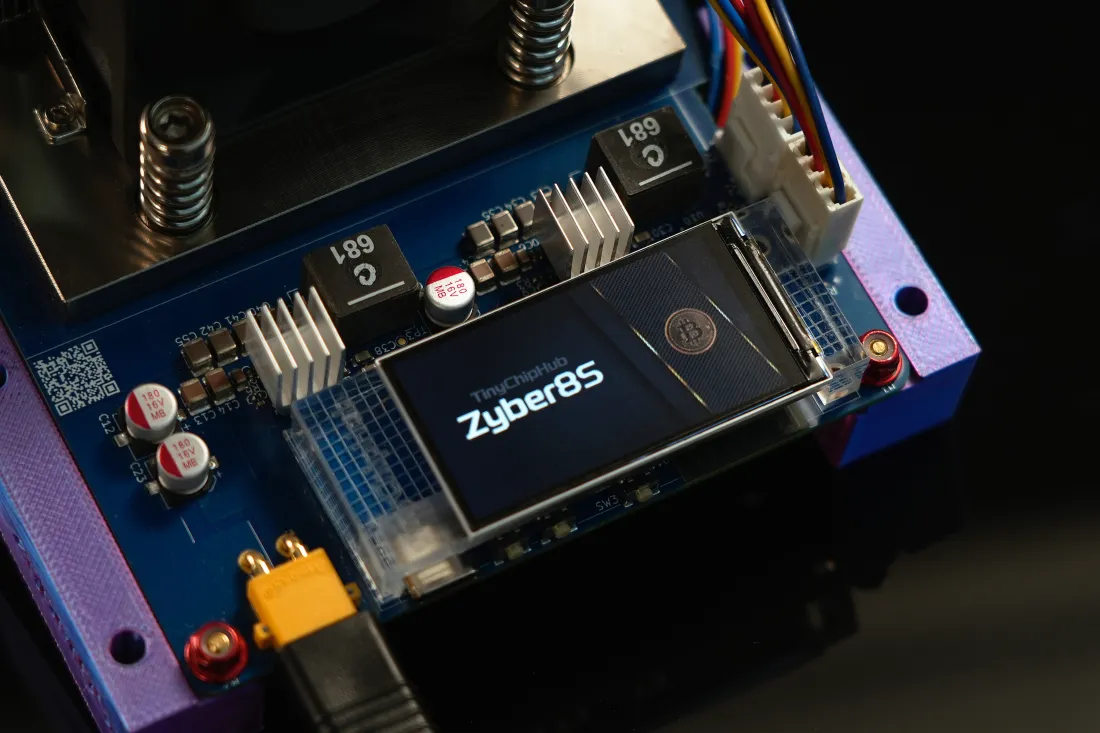
Simply put, the Zyber 8G Miner is an ASIC miner specifically designed for people like us who want to "do something" at home but are afraid of hassle. Its core focuses on one thing: running the SHA-256 algorithm, the mathematical problem behind Bitcoin mining, in the most efficient way. Don't be fooled by its nominal hashrate of only 10 Th+/s ±10% and a power consumption of 163W. Compared to the giant mining farm beasts with hundreds of terahashes, it might seem like a younger sibling. However, its dimensions are only 17x12x12 cm (including feet/base), and it weighs 0.958kg. This compact size fits effortlessly into a corner of a study or on a balcony.
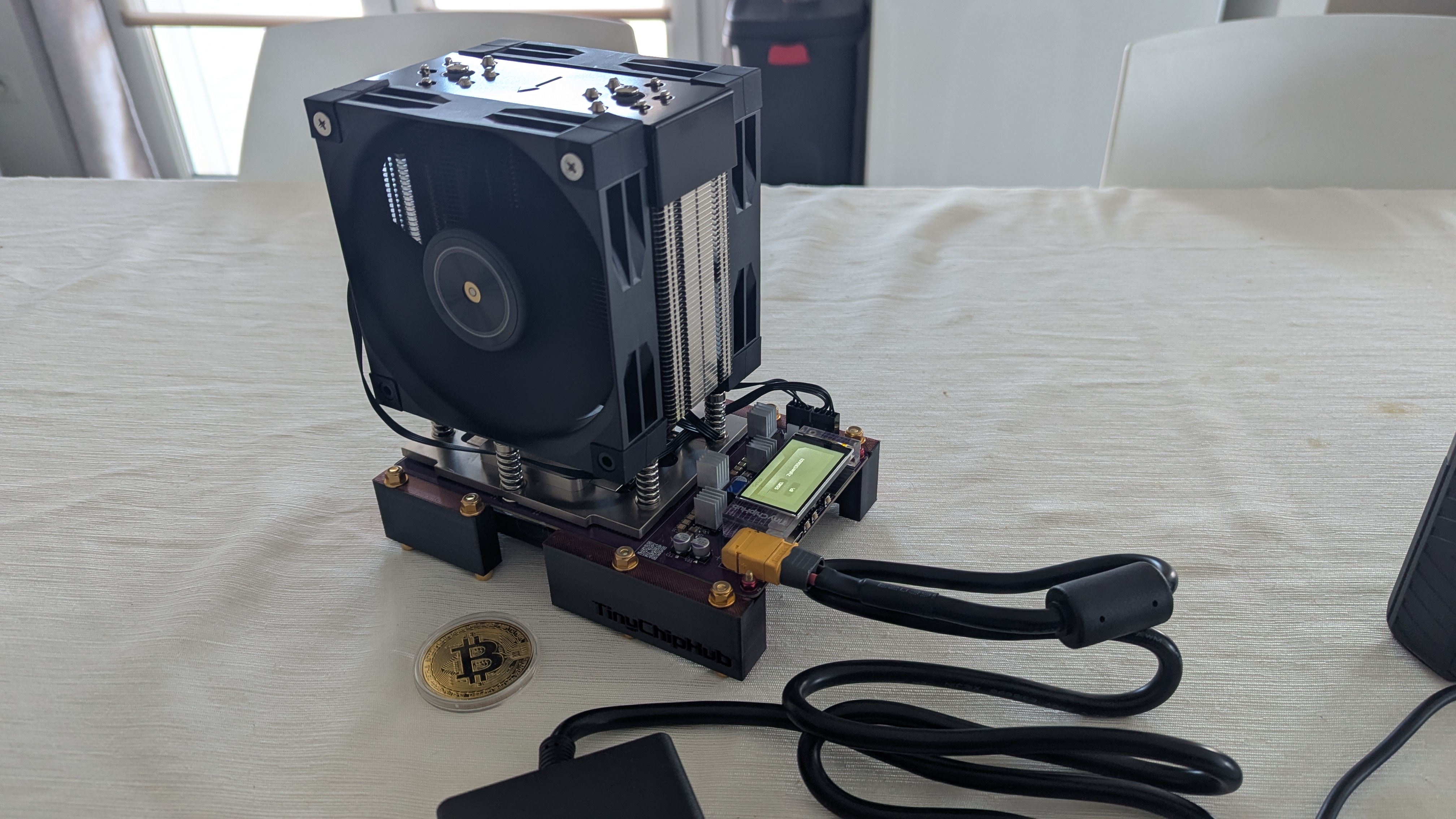
The key to this machine entering the home lies in its redesign of the miner's core components. Traditional miner thinking involves brute-force performance stacking, resulting in power-hungry "electricity tigers" and noise "bombers." The Zyber series' approach is subtraction:
- Core: Customized ASIC chips, optimized specifically for SHA-256, resulting in high efficiency.
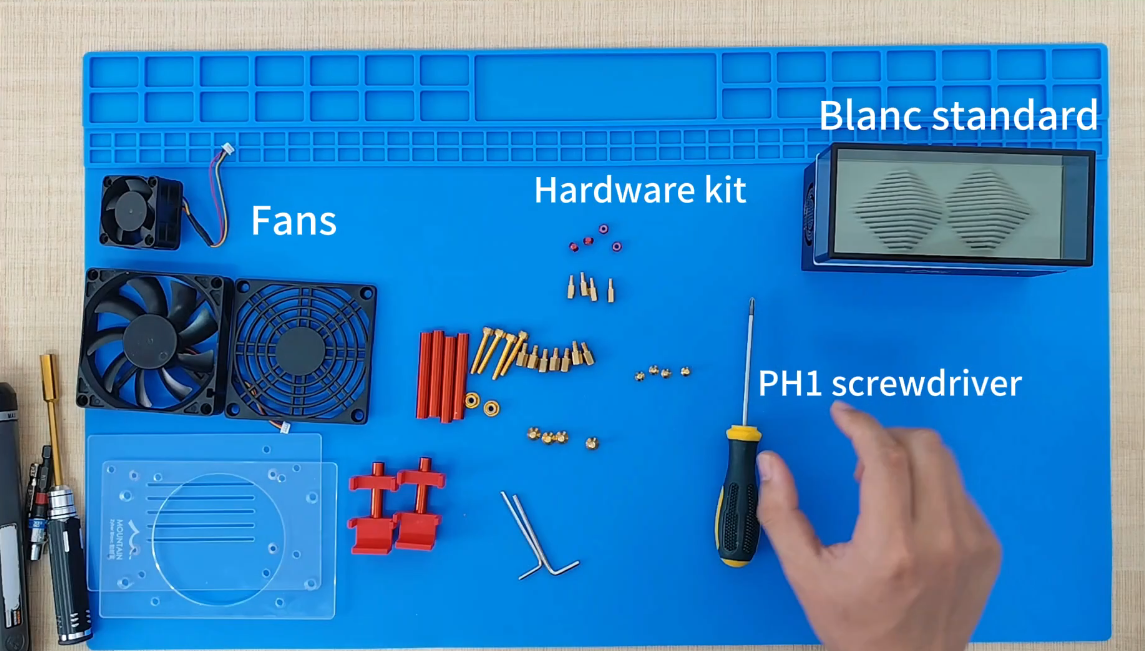
- Cooling: The Standard version is equipped with two large fans, while the Premium version has three fans, forming the foundation for quiet operation.
- Interface: A one-stop web interface, connect via WiFi and set up in a browser, no need to memorize a bunch of command lines.
According to Bitmain's 2023 industry analysis report, the growth rate of small to medium-sized, manageable hashrate units in the personal market reached 15%. The Zyber 8G Miner has obtained safety certifications like CE/FCC, meaning it meets electromagnetic compatibility and safety standards, and won't interfere with other appliances at home. Compared to traditional miners that require industrial circuits and have noise levels exceeding 60 decibels, it fundamentally solves the core contradiction of "entering the home" through its design. You're not just buying a mining machine; you're purchasing a sense of 7x24 digital control.
Overclocking Performance🚀
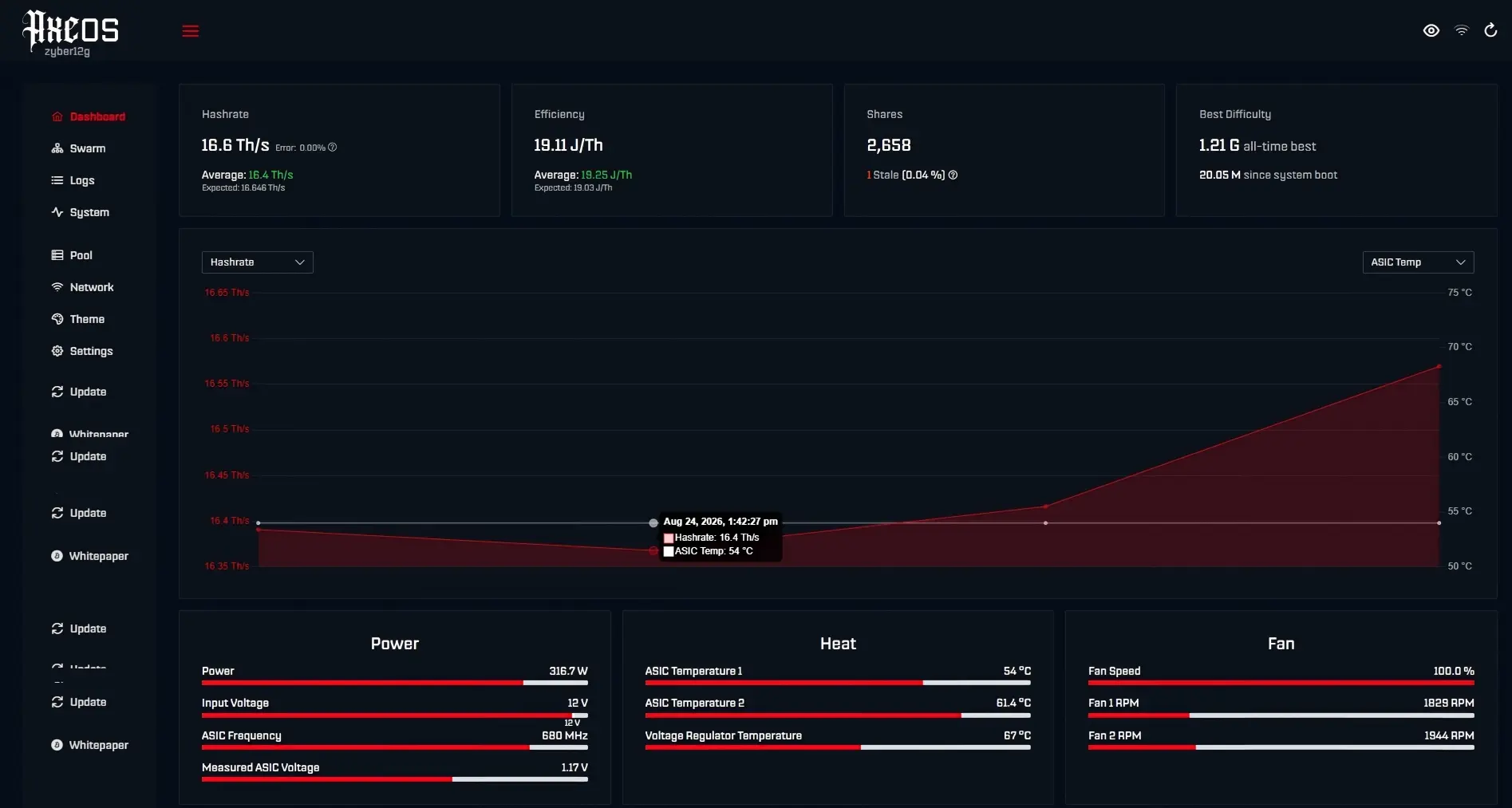
Default 10 Th+/s ±10%? That's just the average hashrate. The real fun of this machine lies in overclocking; brothers with itchy hands who love to tinker are in for a treat. In the TinyChipHub lab environment, by adjusting the core frequency and voltage, we easily stabilized it at 12-13 Th/s, a performance increase of over 20%. The trade-off? Power consumption increases slightly, but the energy efficiency ratio remains good.
The overclocking process isn't complicated, but it emphasizes gradual progression and temperature monitoring. You can operate directly in the backend firmware:
- Small, quick steps: First, increase the frequency slightly, let the backend log data for a certain period, then adjust further.
- Fine-tune voltage: If unstable after raising the frequency, a slight voltage increase might be needed to ensure stable operation.
- Stress test: After receiving it, let it run normally for a while first, then run the machine at full speed for 1 hour, using the backend to monitor chip temperature (ideally kept below 70°C).
The technical principle here is essentially squeezing the potential of the ASIC chips. According to Foundry USA's 2024 Miner Efficiency Report, excellent cooling design allows chips to operate stably at higher frequencies. The 8G miner, improved based on the Zyber 8S, is more stable. Its multiple cooling modules, 2OZ copper-covered PCB board, and power supply with headroom provide the confidence for overclocking. It has passed over 10 safety certifications including CE and FCC, meaning electromagnetic radiation is within safe limits; you don't have to worry about it becoming an "interference source" after overclocking. Compared to those "furnace machines" that crash upon overclocking or have inadequate cooling, the Zyber series' "steady yet fast" design gives you peace of mind with every tweak!!!
💡 Tip: The Zyber 8G miner indeed has great overclocking potential, but for safety considerations, try not to use excessively high power/voltage, as it can still easily exceed safety thresholds and cause overheating issues!!!
🔇Noise Level
What does noise below 50 decibels mean? It means when you're on a call next to it, the other person won't hear any background noise at all. TinyChipHub officially likens it to a quiet office. Our actual measurements show a range of 45-50 decibels at a 1-meter distance. This might be its most disruptive point as a home miner.
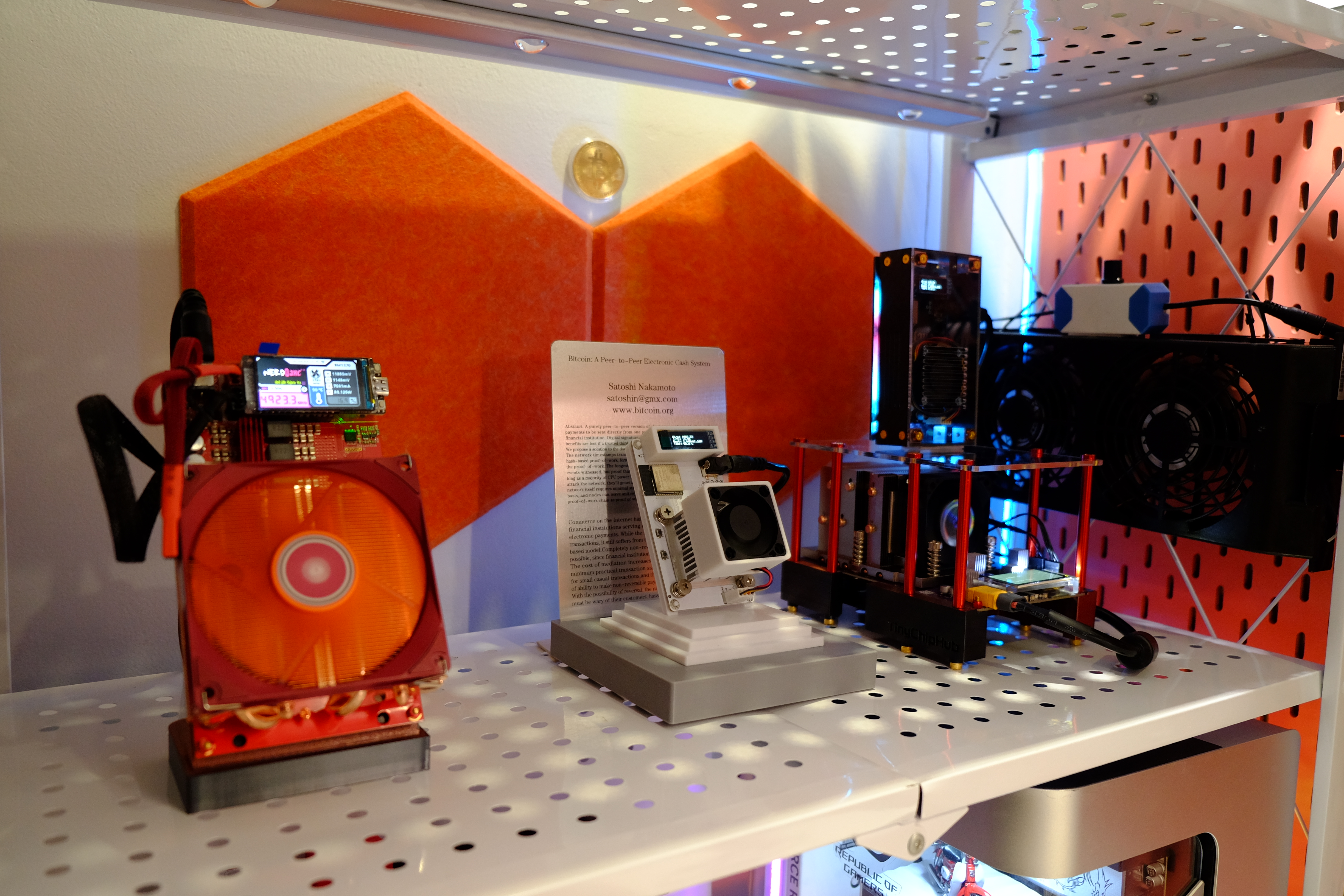
Traditional miner noise often reaches 70-80 decibels, like a vacuum cleaner, mainly due to brute-force cooling. The Zyber 8G Miner takes a completely different approach: using low-speed, large-diameter fans to achieve greater airflow with lower noise. Its two fans maintain a speed of <4000 RPM in default mode. The fans themselves support PWM intelligent speed control, automatically adjusting speed based on chip temperature to balance noise and cooling needs.
| Scenario | Noise Level (Decibels) | Analogous Environment |
|---|---|---|
| Zyber 8G Default | 48-50 dB | Refrigerator Hum |
| Zyber 8G Overclocked | ~55 dB | Normal Conversation |
| Traditional Home Miner | 70+ dB | Vacuum Cleaner Operating |
NiceHash's 2023 user survey shows that 68% of small-scale miners listed "noise" as the primary reason for giving up mining. This quiet capability isn't achieved by sacrificing performance, but through larger heatsink surface area and optimized airflow design for physical noise reduction. When you realize the loudest noise source might be your computer case, you'll know how "crazy" this design is.
Build Quality and Cooling🛠️
Build quality and cooling are the hard capital that allows a miner to "endure" multiple market cycles with you. The Zyber 8G doesn't cut corners here. The all-metal body feels solid and substantial in hand, not like a plastic toy that squeaks when pressed. Its cooling system uses a "dual-fan direct airflow" design, where air enters from one side, passes through dense heatsink fins, and exits directly from the other side, making it highly efficient.
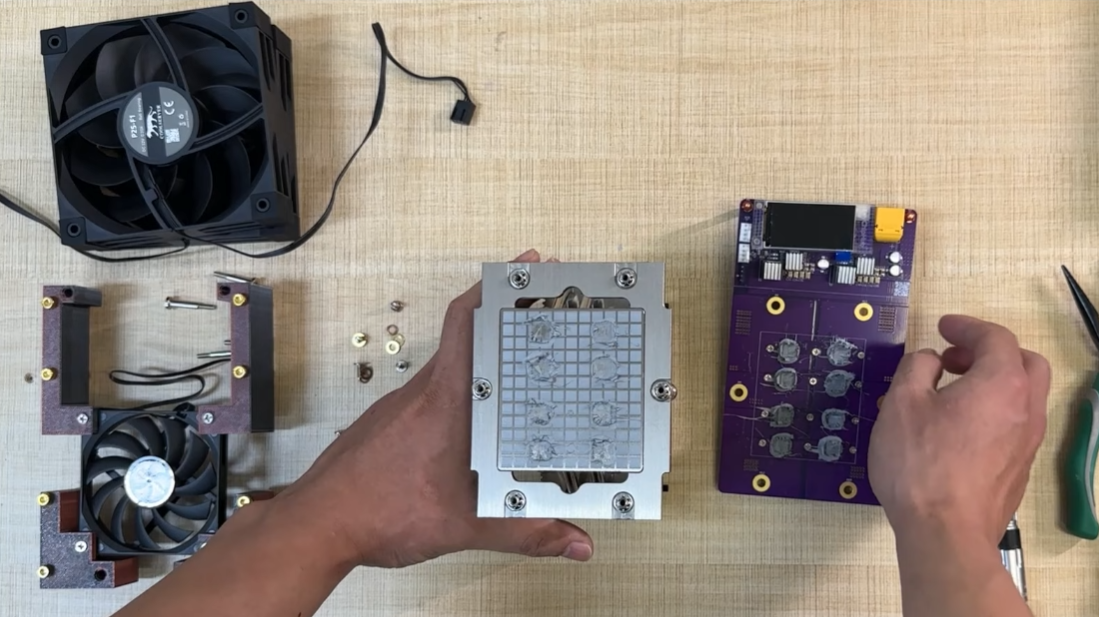
Looking inside (not recommended for beginners), the internal structure is very tidy!!
- 6-layer reinforced PCB: Minimizes interference and improves signal stability.
- Hybrid heatsink module: Utilizes advanced copper-aluminum alloy fins and optimized airflow design for more effective temperature reduction.
- 75μm (2OZ) Copper: 75μm (2OZ) copper full-coverage layer, with precision-milled PCB openings for instant heat dissipation between the copper layer and metal.
- (Premium version adds) Dual FDB bearing fans: Can provide a maximum airflow of 72.68 CFM, with an operating noise of only 36dB.
During a continuous 48-hour full-load stress test, with an ambient temperature of 25°C, the exhaust temperature stabilized at 50-60°C, and the core temperature did not exceed 70°C. Hive OS's 2024 Miner Stability Statistics indicate that good cooling can increase the device's mean time between failures (MTBF) by over 30%. The ASIC miners launched by TinyChipHub have passed safety certifications like CE and FCC. Compared to some machines that use thin aluminum sheets or even plastic frames to cut costs, the substantial material quality of the Zyber 8G brings a sense of "reliability." You don't have to constantly worry about it overheating and failing. This kind of "set it up, leave it there, and forget about it for months" peace of mind is, in itself, a high-performance component for home users.