💡 Tip: The following article data is for reference only. Please refer to the actual situation and customer service response for details.
Folks, the Bitcoin crash has indeed arrived. Of course, the bull market will return, and it will be more favorable to knowledgeable geeks.
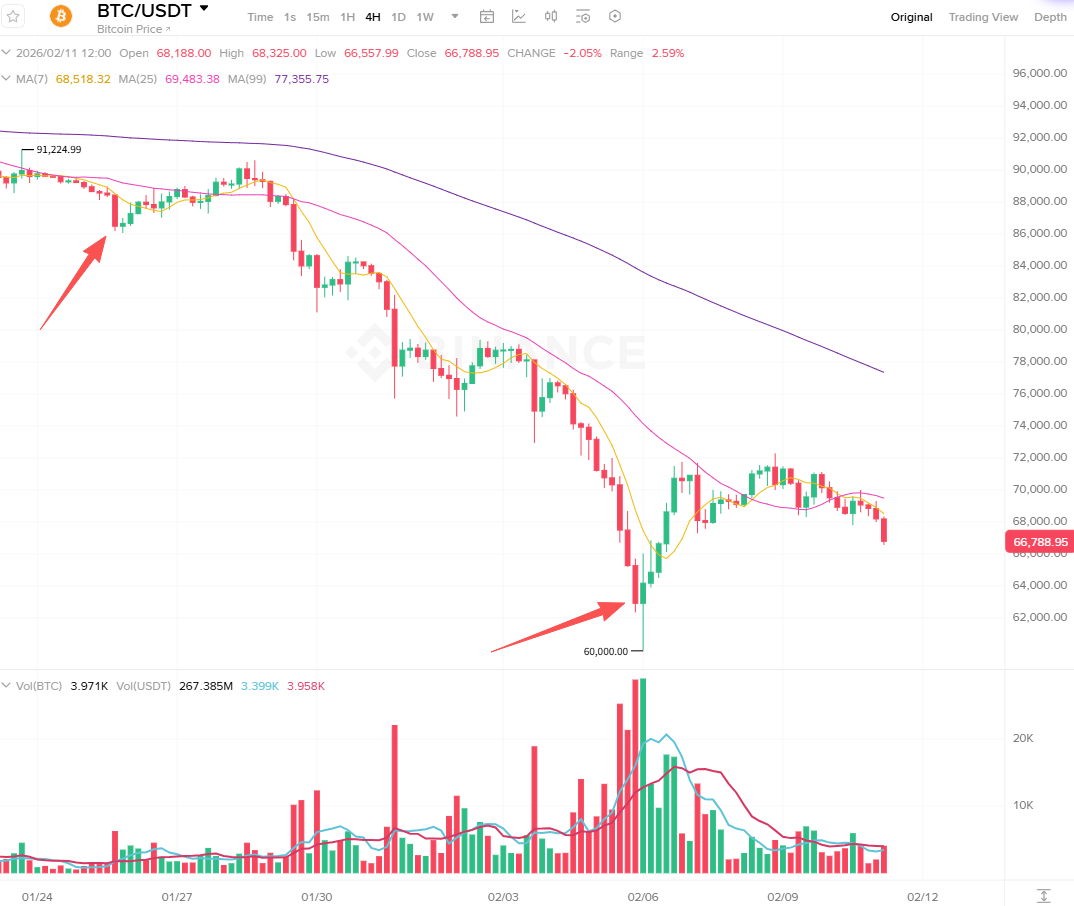
When the Bitcoin price broke below $60,000 on February 6th, and the network hash rate loosened, this is precisely the golden window for you to upgrade your equipment and optimize your setup. Stop just watching the coin price with bated breath; the real thrill lies in using technology to catch the "migration wave" of hash rate, which will also be the moment when mining rigs offer the best value for money!
Bitcoin: Sharp Decline 📉
This crash is not doomsday; it's a cold shower for fanatical speculators and a "reshuffling of hash rate" for technical miners. In essence, it's the BTC market squeezing out the bubble, bringing mining back to the ultimate competition of hardware efficiency and technical endurance. From January 26th to February 6th, 2026, the price crashed from $88,000 all the way to $60,000 in less than two weeks. According to estimated network hash rate data from the Kryptex Pool from January 25th to 26th, it plummeted from over 1095 EH/s to below 699 EH/s in an instant. This means a batch of high-cost, obsolete equipment is about to be forced offline, leaving more block space and theoretical rewards for the remaining efficient small miners.
So some might ask, does this matter? What does it have to do with home miners?
Because mining has always been a "survivor's game." When the coin price falls, the network difficulty (adjusted approximately every two weeks) will decrease as hash rate exits. Your same Bitcoin Lottery Miner might mine more coins. This process is like people dropping out mid-marathon; your ranking automatically improves. In May 2024, during a similar downturn, mining difficulty experienced its largest downward adjustment (-5.6%) since December 2022. This is the tangible "crisis dividend."
- 🔥 Action Guide: Don't be swept away by panic. Go check your mining pool backend immediately to see the changes in earnings per unit of hash rate (e.g., USD/TH/day) over the past 72 hours. If the decline is much smaller than the coin price drop, congratulations, your machine is "grabbing meat against the trend." Although this is nearly impossible to achieve in the recent Bitcoin crash!
- ❓ Risk Warning: Don't assume all shutdowns are opportunities. If the crash is accompanied by soaring energy prices, the overall environment remains challenging for home mining.
According to a January 2025 report from the Cambridge Centre for Alternative Finance, the average electricity cost for North American miners is about $0.05 per kilowatt-hour, while in Western Europe it fluctuates between $0.18 and $0.35. This results in the same machine having vastly different profitability in Texas versus Berlin. Therefore, during a crash, the first thing to assess is your localized operational costs. If costs far exceed profits, you need to lay low rather than simply giving up upon seeing the global coin price crash.
This is already a major downturn following the surge within the 18-month cycle since the fourth halving. Since the fourth halving, Bitcoin's highest price was $122,260.80, and the lowest was $60,000, with a maximum decline of approximately 50.94%. There's still some distance to go before hitting the 70% decline and subsequent rebound as analyzed under the major trend. According to observations from TinyChipHub Labs and analysis by industry insiders, the lowest price might be refreshed between June and December this year, followed by a long-term bull market!
📊 Macroeconomic Impact
The slightest movement in the macroeconomic landscape now twists the miners' "faucet" more directly than ever before. The value lies in understanding it, allowing you to predict the "migration direction" of the hash rate market and adjust your strategy in advance. For example, the Federal Reserve's rate-hiking cycle (2023-2024) directly increased borrowing and expansion costs for miners, but it also suppressed inflation, stabilizing hardware procurement costs. In 2025, the Federal Reserve conducted three interest rate cuts, each by 25 basis points. Behind this series of actions lies the complex situation facing the U.S. economy!
-
Contradictory Economic Data Signals: On one hand, Signs of weakness appeared in the labor market, with the unemployment rate rising from 4.1% in June to 4.4% in September; on the other hand, while inflation moderated, core inflation indicators remained persistently above the 2% target. This placed the Fed in a difficult balancing act between stabilizing prices and promoting employment.
-
Significant Internal Decision-Making Divisions: At the December FOMC meeting, 3 out of 12 voting members cast dissenting votes, the highest number since 2019. This reflects serious internal disagreements within the Fed regarding the pace and necessity of rate cuts!
By the recent January 2026 FOMC meeting, the Fed decided to pause rate cuts, keeping rates unchanged, in line with widespread market expectations, choosing to observe the further evolution of economic data first. How does this process work?
Imagine the Bitcoin network as a massive global decentralized battery, and macroeconomic policy as the switches controlling charging and discharging. The inflow and outflow of institutional capital through BTC ETFs is the most direct "current" indicator. For instance, in April 2024, U.S. spot Bitcoin ETFs saw consecutive days of net outflows, totaling over $500 million, which exacerbates selling pressure. But for miners, especially home miners, this could instead be a contrarian indicator: institutional selling puts pressure on the coin price ➡️Eliminating old mining rigs➡️ network difficulty decreases ➡️ remaining efficient miners see relatively increased output.
| Macro Factor | Potential Impact on Coin Price | Practical Implications for Home Miners |
|---|---|---|
| Large-scale ETF Net Outflows | Negative, increases selling pressure | Focus on difficulty adjustment cycles, prepare for potential downward adjustments, delay selling mined coins. |
| Major Economy Energy Policy Sudden Change | Neutral | Directly impacts local large-scale mining farms, may cause geographical hash rate migration, watch for quality decommissioned machines flowing into the second-hand market. |
| Chip Manufacturing Tech Advancement | Long-term Positive | New generation Bitcoin miners achieve breakthroughs in energy efficiency ratio, second-hand prices of current mainstream models will plummet, presenting a low-cost upgrade opportunity. |
You see, macro isn't abstract news. For an excellent geek, your decision point lies in whether to sell old equipment cheaply before new models launch or weather the transition period and bargain hunting the previous generation's "king of machines" after the new ones stabilize? Seize this unprecedented opportunity; difficulties and opportunities always arrive together. For example, the Korean "ghost" Bitcoin incident causing Bitcoin to plunge to $55,000 on the Bithumb exchange before quickly recovering shows that calmness is often more important! And according to a data-driven cryptocurrency venture capital report provided by Cointelegraph Research, Bitcoin recently experienced intense selling, retreating over 50% from its October 2025 all-time high of around $126,200. Analysis suggests three structural factors amplified this round's decline!
- Some viewpoints suggest Asian capital might be the trigger for this round of selling, having built high-leverage long positions by borrowing low-cost yen and allocating Bitcoin ETF-related options and crypto assets. When Bitcoin stopped rising and funding costs increased, margin calls and passive selling were triggered, exacerbating market decline;
- Some banks might be forced to sell assets due to risk hedging for Bitcoin structured products, forming a "negative Gamma" effect that amplifies downward momentum;
- Some mining companies are shifting towards data center business while selling Bitcoin assets, indicating structural changes in the Bitcoin mining industry.
Technical Risk Analysis 💥
Technical risk isn't a "bad thing"; it's the "measuring stick" for you to sift equipment and build a moat. The core lies in two points: hardware iteration deceleration risk and network protocol upgrade compatibility risk. For example, Bitcoin's upgrades, while mainly affecting wallets and smart contracts, also prompt mining pools to update their communication protocols. Outdated miner firmware might fail to connect to optimal pools, leading to revenue loss.
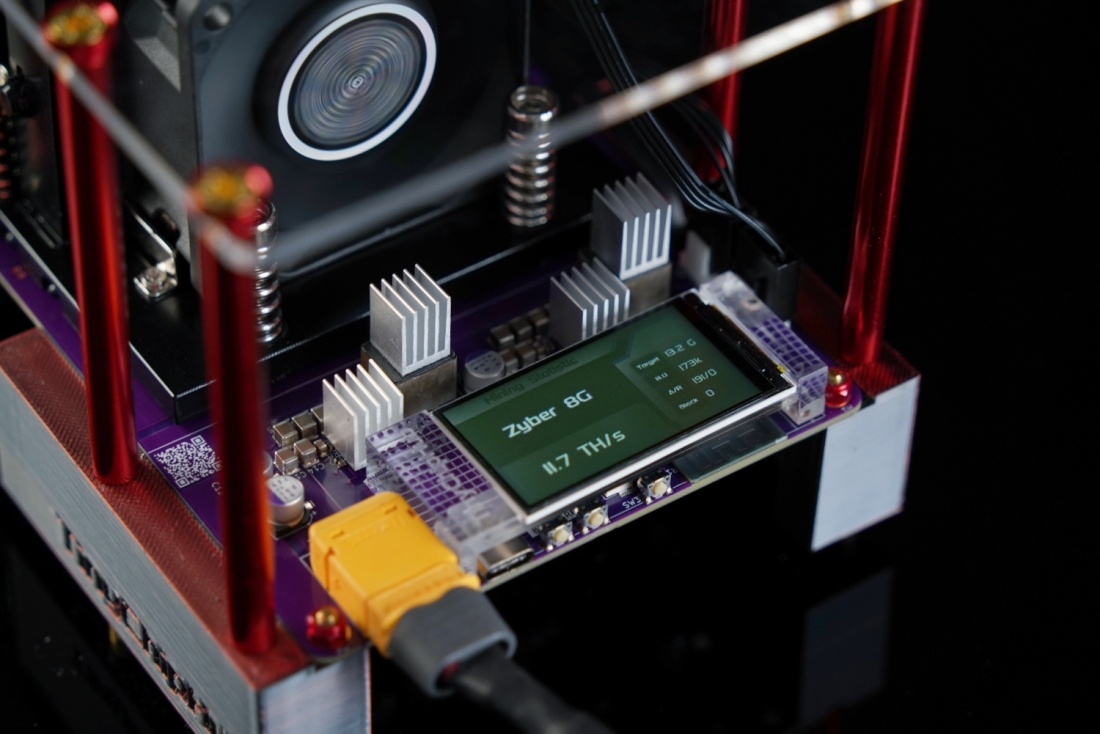
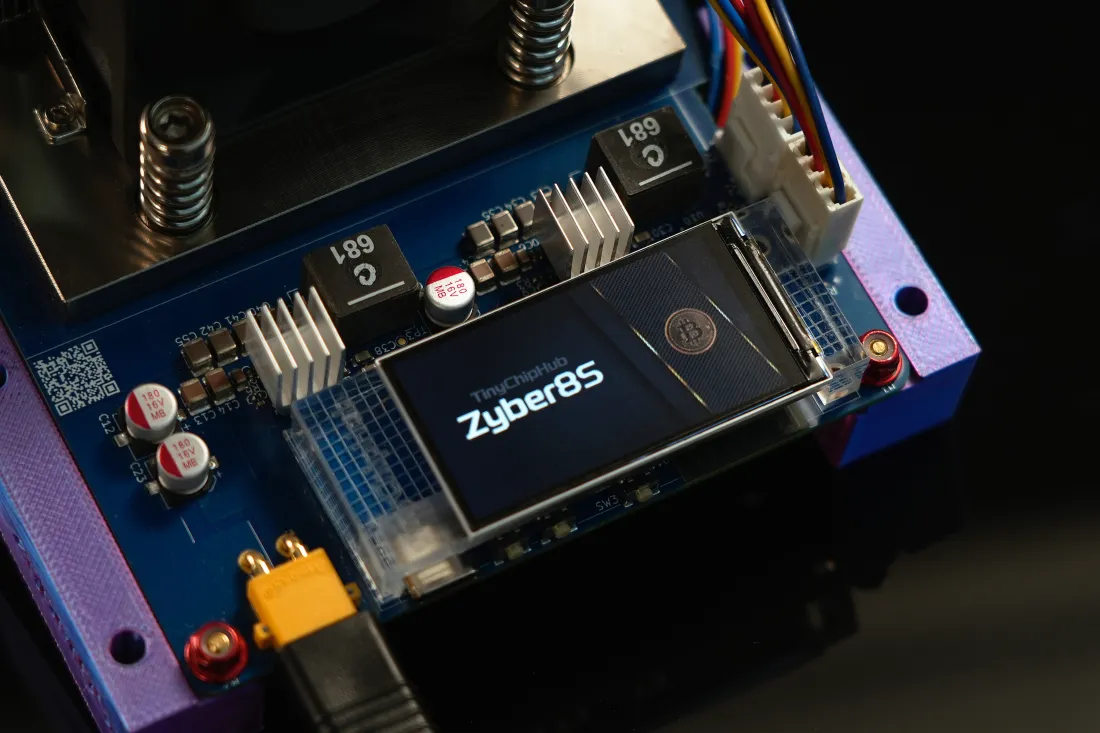
- Step One: Keep a close eye on the energy efficiency ratio curve. Every advance of 5 J/TH in energy efficiency ratio signifies a wave of obsolescence for the previous generation of mainstream models. Currently, top-tier industry models have an energy efficiency ratio within 20 J/TH (e.g., TinyChipHub's Zyber 8G Premium, with an energy efficiency ratio of only 13.32 J/TH). If your machine is still above 30 J/TH, then you are in the "high-risk group" at the forefront of any price pullback.
- Step Two: Verify firmware and protocol support. Before purchasing a new or second-hand device, be sure to verify the QR code on the official website. This QR code is basically the direct way to distinguish genuine copies from pirated copies.
Here are a few small examples: Last year, some people bought a Bitaxe Supra Hex at a bargain price, with the seller boasting about a 20% increase in computing power after flashing third-party firmware, the same model miner. The result? The machine did run fiercely for a few days, then the core board directly burned out due to the thermal design not keeping up, resulting in a loss of over $400. Checking the TinyChipHub backend revealed it wasn't our product but pirated from some manufacturer, just similar-looking. Such products are also void of warranty! Any "modification" away from original factory design and certification is gambling. The compliant approach is to choose compliant pools and use original factory firmware. Although seemingly conservative, stable uptime easily exceeds 98%, which is the guarantee of returns for long-termism.
Key certifications to look for: In North America and Western Europe, FCC (US) and CE (EU) certifications for miners are not just for show. They mean electromagnetic interference and safety standards are met, preventing fires in your home or Wi-Fi interference. Without these marks, no matter how cheap, don't touch them.
Bull Market? Potential Return 🚀
The next "bull market" won't be a simple repeat of boom; it will be the victory of technology penetration and the decentralization narrative, with home miners standing at the best position for this narrative. The potential lies in that when large-scale mining farms face high centralization due to compliance and environmental pressures, the "cell nodes" distributed in homes worldwide instead become precious due to their resilience. This isn't just financial return; it's the ultimate confirmation of network participation and security contribution.
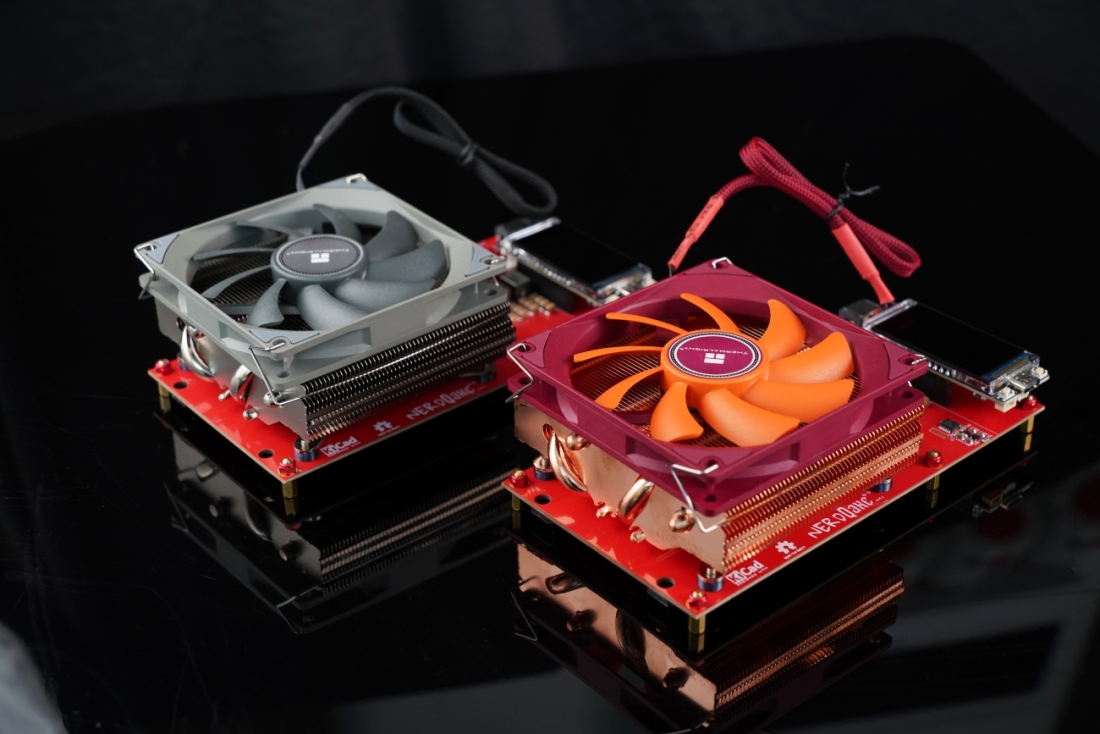
How does it work? Imagine that in the future, the value of the Bitcoin network lies not only in transactions but also in its stability as a global settlement layer. And the home node + miner you run is a screw on this super-stabilizer. This sense of participation is far more stimulating than fluctuating numbers on a ledger. For example, by running a full node and contributing a small amount of hash rate, you can directly verify transactions without trusting any third party.
- 💪 Driven by Hardware Progress: Quieter (noise <45 dB), more compact (close in size to a gaming console), smarter (plug-and-play) home miners are emerging. For instance, new products are starting to integrate advanced heat pipe technology, making "mining in the study" possible rather than being banished to the basement.
- 🏃 Driven by Model Innovation: "Hash rate as a service" or "managed home miner" models are on the rise. You don't need to delve into technical details; professional platforms provide equipment, operation, maintenance, and compliance support. What you gain is the experience of running hardware and learning. This lowers the purely technical threshold for beginners.
According to an analysis by Blockware Solutions at the 2025 Bitcoin Summit, by 2026, global shipments of household and small-scale mining equipment are expected to account for 15% of total ASIC miner shipments, up from less than 5% in 2022. The growth momentum comes from improved product experience and people's desire for autonomously controlling the foundational layer of digital assets. So, stop asking "Can mining still make money?" and start asking "Do I want to personally run a piece of the most powerful decentralized code in human history?" That "bull market," for you, starts the moment you press the miner's power button.