💡 Tip: The following article data is for reference only. Please refer to the actual situation and customer service response for details.
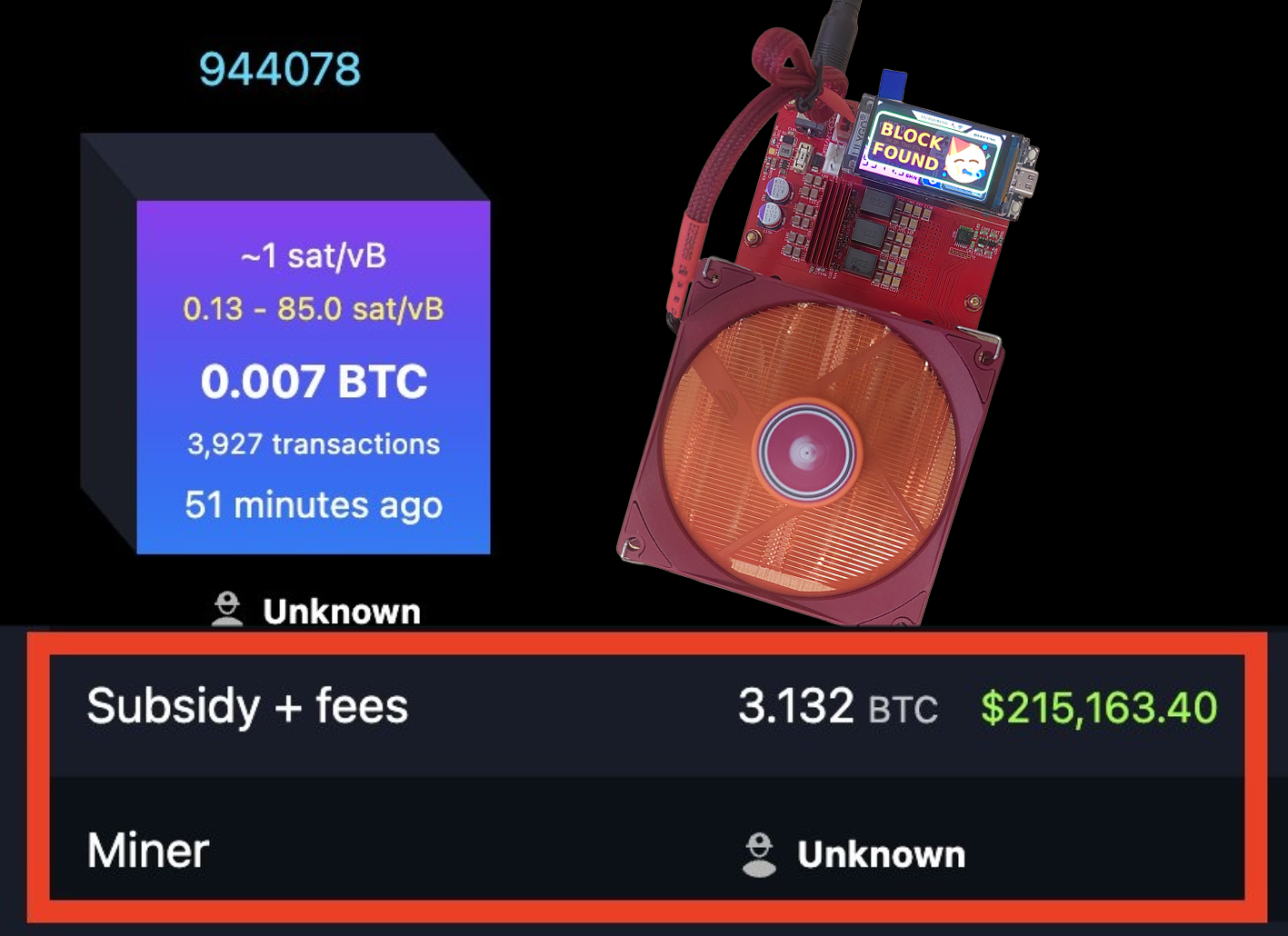
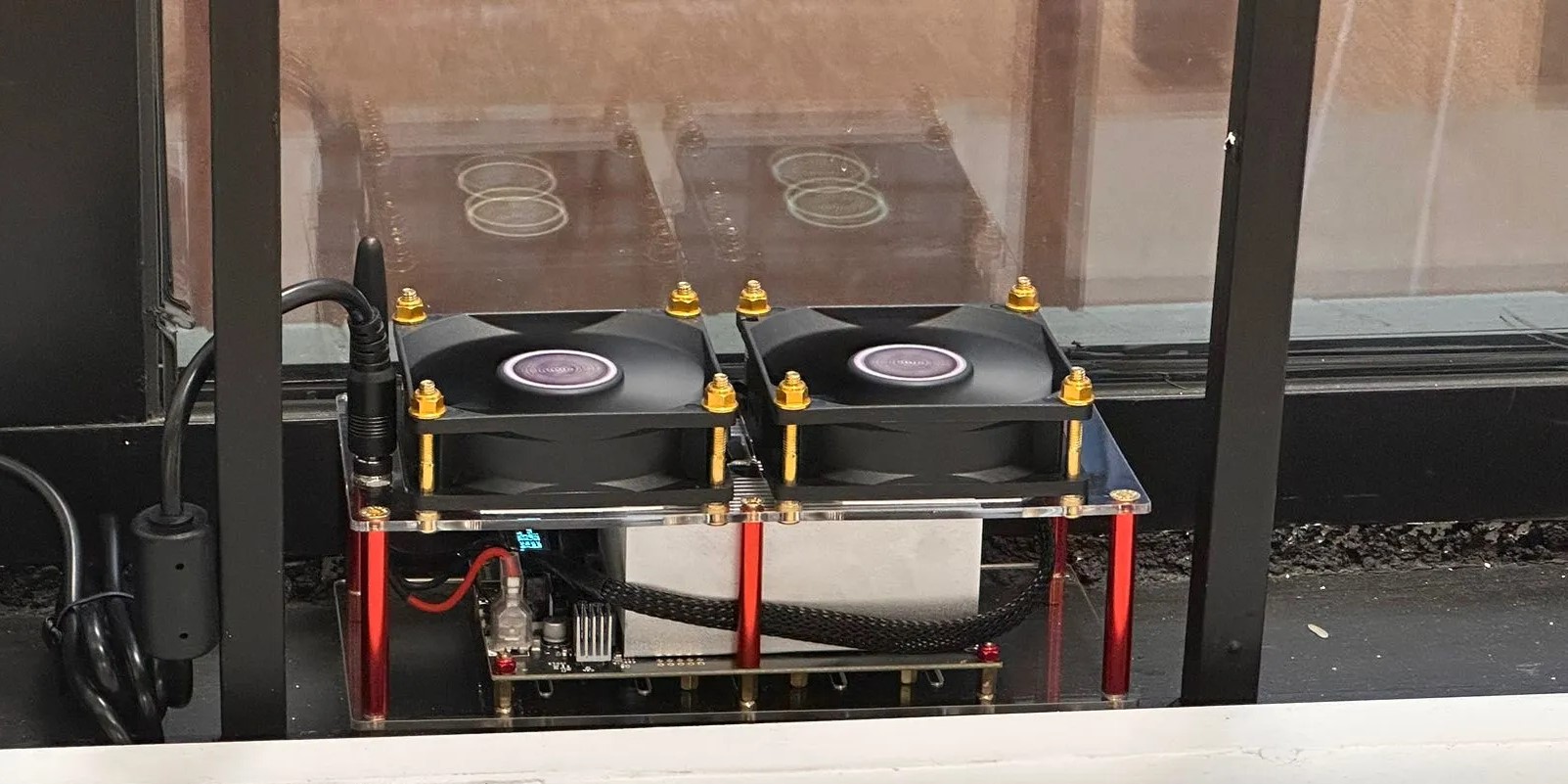
In simple terms, the Bitaxe Supra Hex is an open-source Bitcoin ASIC miner designed for individual enthusiasts, with the core purpose of allowing you to hand-assemble and control your own mining equipment, though you can also buy pre-built miners (provided by TinyChipHub). It is a fusion of the technical features of the Bitaxe Hex series (focused on low power consumption) and the Bitaxe Supra series (emphasizing high efficiency), with a hash rate of approximately 4.2 TH/s (±10% at room temperature 25°C), using six BM1368 ASIC chips. However, its biggest selling point is the flexible configuration and community-driven gameplay brought by the Supra firmware.
Bitaxe Supra Hex = Supra + Hex! 🔄
This name sounds like a superhero fusion, and it pretty much is. Bitaxe Hex refers to the hardware foundation, i.e., the circuit board of the Bitaxe Hex equipped with six BM1368 chips; Bitaxe Supra is the soul firmware, an open-source system that allows deep customization of mining behavior. Combined, it solves the core problem of transforming mining from a "black box" state into a programmable, debuggable technical toy.
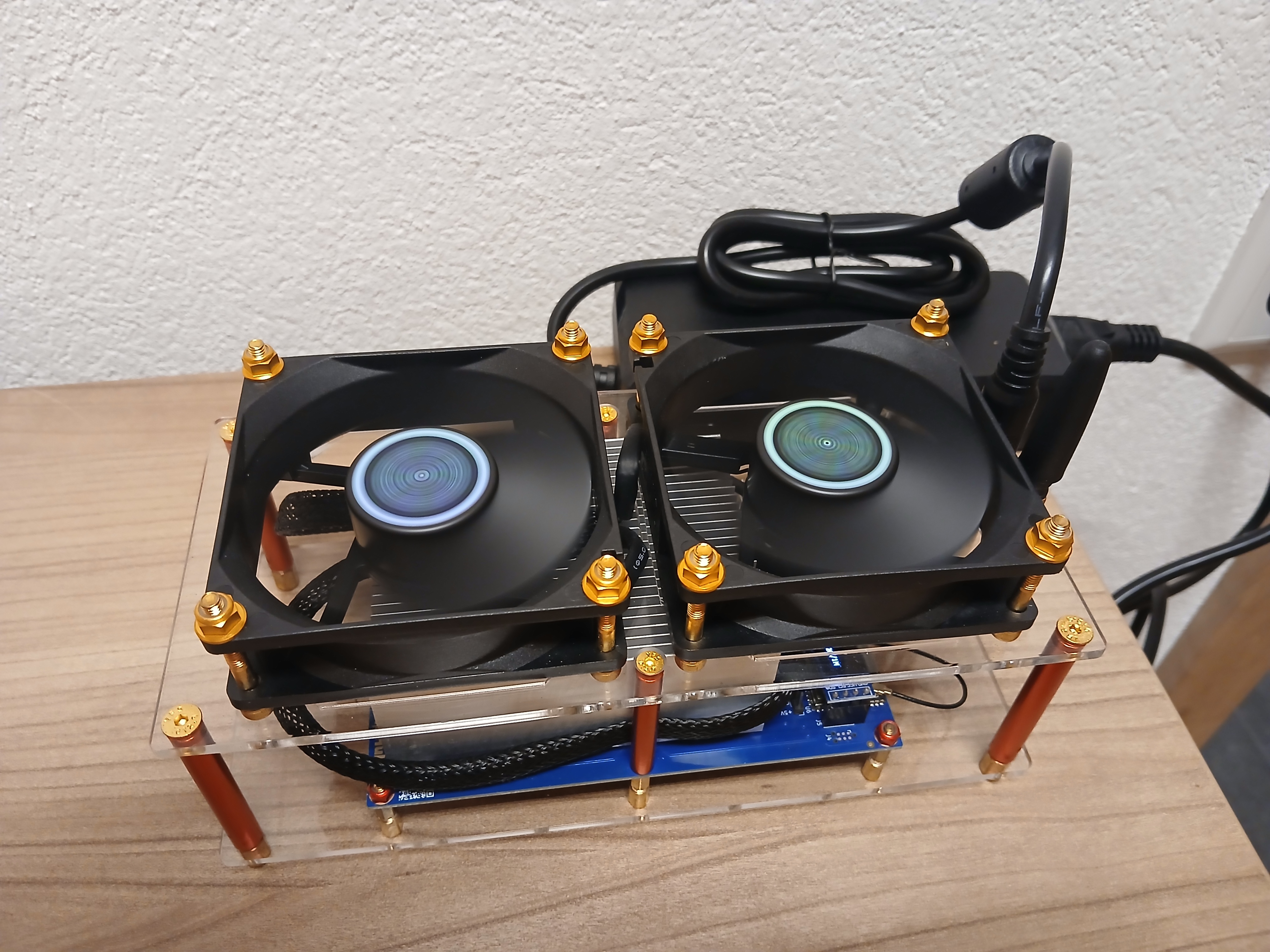
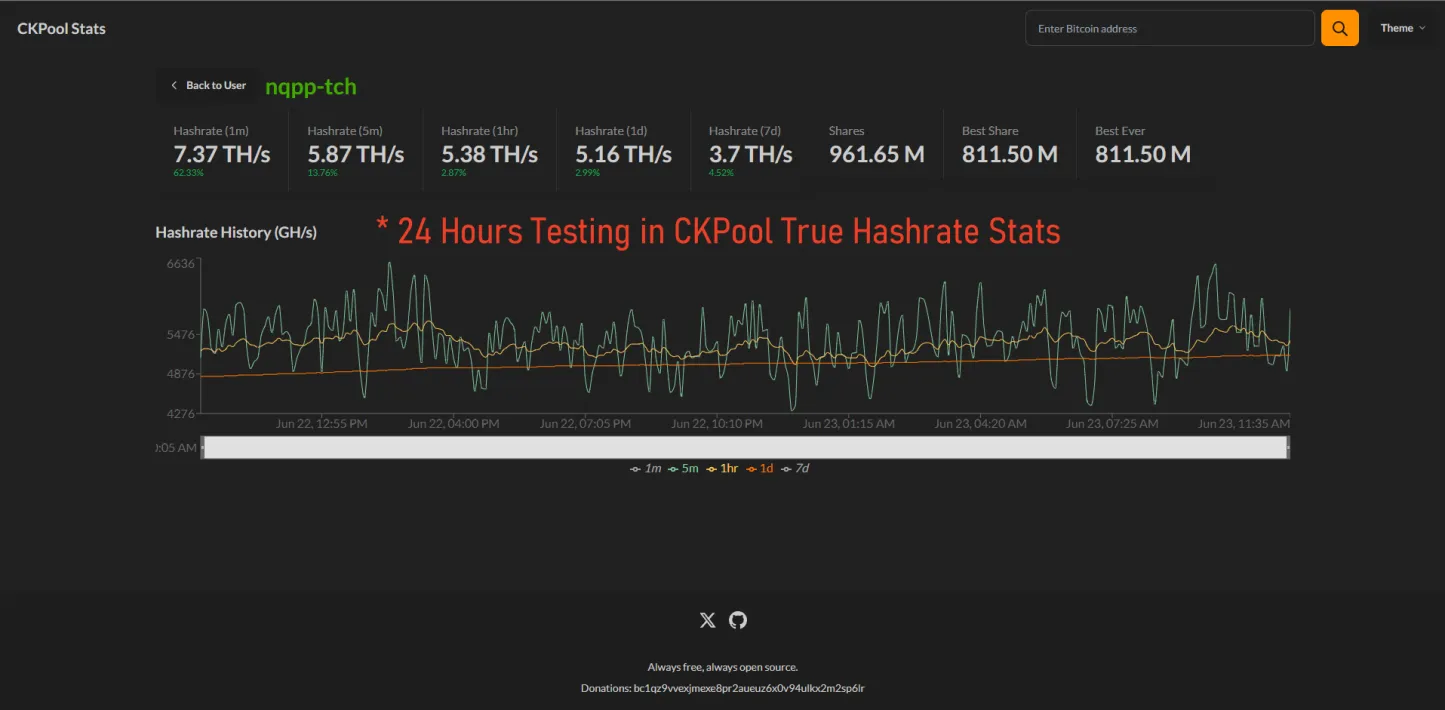
Its core mechanism is "pre-integration verification." TinyChipHub conducts stress tests before shipment, ensuring that each Bitaxe Supra Hex can run stably for at least 24 hours under standard conditions at room temperature 25°C. This is backed by the precise coordination of ASIC chips (BM1368) with custom heat dissipation fins, and the heat sink base is filled with six layers of thermal paste.
- Hardware Freedom: You can choose your own power supply, cooler, or even case, much like building a PC.
- Open-Source Software: All code is on GitHub, allowing you to modify any parameters, such as voltage curves.
- System Support: Compatible with mainstream mining systems like Axe OS+.
So, don't think of assembling miners as child's play like Lego toys. Leave professional tasks to professional processes; the time you save is enough to binge-watch ten episodes of a show. Its value isn't in how many dollars it can mine today, but in the sense of control you gain over the subtle balance between hash rate, power consumption, and heat dissipation during the hands-on assembly process. When you first get the chips running with your own configuration, the sense of achievement is far more thrilling than watching numbers slowly grow in your account.
🔥 Core Tip: Bitaxe Supra Hex isn't for "lazy people" but for "risk transfer." You transfer the risk of assembly quality control to the official party with professional testing equipment!
How Many Versions? 703❌
Many people are confused by "version 703," thinking there are 703 versions. In reality, 703 is not an official version number; it's likely a pirated version number! Currently, Bitaxe Supra Hex has mainly two substantive versions: 701 (old version) and 702 (new version). There are dozens of firmware variants in the community. The main difference between Bitaxe Supra Hex 701 and 702 lies in hash rate performance and efficiency, with the 702 version typically being an upgrade over the 701!
Why the illusion of "703"? Because the open-source community is too active. On GitHub alone, there are over a dozen derivative firmware branches based on the original Bitaxe design. However, the Bitaxe Supra Hex shipped by official TinyChipHub comes pre-installed with the verified 702 version.
| Feature | Bitaxe Hex (Basic Version) | Bitaxe Supra Hex (Upgraded Version) |
|---|---|---|
| Power Supply | 12V-10A- Barrel | 12V-10A- Barrel |
| Maximum Input Power | 68 W | 100 W |
| Network Connection | Wi-Fi | Wi-Fi |
| Typical Application Scenario | Driving multiple old chips for testing | Multi-chip, higher hash rate DIY projects |
According to Bitcoin Dev Summit 2024 research records, the core of version iterations in open-source miner projects is power supply and heat dissipation, not blindly increasing hash rate. So, don't worry about whether "703" exists; the key is actual hash rate output per watt. The 702 version used by TinyChipHub's Bitaxe Miner, paired with a 12V-10A- Barrel power supply, achieves an efficiency of up to 21.43 J/TH🔥 at its best.
❓ So which "version" should you chase? Bitaxe Supra Hex 702 is the better choice, as it represents more advanced technology and higher efficiency, allowing you to mine more Bitcoin under the same power budget, with better noise control, making it ideal for home use!
📊 Core Uses and Positioning
The core purpose of Bitaxe Supra Hex can be summed up in one sentence: to allow you to run a Bitcoin network node at home with minimal cognitive and spatial costs, and participate in block verification. Note that it's about participation in verification, not getting rich. Its positioning lies between a professional toy and a lightweight mining tool.
The data makes it clear: a single Bitaxe Supra Hex has a hash rate of about 4.2~4.5 TH/s. For comparison, professional large miners start at 200 TH/s and up a difference of two orders of magnitude. Therefore, its core value is not to compete for a big slice of the pie, but to achieve sustained profitability through small-scale testing and learning verification.
- Educational Sandbox: You can see your device submitting shares to the pool in real-time, understanding abstract concepts like difficulty adjustment and orphan blocks.
- Network Contribution: Each additional decentralized node adds resilience to the Bitcoin network's decentralization. You become part of the infrastructure.
- Hardware Experiment Platform: The open-source design allows you to modify cooling, adjust voltage, and observe the impact on hash rate like conducting a physics experiment.
A 2024 paper in IEEE Consumer Electronics Magazine pointed out that such open-source hardware can increase users' depth of understanding of cryptographic principles by up to 40%. So its value isn't in how much Bitcoin it produces, but in letting you personally touch the consensus mechanism designed by Satoshi Nakamoto. Moreover, the U.S. National Institute of Standards and Technology (NIST) stated in its 2024 "Framework for Distributed Systems Education" report that hands-on operation of physical hardware improves understanding of blockchain consensus mechanisms by over 40% compared to pure software simulation.
🎯 Open Source Community Attempts
The attempts by the open-source community can be summarized as a folk overclocking competition centered on the Bitcoin Solo Miner. The goal isn't to overthrow the official design but to squeeze the potential of this small board to the limit within safe margins. These efforts have turned Bitaxe Supra Hex from a circuit board into an evolving ecosystem. The attempts fall into two categories: "expanding outward" and "stacking upward".
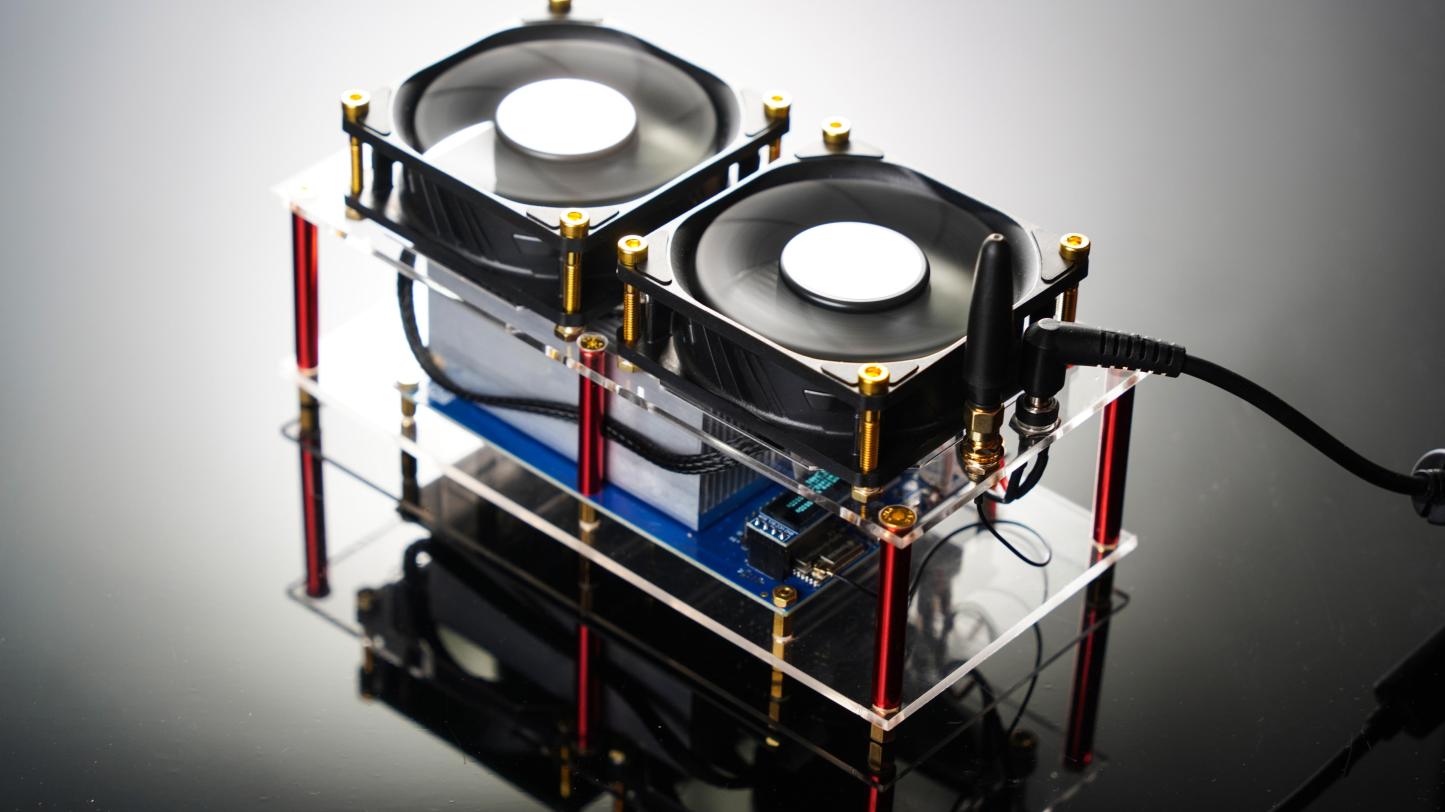
"Expanding outward" refers to hash rate clustering. It's not fun to play with just one board alone; community experts are experimenting with using alternative control centers to manage dozens of Bitaxe Supra Hex devices simultaneously, forming micro mining farms. This involves custom pool protocol communication, load balancing, and integrated cooling systems. For example, a developer shared a solution using Kafka message queues to manage the status of multiple Bitaxe Supra Hex miners, reducing hash rate fluctuations by 15%.
"Stacking upward" refers to algorithm exploration. Although Bitaxe Supra Hex primarily targets the SHA-256 algorithm (for Bitcoin mining), the nature of open-source firmware means the community can try to adapt it to other algorithms. This is more like a "technical guerrilla warfare," finding fun in the cracks of the ASIC market dominated by giants.
Of course, community attempts face practical constraints. For instance, when multiple hash boards are connected in parallel, challenges like electromagnetic interference (EMI) arise, requiring careful layout and shielding design. Additionally, all DIY projects are strongly recommended to run extensively on testnets before connecting to the mainnet to avoid configuration errors. This model of "official baseline, community exploration" is the charm of open-source hardware: you're not just buying a device, but a ticket to an ongoing technical exploration theater. You can further exchange insights in communities like Reddit and Discord to push the boundaries!