💡 Tip: The following article data is for reference only. Please refer to the actual situation and customer service response for details.
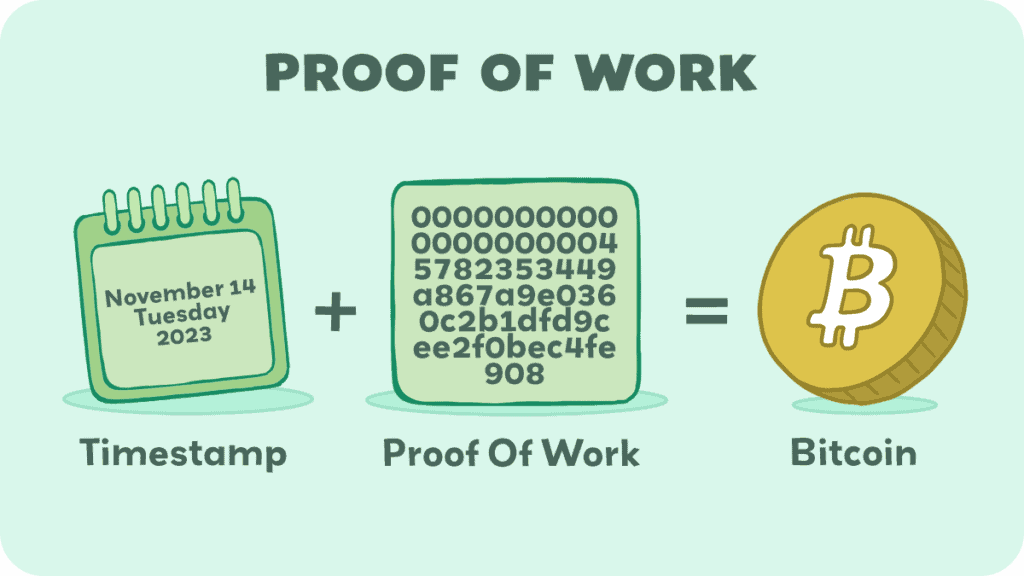
Simply put, Proof of Work (PoW) is a decentralized cryptographic consensus mechanism primarily used to prove that work has been completed to verify network transactions and generate new Bitcoin blocks. You can simply imagine it as a "physical competition" within the Bitcoin network! Miners (for example, using the Bitaxe Gamma) must rely on real computing power to solve the SHA-256 mathematical puzzle and compete for the right to record transactions. The winner receives a block reward of approximately 3.125 BTC (after the fourth halving). This process is like all miners on the network simultaneously working on an extremely difficult math problem; whoever solves it first gets the reward and helps the Bitcoin network record a new ledger page. It is completely decentralized, requiring no approval from any bank or government.
PoW ? Important🔥
Proof of Work (also written as proof-of-work, abbreviated as PoW) is a form of cryptographic proof in which one party (the prover) demonstrates to another party (the verifier) that a certain amount of specific computational work has been expended. The verifier can subsequently confirm this expenditure with minimal effort.
It was first proposed by Moni Naor and Cynthia Dwork in 1993 to combat spam and Denial-of-Service (DoS) attacks. Later, Hal Finney adapted it in 2004 as "reusable proof of work." With the advent of blockchain, Satoshi Nakamoto implemented PoW (Proof of Work) in 2009, successfully using it as the foundation for consensus in a permissionless, decentralized network, thereby achieving a trustless peer-to-peer ledger. Although blockchain technology is effective in terms of security, its high energy consumption has prompted many newer blockchain projects to adopt more energy-efficient alternatives, such as Proof of Stake (PoS).
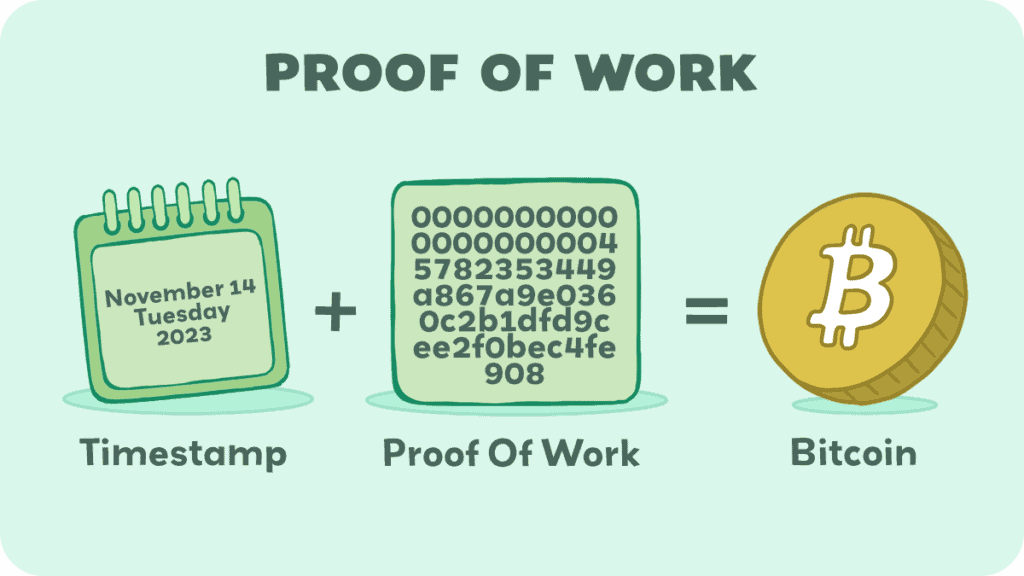
This briefly introduces the core mechanism, where miners primarily compete to participate in and solve a complex, computationally intensive cryptographic puzzle (hash) to obtain virtual cryptocurrencies like Bitcoin (BTC), Litecoin (LTC), Monero (XMR), and Dogecoin (DOGE). The first miner to solve the puzzle broadcasts the block to the network for verification. Because solving the puzzle requires immense computing power, tampering with the blockchain requires controlling over 51% of the network's computing power, making it highly secure against attacks and possessing functions to prevent fraud and double-spending. However, compared to Proof of Stake (PoS), it still has weaknesses such as high energy consumption, slow transaction speed, and poor scalability.
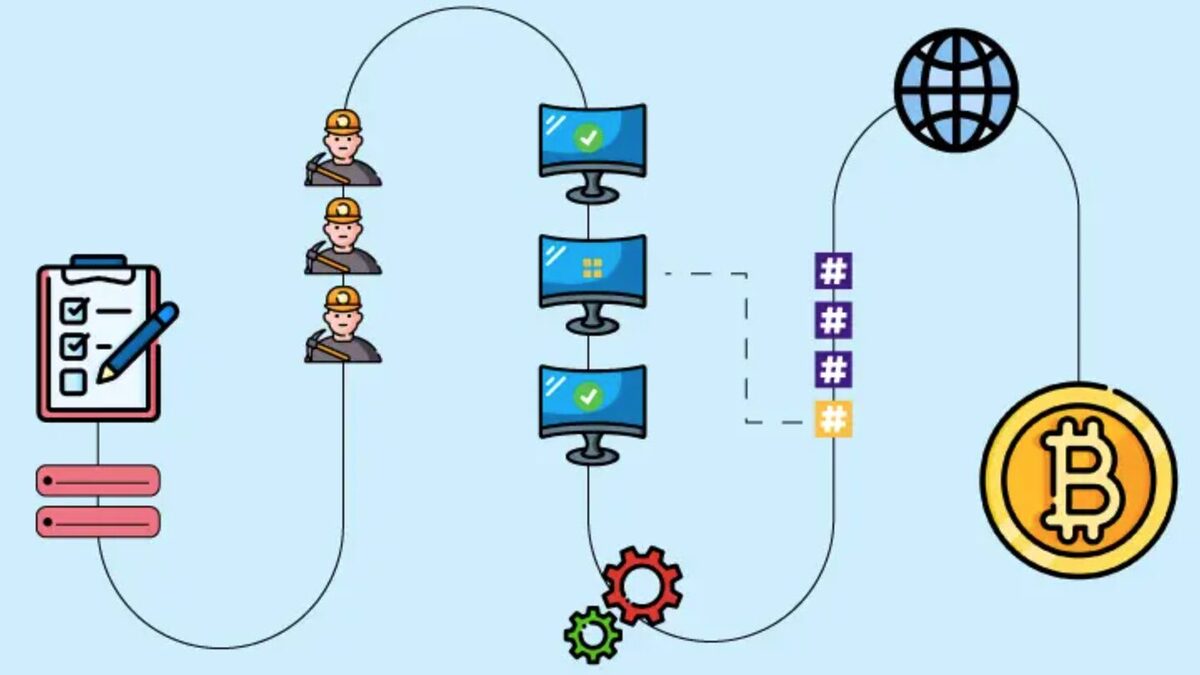
Taking Bitcoin as an example, it solves the Byzantine Generals Problem (a famous distributed computing fault tolerance problem) by providing a way to communicate securely and transfer value without needing to trust each other. This method is based on a network of nodes that confirm the authenticity of transactions before they are timestamped. Once a node records a transaction, a copy of that transaction is propagated to all other nodes in the network. Proof of Work (PoW) was created precisely to achieve this goal.
To maintain the stability of the Proof of Work system, Satoshi Nakamoto implemented a simple yet ingenious solution called the difficulty adjustment algorithm. This algorithm adjusts the difficulty of finding a new block approximately every 10 minutes. This is crucial to prevent new blocks from being discovered too quickly as more miners join the network. Simultaneously, it ensures that the mining process does not become excessively slow even if mining activity decreases.
Hot Knowledge🔥: The U.S. National Institute of Standards and Technology (NIST), in its 2022 report on distributed consensus, classified PoW as a "cost-based consensus," where its security is directly tied to the consumption of external resources. It's like the security door in your home; the heavier and more complex its craftsmanship (the more resources consumed), the higher the cost of brute-force breaking. PoW puts a lock on the blockchain using the same principle.
🔨PoW ≠ PoS
Proof of Work (PoW) requires consuming energy to ensure Bitcoin maintains its position as the world's most secure network, whereas Proof of Stake (PoS) cannot solve the problem of malicious entities potentially causing interference. Instead, PoS sacrifices security for scalability, making it a faster blockchain but one that cannot be fully trusted. The costly nature of Bitcoin's Proof of Work consensus mechanism incentivizes participants to only publish truthful information.
Proof of Stake (PoS) is the consensus mechanism adopted by most altcoins, digital penny stocks, and other Ponzi schemes marketed as alternatives to Bitcoin. Its consensus is achieved through "staking," which requires investors to lock the chosen protocol's tokens in the system, making them unspendable. However, the more tokens staked, the higher the probability of being chosen to validate transaction blocks. Considering that most altcoin tokens are distributed to insiders and developers before public issuance, it's easy to see how poorly designed decentralization is in Proof of Stake networks.
The main differences between the two mechanisms are referenced below:
| Comparison | PoW (e.g., Bitcoin) | PoS (e.g., Ethereum 2.0) |
|---|---|---|
| Participation | Requires mining hardware and related knowledge; anyone can participate (e.g., Bitaxe Miner, entry-level starting at ~50-100) | Requires staking a large amount of the native token (often worth tens of thousands of USD or more) |
| Security | Requires controlling 51% of global hash rate; physical hardware and energy consumption make attack costs extremely high | Economic collateral and slashing mechanisms; attackers stand to lose their own staked assets |
| Resource | High energy consumption, but energy sources are increasingly green (~58% of North American mining uses sustainable energy) | Very low energy consumption, primarily the electricity for running ordinary validator node servers |
| Decentralization | Hash rate is distributed globally; miners can join/exit at any time | Validator nodes tend towards large holders; the "rich get richer" Matthew effect exists |
For us miners who enjoy tinkering with hardware and relish the feeling of "building with our own hands," the charm of PoW is irreplaceable. The thrill of seeing the luck value of your small mining pool increase by a few dozen percentage points because you optimized the firmware parameters of your Bitaxe is not something that can be matched by simply clicking a mouse to stake assets. PoS may be more "eco-friendly," but PoW is more "hardcore," more in line with the old saying: "You have to give something to prove you own something."
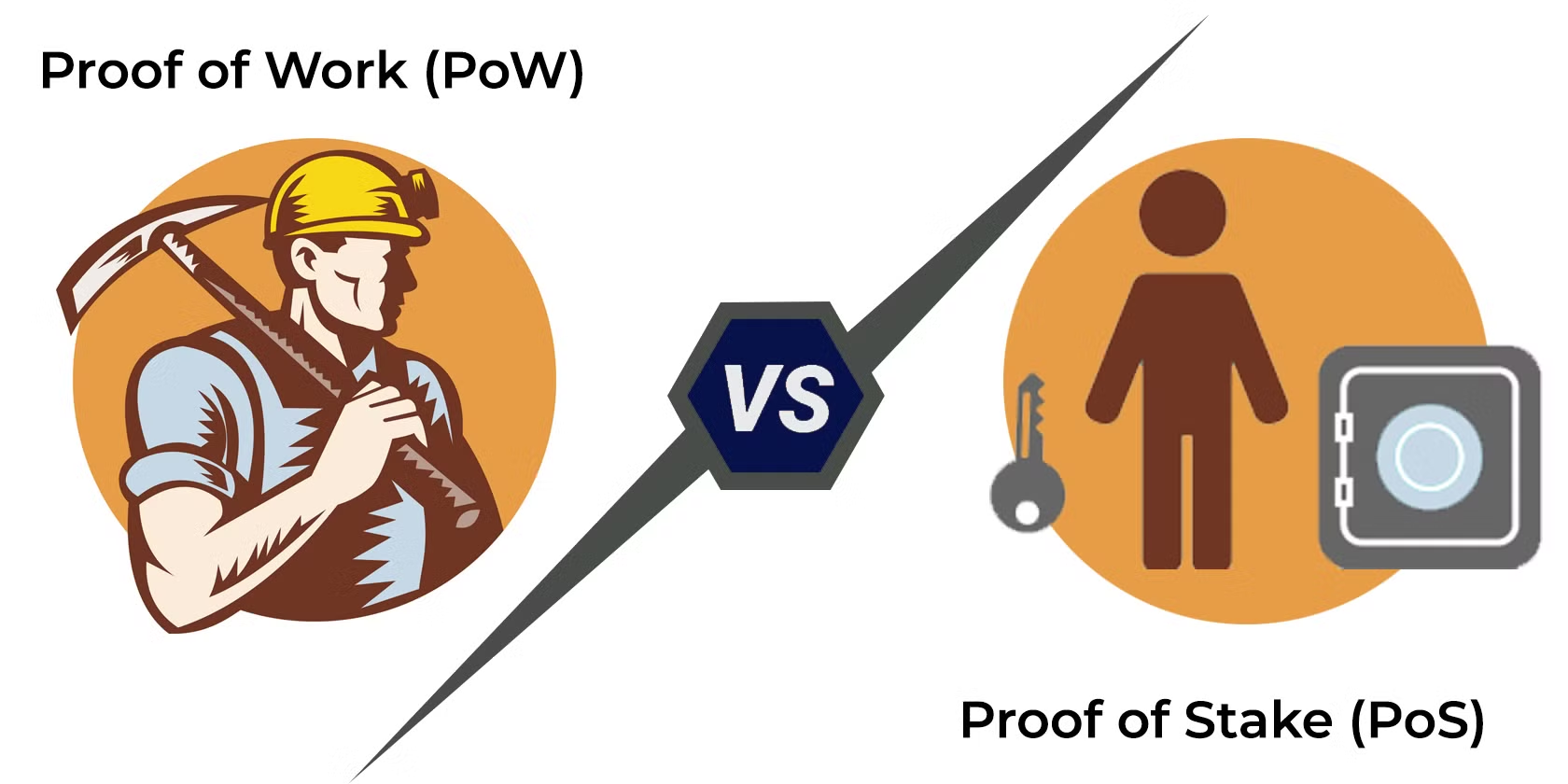
According to the CoinMetrics Q1 2024 report, Bitcoin miners are geographically distributed across more than 65 countries, while the top 10 PoS validators control over 60% of the staked assets. For home miners, the appeal of PoW lies in the fact that a Bitaxe Gamma Turbo is a physically existing "vote"—power it off and you're out of the race. PoS, on the other hand, is more like a financial game where you need a large entry fee. Don't forget, the U.S. SEC has maintained strict regulatory scrutiny regarding the securities attributes of some PoS projects, but PoW mining is explicitly considered data processing services in most jurisdictions.
⏳ How It Works
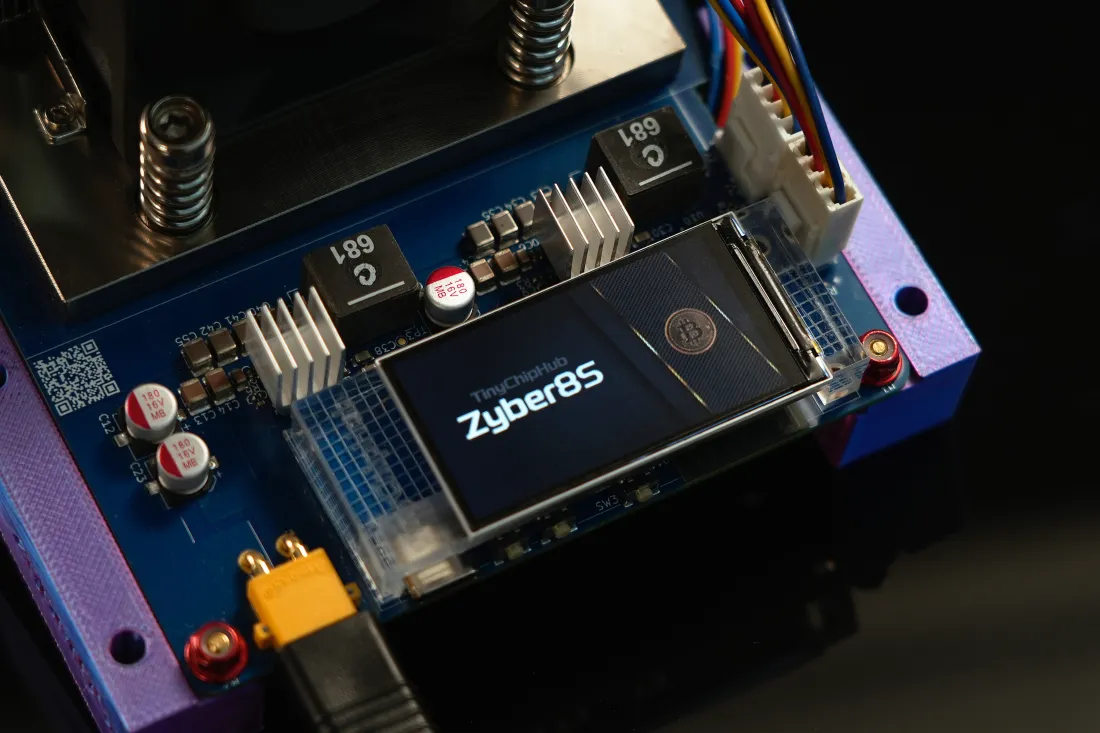
The operation of PoW is like a "digital lottery" held by global miners every 10 minutes. Don't think it's some profound AI calculation; at its core, it's about making your mining rig (like your Zyber 8G Premium) frantically "roll dice" to see who can be the first to roll that super lucky number that meets the requirements.
Specifically, it's a four-step process, taking you on an immersive experience:
- Collect Transactions: Nodes package the unconfirmed transactions broadcast across the network into a "block template."
- The Puzzle-Solving Competition Begins: The mining rig adjusts a value in the block header called the "nonce" (Number used ONCE) and performs a SHA-256 hash operation on the entire block header. The goal is to obtain a hash result smaller than the current "target value." This relies entirely on massive numbers of attempts.
- The Lucky One Emerges: Suppose your Zyber 8G Premium luckily finds this nonce. You immediately broadcast to the entire network: "I solved it! Here is the new block and the proof!"
- Verification and Chaining: Other nodes can instantly verify if your answer is correct (verification is easy). If correct, they will start the next round of competition based on your block, and your block is thus permanently engraved on the chain.
This "target value" determines the difficulty. Approximately every 2016 blocks (about every two weeks), the Bitcoin network dynamically adjusts this target value based on the total hash rate of the entire network over the past two weeks, ensuring the average block time remains stable at around 10 minutes. This is the "difficulty adjustment" mentioned above, proposed by Satoshi Nakamoto to maintain the stability of the Proof of Work system. For example, after an adjustment in October 2025, the mining difficulty reached a historical high of about 155 T, meaning it became particularly hard to "win the lottery," but the reward would be worth more.
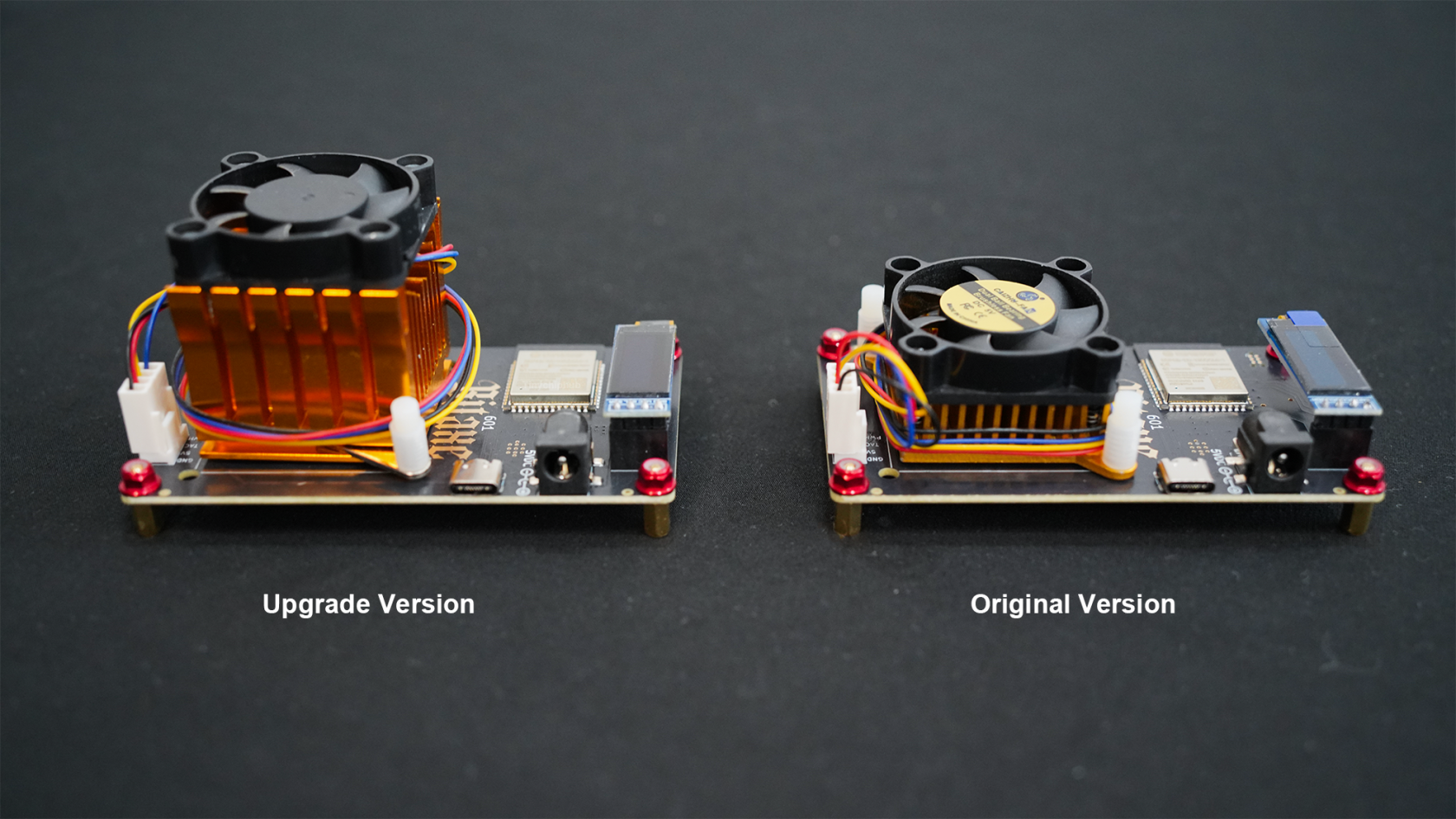
Your mining rig, whether it's the compact Bitaxe Gamma or the ultra-powerful Zyber 8G Premium, plays the same role in this process: a tireless, high-speed "hash guessing machine." Its entire job is to execute the SHA-256 algorithm, making billions or even trillions of attempts per second. The miner connects to a mining pool via mining firmware (like Axe OS+), pooling your modest individual hash rate into a torrent that can compete with large mining farms, thereby increasing the chance of earning stable rewards.
Pros✅ & Cons⚠️
First, the biggest advantage: security, security, and absolute security. PoW's security has been proven through over 15 years of real-world, trillion-dollar scale testing and has never been successfully breached. Its security model is simple and brutal: want to launch a 51% attack? You first need to control most of the global hash rate, a cost so high that no single entity or nation would find it worthwhile. As for some Bitcoin and related virtual cryptocurrency fraud incidents that appeared in January and February 2026, they were mainly issues with other software, not PoW, which already proves its exceptional value!
- ✅ Decentralization Potential: Theoretically, anyone with electricity and a miner (like a Bitaxe GT in the garage) can participate; permissionless entry.
- ✅ Clear Value Proposition: The coin price is backed by real energy and hardware costs, providing a clear "cost of production" floor.
- ✅ Censorship Resistance: Once a transaction is confirmed by sufficient hash power, it is almost impossible to reverse or delete, providing strong property guarantees.
⚠️ The drawbacks are also as obvious as the noise from some industrial mining rigs:
- ⚠️ Energy Consumption and Centralization: Although the proportion of renewable energy is increasing, hash rate still concentrates in regions with cheap electricity, potentially affecting geographical decentralization.
- ⚠️ Hardware Arms Race: ASIC miners iterate quickly, making it difficult for ordinary users to keep up with top-tier mining farms, easily leading to hash rate centralization in a few large mining pools.
- ⚠️ Entry-Level Noise and Thermal Management: Home mining requires solving heat dissipation and noise issues (choose brands like TinyChipHub that focus on quiet design, e.g., Bitaxe GT at only 34 dBA, with heat dissipation also stabilized at 55~65°C).
But for us home miners, some of these "drawbacks" have instead become part of the fun. Researching how to run chips at lower voltages (reducing power consumption), designing a quiet cooling duct for the miner, or even using the miner's waste heat to warm a small room have all become joys for tech enthusiasts. PoW mining has never been an easy path, but it is a path you can touch with your own hands, constantly optimize, and truly feel the pulse of the network. It doesn't promise sudden wealth, but it does promise this: as long as you contribute computation, you are contributing a physical force that cannot be tampered with to this greatest cryptographic experiment in human history.