If you have a Solo Bitcoin Miner, you will definitely have seen these three words —— VRM. This is Miner 101 from the TinyChipHub.Today, we're opening up that black box.
- What is a VRM?
- How does it work?
- And why do different miners use completely different approaches to solve the same problem?
I'm Winston. Let's get into it.
1、What is VRM? Principle Explained
In episode one, we talked about capacitors — the tiny soldiers that keep your power clean. Before that power reaches those capacitors, it goes through a set of chips and circuits. This is the VRM — the Voltage Regulator Module.
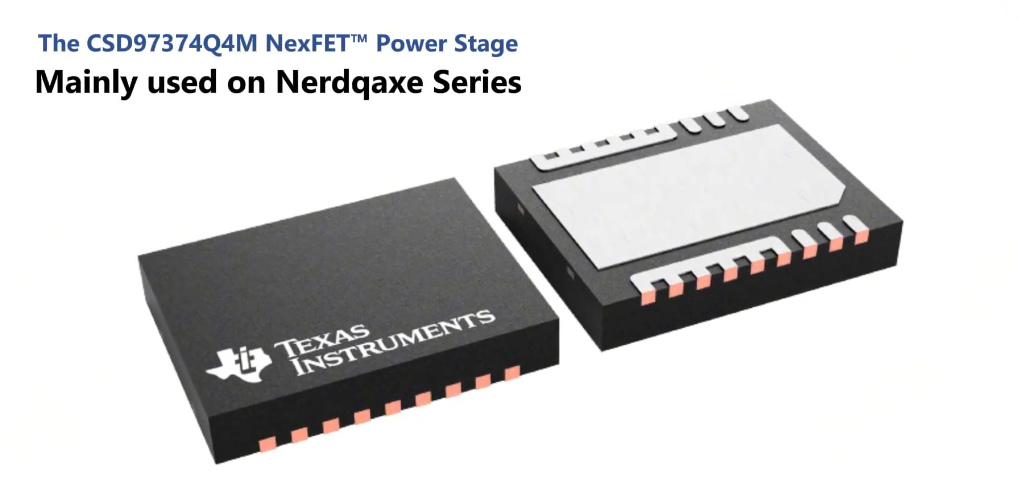
Your PSU gives you 12 volts DC. But your ASIC chip wants about 1.2 volts — and a ton of current. The VRM is the circuit that takes 12V and steps it down to 1.2V, at the same time delivering massive clean, stable current for the ASICs.
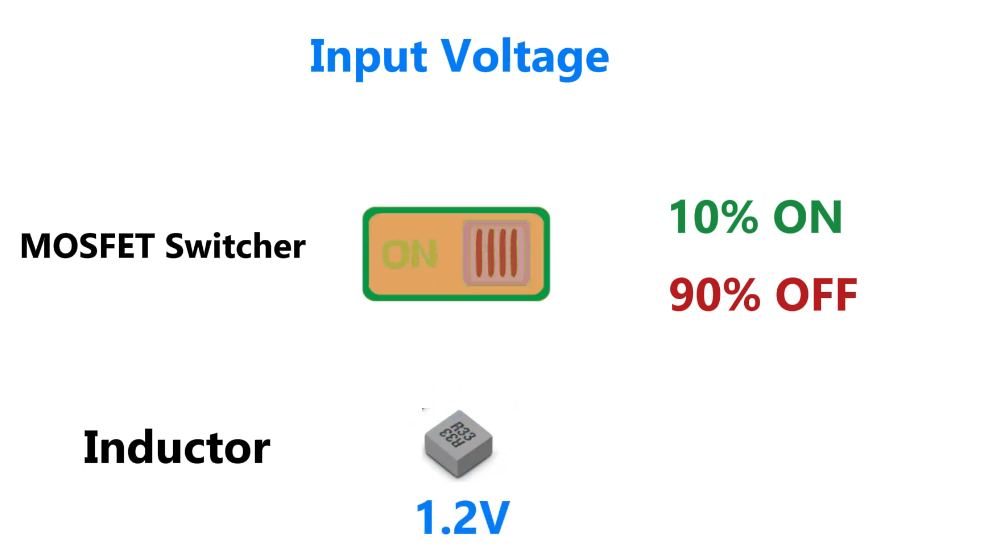
Here's How it Works ?
It doesn't burn off the extra voltage. It uses a switcher — a MOSFET — that turns on and off thousands of times per second. The ratio of on-time to off-time determines the output voltage.
📈For Example: if 10% time is on, and 90% off — the the voltage delivering will drop from 12V to 1.2V. But those pulses are choppy. So after the MOSFET, you add an inductor to smooth the current. Then capacitors to filter the last ripple — that's our episode one. At last, clean power to your ASIC Miner.
2、Stacked Design
Now, here's where things get interesting. There are two completely different ways to put this on a board. Both methods get the job done. But one is a team of independent thinkers. The other is a foreman and a crew. Let me show you what I mean.
First, the Stacked Approach (Taking NerdQaxe++ as an example).
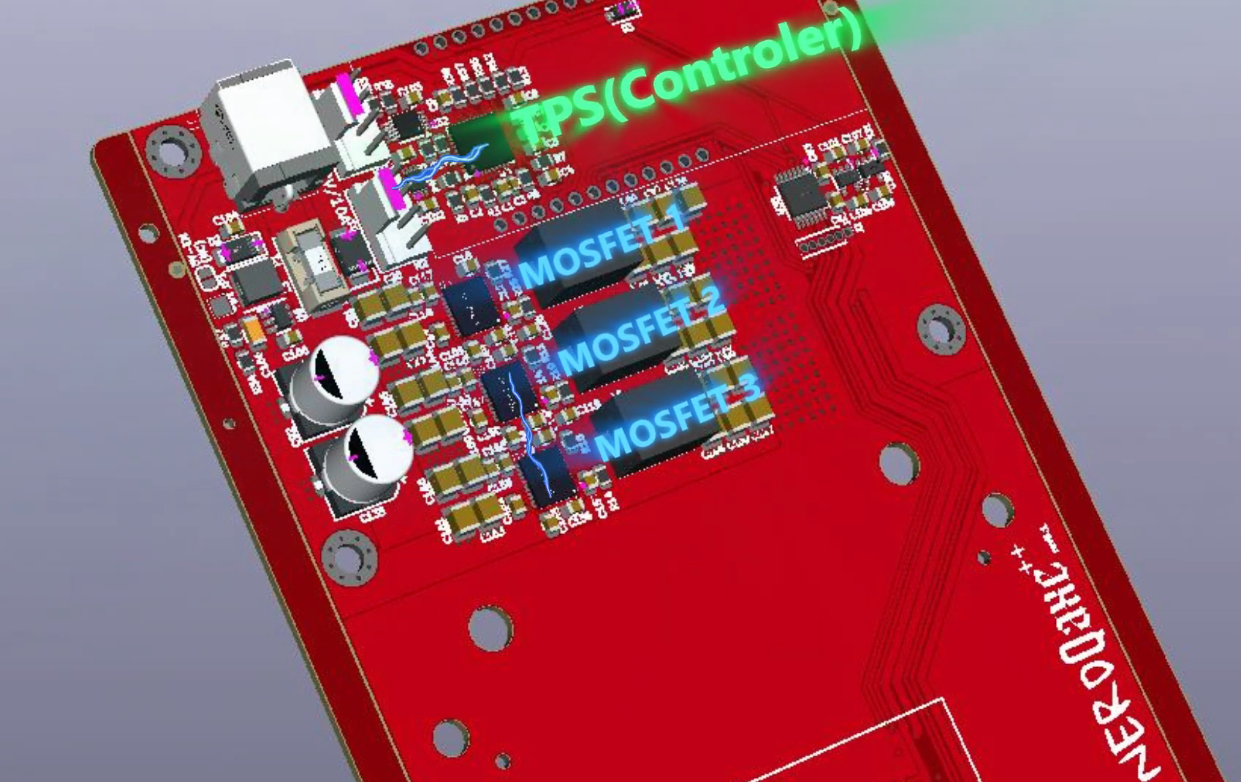
Imagine a foreman shouting orders at a bunch of workers. They're strong, but they don't think. If the foreman stops, everyone stops. Some other models do exactly this — one standalone controller commanding multiple external power stages.
Need more power?
Just hang more workers on the foreman. It's convenient, but the trade-off is: your board gets bigger and bigger every time you want more power, and everything depends on that one controller.
Here's the thing. When both designs deliver the same current, the difference isn't on the spec sheet. It's in the mindset. Neither way is wrong. But We just prefer elegance.
Stacking is convenient and makes total sense for a lot of projects. But we're just wired differently. We'd rather spend the extra time optimizing. We believe that When you strip away everything unnecessary, what's left is inherently more reliable.
3、Zyber 8G: Choose Integrated Design
Now, the Integrated Approach.
Imagine a team of muscular guys. Each one has his own brain, his own muscles, knows exactly what he's doing. They work together, share the load.
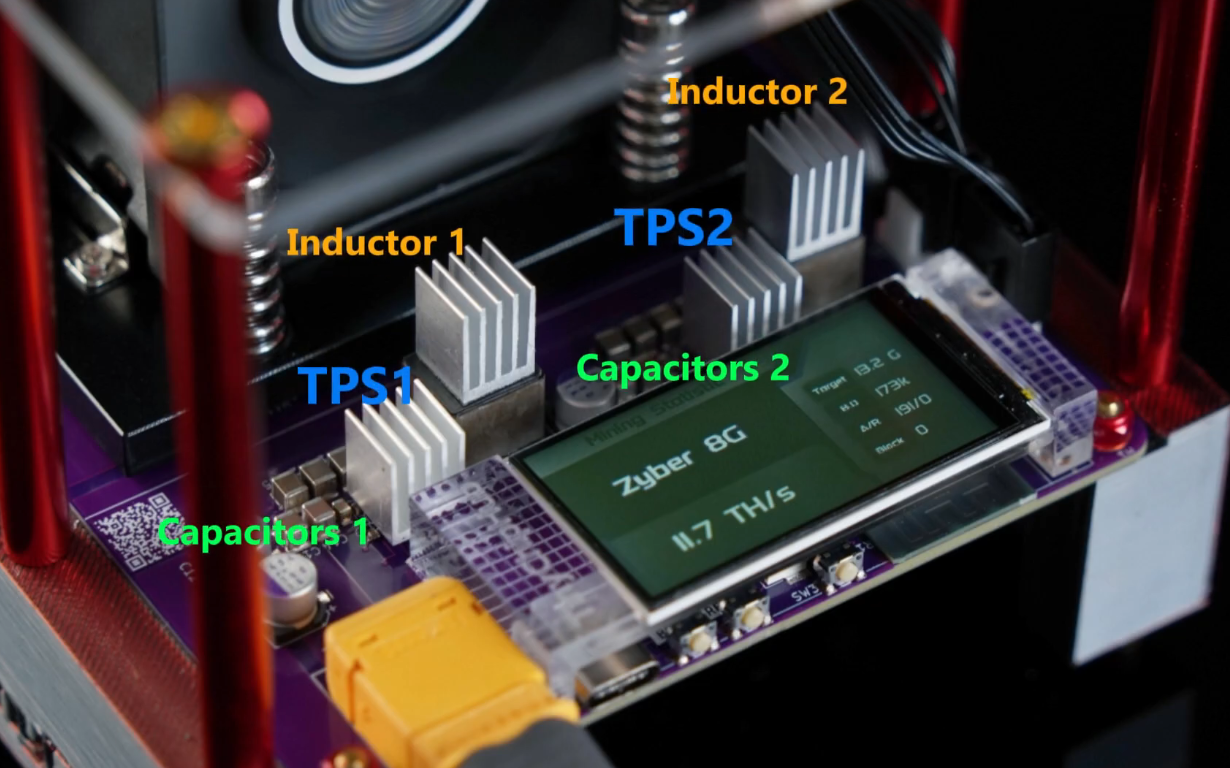
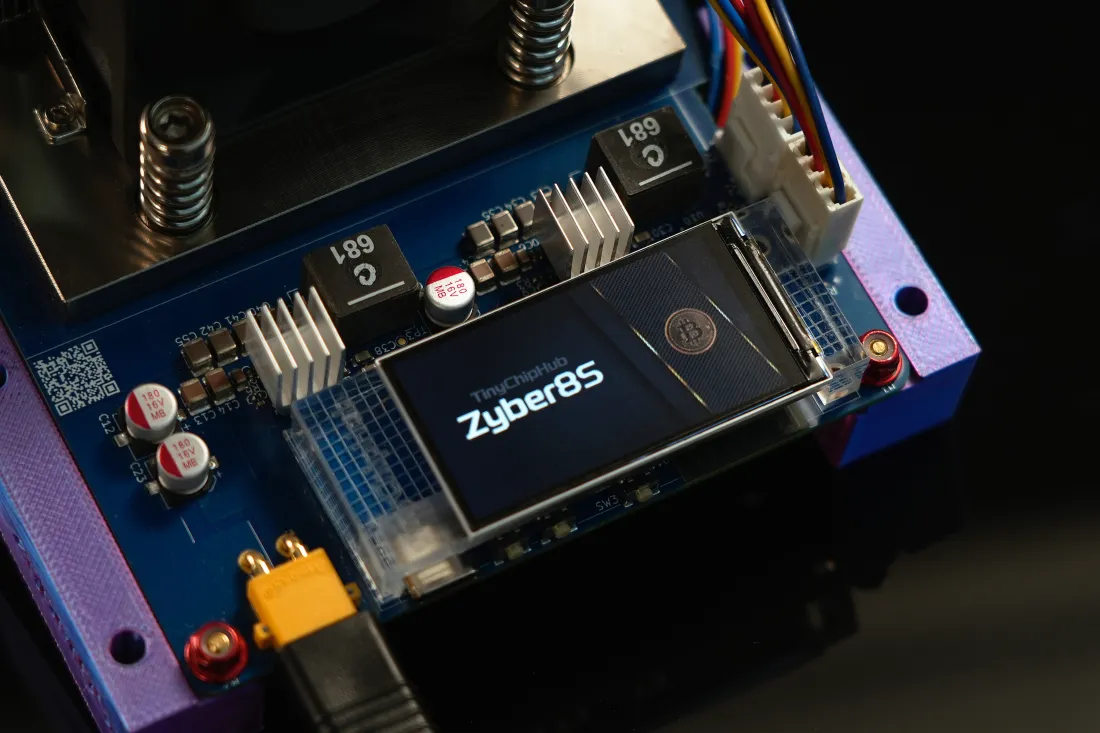
That's exactly what we did on the Zyber 8G. We use a TPS chip from Texas Instruments — a fully integrated buck converter. Controller and MOSFETs, packed into one package. Pair it with an inductor and capacitor — and that's one complete VRM.
We put two of these VRMs on the board. Two independent powerhouses working together, sharing the load across 8 ASIC chips and provide you the stable operating 24 hours per day.
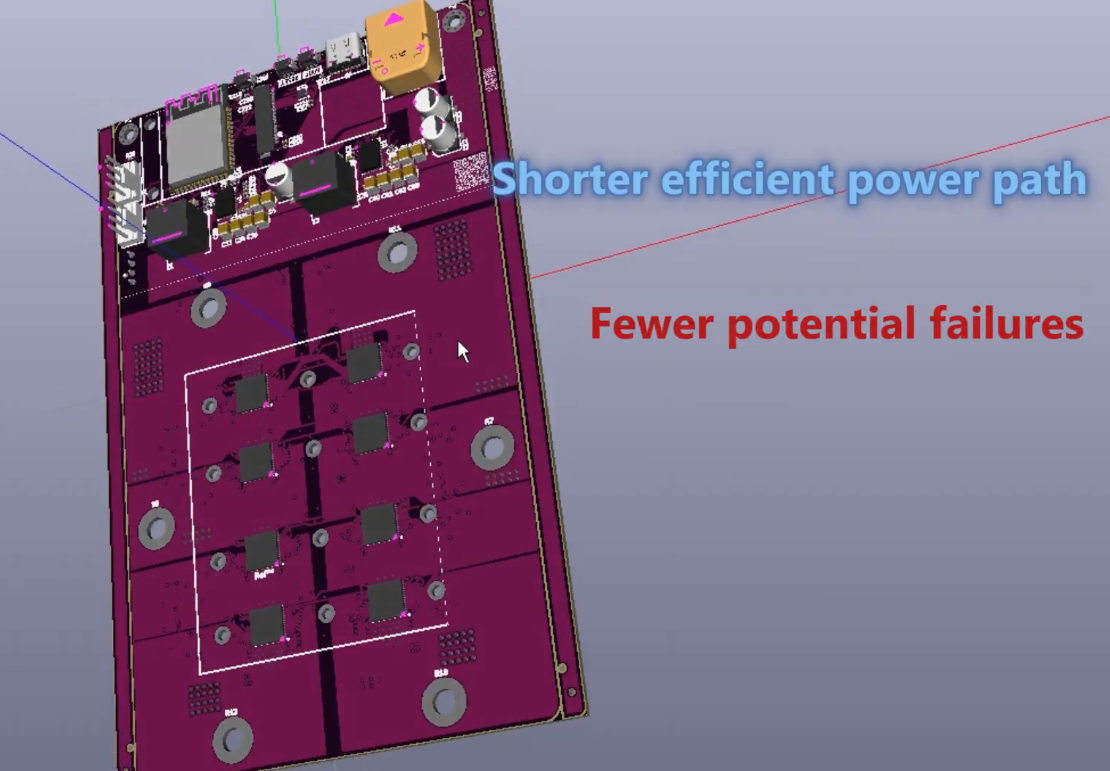
Why do we like this approach? Let me lay it out.
- A Shorter, More Efficient Power Path. Fewer components, fewer potential failure points.
- Compact Layout. Integrated means we can keep the whole power section tight and clean. This is why our multi-chip machines stay small enough to sit on your desk, not in your garage.
- Independent Operation with Built-in Redundancy. Each VRM is self-contained. They share the load, so there's plenty of headroom. It's a team.
4、Upgrades to Zyber 8G Plus
Now, for the upcoming new model Zyber 8G Plus.
We kept the integrated architecture from the Zyber 8G Premium and pushed it further. Three independent VRMs — because the Zyber 8G Plus runs 12 ASIC chips. More chips, more power, more muscle.
We also optimized the circuit to give each TPS its own dedicated external power supply. This reduces heat inside the chip, improves efficiency, and makes the whole system more stable under overclocking.
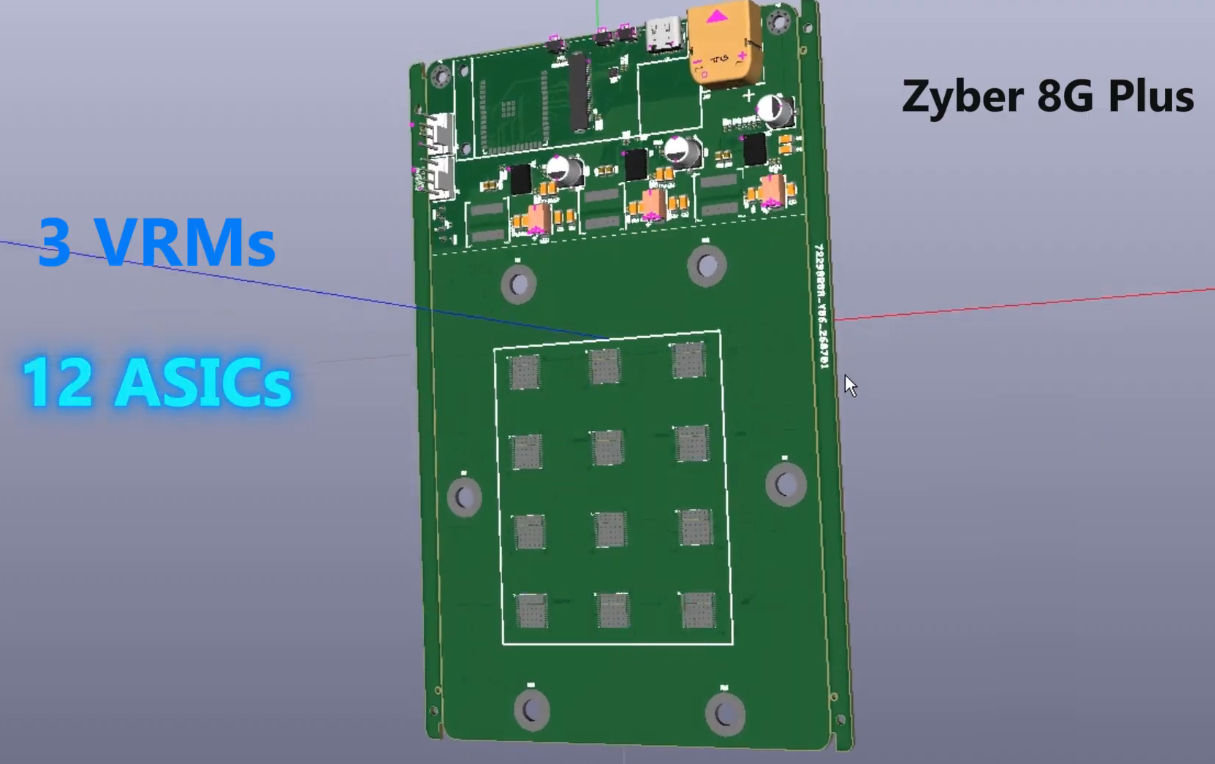
Same philosophy. Same obsession with doing more with less. Just better.
OK, that's it for today. If this episode helped you, like and share. Questions? Drop a comment. We read every one.
I'm Winston from TinyChipHub. Know your Hardware. Mine Smarter. See you next episode.
5、FAQs