Bitcoin has a maximum of only 21 million coins, but "total supply" and "actual circulating supply" are not the same thing. As of early 2026, approximately 19.99 million BTC have been issued, exceeding 95% of the 21 million cap; based on the block reward of 3.125 BTC after the fourth halving, approximately 450 BTC are added daily, while a large amount of lost or permanently inaccessible BTC does not equal truly actively circulating BTC.
1. BTC Circulating Supply ≠ Total Supply
Many people new to Bitcoin equate "already mined BTC" with "BTC that can actually be used in the market" as the same circle. In reality, a very critical technical fact separates these two numbers: being issued does not mean it is still accessible now.
Bitcoin's designed maximum is 21 million BTC, and each BTC can be divided into 100 million satoshis, meaning 1 BTC = 100,000,000 satoshis. The MAX_MONEY in the current Bitcoin Core source code is 21,000,000 × 100,000,000 satoshis, and the source code also specifically states that this value is a monetary range check in consensus verification, not to be simply understood as "the amount of BTC that exists now."

This distinction is particularly interesting for home miners. When you run a small ASIC miner, the miner does not "manufacture a complete BTC". It participates in the PoW (Proof of Work) network and obtains block subsidies and transaction fees by mining blocks. After the 2024 halving, the current block reward after the fourth halving is 3.125 BTC; based on an average of approximately 10 minutes per block, approximately 144 blocks are produced per day, corresponding to approximately 450 BTC in new issuance.
| Concept | Meaning | Current Understanding |
|---|---|---|
| Total Amount of Bitcoins | Maximum monetary range in protocol design | 21,000,000 BTC |
| Issued Supply | BTC already issued through block subsidies | Exceeded 95% by early 2026 |
| Circulating Supply | BTC generally considered still available for use in the market | Lower than the simple issued amount |
| Lost BTC | BTC that cannot be accessed due to lost private keys, device damage, etc. | No precise on-chain number |
Moreover, Bitcoin does not work in integer units like dollars or euros. A wallet may contain only 0.001 BTC, or only a few hundred thousand satoshis. For miners, this means that the observation unit of block rewards, the display unit of wallet balances, and the minimum on-chain unit are not exactly the same. When testing mining machines, I prefer to look directly at three dimensions: BTC, sat, and block height, rather than just staring at a single "circulating supply" number.
What is truly worth paying attention to here is not the supply displayed on a certain website, but whether the Bitcoin Core consensus rules, PoW, and block verification logic are consistent. Real-time numbers from different data websites may have slight delays, but the monetary range at the protocol level will not change due to webpage refreshes. 21 million BTC sounds like a fixed inventory, but the reality is more like a warehouse that is "constantly shipping goods while someone loses the keys to the goods." The inventory cap is fixed, but the number of keys that can actually open the warehouse door may be even smaller.
2. Can the 21 Million Cap Be Changed?
Theoretically, Bitcoin's software rules can be modified; but technically, "being able to change the code" and the network "accepting the modification" are two different things. 21,000,000 BTC is not a database number written on a central server, but is jointly constrained by consensus rules, block verification, and currency issuance rules executed by node software such as Bitcoin Core.
The most crucial point is that miners cannot unilaterally decide to increase the block reward. Suppose someone modifies their software to reward 100 BTC per new block, and then mines a new block; other nodes following the existing consensus rules will check this coinbase transaction. If the block violates the currency issuance rules, it will not be accepted by normal nodes.
- Miners: Responsible for PoW calculations and attempting to produce new blocks.
- Nodes: Verify whether blocks and transactions comply with consensus rules.
- Developers: Can propose code modifications, but cannot force the entire network to upgrade.
- Users and Ecosystem: Decide which software rules are ultimately widely adopted.

This is why "modifying the 21 million cap" is not as simple as editing a number. The Bitcoin Core source code currently still writes the monetary range corresponding to 21 million BTC into the consensus-critical code, and clearly states that changing such consensus-critical values may cause a network fork. From the perspective of the time mechanism, Bitcoin also does not use a forever-unchanging issuance speed. The initial block subsidy in 2009 was 50 BTC; it was reduced to 25 BTC in the first halving in 2012, reduced to 12.5 BTC in 2016, reduced to 6.25 BTC in 2020, and further reduced to 3.125 BTC in 2024, as shown in the chart below.
| Halving Year | Block Reward | Typical Daily Issuance |
|---|---|---|
| 2009 | 50 BTC | Approx. 7,200 BTC/day |
| 2012 | 25 BTC | Approx. 3,600 BTC/day |
| 2016 | 12.5 BTC | Approx. 1,800 BTC/day |
| 2020 | 6.25 BTC | Approx. 900 BTC/day |
| 2024 | 3.125 BTC | Approx. 450 BTC/day |
Among these, BTC halving is an issuance mechanism stipulated by the protocol, not a product feature of any mining machine manufacturer, mining pool, or wallet company. For individual miners, ASIC miners with stronger hashrate only represent different abilities to participate in PoW calculations, and do not change the fixed issuance rules of the entire network. At the same time, when running mining machines, do not interpret "software can be modified" as "network rules can be changed arbitrarily." Node verification, block validity, and consensus rules are the true technical boundaries of the Bitcoin system.
3. What Happens When All Bitcoins Are Mined
"After all 21 million BTC are mined, will miners have no income?" This is a question small miners often ask. Here we need to first dismantle a misconception: block rewards are not only newly issued BTC. The block reward miners receive consists of block subsidies and transaction fees. Currently, the new subsidy for each valid block is 3.125 BTC, but miners can also receive transaction fees paid by users. As block subsidies continue to halve, the number of new BTC issued will become lower and lower. Based on the current issuance schedule, the last satoshi will be mined around the year 2140.
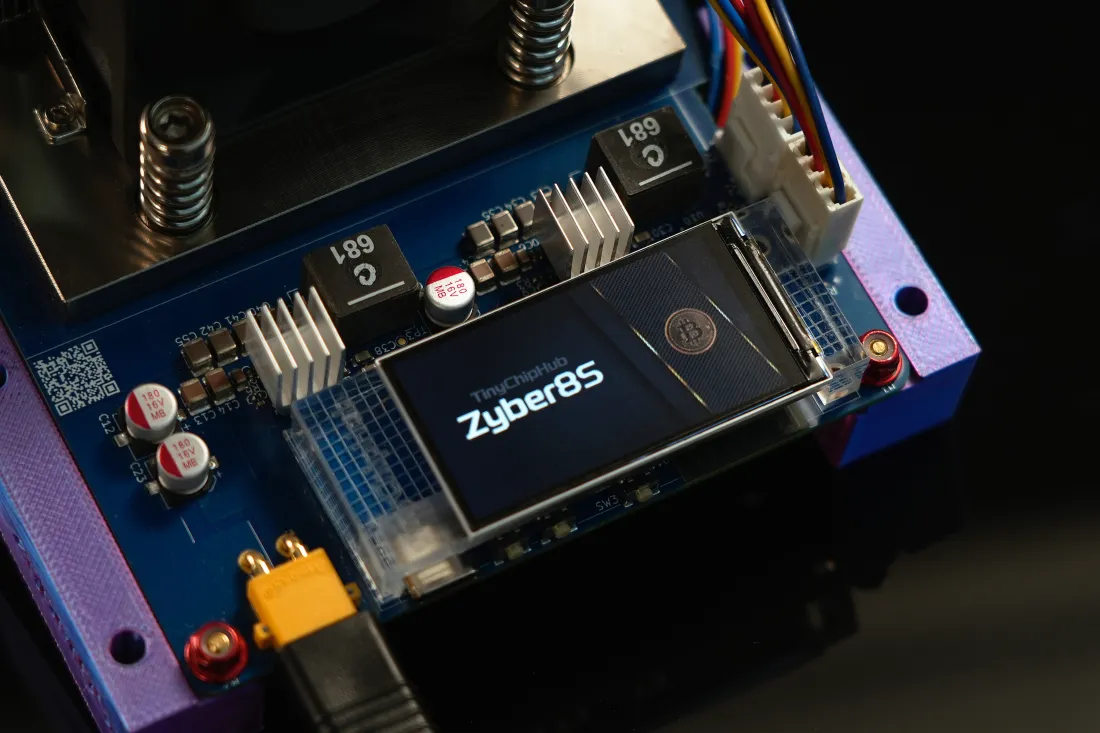
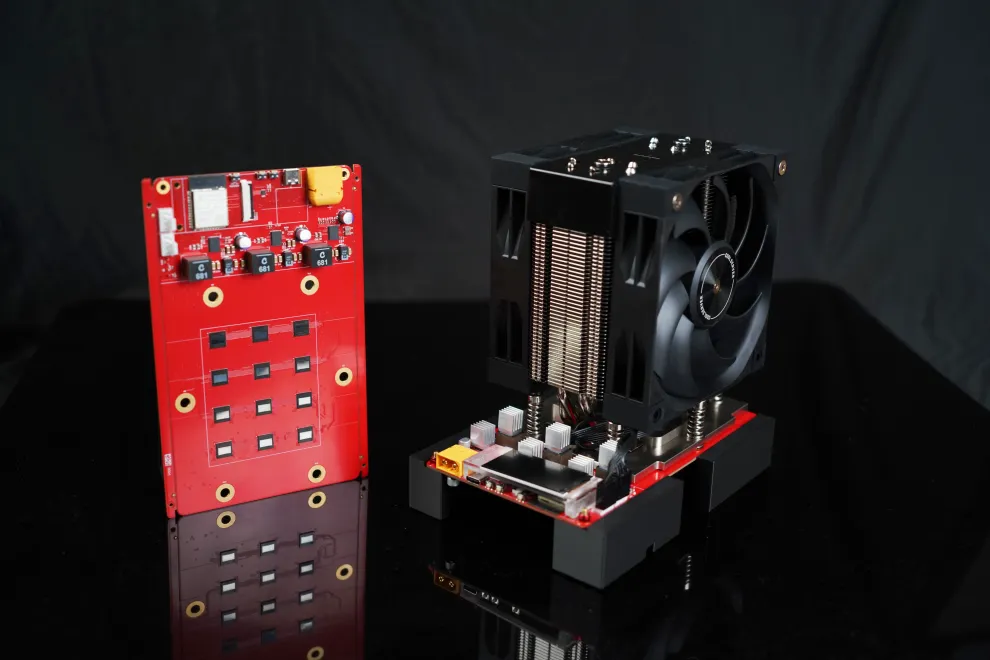
If you observe this change from the perspective of a home miner, it is actually very interesting. When testing a Zyber 12G miner today, common metrics are TH/s, J/TH, W, chip count, frequency, temperature, etc.; over time, the importance of block subsidies will gradually decrease, and the significance of transaction fees in the miner's income structure will become more prominent.
- Now: Block subsidies remain an important component of miner rewards.
- Future: New BTC issuance gradually decreases.
- Long-term: Block subsidies approach zero.
- Persistent: Transaction fees can still be paid to miners who package transactions.
This also involves an easily overlooked time parameter. Bitcoin's average target block time is approximately 10 minutes, and halving is not executed according to the real world's "every four years on the dot," but is calculated every 210,000 blocks. Therefore, the actual occurrence time will be affected by changes in block production speed.
After the 2024 halving, the block subsidy decreased from 6.25 BTC to 3.125 BTC; based on approximately 144 blocks/day, the theoretical new issuance is approximately 450 BTC/day. After the next halving, the subsidy will drop to 1.5625 BTC, with a theoretical daily new issuance of approximately 225 BTC. At the same time, mining machines will not suddenly stop working just because "21 million is almost mined." ASIC miners are still performing SHA-256 PoW calculations; the only difference is that the reward structure changes. For individual miners, understanding this is more important than memorizing the year "2140."
4. Lost Bitcoins: Why Actual Supply Is Lower
If 21 million is the theoretical maximum supply, then how much BTC can actually still be accessed, transferred, and used by people? The answer is not a precise number that can be directly read from the blockchain. Current market estimates suggest that approximately 3 to 4 million BTC may have been permanently lost or become inaccessible, but this is an estimate, not an official statistical field provided by the Bitcoin protocol.
The reason is simple and also cruel: the blockchain can prove that a certain UTXO exists, but it cannot prove that the holder still remembers the private key. If an address has not moved BTC for decades, we can observe its long-term inactivity, but we cannot assert that the private key has been lost based solely on "no movement." The holder may have simply placed the assets into long-term cold storage.
In actual use, there are roughly four common causes of loss:
- Lost private key: No proper backup; the wallet still exists, but the ability to access it is gone.
- Damaged mnemonic phrase: The hardware wallet or computer is still there, but the recovery information is unavailable.
- Storage media failure: Early users may have stored wallet data on hard drives, USB devices, or paper.
- Missing inheritance arrangements: After the holder passes away, no secure and executable recovery plan is left.
"Long-term inactivity" does not equal "permanently lost." This is the easiest pitfall when judging the actual supply of BTC. The balance can be accurately calculated on-chain, but one cannot directly read a person's memory, backup location, or inheritance arrangements.
| Status | On-chain Behavior | Can Confirm BTC is Lost |
|---|---|---|
| Normal Active Wallet | UTXO can be spent with signature | No |
| Long-term Dormant Wallet | No transfers for many years | Cannot confirm |
| Lost Private Key | UTXO still exists | Cannot be confirmed by on-chain data alone |
| Known Unspendable Outputs | Cannot be spent normally at the protocol level | Higher degree of certainty |
This is also a point worth learning from when home miners manage their equipment. A miner's hashrate can be tested via TH/s, temperature can be read by sensors, and power consumption can be measured by meters, but wallet security is not "looks usable" means it is secure. Private keys, mnemonic phrases, backup media, and recovery procedures—if any link has a problem, it may turn BTC that still exists on-chain into actually inaccessible BTC.
In terms of security operations, it is recommended to manage the mining machine system and wallet system separately: the mining machine is responsible for computation, nodes are responsible for verification, and wallets are responsible for signing and key management. Do not stuff all sensitive information into the same machine just because an encryption device can run stably. For small miners, what is truly worth maintaining long-term is not a beautiful balance number, but a key management process that can be safely recovered even if the device is damaged, the system is reinstalled, or even the person is temporarily unable to operate.