The answer is not a fixed number, because there is no fixed exchange rate between Satoshi and USD; it changes in real time with Bitcoin's USD price.
1 BTC = 100,000,000 Satoshi.
If the price of 1 Bitcoin is 100,000, then 1 ≈ 1,000 sats; with 1 Bitcoin currently at ≈ 80,000, 1 ≈ 1,250 sats. In practice, use 1 USD ÷ USD price of 1 BTC × 100,000,000 to quickly calculate how many Satoshi correspond to 1 USD.
1. What is Satoshi? The smallest unit of Bitcoin
Satoshi, often abbreviated as sats, is the smallest unit of measurement in the Bitcoin protocol. It is not another independent currency but the smallest unit of Bitcoin. According to the basic rules of the Bitcoin protocol, 1 BTC is divided into 100,000,000 sats.
In other words, 1 sat = 0.00000001 BTC.
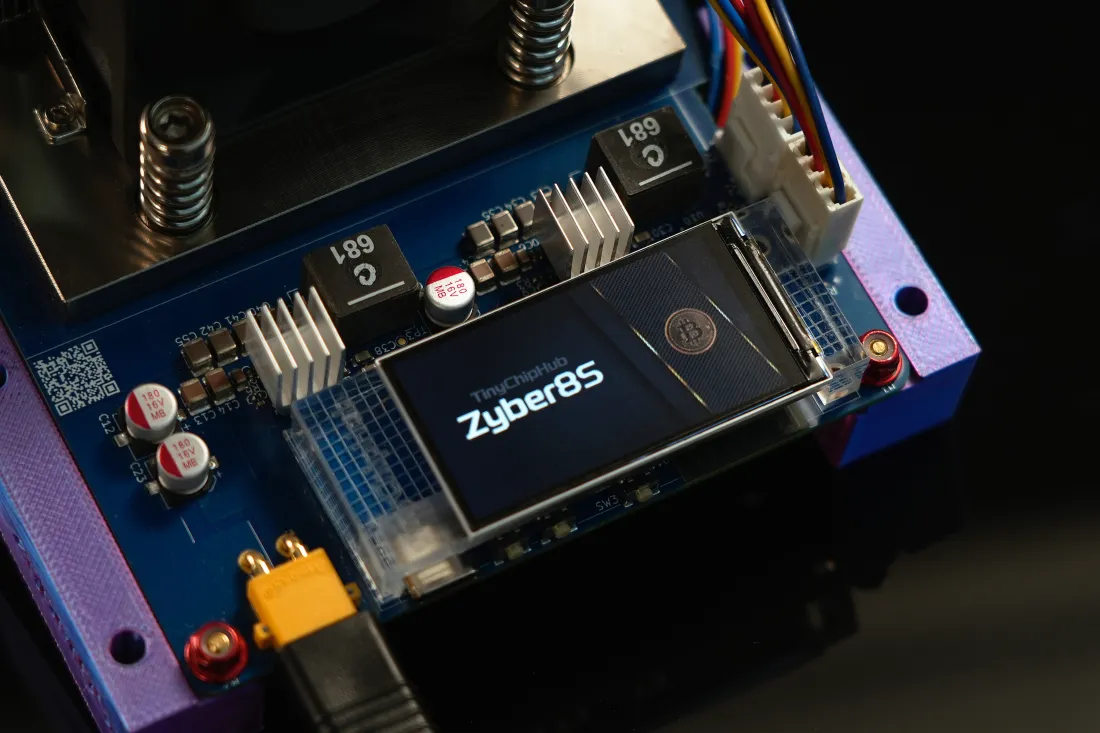
This number may look a bit exaggerated, but it becomes quite intuitive in real-world usage. For example, when a small Bitcoin miner is running, the interface may not always display full BTC figures; instead, it uses sats to express very small value changes. For people new to Bitcoin, 0.00001000 BTC looks like a string of code, while 1,000 sats is easier to understand.
- 1 BTC = 100,000,000 sats
- 0.1 BTC = 10,000,000 sats
- 0.001 BTC = 100,000 sats
- 0.000001 BTC = 100 sats
There is also an easily overlooked technical detail here: the definition of Satoshi comes from Bitcoin's integer-based measurement method, not from the "cents" system in the US dollar framework. The dollar can be further subdivided into cents, while Bitcoin on-chain transaction amounts are usually expressed in satoshi as the smallest unit. Software such as Bitcoin Core also processes amounts around this unit, which keeps wallet, transaction, and miner data precise.
Security is also worth noting. Satoshi itself has no independent security certification; it inherits the cryptographic security mechanisms of the Bitcoin network. Bitcoin uses the SHA-256 hash algorithm and digital signature mechanisms to verify transactions. For BTC miners or wallet devices, product-level compliance requirements such as CE and FCC may also apply.
🔎 Practical difference: BTC is more suitable for describing whole asset units, while sats are better for describing very small amounts of Bitcoin. Just as "kilometers" and "meters" both describe distance, they are simply used in different contexts.
2. Bitcoin Unit Conversion: Sats, BTC & USD
When you actually start calculating, there is no need to memorize a bunch of complex formulas. Just remember one core number: 100,000,000 sats = 1 BTC. The dollar is only an external pricing unit; it has no fixed ratio to sats. You must first know the current USD price of Bitcoin.
Assume a test condition of Bitcoin = $100,000/BTC. Then 1 BTC corresponds to 100,000,000 sats. Therefore:
| Bitcoin Price | Approx. sats per $1 | Approx. sats per $10 | Approx. sats per $100 |
|---|---|---|---|
| $50,000/BTC | 2,000 sats | 20,000 sats | 200,000 sats |
| $100,000/BTC | 1,000 sats | 10,000 sats | 100,000 sats |
| $150,000/BTC | ≈667 sats | ≈6,667 sats | ≈66,667 sats |
| $200,000/BTC | 500 sats | 5,000 sats | 50,000 sats |
The formula is actually very simple:
USD to sats = USD amount ÷ BTC USD price × 100,000,000
For example, with test conditions of 25 + 100,000/BTC: 25 ÷ 100,000 × 100,000,000 = 25,000 sats

The reverse also applies. If you already know a certain amount of sats and want to convert it to USD, use:
USD value = sats ÷ 100,000,000 × BTC USD price
- First confirm Bitcoin's current USD price.
- Confirm whether you need to convert BTC, sats, or USD.
- Use 100,000,000 as the fixed conversion ratio between BTC and sats.
- Keep a reasonable number of decimal places after calculation.
If you are using a home miner, it is recommended to check the BTC or sats data directly in the device dashboard and then convert based on the current BTC/USD exchange rate. Do not interpret a sats number displayed by the device as a fixed USD amount! The number itself does not change, but its USD valuation can.
⚠️ TinyChipHub technical note: Calculation tools must distinguish between "real-time BTC/USD price" and "fixed test price." If the test page uses $100,000/BTC, the result is only a conversion under those test conditions and does not represent any real-time market quote.
3. Dollar to Satoshi: From 1 to 1,000
If you increase the USD amount all the way from 1 to 1,000, the only thing that really changes is the order of magnitude; the calculation logic remains exactly the same. Assuming a fixed test condition of 100,000/BTC, then 1 = 1,000 sats. This baseline is very easy to remember, and the displayed data of many small Bitcoin devices can be understood in a similar way.
Continuing upward:
- $1 ≈ 1,000 sats
- $5 ≈ 5,000 sats
- $10 ≈ 10,000 sats
- $50 ≈ 50,000 sats
- $100 ≈ 100,000 sats
- $500 ≈ 500,000 sats
- $800 ≈ 800,000 sats
- $1,000 ≈ 1,000,000 sats
There is something very interesting about this set of data: under the test condition of Bitcoin = 100,000/BTC, 1,000 exactly corresponds to 1,000,000 sats, which is 0.01 BTC. When converted to the miner dashboard, 0.01 BTC and 1,000,000 sats are exactly the same amount of Bitcoin; they are just displayed differently.

But if the Bitcoin price changes to 200,000/BTC, the situation immediately doubles in the opposite direction. At that point, 1 corresponds to only about 500 sats, while $1,000 corresponds to about 500,000 sats. The fixed unit of Bitcoin quantity has not changed; what has changed is the exchange ratio between Bitcoin and USD.
| Test Conditions | $1 | $100 | $1,000 |
|---|---|---|---|
| $50,000/BTC | 2,000 sats | 200,000 sats | 2,000,000 sats |
| $100,000/BTC | 1,000 sats | 100,000 sats | 1,000,000 sats |
| $200,000/BTC | 500 sats | 50,000 sats | 500,000 sats |
For miners, this means the device side can accurately record very small amounts of Bitcoin, while the user side converts it into the more familiar USD unit based on the BTC/USD data. From a security perspective, the calculator itself does not determine whether a transaction is valid. When it comes to actual fund transfers, the transaction still needs to go through signature verification, script execution, and block confirmation on the Bitcoin network. Electronic devices sold to the US, Canadian, or Western European markets should pay attention to applicable requirements such as FCC, CE, RoHS based on product type.
4. Why use Satoshi? And not Bitcoin
The reason is actually very simple: small numbers are easier to read, and a large number of leading zeros can easily cause misreading ❌️. Suppose a device dashboard displays 0.00001000 BTC; you need to count the zeros after the decimal point. If you switch to the common number 1,000 sats, human logical thinking can quickly grasp it.
This difference is especially obvious for home miners, small Solo Miners, and Bitcoin node devices. The device dashboard may simultaneously display information such as Hashrate, Shares, Difficulty, BTC, sats, etc. There are already enough technical parameters; making users count zeros is somewhat of an "engineer's little prank." It can be simply understood as follows:
| Unit | Numerical Relationship | More Suitable Scenarios |
|---|---|---|
| BTC | 1 BTC = 100,000,000 sats | Describing whole Bitcoin amounts |
| sats | 1 sat = 0.00000001 BTC | Small amounts, miners, payments |
| USD | External fiat currency pricing | Understanding Bitcoin's USD valuation |
In miner usage scenarios, I prefer to view sats as the "device language." For example, when testing a small miner dashboard, if a certain period is recorded as 2,500 sats, it directly tells you that this is 2,500 minimum units, without needing to first understand what 0.000025 BTC is. There is also an important distinction here: just because sats are easier to read does not mean sats are more "valuable." They are merely a unit of measurement. Just as 1,000 meters does not suddenly become longer just because it is written as 1 kilometer, converting Bitcoin from BTC to sats does not change the quantity at all.
- 📌 BTC: Suitable for expressing macro quantities.
- 📌 sats: Suitable for small amounts, device, and payment data.
- 📌 USD: Suitable for understanding prices across languages.
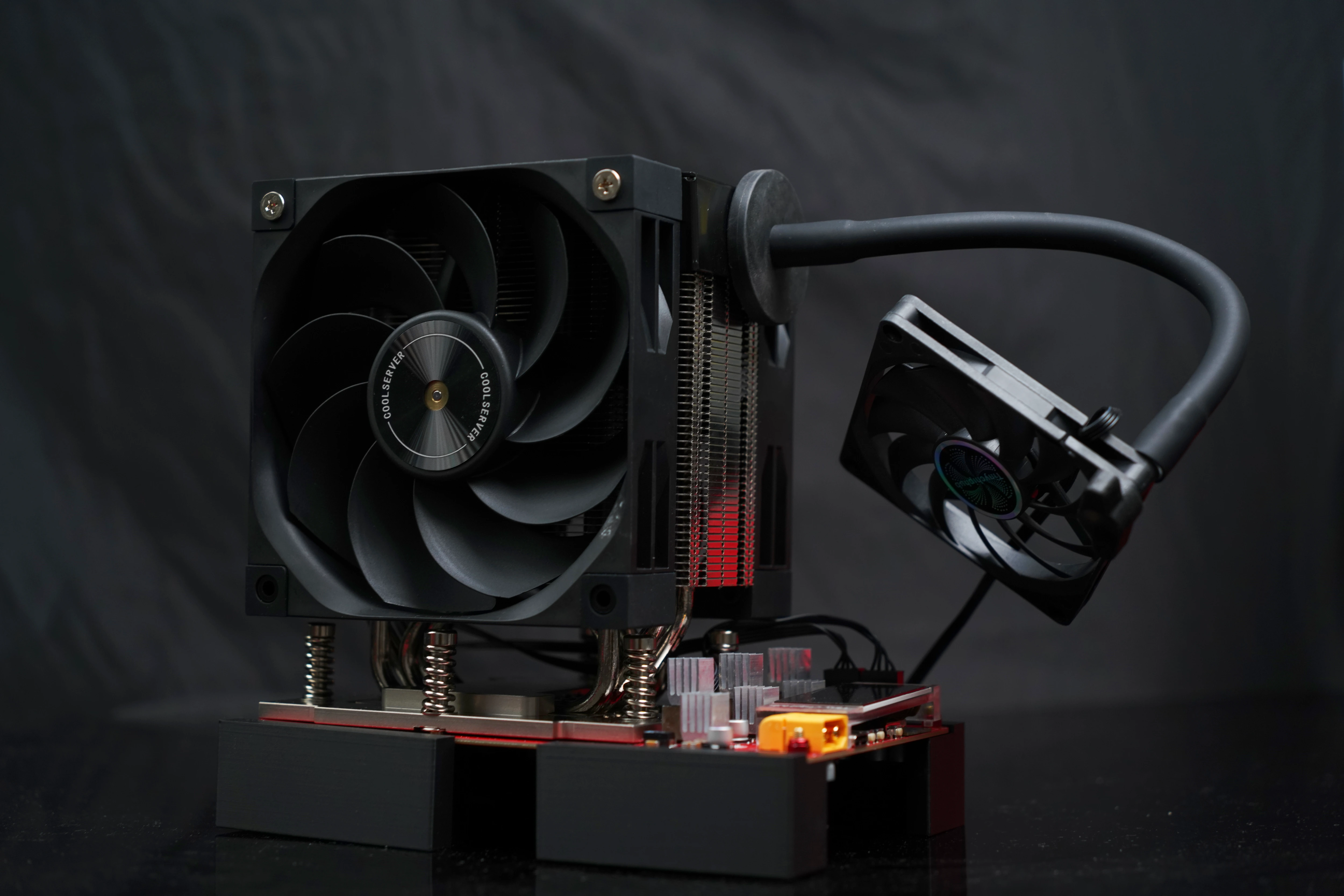
For daily testing of miner products, I usually record Hashrate (TH/s), runtime, and Bitcoin amount simultaneously, and display BTC and sats separately. Hashrate is a device computing power indicator, while sats are a Bitcoin quantity unit; the two cannot be confused. When a miner connects to the Bitcoin network, it also involves mining pool communication mechanisms such as the Stratum protocol; the device itself should pay attention to applicable safety and compliance standards such as FCC, CE.
🔥 A very practical rule of thumb: When you see "1,000 sats," first understand it as a unit of Bitcoin quantity; when you see "$1," convert it based on the current BTC/USD data. This way, when looking at miner data, wallet data, and Bitcoin network data, you basically won't get tangled up by a string of decimal points anymore.