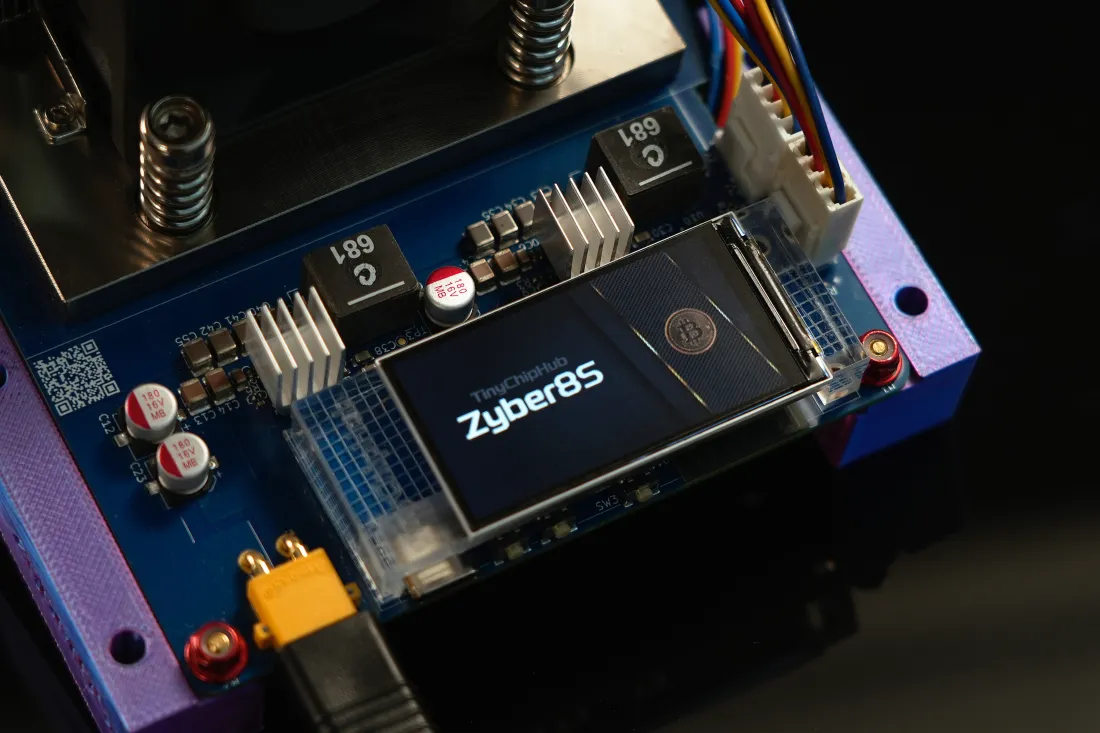
Hi ! I'm Winston from TinyChipHub. Today, we are going to talk about the noisy beasts that keep your miner from melting: Miner Fans.
Everyone's got a hot take. Just crank up the RPM! Bigger fans are always quieter! Add more fans, problem solved! Some of that is true. Some of that is pure nonsense. Today Let's clear the air.
1、Real Master Switch: RPM
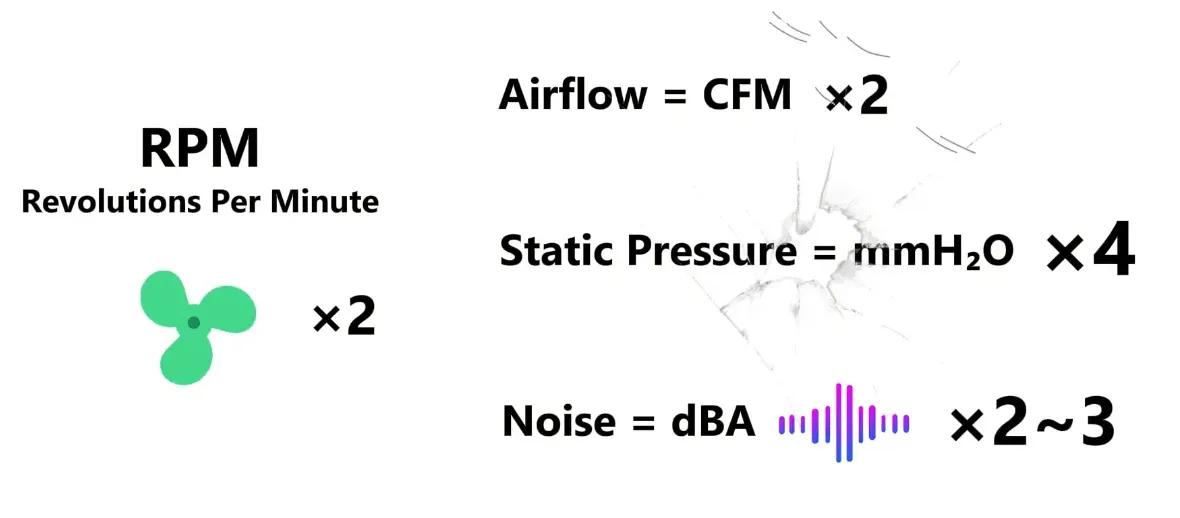
Here's the one thing you need to understand before anything else. RPM is the master switch. Everything else: Airflow, Pressure, Noise — they're just consequences.
Turn the switch on, and three things happen. But they don't move together like a happy family. They move at wildly different speeds.
- Airflow — CFM. It's the polite one. Double the RPM, you get about double the wind. Fair enough.
- Static pressure — mmH₂O. This one's more aggressive. Double the RPM, pressure quadruples. Because centrifugal force goes crazy as you spin faster.
- And then there's Noise. Noise is the monster. It doesn't just go up — it explodes. Double the speed, and it doesn't just sound twice as loud — it sounds two to three times louder.
Now, a quick word on dBA, because most people read that number completely wrong.
dBA is logarithmic — that means: it doesn't add up the way you think. Every 10 dBA increase, the sound is perceived as twice as loud. So a 50 dBA fan isn't a little louder than 40. It's twice as loud. Also, distance is your friend. Double your distance from the fan, noise drops about 6 dBA. Garage versus desk? Completely different world.
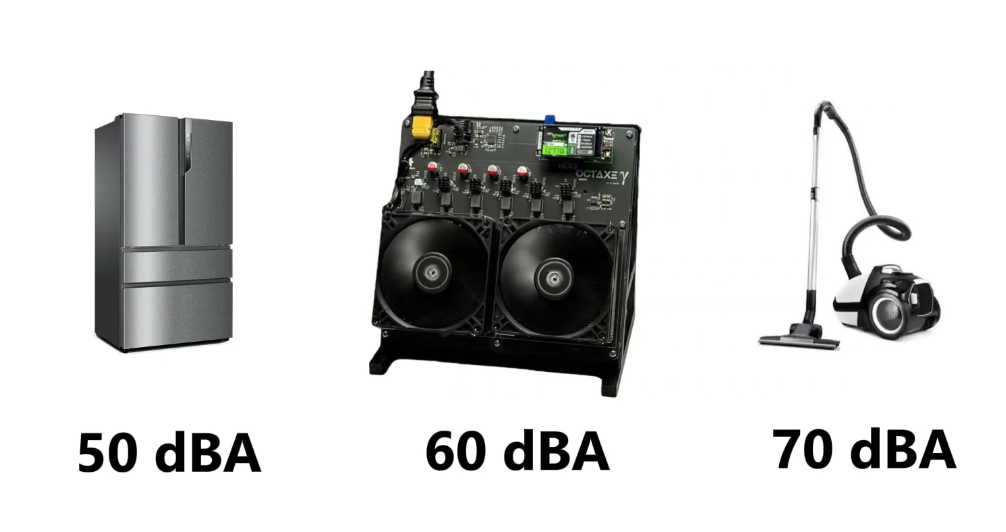
💡For Reference: 50 is a fridge humming. 60 is normal conversation. 70 is a vacuum cleaner. Most home miners sit between 50 and 70 dBA — anywhere from 'fridge talking to itself' to 'someone vacuuming next to your head. Now you know why every 10 dBA matters.
2、CFM Vs. Static Pressure ? Uncover the Truth
Now, when you actually go shopping, all you see are two numbers on the box: Max Airflow, Max Static Pressure. What do they really tell you?
Here's the dirty secret. Those numbers are measured in two situations that never happen in real life.
- Max Airflow is measured with the fan blowing into nothing — wide open, zero resistance.
- Max Static Pressure is measured with the fan completely blocked — zero airflow.
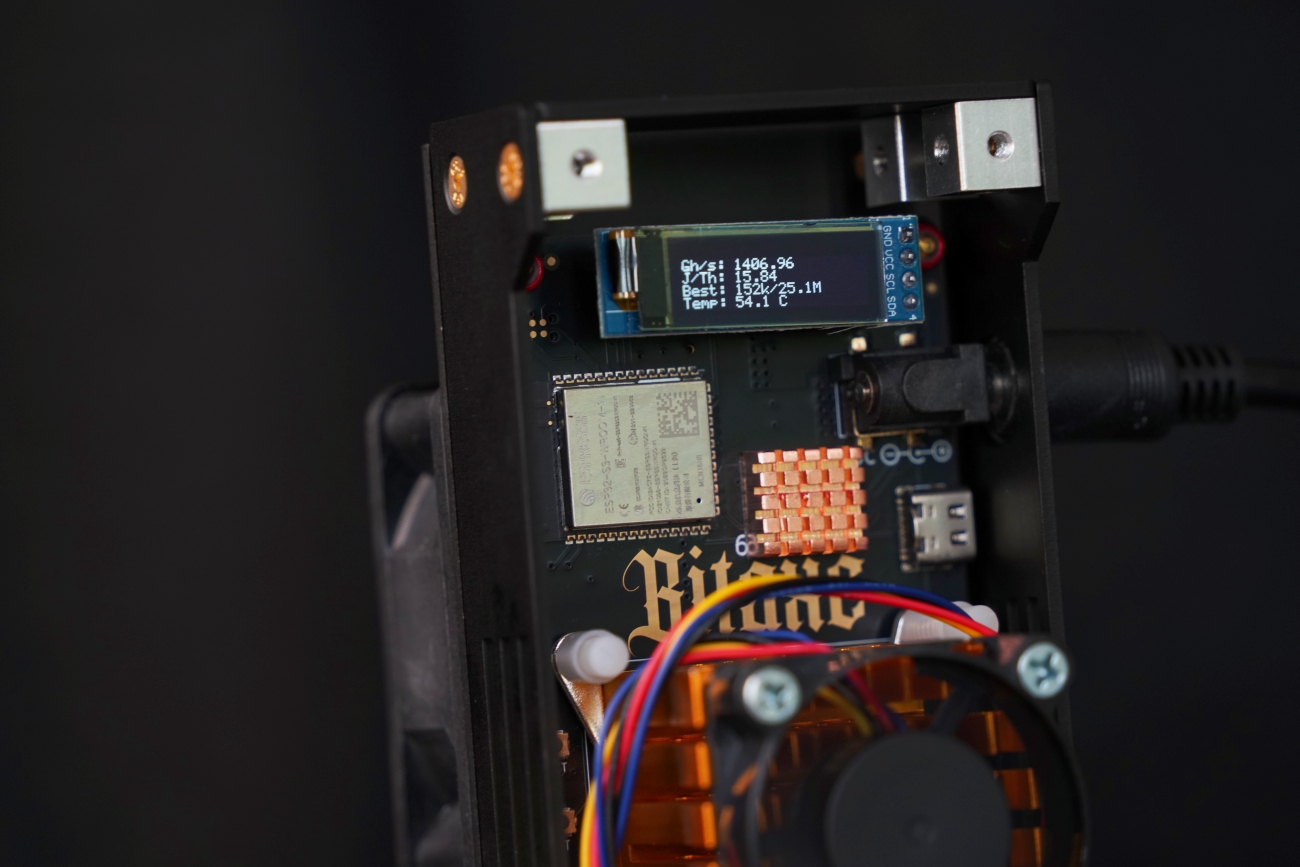
Neither one exists inside your Bitaxe Gamma.The real world is somewhere in between. Your heatsink puts up resistance. Your fan pushes back. The actual performance is the meeting point of these two forces. But the box only shows you the extremes.
So how do you use these incomplete numbers? Simple.
If your bitaxe gamma fan upgrade blows into open space — like a case exhaust with no obstruction — just care about airflow. Higher CFM wins.
If your fan has to push through a dense heatsink or a thick dust filter — which is exactly what miners do — forget the CFM number. Look at static pressure. Higher pressure is what guarantees the air actually makes it through.
And one more thing: if a cheap 120mm fan claims super high pressure at very low RPM — it's lying. Physics doesn't work that way. Walk away.
3、The Art of Balancing Cooling & Noise
So here's the golden rule for noise: lower RPM is always better. The slower the fan spins, the quieter it is — that's just physics.
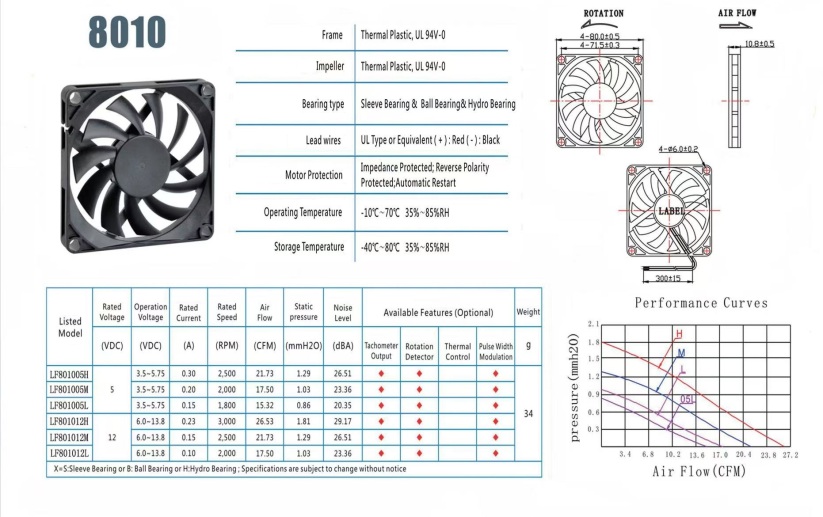
But now you hit the real problem. Lower RPM means less airflow. And less airflow means your chips get hotter. So what do you do?
Your first instinct might be: just get a Bigger TL-9015R Electric Cooling PWM Fan. And you're not wrong. A larger fan at the same low RPM moves more air simply because the blades sweep a bigger area. It's a clever way to get your airflow back without cranking up the speed and killing your ears.
But — and there's always a but — bigger fans usually come with lower static pressure. That wide, gentle breeze might not have the muscle to punch through a dense fin stack. So now you've traded one problem for another.
And this is the art of it. Cooling versus noise isn't a switch you flip. It's a balance. Low RPM, large diameter, enough pressure — every decision pulls something else.
Now, if you ask me: 'Winston, what's the perfect balance? Give me the formula.'
Honestly? We don't know either. The only way to find the sweet spot is to do what Edison did: try everything, fail a lot, and keep going.
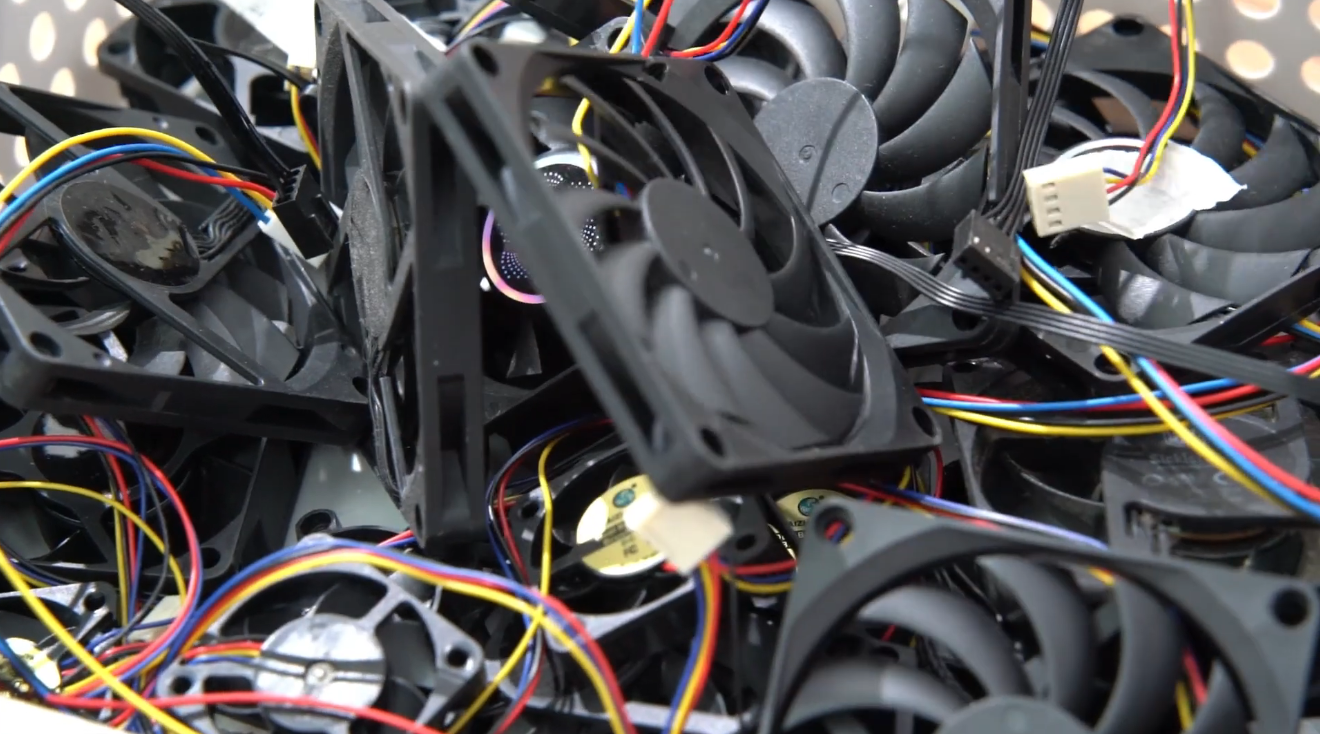
See that mountain back there?Those are custom fan samples. Too loud. Too weak. Too ugly — Straight to the graveyard.
But here's the good news: you don't have to build your own fan graveyard. We already did it. So when you buy a TinyChipHub Miner, the fan inside survived a long, painful audition.
Even if we didn't get it perfect on day one — we will figure it out., revise the spec, find the fix, and help you upgrade. That's the difference between a factory that just ships boxes, and a team of engineers who actually care about the machine running in your garage.
4、3 Pitfalls to DIY Fan Swaps
Alright. If you still want to swap fans yourself — I respect the hustle. Just know the traps.
- Voltage. Most home miner fans are 12V, some small ones are 5V. Match them. If you plug a 12V fan into 5V, it just spins slow, no damage. If you plug a 5V fan into 12V, it'll scream at double its rated speed , then the magic smoke comes out. And you can say goodbye to your fan.
- PWM Signal Voltage. Here's the thing — most miner control boards today are based on ESP32. The GPIO pins on those chips output 3.3V. That's just what they do. Most consumer PC fans are fine with this — they accept anything from 3.3V to 5V, no problem. But some industrial fans, especially those ultra-high-RPM server fans, expect a full 5V signal and nothing less. If you plug one of those into an ESP32 board, the fan won't respond to speed control at all. It'll either run at full blast or just sit there confused. Just check the spec before you buy.
- Don't Plug it in Backwards. This sounds stupid but it happens all the time. If you plug the fan header in crooked, or flip it around — the fan driver chip on your board fries instantly. I mean it. I've killed a dozens prototype boards exactly like this. If you're doing any DIY mod, triple-check the polarity before you power on. The only thing worse than a loud miner is a dead miner.
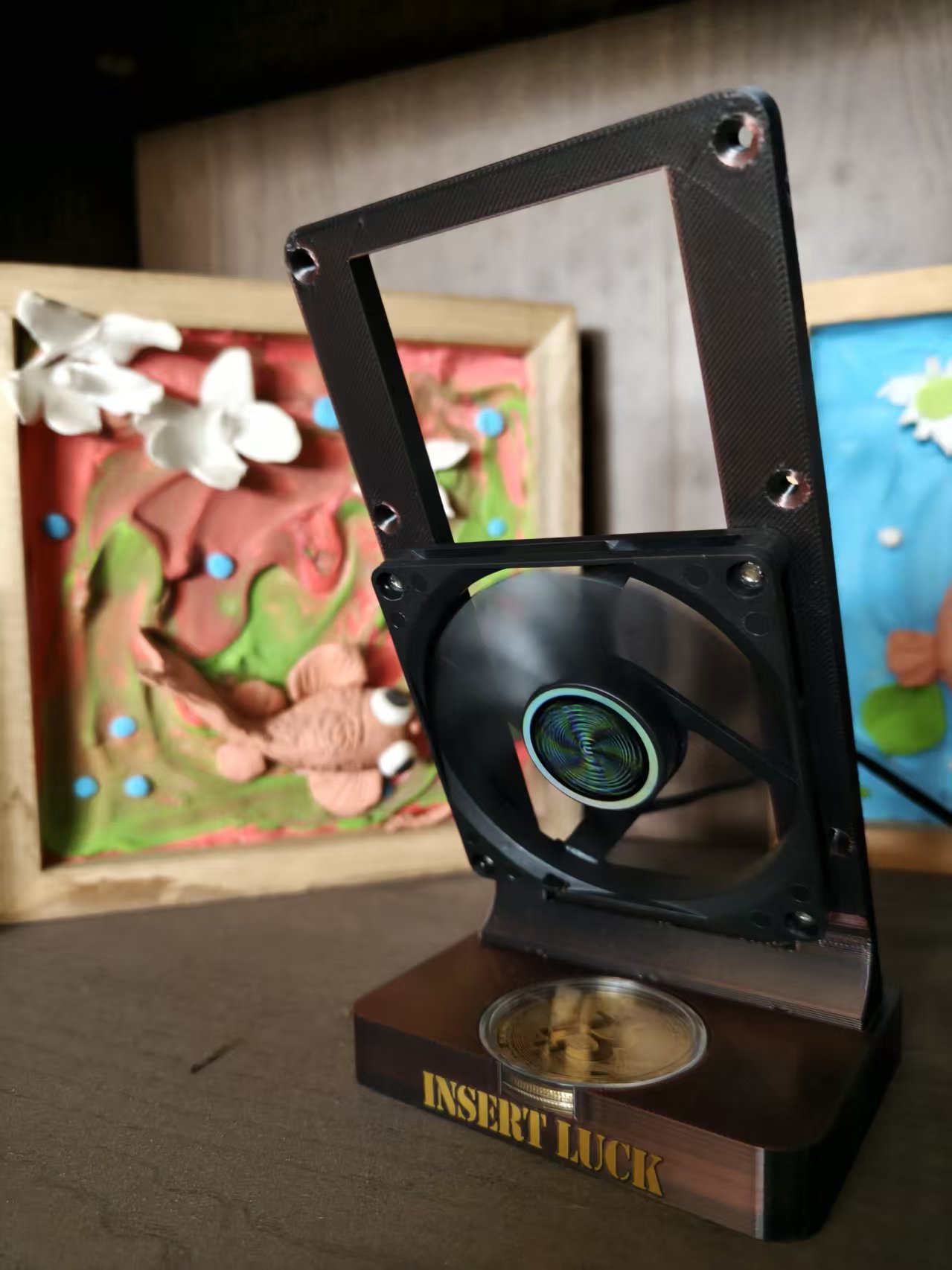
At TinyChipHub, we have a dedicated fan manufacturing partner who works with us to develop custom cooling for our ASIC Miners. Every fan that makes it into your machine survived the graveyard. Because a well-designed miner should sound like a tool, not a trauma.
If you found this helpful, smash that like button and share it with your friends! Got questions? Want us to cover a specific topic? Drop a comment below. We actually read them. I'm Winston from TinyChipHub. Stay cool, stay hashing.
5、FAQs