💡 Tip: The following article data is for reference only. Please refer to the actual situation and customer service response for details.
Want to use Bitcoin Lottery Miner to solo mine an entire Bitcoin block? It's like searching for new planets with a backyard telescope. Through a lottery mining strategy, you can inject hash power into a Solo pool, participating in this global lottery at an extremely low cost.
The key is choosing a pool like Solo CK, which allows you to participate with as low as 1 TH/s of hash power (equivalent to a good-quality small miner) and charges a fixed fee. If you're lucky enough to hit a block, after deducting fees, you directly receive nearly 100% of the block reward of 3.125 BTC (post-2024 halving), which is much more thrilling than the stable but meager payouts from traditional pools. The key isn't about stacking equipment, but choosing the right protocol and maintaining 24/7 online presence to secure a spot in this game of probability.
📊 The Math of Mining?
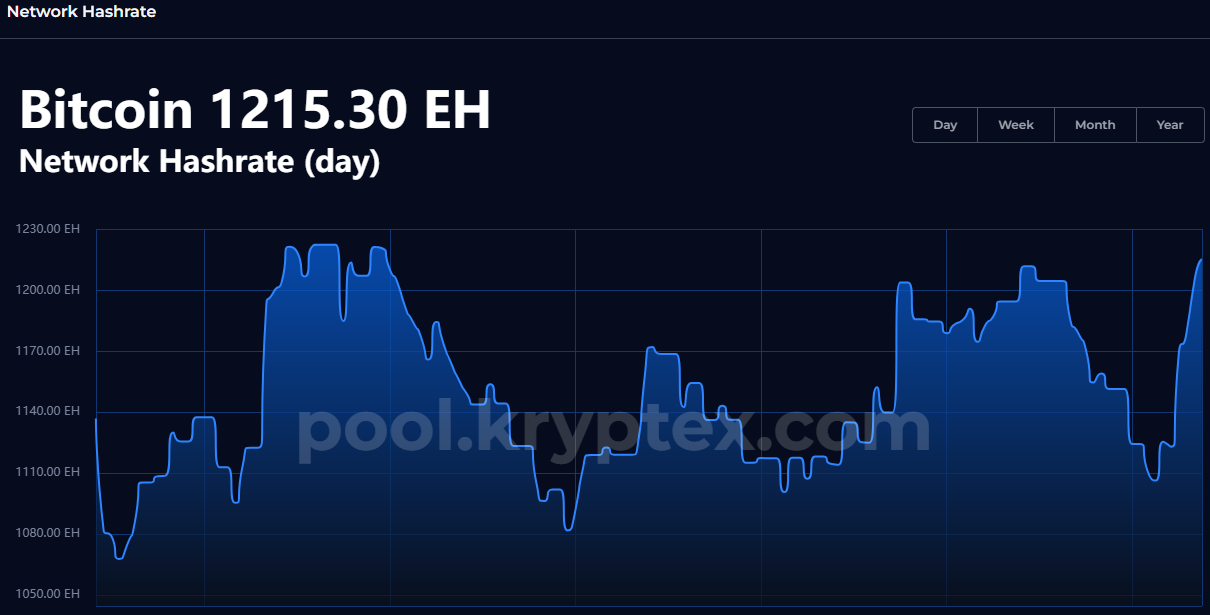
Many people think mining is "the more hash power, the more stable the earnings," but the essence of Solo mining is more like buying a lottery ticket! Your hash power just determines how many tickets you hold. The core formula is simple: Block finding probability ≈ Your hash rate / Total network hash rate. Taking the current average network hash rate, which is stable at around 1100 EH/s, as an example, if you have a miner with about 10 TH/s (like 2 units of the NerdQaxe++ Miner), your "winning" chance is approximately 0.000000909% in every 10-minute drawing to solo the 3.125 BTC (about $200,000).
- Key Metric 1: Hash Rate: Your "ticket purchasing speed," measured in TH/s (Terahashes per second). 1 TH/s = 1 trillion guesses per second.
- Key Metric 2: Difficulty: Measures the complexity of the "winning lottery numbers"; the higher the value, the harder it is to guess correctly.
- Key Metric 3: Luck: In a mining pool, the ratio of actual blocks found to theoretical blocks found. It may deviate from 100% in the short term but converges in the long run.
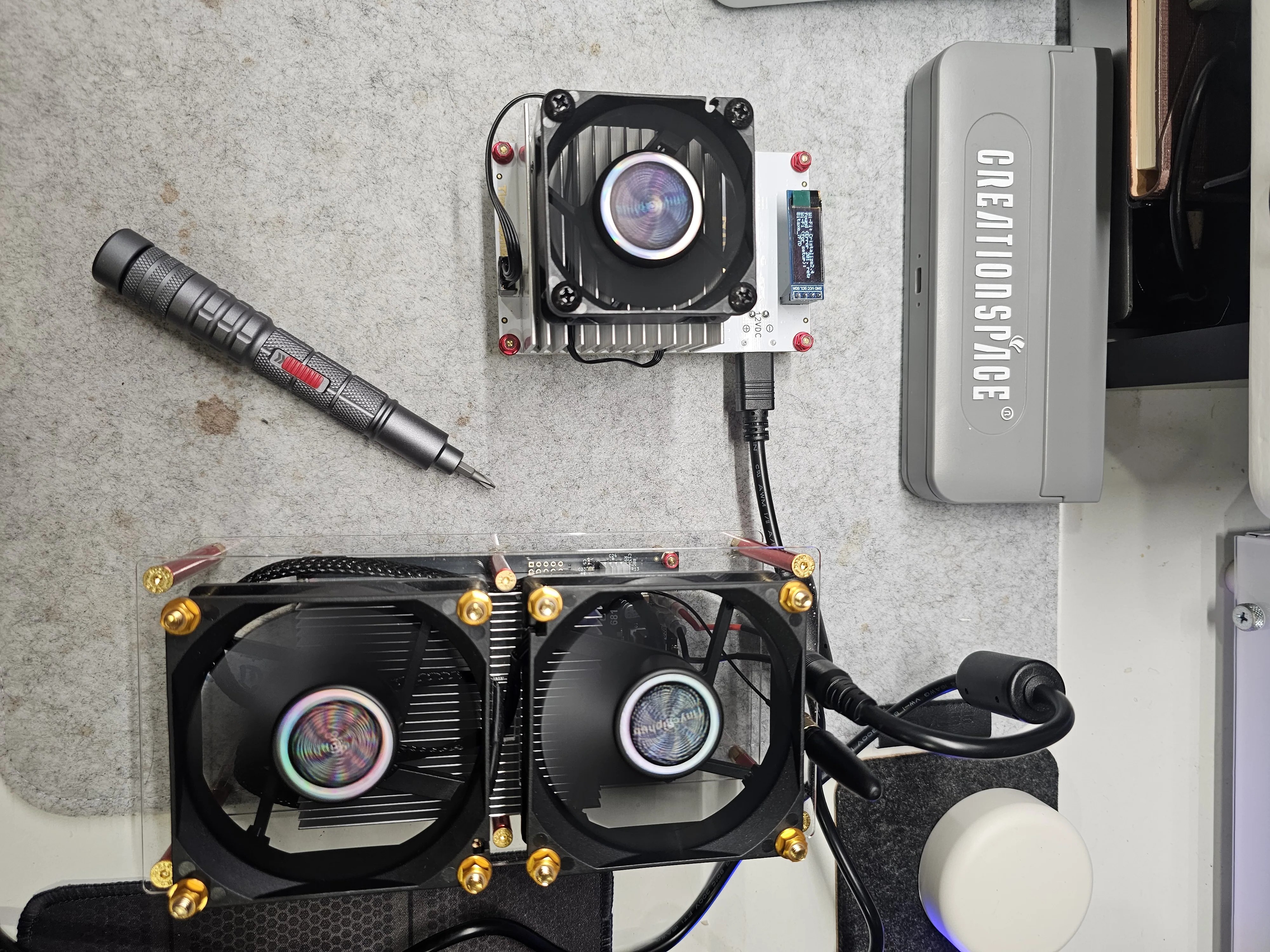
Is this probability laughably low? Absolutely, but the focus is on the cost structure. According to the Braiins Pool 2023 Report, joining a traditional pool (like F2Pool) requires paying 1%-2.5% commission, with earnings averaged out daily; whereas Solo pools (like Solo CK) typically use a fixed fee model (Flat Fee), such as 2%, but it's only deducted when a block is found. This means you might earn zero 99.99% of the time, but if you hit, the reward is nuclear-level. It's like using the cost of a daily cup of coffee to buy a lottery ticket that could hit the jackpot.
| Mining Mode | Earnings Method | Fee Structure | Risk/Thrill Level | Suitable For |
|---|---|---|---|---|
| Traditional Pool (PPS/PPLNS) | Stable, daily averaging | Percentage commission (1-3%) | Low risk, low thrill | Those seeking stable cash flow |
| Solo Pool (Lottery Mode) | All or nothing | Fixed fee per block (~2%) | Extremely high risk, high thrill | Lottery enthusiasts, tech players |
| Fully Independent Solo | Keep all rewards | Only electricity & hardware costs | Extremely low probability, purely for belief | Hardcore geeks, labs |
🔥 Key Tip: The core of this model is not "investment," but participating in a pure probability game with controllable hardware costs (a miner with CE/FCC certification), enjoying the sense of control and heart-pounding excitement of "what if it's me?"
How Miners Chase Blocks🎯
Chasing blocks isn't about brute force; it's a carefully planned "hunt." First, you need a low-latency connection. Block propagation is a race measured in milliseconds. According to the Bitcoin Core Developer Contribution Guide, the risk of a block being orphaned (invalidated) increases sharply if its propagation delay exceeds 2 seconds. This means your ASIC miner is best deployed geographically close to large pool servers (like North American or Western European nodes), or using high-quality ISP services.
Hardware is the shotgun, software is the scope. You need third-party firmware like AxeOS+ to unlock the full potential of Solo Miners, which can provide:
- Overclocking and Tuning: Increase hash rate by 5-15% within thermal limits, but closely monitor chip temperature (ideal range 60-70°C).
- Automated Management: Automatically switch to backup pools when the primary pool is temporarily offline or network latency is too high, ensuring the hunt never stops.
- Detailed Log Analysis: Record every hardware error and rejection rate; keeping the average rejection rate below 2% is a mark of professionalism.
| Strategy Type | Goal | Key Tools/Protocols | Risk Warning |
|---|---|---|---|
| Hash Rate Optimization | Increase hash output per unit of energy | Custom firmware, liquid cooling | Overclocking may void hardware warranty |
| Network Optimization | Reduce latency, improve submission efficiency | Dedicated VPN, low-latency network interfaces | Unstable networks can lead to "stale shares" wasting hash power |
| Pool Strategy | Choose the optimal reward distribution model | Solo Pool, PPLNS mode | Small hash power may not be cost-effective in PPS mode |
This process is like tuning a high-performance race car; every parameter (temperature, frequency, network latency) matters for the final dash to the finish line. According to data shared by Slush Pool at the 2022 Bitcoin Summit, well-optimized Solo miners can improve their effective hash rate submission success rate by 15% compared to default settings. This increase isn't just about earnings; it's about winning probability.
Up Odds: Clever Strategies🔍
Since the probability is low, use strategies to "stack" the lottery tickets. The most direct method is Joint Hunting (Solo Pooling). You can combine hash power with a few friends (e.g., 5 people) by connecting through a personal relay server to a Solo pool. This way, your combined hash power might reach 50~100 TH/s, increasing the block finding probability by 5 times, and then distributing rewards based on the proportion of hash power contributed. This requires some technical setup, such as configuring a Bitcoin Core node and proxy mining software.
- Hash Rate Fluctuation Sniping: The total network hash rate isn't constant. On weekends or holidays, large mining farms may undergo maintenance, causing the total network hash rate to briefly drop by 3-5% (data source: Blockchain.com 2023 Volatility Analysis). Starting your miner at this time increases your relative "lottery ticket weight."
- Participate During Transaction Fee Peaks: When the network is congested and block transaction fees surge, the reward for finding a block becomes even more lucrative.
Subscribe to real-time data services like BTC.com, setting alerts for hash rate difficulty and transaction fee rates. When conditions are triggered, it's like receiving a signal that "prey is in range," immediately running your miner at full speed. Remember, you're participating in a 7x24 global lottery; information asymmetry is your telescope. These strategies won't guarantee profit, but they turn passive "leaving it to fate" into an active "ambush" with technical sophistication—the fun and sense of control are on a completely different level.
🛠️ Set Up Solo Miner!
Of course, to implement the above operations, you need to set up a home Solo mining node, with a technical difficulty similar to assembling a high-end PC. Here is your shopping and configuration checklist:
| Component | Recommended Model/Specifications | Estimated Cost (USD) | Key Role | Certification/Notes |
|---|---|---|---|---|
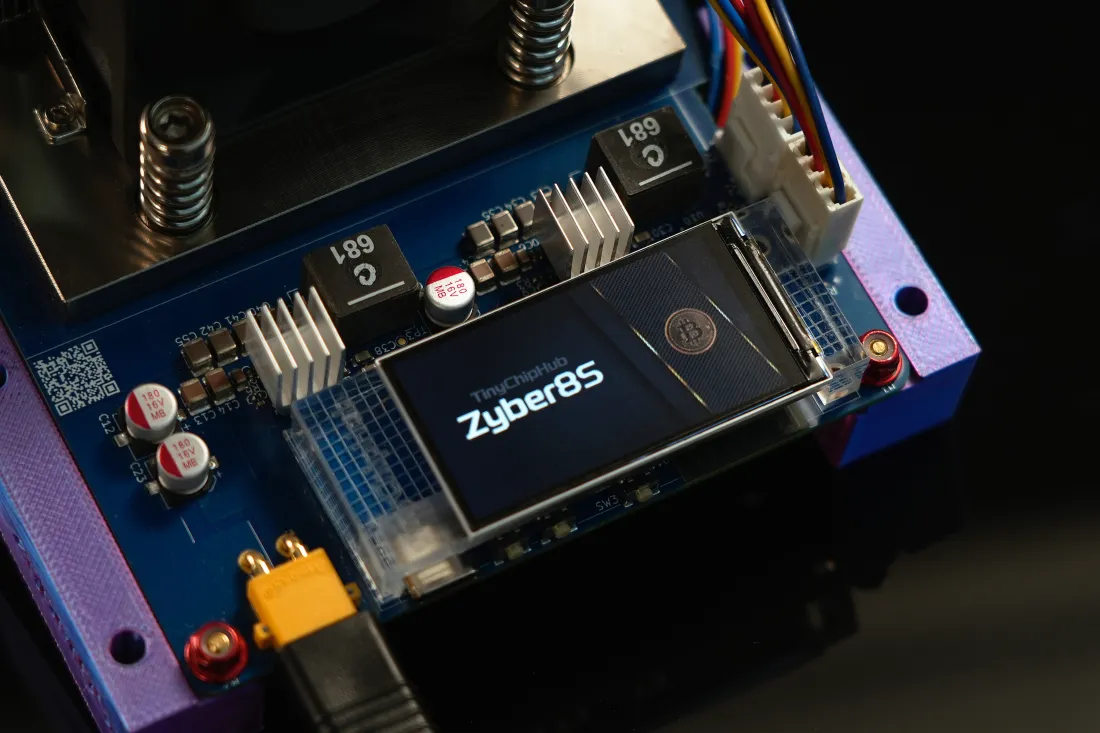
| ASIC Miner | Zyber 8G | ~800 | Provides core hash power | Confirm support for Axe OS+ firmware |
| Power Supply (PSU) | 12 V-20A Power Supply | ~Included | Stable power delivery | Requires FCC , TÜV GS, CE, ETL safety certifications... |
| Cooling | Custom air duct + powerful fans | ~Included | Cooling and noise control to <55 decibels | Avoid overheating leading to hash rate drop |
❄️ Configuration Process
Step 1: Hardware Entry and Certification Check. When purchasing a New Miner, confirm it complies with Electromagnetic Compatibility (EMC) certifications (like FCC in the US) and energy efficiency standards for your region. For a used miner? Be sure to check if its control board shows signs of repair and ask the seller for at least a log of stable operation during testing.
Step 2: Environment Setup is Key to Success. 80% of mining problems stem from cooling and power supply.
- Cooling: Don't blow household AC directly at it! Place the miner in a soundproof box (can be DIY from a storage box with fireproof soundproofing foam inside), use a high-power centrifugal fan to exhaust hot air directly outside through a duct. The intake vent needs a dust filter.
- Power Supply: Have a licensed electrician handle it! Generally, small miners don't overload home circuits, but to ensure separate electricity consumption tracking, run a dedicated 220V universal line from behind the meter, using thicker copper wires, and equip it with appropriately rated circuit breakers and surge protectors.
Step 3: Software Configuration and Pool Connection. 1. Flash enhanced firmware (like Axe OS), which typically uses SSL encryption and provides finer control over fans and frequency. 2. Register with a pool (using Solo Pool as an example) to get your unique mining address and port. 3. In the miner's backend configuration interface, enter the Stratum URL and your Bitcoin wallet address as the username. 4. Set up an automatic restart policy: To ensure overall stable operation, the chip performs self-checks. When the hash rate drops by more than 10% continuously for a period, or anomalies occur, it will automatically log and adjust to guarantee subsequent 24/7 stable operation.
The most satisfying moment in this entire process isn't receiving Bitcoin (that might be much later), but seeing your device running stably at 10 TH/s on the dashboard, knowing that every hash calculation is an independent declaration aimed at that $200,000 block. The sense of accomplishment from building your own system and participating in the global network's operation is far more addictive than fluctuating numbers in an account. 🏃