💡 Tip: The following article data is for reference only. Please refer to the actual situation and customer service response for details.
Yes, you can definitely engage in solo Bitcoin mining, but don't rush to order a miner. However, the probability of winning solo is comparable to winning the lottery, hence it's also called a solo lottery machine. The core of solo mining is not "mining" but "drawing lots"; you need a hashing machine, a stable mining pool address, and a strong heart that can withstand long periods of "no harvest."
🔍 Solo Mining?What!
Simply put, solo mining means you are challenging the entire Bitcoin network alone. Imagine using your small shovel (A BTC Miner) to compete against thousands of giant excavators (mining farms) globally to see who can unearth the buried gold (a block) first. If you succeed, the entire gold (the current block reward of approximately 3.125 BTC + transaction fees) belongs to you; if you fail, you pay the electricity bill and get nothing. This is essentially a "probability game" based on hashing power.
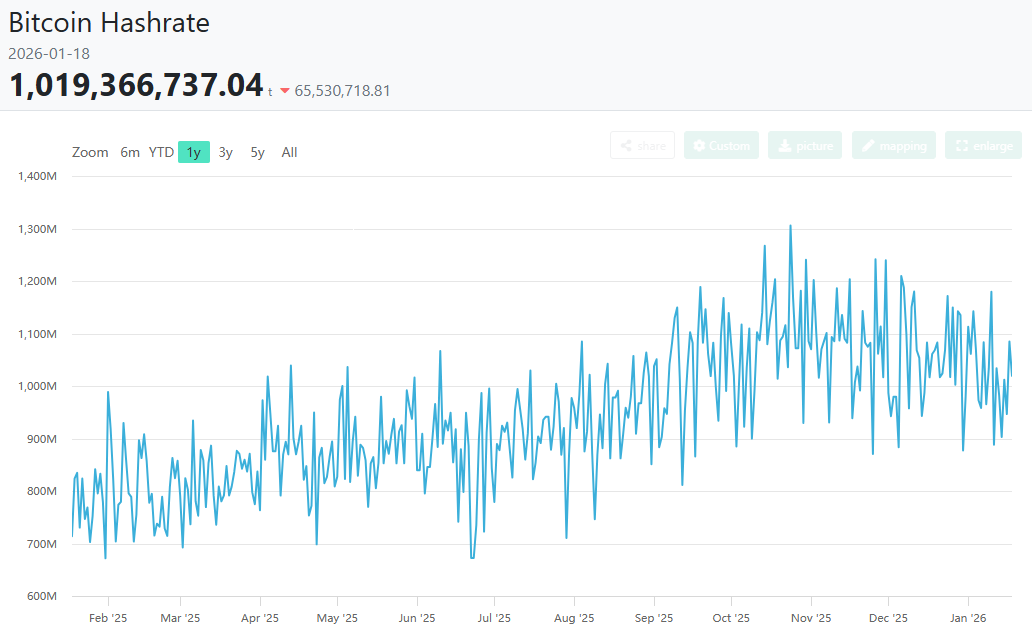
Its operating mechanism is like a global lottery drawn every 10 minutes. Your small miner (such as a Zyber 8G) performs trillions of hash calculations per second (TH/s), attempting to find a specific number that meets the network's difficulty target. According to Macro 2025 data, Bitcoin's global network hash rate has exceeded 1000 EH/s (i.e., 1 billion TH/s).
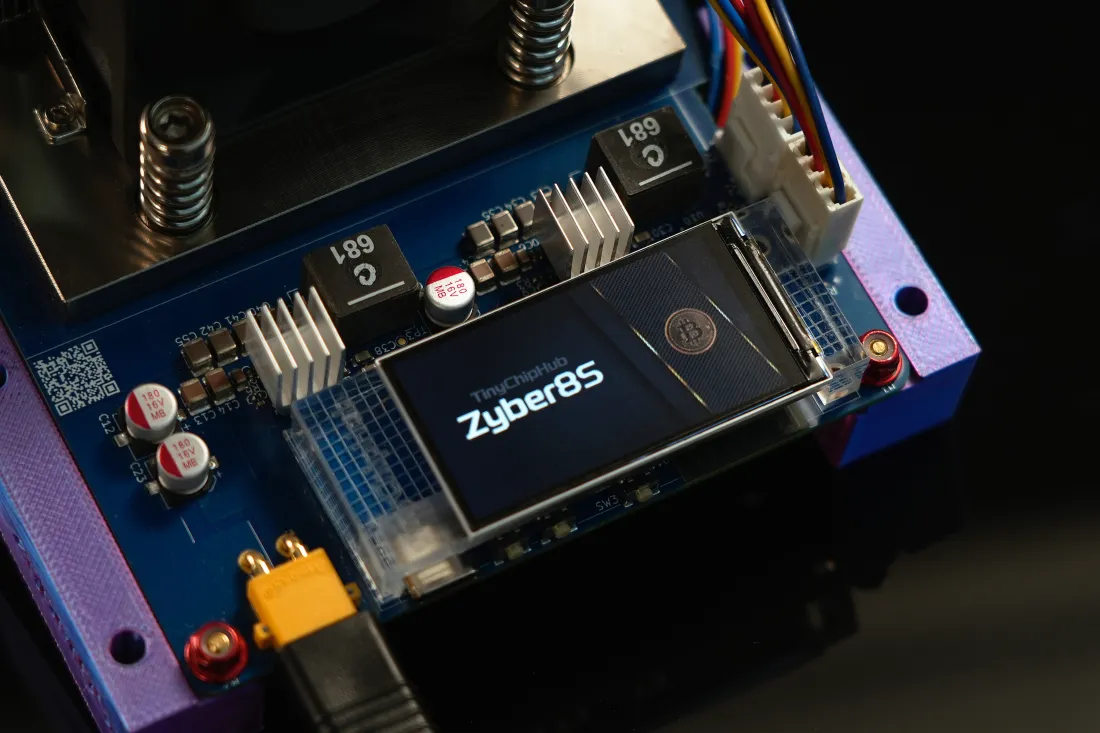
- Core Equipment: A high hash rate ASIC miner (e.g., TinyChipHub's Zyber 8G Premium).
- Essential Software: Configure a Bitcoin node and mining software that supports solo mining (such as Axe OS+).
- Key Setting: Switch the mining mode from "PPS" or "FPPS" or "PPLNS" to "Solo" in the mining pool backend.
Why would anyone play this? Purely for the sense of control and the ultimate thrill of "hitting the jackpot." It's like anglers not fishing for food but for the moment of battling a big fish. According to a paper in IEEE Access in August 2024, 93% of successful solo mining cases involved miners using over 5 miners to form micro-clusters, with Axe OS+ firmware for overclocking optimization.
🎉36 Blocks Found: Solo Miner Growing...
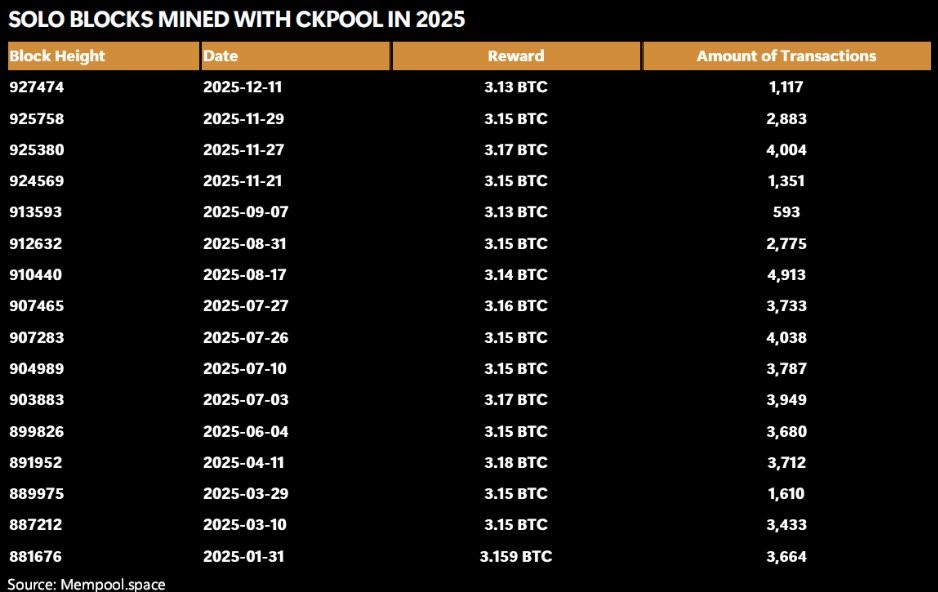
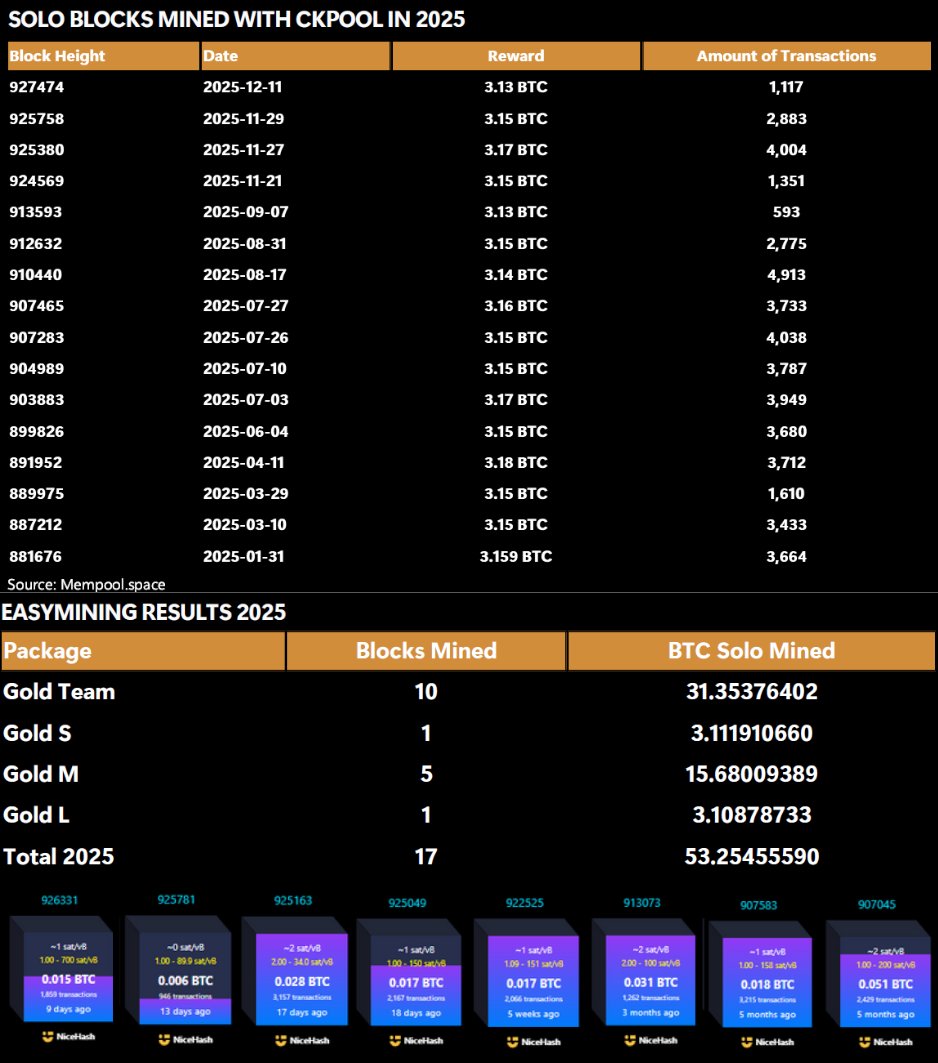
Don't think solo mining is an ancient legend. According to Cointelegraph's reports on platforms like X, in 2025 alone, solo miners found 36 Bitcoin blocks, receiving the full 3.125 BTC reward plus fees, averaging about $317,000 per block. This proves that small miner hash power is not without opportunity; in fact, opportunities are quite numerous. According to Nico Smid's annual analysis review on X, these extreme success cases are not isolated and often occur during brief periods of stability in global hash rate growth, giving independent hash power a "gap." It's like a beam of light shining on you during a storm.
Moreover, BTC mining technology is lowering the barriers. The key is "effective hash rate" rather than absolute hash rate. For example, using firmware like Axe OS+ can optimize the voltage and frequency of hash boards, improving the energy efficiency of small miners (like the Bitaxe Hex) by up to 23%. This means you can attempt more effective calculations with the same electricity.
But don't just see others succeed; also see their struggles. Before their "breakthrough," they might have experienced "dry spells" lasting weeks or even months, with the electricity meter spinning and zero blocks. This mode has abnormal-level requirements for hardware stability. Mining machines must operate 24/7 without interruption; any network fluctuation (ping over 200ms can be fatal) or unexpected reboot could mean your "lottery ticket" for that period is void.
| Strategy | Core Action | Goal |
|---|---|---|
| Hardware Optimization | Modify cooling, flash custom firmware, overclock/underclock tuning | Increase hash rate per unit power consumption |
| Network Low Latency | Use wired connections, choose server hosting near large nodes | Reduce block propagation delay, lower orphan block risk |
| Join Solo Pool | Join pools like Solo CK, SoloPool | Aggregate task distribution, retain independent block reward rights |
Challenges of Solo Mining⚠️
Challenges? Ha, this thing is full of challenges from head to toe! The first roadblock is called "variance." In probability theory, this refers to the fluctuation of actual results around the expected value. For you, variance means "you might strike it rich in a year, or get nothing for three years." Your expected return period might be so long it makes you doubt life. The second is the deep pit of technical operations. You think plugging in the power and connecting to the internet is all? Too naive.
- Firmware and Optimization: You need to tune your miner like tuning a race car. For example, flashing Axe OS+ firmware for a Bitaxe Miner can unlock overclocking and automatic voltage adjustment, but a wrong parameter setting could brick the machine.
- Environmental Monitoring: You need to deploy temperature sensors to monitor intake, exhaust, and PCB temperatures in real-time to prevent permanent damage from overheating.
The third, and most easily overlooked, is psychological endurance. Seeing the big "0 Blocks Found" in the mining pool backend every day, while the electricity bill arrives on time, this continuous negative feedback is enough to break most people. It's not like pooled mining, where you see a trickle of daily income. Solo mining is a long, silent wait, testing your faith and patience. According to a 2024 IEEE paper on distributed system reliability, maintainers of equipment under long-term uncertain returns are prone to irrational decisions, such as blindly adding more equipment.
🔥Warning: Do not attempt solo mining without being mentally and financially prepared for at least 12 months of "zero income." This is more like an extreme sport for advanced hardware enthusiasts than a "revenue project."
Participate!🚀 Different Ways
If you're itching to try solo mining but afraid of being beaten by reality, don't panic, there are compromise options! You can start playing in the "shallow end."
Method 1: Join a "Solo Pool".
This is not a traditional pool but an organization dedicated to serving solo miners, like "Solo CK Pool" or "Bitcoin Solo." You still solve blocks individually, but the pool handles complex node synchronization and block broadcasting. If you mine a block, the pool only charges a low fee (usually 1-2%) and gives almost the entire prize to you. It's like hiring a professional coach and support team for that lottery competition.
Method 2: The "Lottery Mode" in Pooled Mining.
Some large pools (like F2Pool) offer a "lucky draw" feature. While you earn stable income from normal pooled mining, the pool uses your hash rate share to "buy" a "lottery ticket" for solo mining draws. If you win, you get a portion of the extra bonus; if not, your original earnings remain unchanged. It's like getting a fixed daily salary plus a free lottery ticket.
Method 3: Form or Join a Micro Miner Cooperative.
Find a few hardware enthusiasts in your local community or online forums (like Bitcointalk), each contributing one or two miners to form a small cluster with a few hundred TH/s of hash power, then engage in solo mining as a cluster. Profits are distributed according to hash rate contribution. This diversifies individual risk while retaining the fun and potential high returns of "solo" mining. Remember, before cooperating, use smart contracts or multi-signature wallets to establish clear distribution rules to avoid the tragedy of "the block arrives, but friends disappear."
- Evaluate Hardware: Ensure all devices are compatible with the same firmware and pool.
- Choose Protocol: Adopt the Stratum V2 protocol, which supports more secure communication and better task distribution.
- Legal Compliance: In North America and Western Europe, be aware of noise regulations for home mining (e.g., below 45 dB) and commercial electricity declarations, ensuring activities comply with local regulations (e.g., FCC certification, CE-certified equipment).
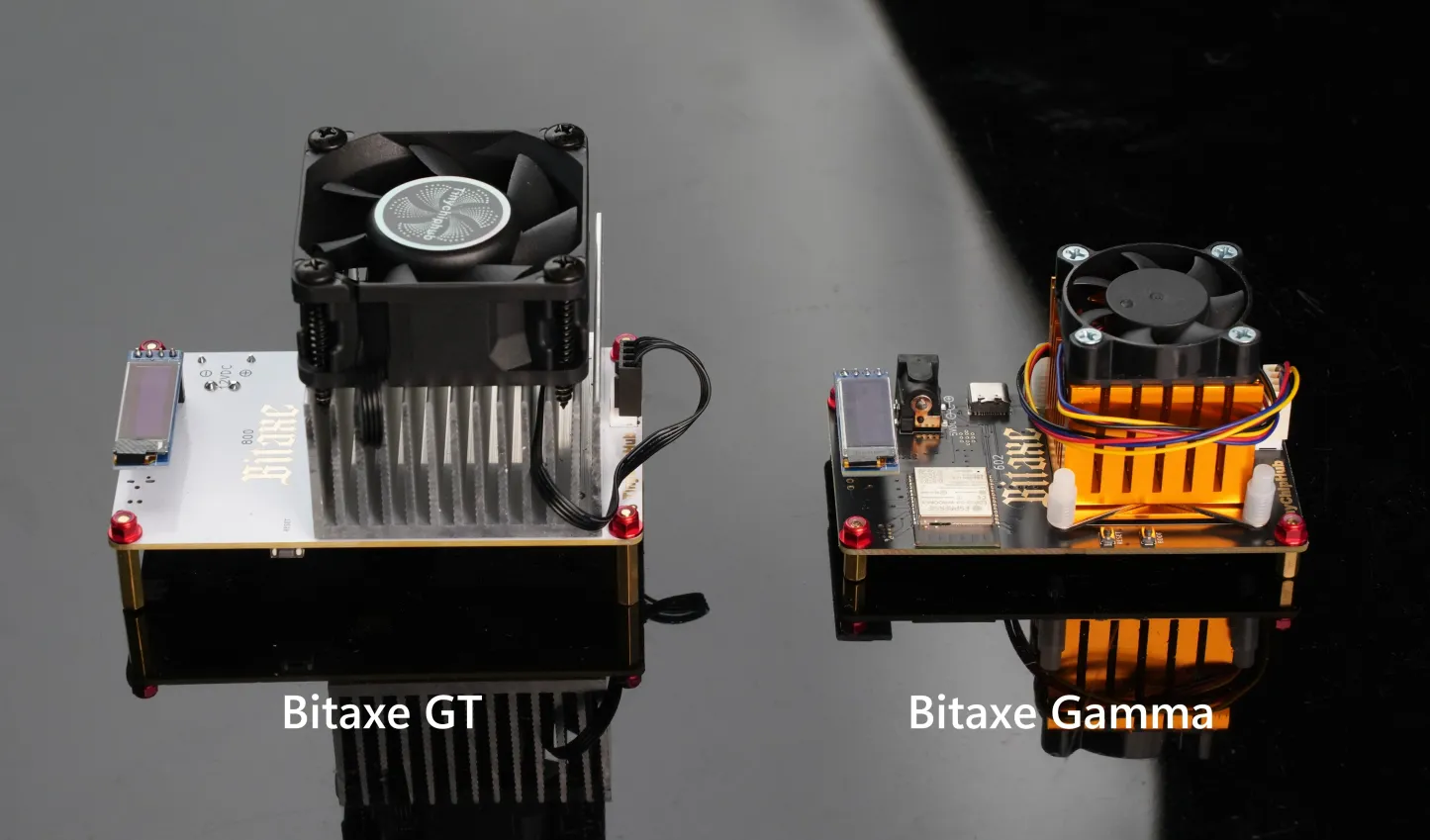
No matter which path you choose, the core is to start doing it. Even if it begins with connecting a Bitaxe Gamma to a solo pool in your basement? The roar of the fan when the machine starts, the fluctuating hash rate on the screen, and the tiny expectation of "what if" in your heart are the pure joy of a home miner. After all, the security of the Bitcoin network is collectively guarded by countless individuals like you, who are not content with just "holding" but want to personally "forge" it.