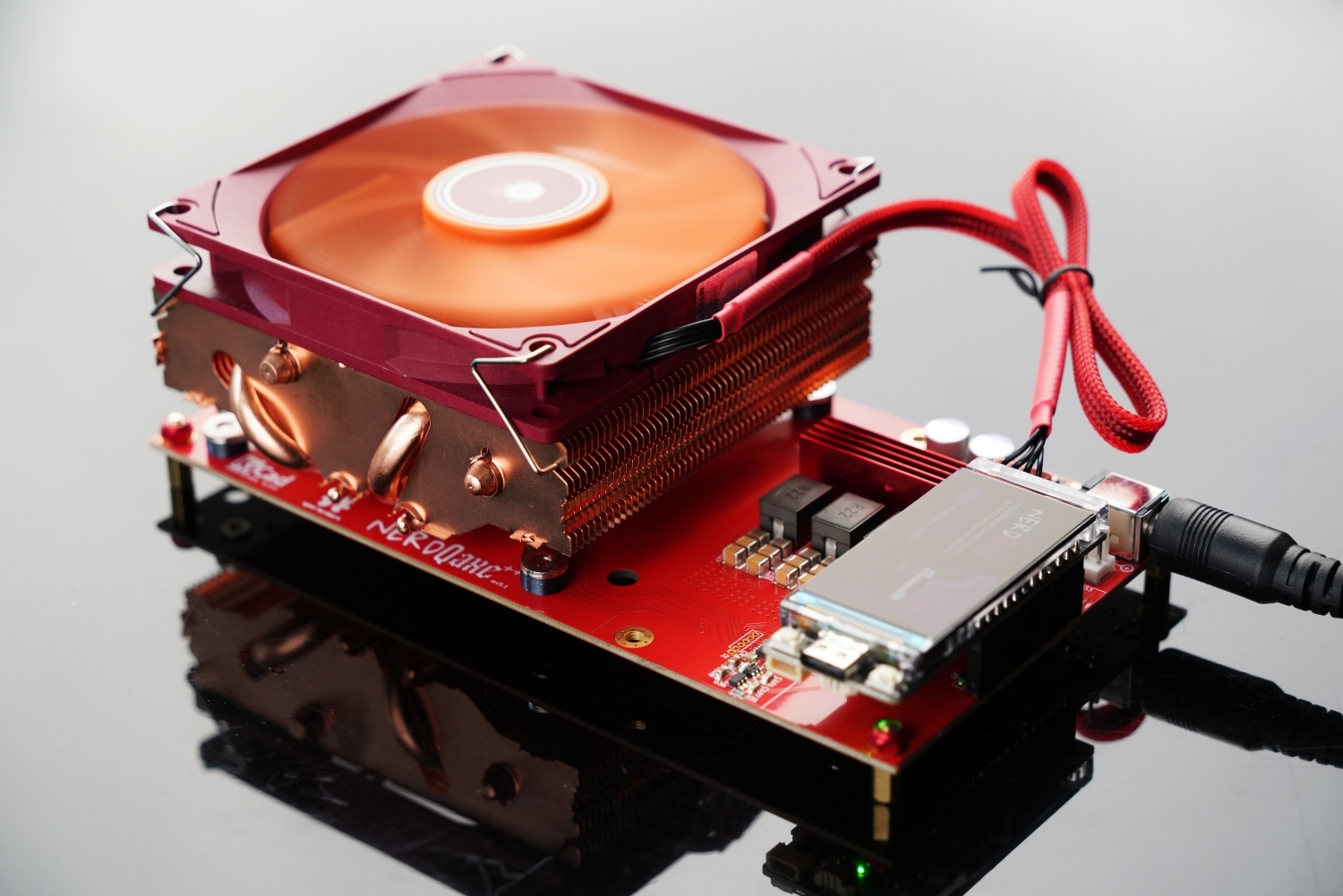
As more enthusiasts explore home crypto mining, understanding what really separates premium miners from budget options is critical. With open-source designs enabling countless variants, true quality lies in component selection, engineering integrity, and thermal design – factors rarely visible on spec sheets.
Tinychiphub isn't just a manufacturer – we're developers too. Having processed thousands of crypto miners, we're sharing our hardware expertise in understandable terms to help you make smarter choices! Throughout this article, we'll use our NerdQaxe++ Remastered Edition as a reference to explain some hardware concepts and details.
1. The ASIC Chips Origin: The Heart of Mining
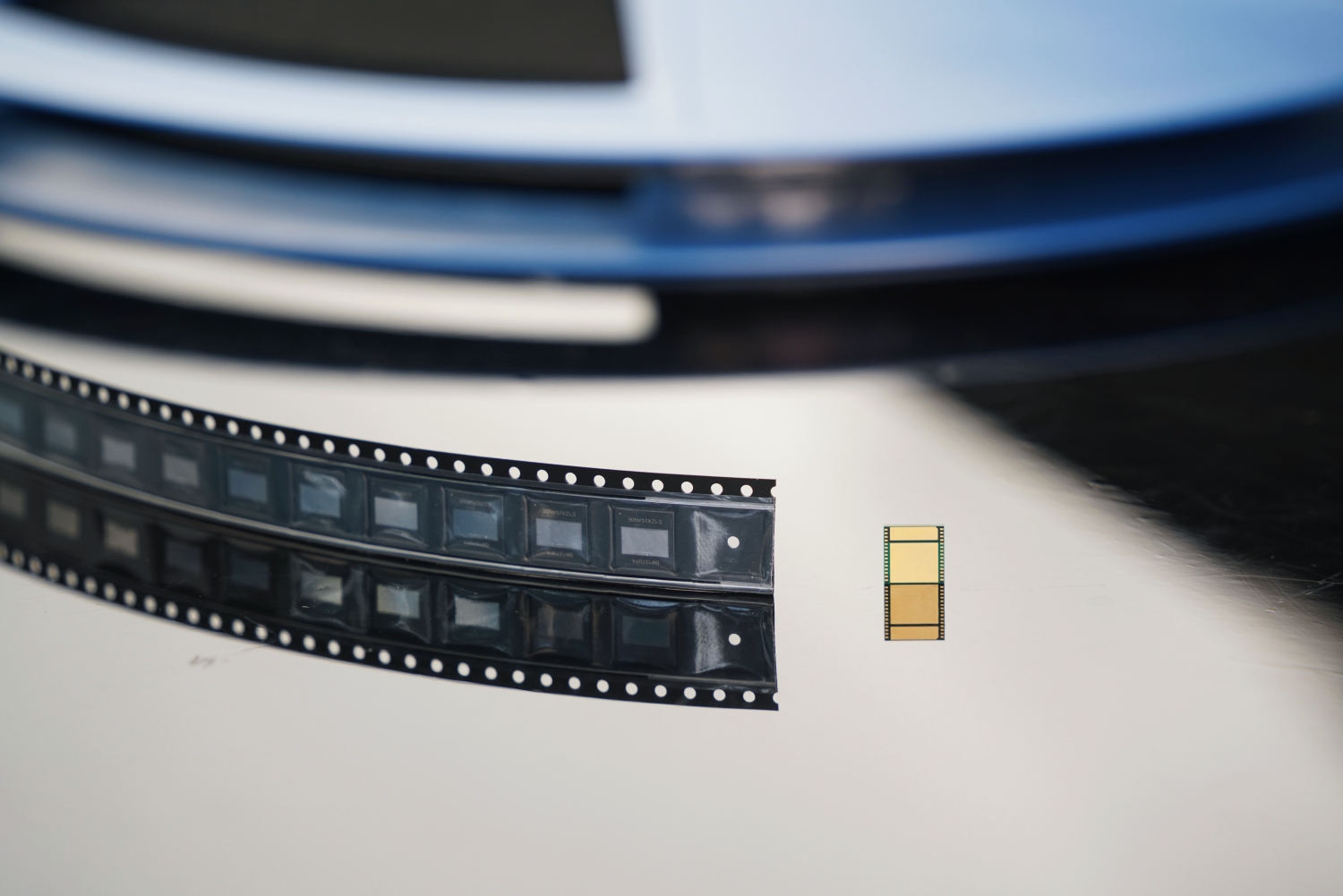
The Science: The BM1370 Chip using on Nerdqaxe++ was exclusively designed by Bitmain for Antminer's industrial mining rigs. A rarely discussed truth is Antminer does not sell these chips separately through retail channels. Apart from some special source (such as leaks from Bitmain's factories, though these are equally difficult to distinguish authenticity from refurbished chips), most market supplies can only obtain chips through the following two sources:
- Option A (High Cost)- New Machine Harvesting: Manufacturers purchase entire Antminer units, dismantle them to extract chips(≈15-20% loss rate). After the refurbishment process (which involves cleaning all remaining solder paste), then re-solder onto new boards.
-
Option B (Low Cost) - Retired Miner Recycling: Chips are salvaged from decommissioned mining farms that often operated 24/7 in harsh environments for years. Like endurance athletes pushed beyond their limits, these chips from retired mining equipment are more likely to suffer silicon degradation (manifested as increased electron leakage) when operating under heavy loads.
Our Commitment: While most manufacturers avoid disclosing chip sourcing details and merely specify which chips they use, we've established partnerships with verified supply chain providers to ensure consistent, reliable components. We pay a premium for Option A - guaranteeing every ASIC is virgin-harvested exclusively from new Antminer units!
2. PCB Copper Weight: The Backbone of Circuit Reliability
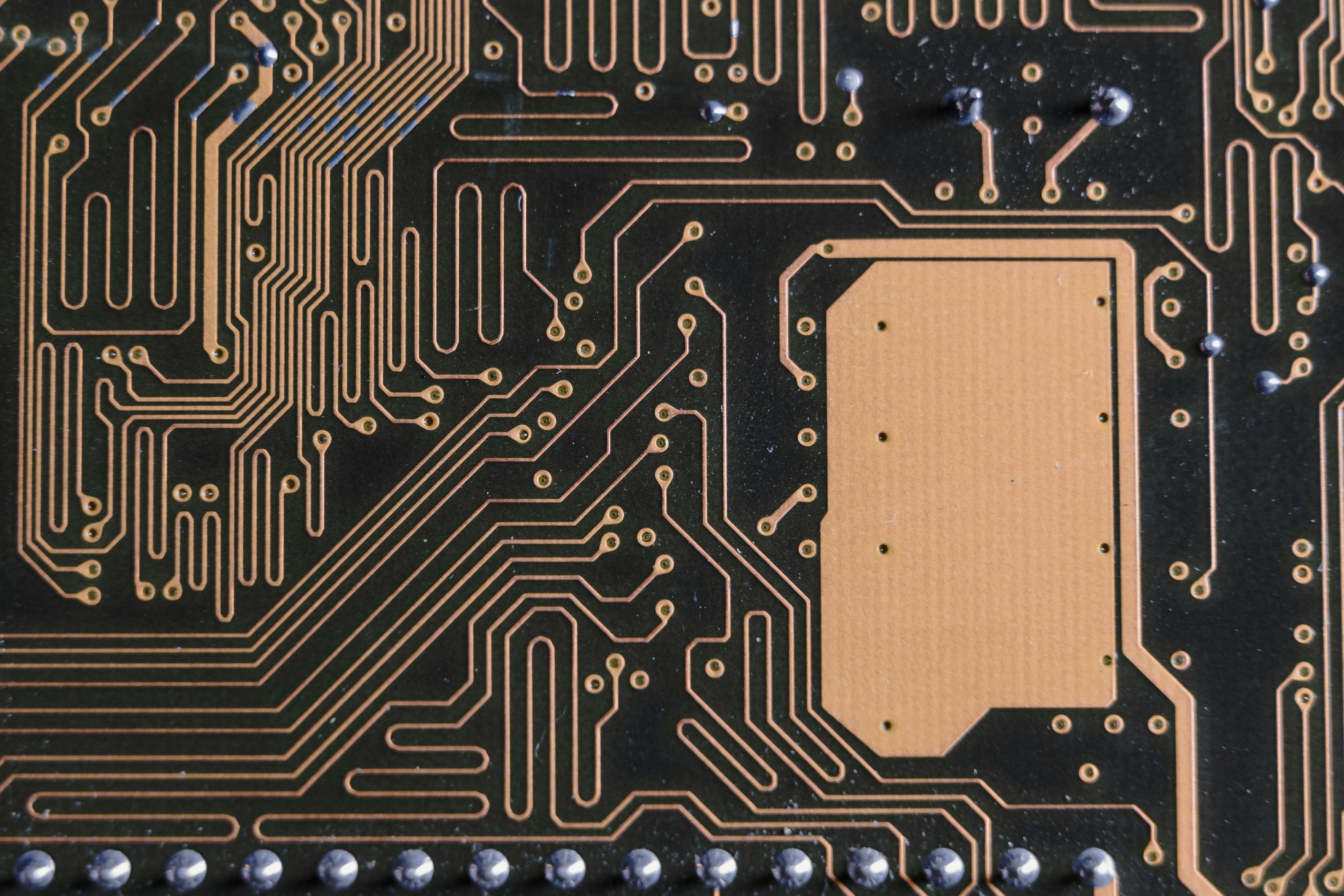
The Science: VRMs (Voltage Regulator Modules), critical for stable power delivery to your mining chips, generate significant heat. The thick copper layers inside your Printed Circuit Board (PCB) act like highways for electricity and heat. Copper weight is measured in ounces per square foot (oz).
What Tinychiphub Chose: While the original design of Nerdqaxe is using very thin copper less than 1oz, some designs may upgrade it. However, our NerdQaxe++ Remastered Edition utilize 2oz copper! Doubling the copper thickness dramatically increases its ability to spread heat away from sensitive VRMs and other components in the same condition!
Why it Matters: Thicker copper provides two significant advantages: Substantially improved thermal management (resulting in cooler operation and potentially extending component lifespan) and enhanced electrical stability and safety under heavy, sustained loads - a critical factor for overclocking applications.
Integrating 2oz copper isn't just an easy swap of component- it demands a complete PCB layout redesign to accommodate its increased physical bulk. A substantial engineering investment reflecting a commitment to quality and safety. This represents a substantial engineering investment that demonstrates a commitment to quality and safety.
3. Fuse Protection: The Safety Net
The Science: High-amperage devices (like optimized miners for overclocking ) are susceptible to power surges and faults. A fuse is a critical safety device designed to fail first, breaking the circuit and protecting expensive components from catastrophic damage "bricking".
Why it Matters: As the old engineering adage warns: "You don't unleash the beast without a chain." We firmly believe that safety is paramount. The original Nerdqaxe fuse system remains our benchmark, especially when pushing performance boundaries.
While newer revisions' higher-amperage requirements demand physically larger fuses—posing significant layout challenges. Omitting fuses to chase marginal performance gains or simplify design sacrifices fundamental safety. Robust onboard fusing serves as that essential safety chain, ensuring your investment remains protected from unexpected power events.
4. Capacitors: The Silent Guardians Against Ripple
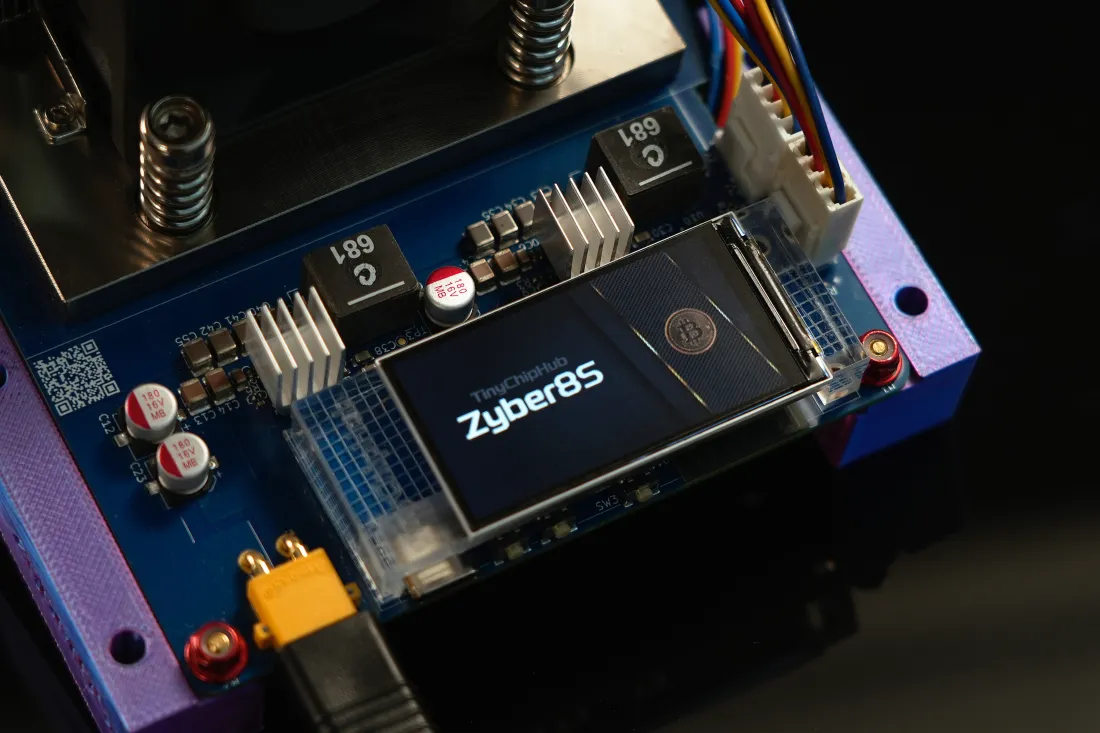
The Science: Capacitors store and release electrical energy, smoothing out the voltage delivered to your mining chips. They fight Ripple Current – small, rapid fluctuations in voltage leftover after power conversion. Excessive ripple stresses components, reduces efficiency, generates heat, and can lead to instability or premature failure. There are two kinds of capacitors on the unit:
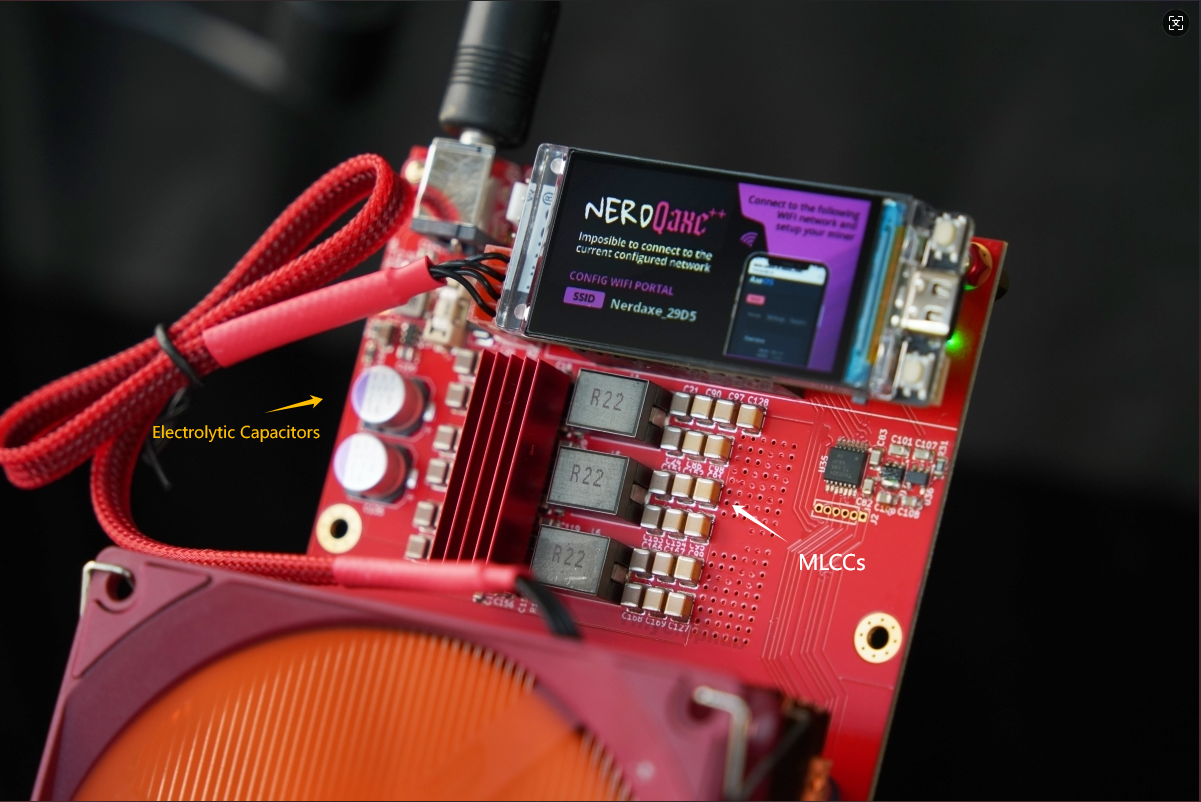
- MLCCs (Multi-Layer Ceramic Capacitors): These neatly arranged small squares are MLCCs. These tiny capacitors filter high-frequency noise. Their quantity and quality directly impact voltage stability at the chip level. While quality variations create significant price disparities (ranging from cents to dollars per unit), visual differentiation remains challenging for non-professionals. However, one quantifiable metric exists. Since MLCCs exhibit diminishing marginal benefits in ripple suppression, more units on the board indicate higher manufacturing costs and deliver greater operational stability.
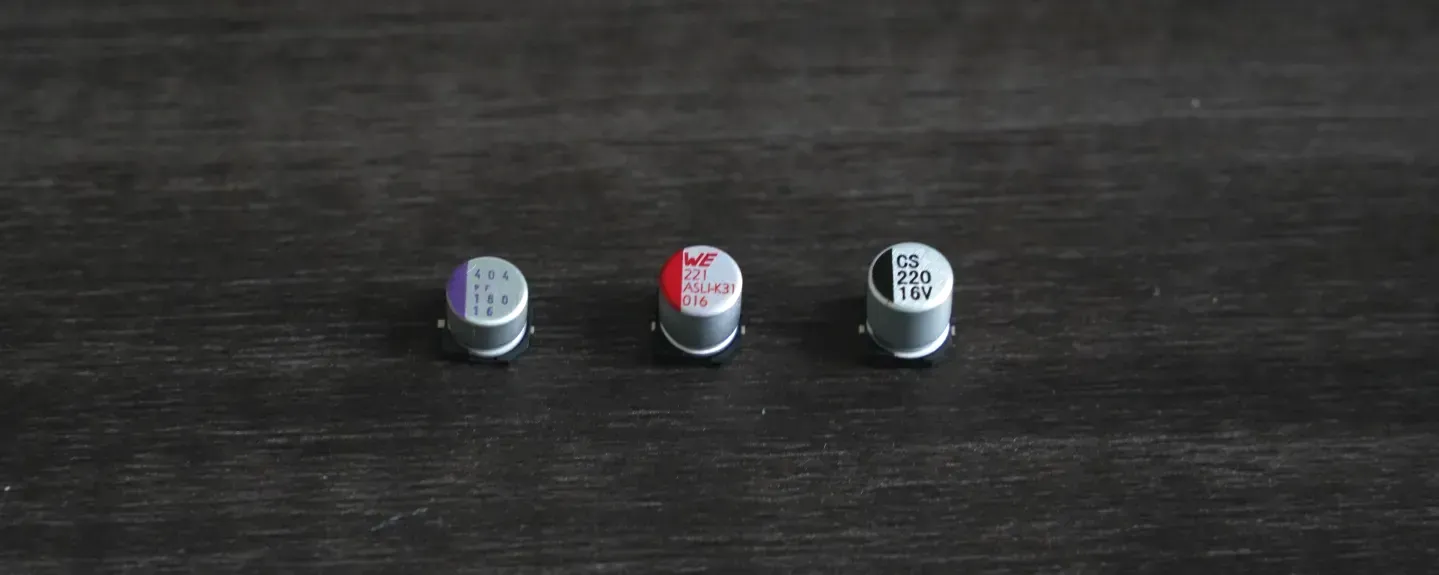
- Electrolytic Capacitors: These cylindrical parts are electrolytic capacitors. These power reservoirs handle bulk energy storage and smoothing. But not all are created equal! Electrolytic capacitors lack a unified industry standard like resistors. However, the colour on the top provides a general guidance - Just think of electrolytic capacitor grades like whiskey colors:

-
Blue/Black: Indicate standard industrial-grade capacitors without specifics.
-
Gold/Brown: Often denote 105°C long-life types or high-end/audio-grade series.
-
Red/Orange/Purple: Primarily serve as manufacturer-specific identifiers for distinct product lines and specialized applications or specific characteristics. (e.g., ultra-high ripple current).
What Tinychiphub Chose: Panasonic premium purple capacitors - these superior components offer significantly lower ESR and higher ripple current handling capability. This means they dissipate less heat internally and allow much higher ripple currents to pass through safely, resulting in cooler operation, greater stability under load, and longer lifespan – critical for 24/7 mining.
Why it Matters: High-grade electrolytics and abundant, quality MLCCs are hallmarks of a stable, reliable, and durable miner. They ensure clean, consistent power delivery, minimizing stress and maximizing stable hash performance.
5. Power Connectors: Durability Meets Function
The Science: You rarely turn off your mining equipment, right? Ensuring power delivery to an always-on device through a reliable entrance is non-negotiable. Two common connector types are the Barrel Jack and XT30. While these connectors differ primarily in application scenarios, there's no inherent superiority between them in terms of quality.
- XT30: Used in RC/drone applications requiring high current capacity (up to 30A). Robust but less common on consumer adapters.
-
Barrel Jack: More common in consumer electronics (5.5mm/2.1mm) from lower to medium currents (typically under 10A).
What Tinychiphub Chose: As a model optimized for overclocking, we exclusively use all-metal barrel jacks rather than plastic housings. These offer superior heat dissipation, exceptional mechanical durability, and eliminate plastic fatigue or melting concerns. You get the universal convenience of a barrel jack combined with the ruggedness and safety demanded by a high-performance, always-on device.
6. PCB Thickness: The Foundation's Strength
The Science: PCB thickness impacts rigidity, weight, and slightly influences heat spreading. Standard thicknesses are 1.0mm, 1.2mm, 1.6mm, and 2.0mm:
-
Thicker PCBs (e.g., 2.0mm): Offer high rigidity and resist bending, but are heavier and can act as a slight thermal insulator, making heat dissipation from the board itself marginally harder.
-
Thinner PCBs (e.g., 1.0mm): Are lighter and can theoretically dissipate heat slightly faster from the board surface, but are much more flexible and prone to damage during handling or if components are heavy. Manufacturing thinner boards reliably requires more advanced (and costly) processes.
What Tinychiphub Chose: We utilize the industry-standard 1.6mm PCB. This provides the optimal balance: excellent rigidity and durability to protect components and effective thermal performance when combined with our premium 2oz copper and overall thermal design. It avoids the fragility of thin boards and the unnecessary bulk and potential minor thermal downsides of ultra-thick boards.
7. Fan Engineering: The Physics of Silence
The Science: Different manufacturers employ varying fan production technologies, yet evaluating fan performance ultimately boils down to two critical quantitative metrics:
- CFM (Cubic Feet per Minute): CFM is a comprehensive performance metric measured in ft³/min which indicates actual air volume moved. It relates to rotational speed (RPM), depends on the aerodynamic efficiency of blade design, and correlates with fan dimensions. Under identical conditions, higher CFM values are preferable as they indicate superior airflow and cooling capacity.
- Noise Level: Sound pressure measured in dBA. Counterintuitively, dBA operates on a logarithmic scale. Each 10dBA increase represents a tenfold rise in sound energy, yet humans perceive this as only a doubling in perceived loudness. Since sound originates from vibrations, any technology or measure that reduces fan blade vibrations - such as dust removal from blades or placing a soft pad under the equipment - can effectively lower noise levels.
Real-World Sound Profile:
- 30 dBA: Whispering in a library
-
44 dBA: Refrigerator hum
-
70 dBA: Vacuum cleaner (typical industrial mining rig noise)
The Size Advantage: A 120mm fan operating at 1,800 RPM moves the same air volume (65 CFM) as an 80mm fan running at 4,800 RPM - yet achieves this with significantly lower noise output (44 dBA vs. 70 dBA). The reason lies in fundamental fluid dynamics principles:
-
Larger blades displace more air per revolution: Increased blade surface area captures more air molecules with each rotation.
-
Lower RPM reduces mechanical noise sources: Reduced bearing friction and airflow turbulence at slower speeds.
This demonstrates a key engineering principle: When operating under identical thermal demands, larger, slower -spinning fans achieve equivalent or superior cooling performance with reduced acoustic output compared to smaller, faster-spinning alternatives.
What Tinychiphub Chose: The 95mm hydrodynamic bearing fan delivers 42.58 CFM at 2700 RPM maxium speed with soft-silicore vibration-dampened mounts, achieving ultra-quiet 22.4 dBA operation.
8.The Heatsink and Material Science: Copper vs. Aluminum
The Science: The thermal management involves two distinct phases:
-
Conduction Phase: Heat transfer occurs from the chip package or TPS to heatsink fins. This process is governed by the material's inherent thermal conductivity (k), which quantifies its ability to conduct heat.
- Dissipation Phase: Fin surfaces release thermal energy to the surrounding air. The governing equation for thermal diffusivity is: α = k / (ρ × Cp)
| Copper | Aluminum | Comparison | |
| k = Thermal Conductivity | 398 W/m·K | 237 W/m·K | ↑ Copper moves heat 68% faster |
| α = Thermal Diffusivity | 111 mm²/s | 84 mm²/s | ↑ Copper release heat 32% faster |
| Cp = Specific heat capacity | 385 J/kg·K | 897 J/kg·K | ↓ Copper stores 57% less heat |
| ρ = Material density | 8940 kg/m³ | 2700 kg/m³ | ↓ Copper sinks 3.3X heavier |
Design Optimization Principles: Feeling overwhelmed? Just remember in most cases, aluminum is used for cost and lightweight considerations. Thermodynamic principles and materials engineering are relatively complex, so we only need to remember some basic application scenarios:
- Small passive cooling heatsinks (surface area<500cm²): Aluminum dominates - Lower material cost and weight. Sufficient thermal performance for low-power components
-
Medium active cooling heatsinks (surface area<2500cm² ): Copper-aluminum composite (copper base plate + aluminum fins) provide optimal cost-performance balance - Enhanced heat spreading (copper) with lightweight construction (aluminum)
-
Large active cooling heatsinks (surface area>2500cm² ): Pure copper becomes critical for superior thermal conductivity and rapid heat spreading to fin arrays where forced airflow achieves dissipation.
In simple terms: Larger heatsinks perform better. For surface area estimation, use this simplified formula: Surface Area = (Number of Fins) × 2 × (Fin Length × Fin Height)
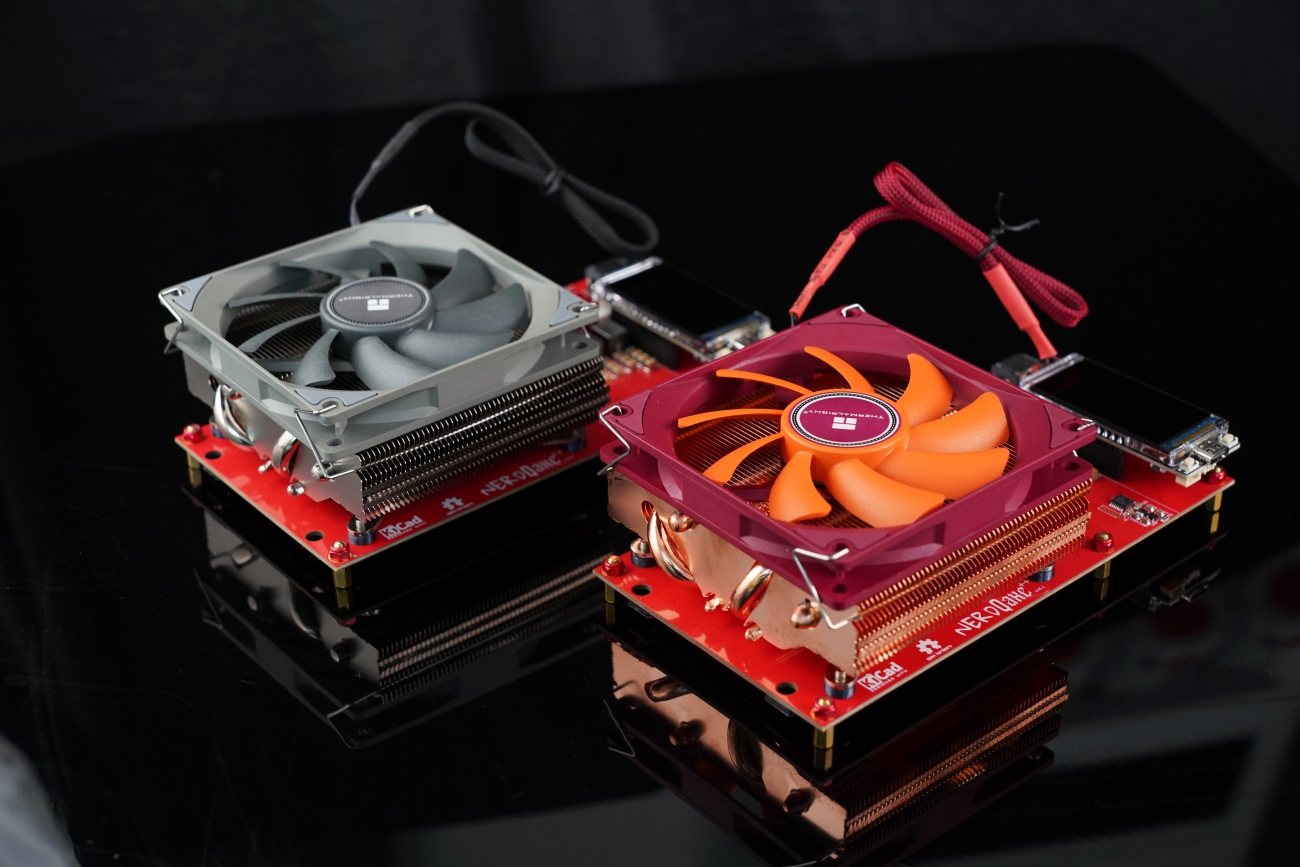
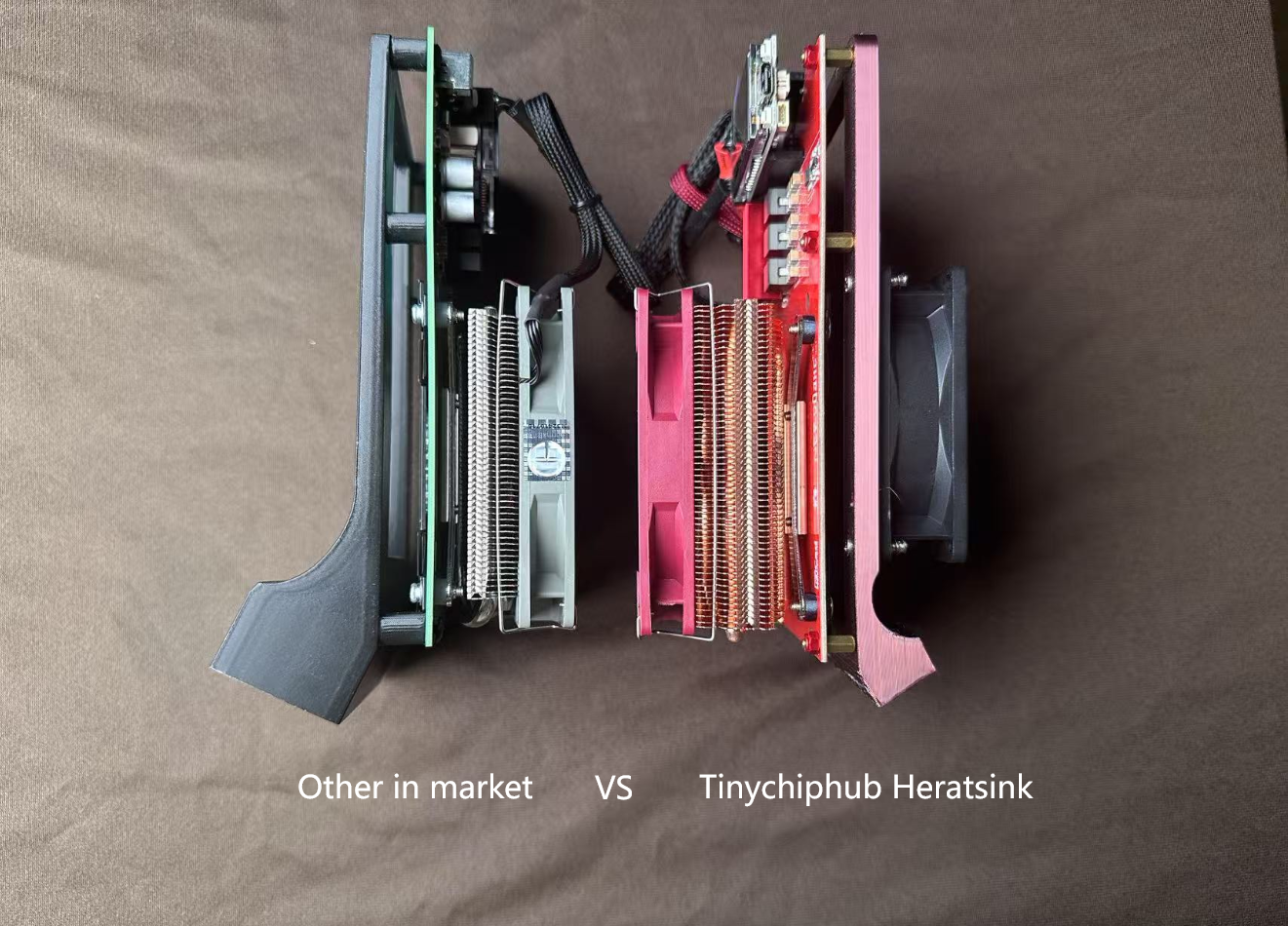
What Tinychiphub Chose: Our heatsink dimensions: 94.5mm × 95mm × 32mm (28% thicker than the general models in the market). This configuration achieves an exceptional 3,000 cm² thermal surface area - ideal for high-TDP components.
9. Hashrate Stability: Why Peak Numbers Don't Tell the Whole Story
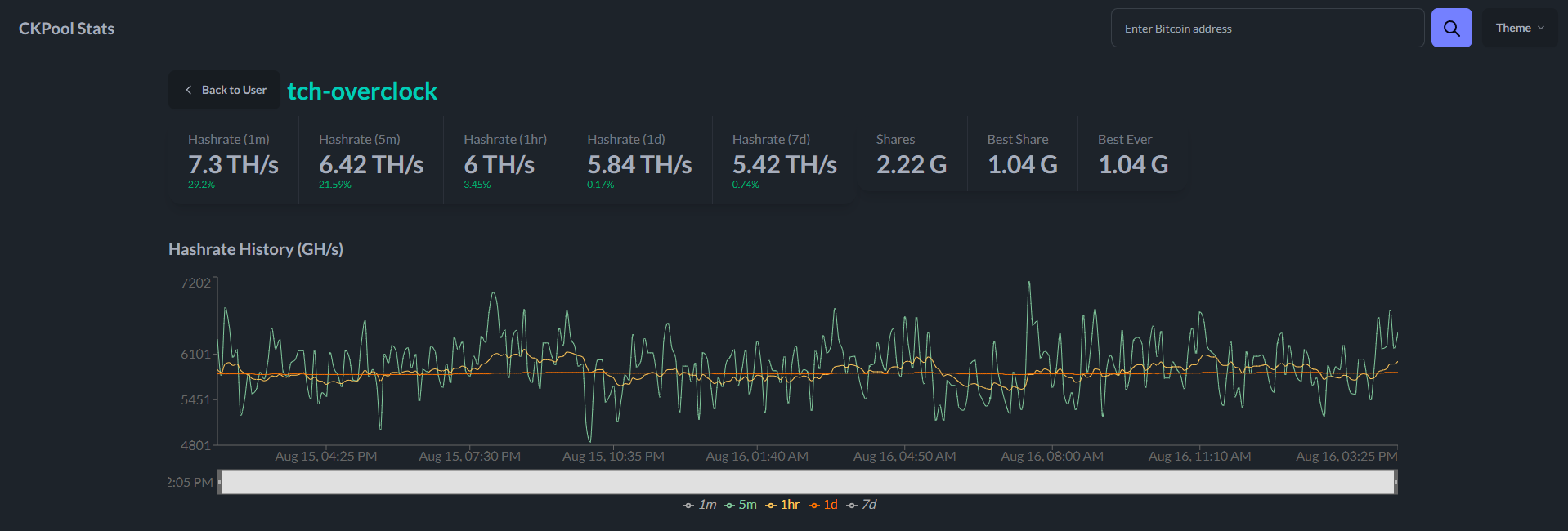
Hashrate can be tricky: In the real world, hash rate fluctuates due to various factors, much like stocks. Peak hashrate and trough hashrate alternate, so we cannot judge based solely on a single moment shot of the screen. Also, short-term bursts achievable through aggressive overclocking or ideal conditions. Like a race car at maximum – impressive but unsustainable.
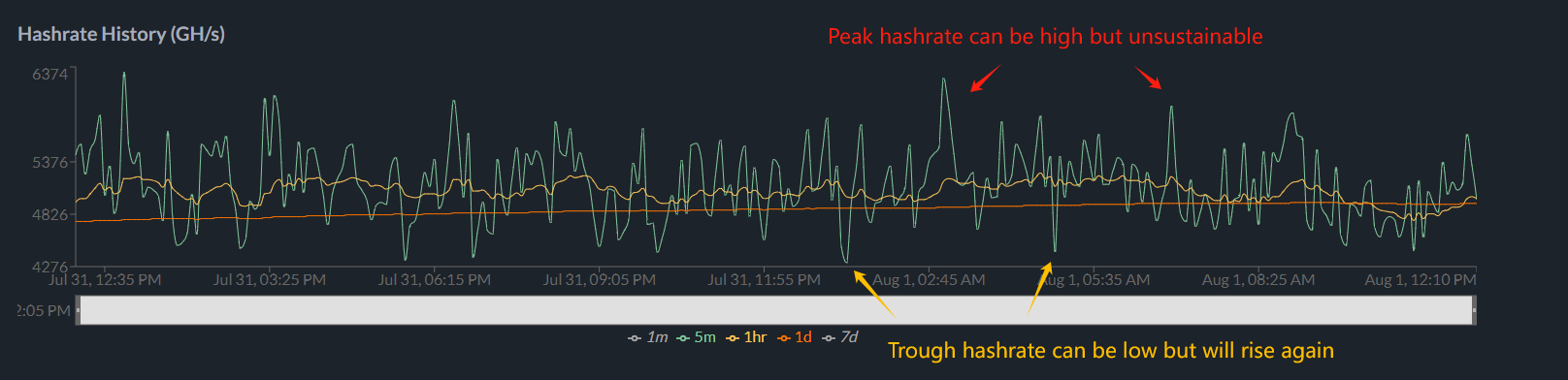
However, pushing hardware beyond its thermal dissipation capacity or power delivery limits may cause cumulative thermal stress and eventually result in component degradation.
Think of hardware as a game character's innate attributes: Before activating Berserk Mode (Overclocking), you must verify whether your Base Stats and Equipped Gear can sustain this state. Otherwise, it may ultimately lead to self-inflicted damage.
-
Engineering and components = The "Base Stats" of Your Miner.
-
Cooling Solutions = "Equipped Gear"
Weak Base Stats can be remedied with gears, but when superior Base Stats armed with premium gears, you achieve god-tier performance!
10. Reviews and Tests
This article aims to empower readers to look beyond surface specifications and consider multiple layers of factors when making decisions. It's crucial to understand that peak performance doesn't tell the full story, nor do the hashrate readings on the screen. Real performance depends on multiple factors like engineering and components, cooling solutions, configurations and environmental conditions. Controlled variable analysis between products from different manufacturers is actually challenging.
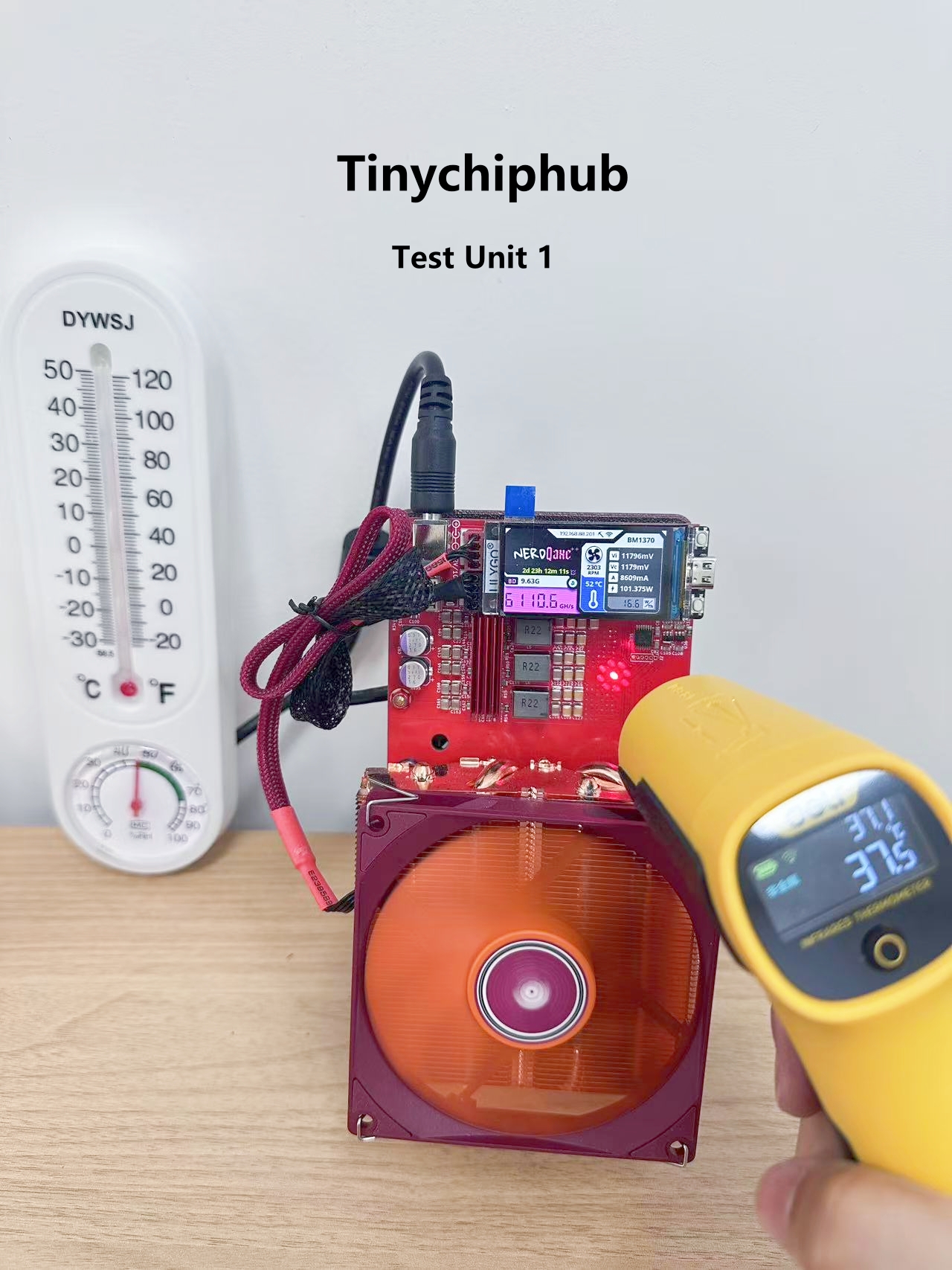
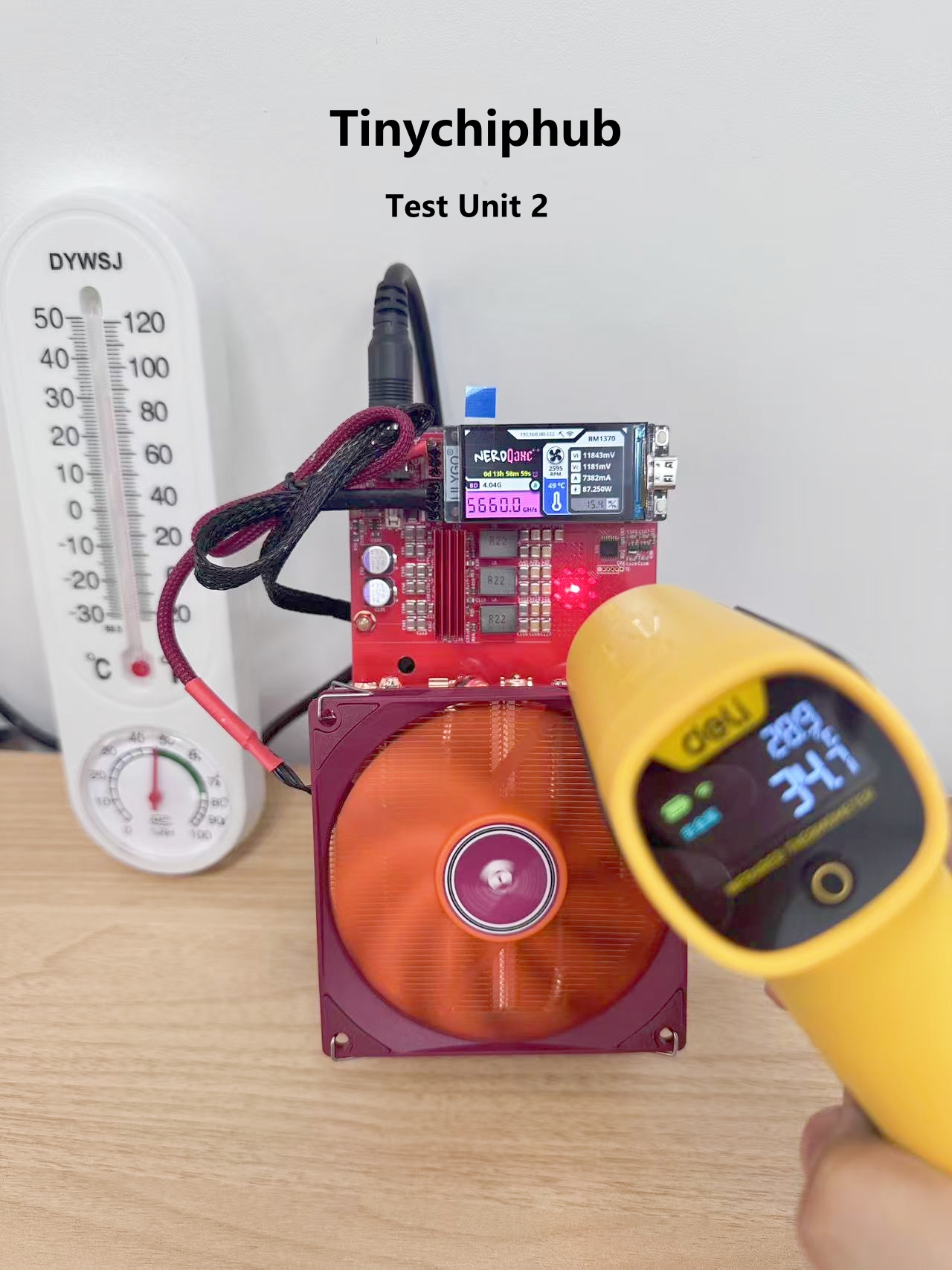
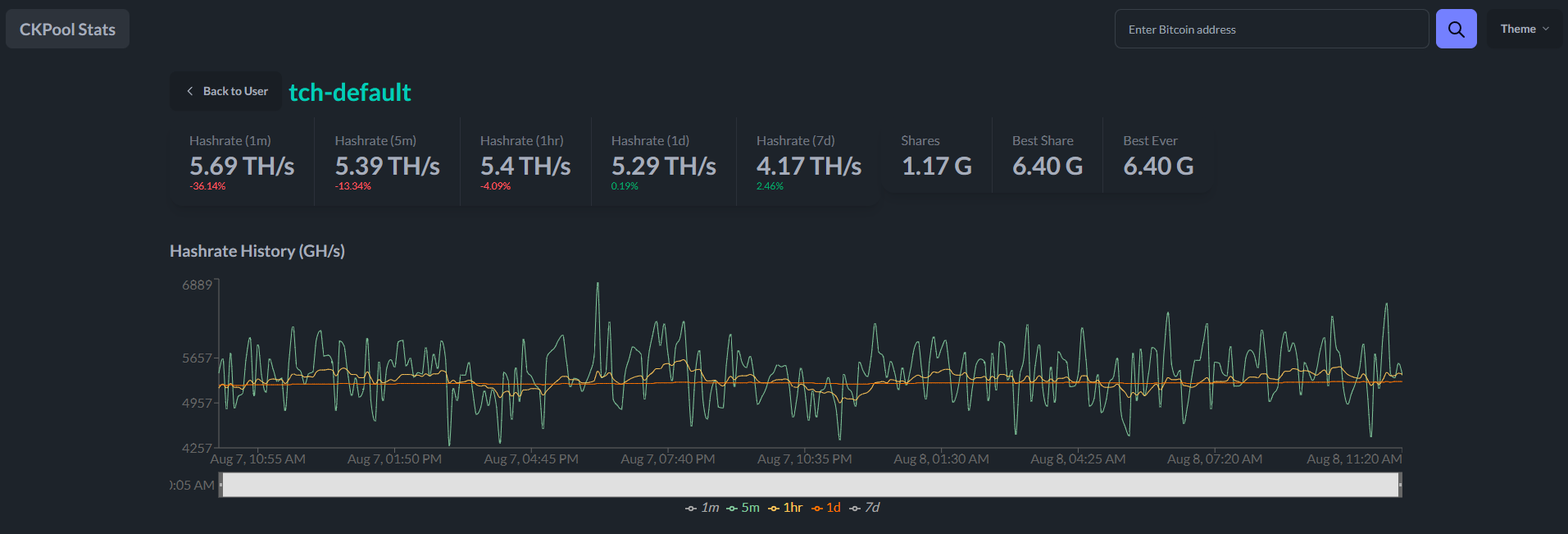
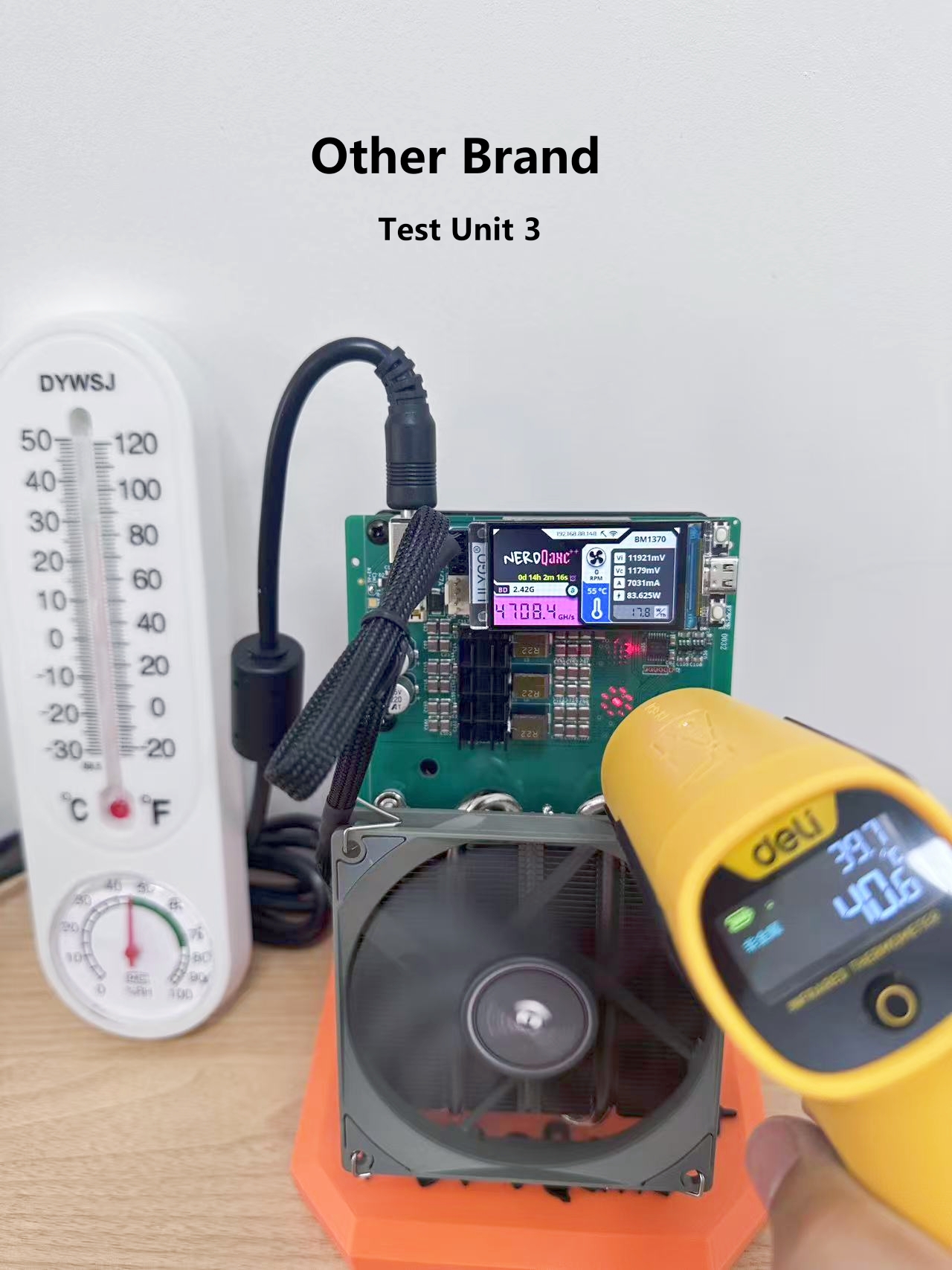
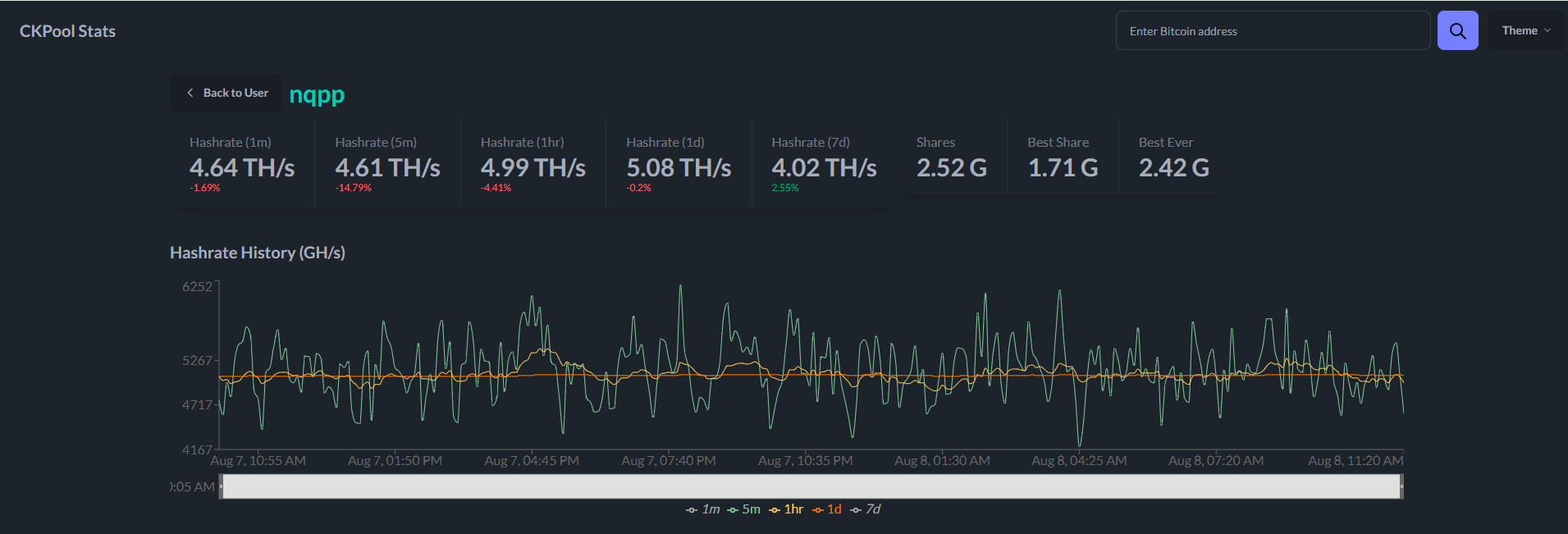
However, we deployed some Nerdqaxe++ units and ran them in a room with activated airflow and temperature of approximately 30℃ for several days only for your reference (ongoing updating for long-term data).
* We are not recommending any overclocking configuration as every unit varys and requires specific tuning. If you want to learn more about overclocking, you can read Master Your ASIC Miner Tuning & Overclocking - Core Voltage & Frequency Setting Guide
.
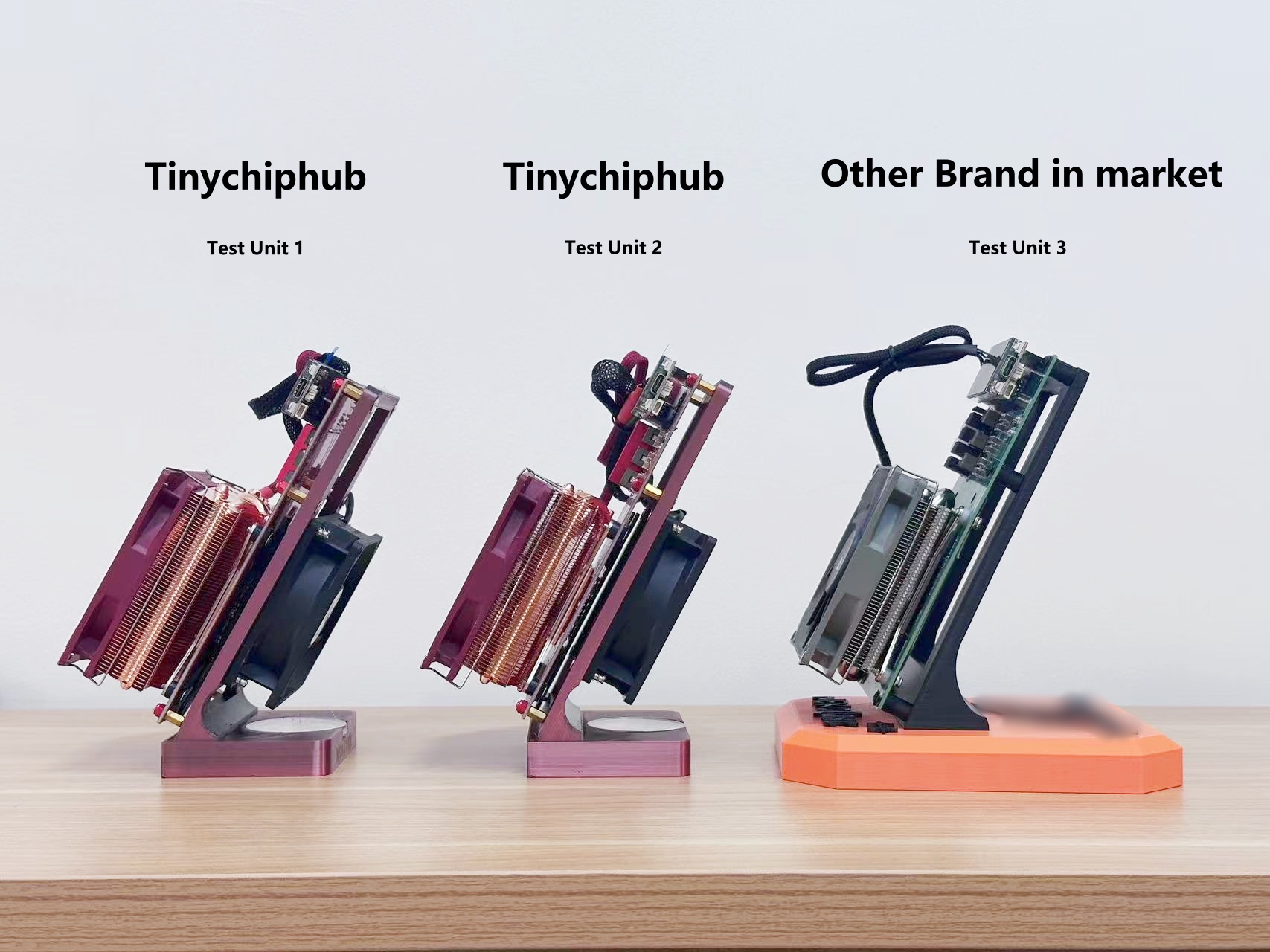
| Test Unit |
Brand |
Included Stand |
Heatsink Material |
Fan Speed |
Configurations | Temp |
Power | CKpool Average Hashrate |
|||
| Core Voltage | Frequency | ASIC | PCB |
1hour |
1day |
||||||
| 1 | Tinychiphub | Fan Stand | Pure Copper | 100% | 1180mV |
725MHz |
52℃ | 37.5℃ |
101.375W 16.6W/Th |
6.13Th/s | 5.99Th/s |
| 2 | Tinychiphub | Fan Stand | Pure Copper | 100% | 1180mV | 650MHz | 49℃ | 34.7℃ |
87.25W 15.4W/Th |
5.40Th/s | 5.29Th/s |
| 3 | Other Brand | Regular Stand | Aluminum Copper | 100% |
1180mV |
625MHz (maxium) |
55℃ |
40.6℃ |
83.625W 17.8W/Th |
4.99Th/s |
5.08Th/s |

Last Word: Choose Wisely, Mine Confidently
When investing in a home mining rig, look beyond the advertised hashrates. The quality of foundational components – the copper weight cooling your VRMs, the safety features like fuses, the grade of capacitors smoothing your power an so on – determines real-world reliability, safety, efficiency, and longevity.
At Tinychiphub, every component choice reflects our commitment to engineering integrity, uncompromised safety, and sustained performance. We invest in premium materials like 2oz copper and top-tier purple electrolytic capacitors, implement essential safety features like onboard fusing, selecting silent fan and larger heatsink and even included an Enhanced Fan Cooling Luck-Infusion Stand as free bonus.This holistic approach ensures your miner isn't just powerful, but is built to perform reliably and safely, shift after shift.
Equip yourself with knowledge. Choose miners with quality. Explore the engineering behind the NerdQaxe++ Remastered Edition difference today!


comments