💡 Tip: The following article data is for reference only. Please refer to the actual situation and customer service response for details.
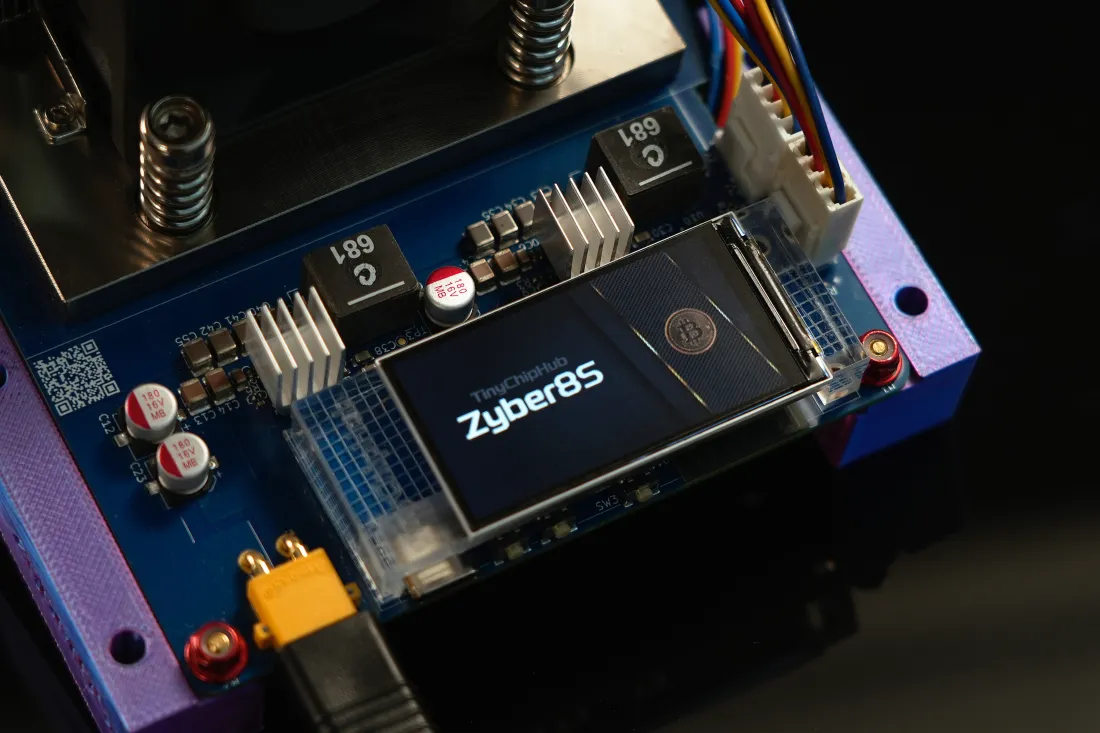
An ASIC miner is like a special forces computing unit born specifically for mining a certain cryptocurrency (like Bitcoin). Unlike your gaming computer that can do many things, it only does one thing: frantically computing SHA-256 hash puzzles. For example, the latest small miner Zyber 8g boasts a hash rate of 10 TH/s but consumes only 163 W of power, achieving an astonishing efficiency of 18 J/TH. Simply put, it is the ultimate hardware designed to win the number-guessing championship on the Bitcoin network.
💡ASIC? Learn Technical Term!
Don't be intimidated by the term Application-Specific Integrated Circuit. In plain terms, it's the academic savant of the chip world. The CPU is the all-around class monitor scoring 90 in every subject, the GPU is the sports-specialized student excelling in graphics calculations, and the ASIC? It's that odd genius who can get a perfect score in the Math Olympiad but might hand in blank papers for other subjects. Its specialization is reflected in the circuit design; every transistor is optimized solely for executing the SHA-256 algorithm for Bitcoin mining. This extreme focus brings overwhelming efficiency.
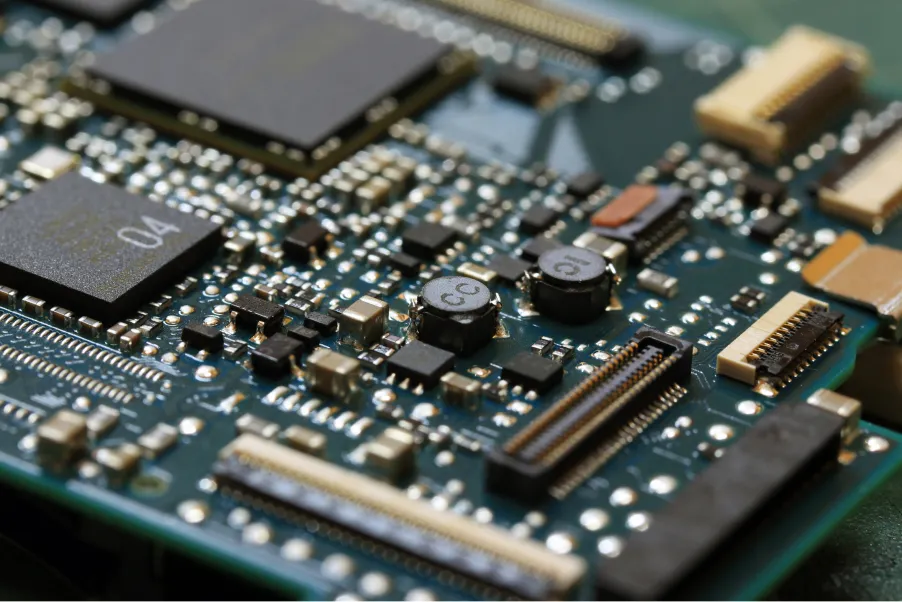
Why is this specialization so crucial? Let's talk numbers. According to Bitmain's 2023 white paper, its flagship ASIC chip series, the BM1398, uses a 5-nanometer process, integrates over 30 billion transistors, and specifically optimizes the data path for hash operations. For comparison, a high-end gaming PC with an RTX 4090 has a Bitcoin mining hash rate of about 120 MH/s with a power consumption of 450W. Meanwhile, a Zyber 8G home miner has a hash rate of 10 TH/s with a power consumption of 163 W. The hash rate differs by at least 83,000 times, but the power consumption gap isn't that large. This is the terrifying energy efficiency ratio of ASIC's dimensional reduction strike on specific tasks.
| Device Type | Typical Hash Rate | Typical Power Consumption | Efficiency Ratio (J/TH) | Core Task |
|---|---|---|---|---|
| Home Computer CPU | ~10 MH/s | ~65W | Very Low (N/A) | General-Purpose Computing |
| High-End Gaming GPU | ~120 MH/s | ~450W | Very Low (N/A) | Graphics Rendering / General Computing |
| ASIC Miner | ~10 TH/s | 163 W | ~18 J/TH | SHA-256 Hash Calculation |
🔥Key Point: The specialization of ASIC also means it's almost impossible to repurpose. You can't use it to play Cyberpunk 2077, nor can you use it to run AI image generation. Its life, from the moment it leaves the factory, is destined to be dedicated to that virtual gold mine built from hash values. This extreme singularity is the source of its power.
ASIC Miner!Growth Process 📜
The evolution history of ASIC miners is a condensed documentary of the computing power arms race. The entire process is filled with engineers' obsessions and the relentless drive of Moore's Law. In the earliest days, Bitcoin could be mined with a CPU, which felt like cutting paper with scissors, slow, but anyone could do it. Later, people discovered that the GPU's stream processors were better suited for parallel hash calculations, ushering in the feverish era of graphics card mining. This directly led to the graphics card nightmare for gamers worldwide.
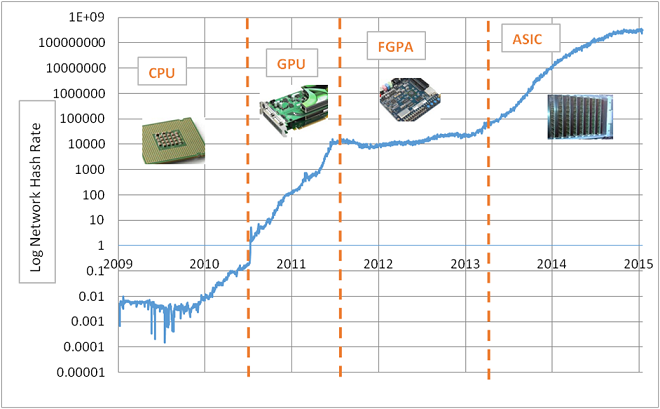
The real turning point came in 2013 with the debut of the first commercial ASIC miner, the Antminer S1. It skyrocketed the hash rate from the GPU's mega-hash per second (MH/s) level directly to the giga-hash per second (GH/s) level, equivalent to replacing scissors with industrial electric cutters. According to CoinDesk's 2014 industry report, the emergence of ASICs caused the Bitcoin network's hash rate to surge 10,000-fold within a year, completely changing the rules of the mining game. The era of hobbyist home computer mining officially ended at that moment.
- Grassroots Era (2009-2012): CPU/GPU mining, low barrier to entry, strong community hacker ethos. Network hash rate remained below 10 TH/s for a long time.
- Dawn of Industrialization (2013-2016): First-generation 28nm-16nm ASICs debut, hash rate entered the TH/s era. Mining farms began to appear.
- Arms Race (2017-2020): Process technology advanced to 10nm-7nm, energy efficiency ratio became the core metric. Solutions like water cooling and immersion cooling emerged.
- Professional Specialization (2021-Present): Entered the 5nm process, energy efficiency ratio below 20 J/TH became the flagship threshold. Full-chain optimization of chip design, cooling, and power management.
There's an interesting "leveling up" logic in this process: whenever a new generation of ASIC miners is released, the electricity cost of the older generation machines may exceed their output, instantly turning them into "electronic waste." According to data from the Cambridge Centre for Alternative Finance (CCAF) in 2023, in regions with electricity costs of $0.05 per kWh, miners with an efficiency worse than 68 J/TH are basically no longer profitable. This brutal iteration speed forces manufacturers and miners to constantly sprint forward and has spawned today's Bitaxe miner research and development industry chain.
What's it Used for🔧
Besides mining Bitcoin, what else can an ASIC miner do?
The answer is: within its "comfort zone," it remains king. While a Bitcoin ASIC miner cannot mine Ethereum (that uses the Ethash algorithm), there are families of ASIC miners target different algorithms on the market. For example, Litecoin (Scrypt algorithm) has dedicated L-series miners, and Dash (X11) also has corresponding models. They are like special forces units of different branches, each with its own responsibilities.
For us home or small-scale miners, the primary use of a Bitcoin ASIC is to participate in the "Security defense battle" of the Bitcoin network and earn block rewards. Technically speaking, this process involves miners competing with computing power to solve a cryptographic puzzle. The miner who finds the correct answer first gains the right to add a new block of transactions to the blockchain and receives a reward of 6.25 Bitcoin (pre-2024 halving data, now only 3.125 BTC). The proportion of your ASIC's hash rate relative to the total Bitcoin network hash rate roughly determines your probability of receiving rewards.
- Core Use 1: Network Consensus. Your miner running contributes "Proof of Work" to the Bitcoin network, helping to verify transactions and prevent double-spending attacks.
- Core Use 2: Earning Rewards. By joining a mining pool, you aggregate your hash rate to share block rewards and transaction fees with a more stable probability.
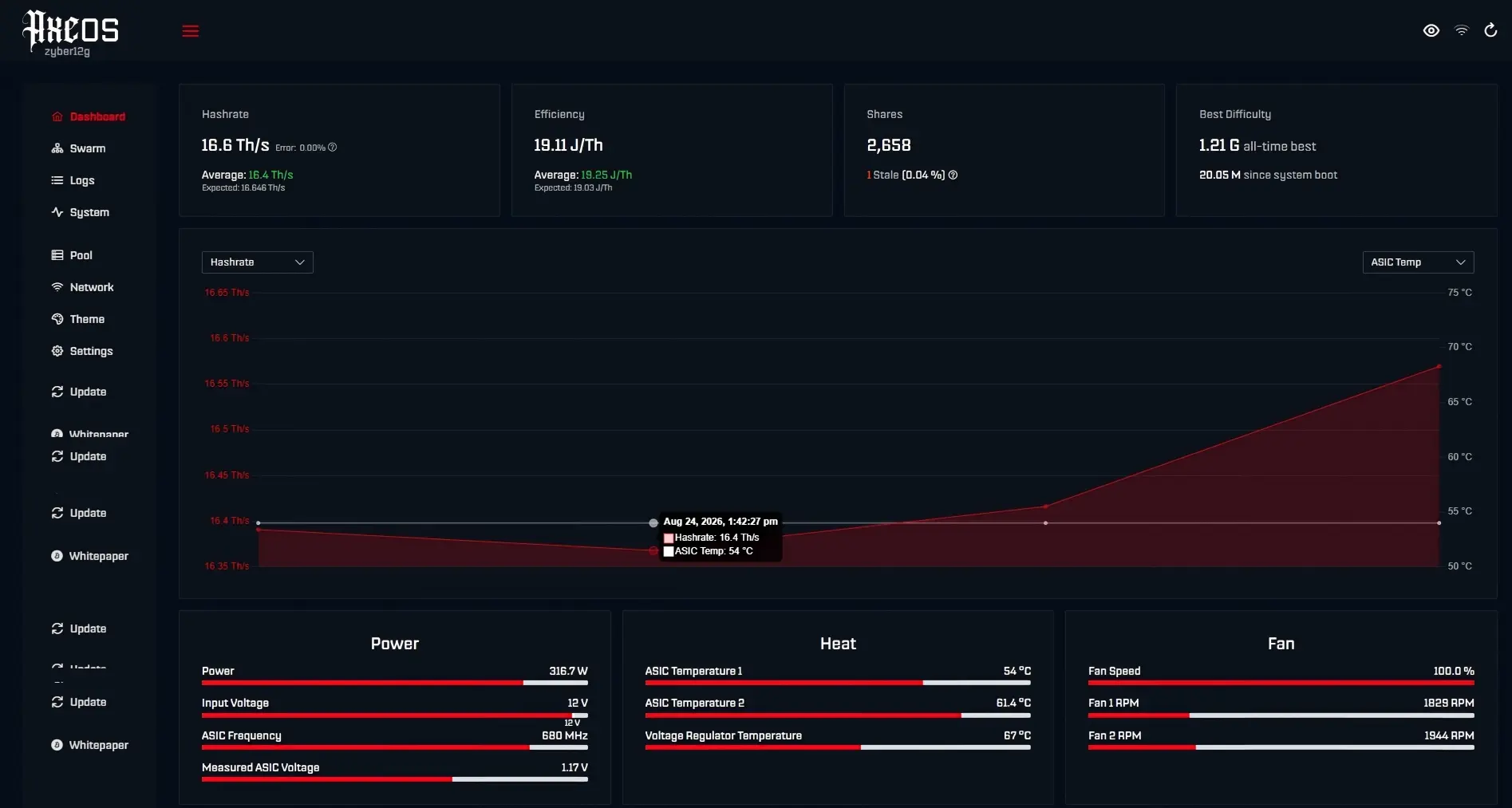
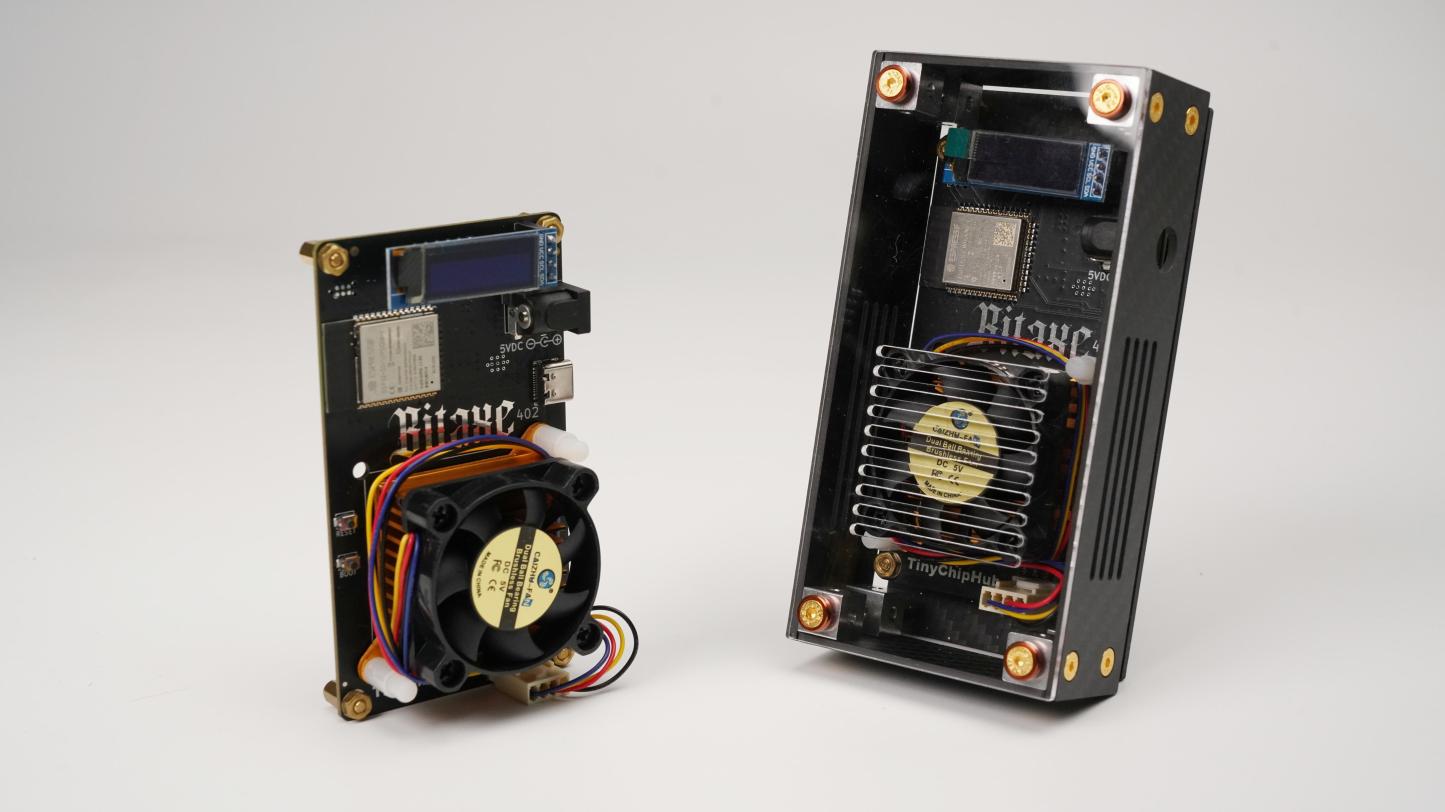
❄️Operational Perspective: When you connect an ASIC miner from TinyChipHub to power and the network, configure the pool address and wallet, it can start up, the fans spin, and it runs directly (plug-and-play). At its essence, this is hundreds of billions of transistors switching synchronously, performing trillions of hash calculations per second. You monitor its real-time hash rate, temperature, and power consumption through a mobile app. That direct sense of control over immense computing power is far more primitive and exciting than watching numbers fluctuate in a stock trading account.
📋Key Things to Know
To master ASIC mining, passion alone isn't enough; you need to understand some core technical aspects. First, the energy efficiency ratio (J/TH) is the lifeline. This number represents the joules of energy consumed per trillion hash calculations; the lower, the better. Currently, the efficiency ratio of top-tier miners mostly stays below the 20 J/TH mark. For example, the independent series launched by TinyChipHub, like the Zyber 8G, can achieve 18 J/TH. With fixed electricity costs, the efficiency ratio directly determines whether your machine is a "money printer" or an "electricity hog."
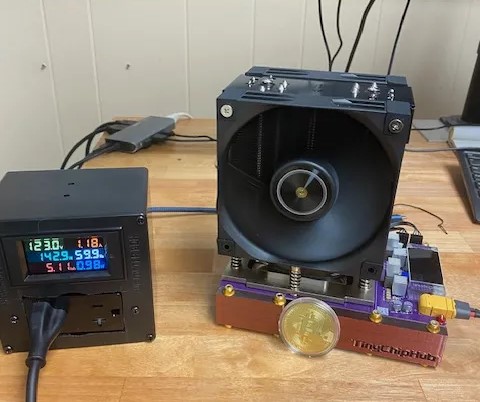
Secondly, heat dissipation and noise are the ultimate bosses for home deployment. A miner with 3000W power consumption generates heat equivalent to two high-power electric heaters, and the noise can reach up to 75 decibels, akin to standing on a busy street. The solution? Either have a separate, extremely well-ventilated space (like a garage or basement), or invest in specialized quiet small miners. Many North American home miners choose to place their miners in sound-insulated tool sheds and use ducts to exhaust hot air outside, even heating greenhouses in winter.
Compliance and certification cannot be ignored. In North America and Western Europe, ensuring miners have electromagnetic compatibility and safety certifications like FCC (USA) and CE (EU) is crucial. This is not only about legal use but also related to home insurance and electrical safety. Some high-end models also undergo rigorous testing by UL (Underwriters Laboratories) to ensure stability under prolonged high-load operation. When purchasing, be sure to confirm these certification marks to avoid buying "knock-off" or non-compliant power supplies, which are potential causes of house fires.
💪Final Preparation: ASIC mining is not a "set it and forget it" passive income. It requires you to care for it like a high-performance race car: regularly clean dust filters, check fan status, update miner firmware to improve stability or slightly boost hash rate. The community circulates various "overclocking" and "undervolting" tutorials to squeeze out the last bit of performance within safe margins. This process itself is a form of geeky fun and challenge. Remember, you are in charge of a computing beast; enjoy the process of taming it, not just staring at the output.