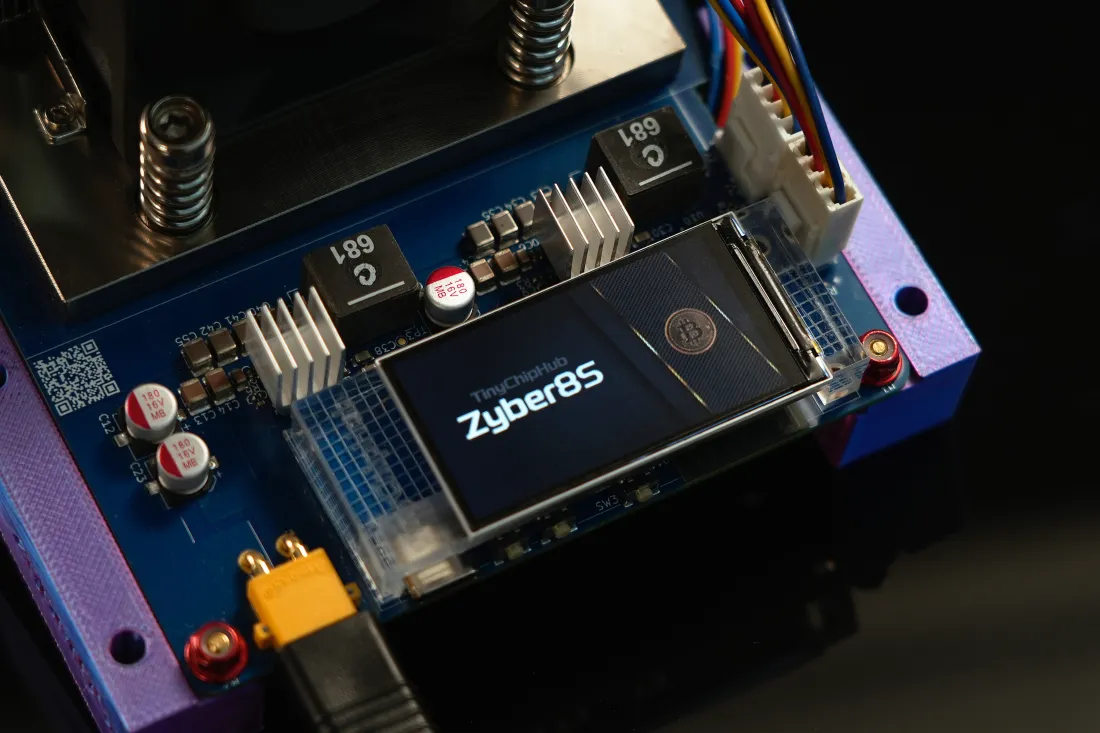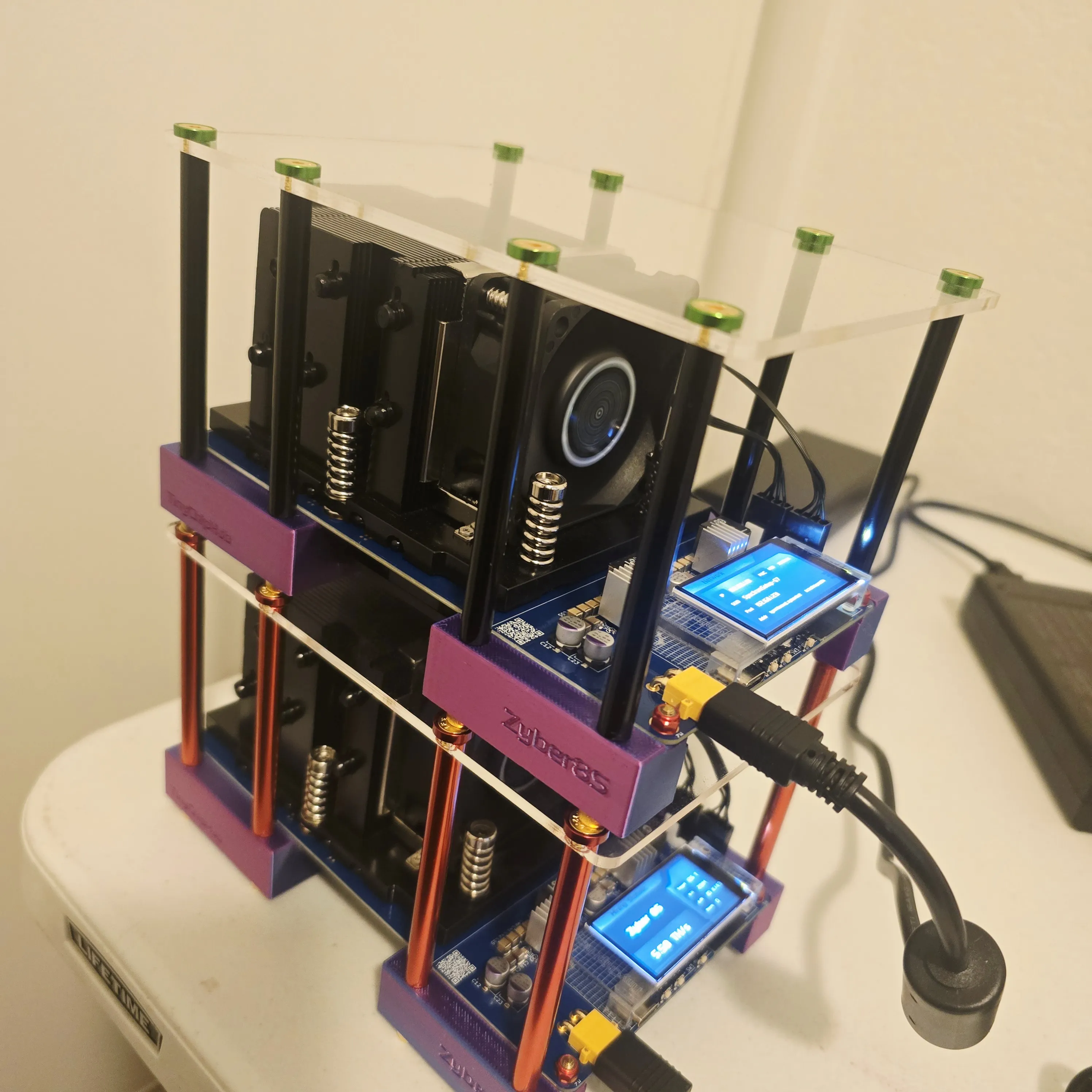
To squeeze every last drop of computing power from the Zyber 8S hinges on fine-tuned monitoring, stable power input, reasonable overclocking settings, and proactive thermal management...
📈My experience debugging over 1000 different models of confirms that mastering these four aspects can increase its continuous operational stability to over 99%, making your Solo mining journey twice as effective.
🌡️Regular Monitoring
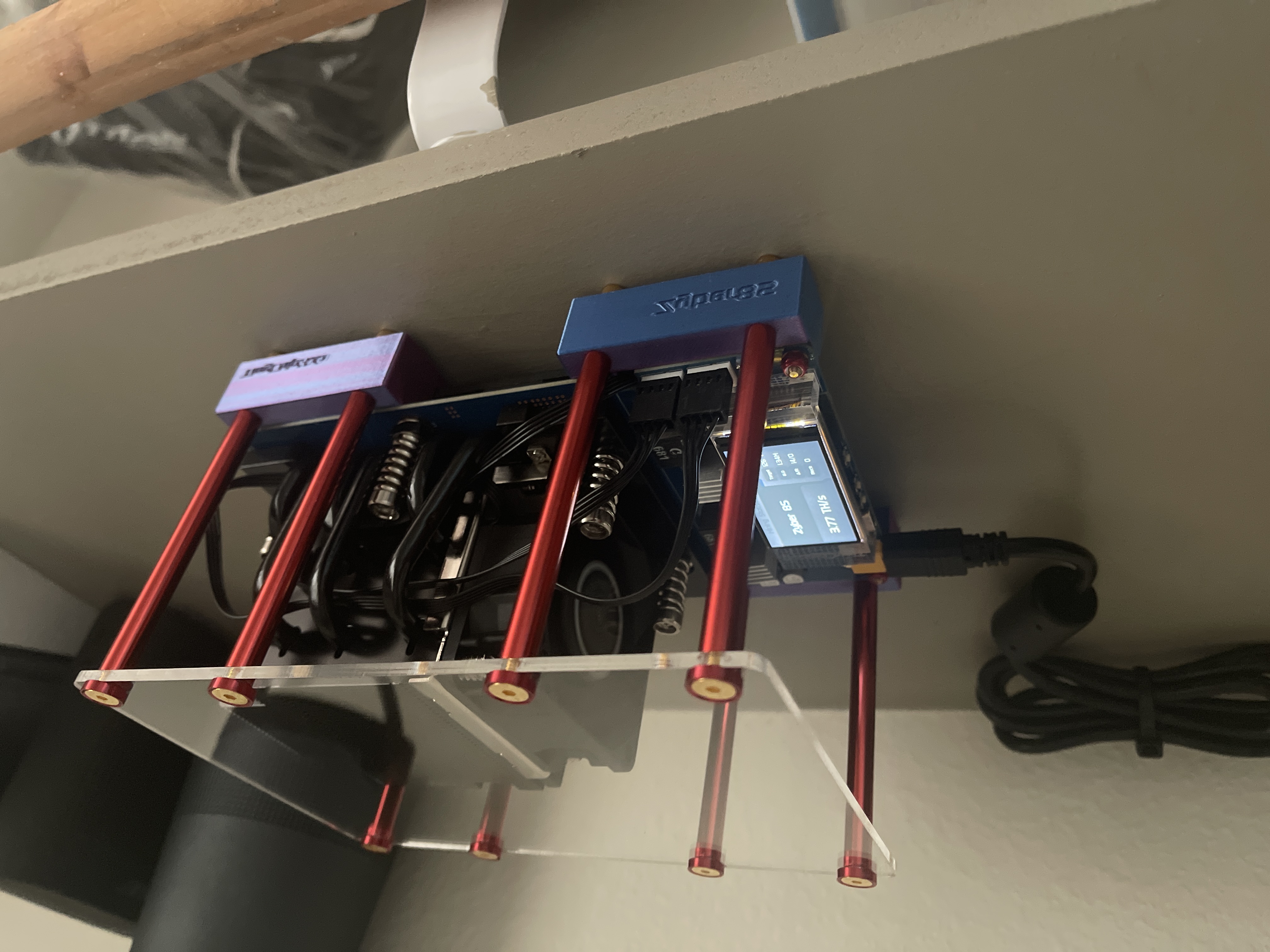
The core first step: develop the habit of regularly checking that 1.9-inch color screen. This isn't micromanaging; it's data-driven efficiency mining. The real-time hashrate, chip temperature, and power consumption data on the screen are the foundation for all your optimization decisions. According to Bitmain's 2024 operational data comparison, continuous monitoring can restrict hashrate degradation due to overheating to <1%.
You need to focus not just on the current values, but also on the fluctuation trends. Did the hashrate suddenly drop from 6.4 TH/s to 5 TH/s? This likely indicates that one of the activated its protection mechanism due to poor cooling. For every 1°C increase in ambient temperature, the core temperature may rise by 2-3°C, subsequently affecting the computational efficiency of the SHA-256 algorithm. Based on personal experience, placing the in a constant temperature environment below 25°C results in far superior long-term stability compared to environments above 30°C.
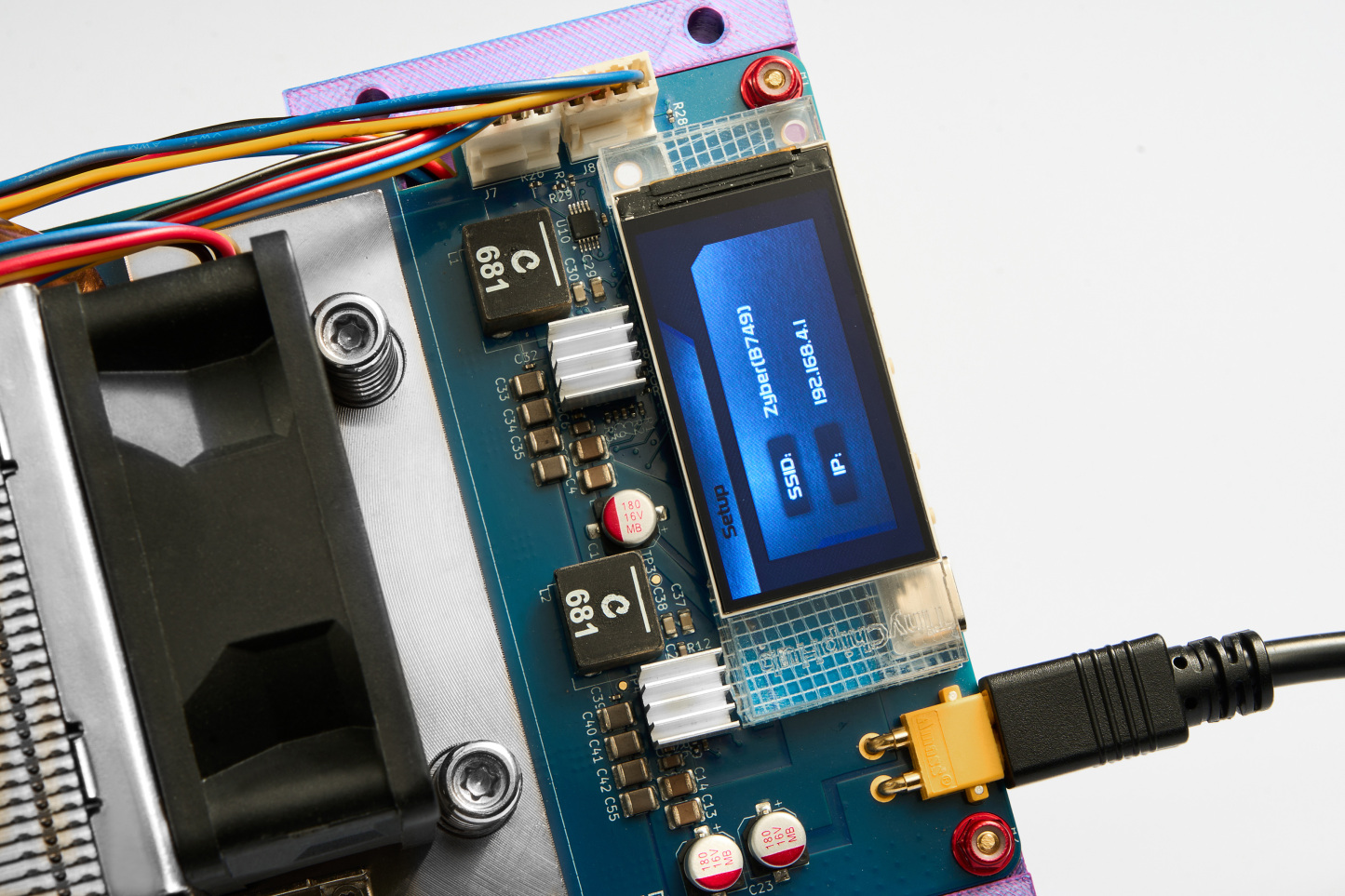
According to reports from the World Digital Mining Standard (WDMS) summit, establishing baseline monitoring is the top recommended practice for Miner Health Management (MHM). Compared to blind operation without monitoring, systematic monitoring can provide early warnings for about 80% of potential failures. Note that network latency can also cause temporary distortion of monitoring data; it's recommended to use the miner's local interface data as the benchmark, as its refresh rate is higher and the error is typically within ±0.5%.
Stable 🔌Power...
With an unstable foundation, Everything shakes. The power supply is the "foundation" of stable miner operation. The built-in Dual-Phase Power Supply module in the is the cornerstone of its rock-solid performance. Its core task is to convert the high fluctuations of mains electricity into the stable DC power required by the ASIC chips, with voltage fluctuations firmly controlled within the ideal range of ±5%.
Compared to traditional single-phase power supplies, this solution can improve efficiency by about 15% at full load, while also suppressing current ripple to a lower level.
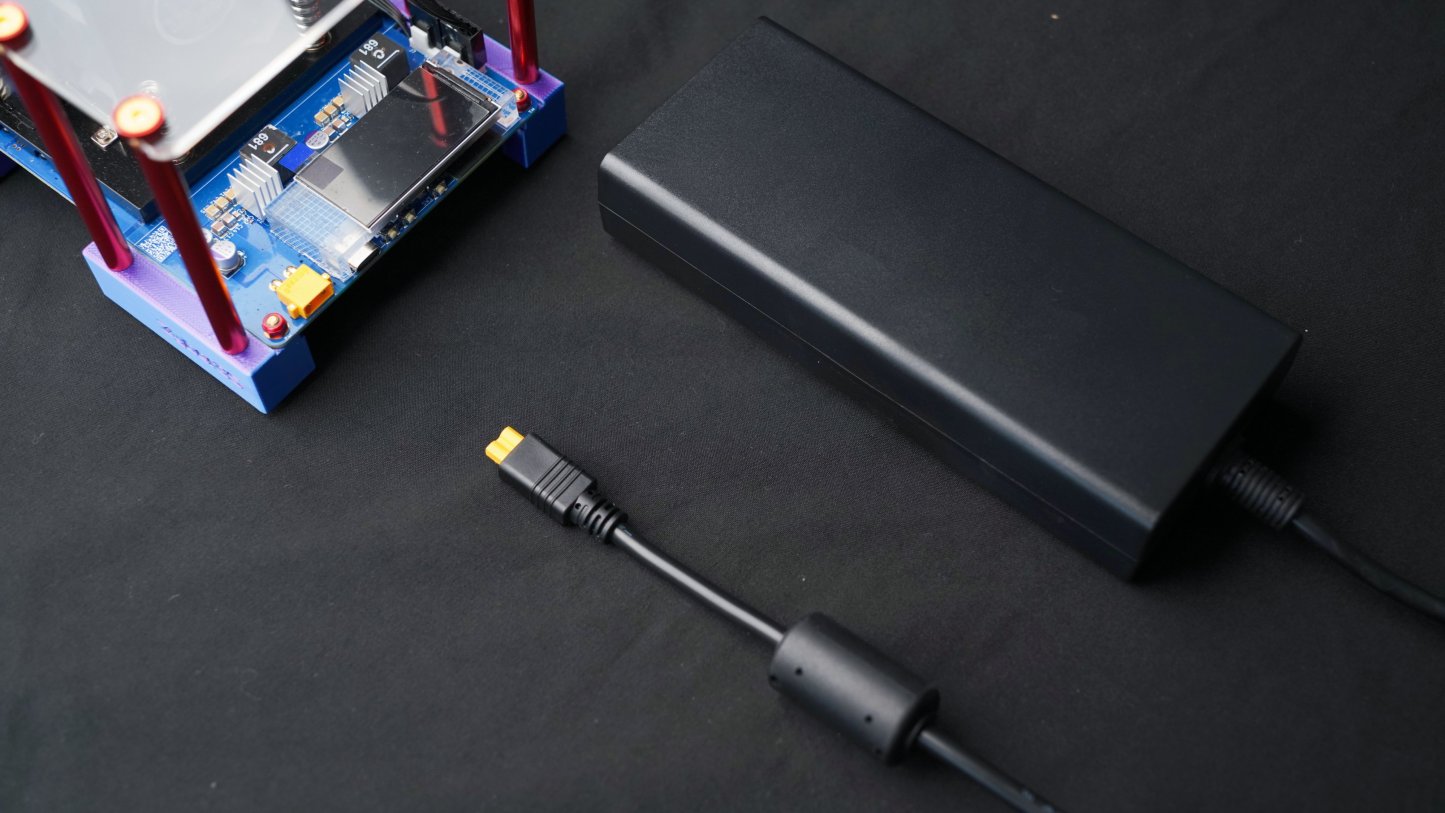
Independent lab tests show that the original power supply solution (officially specified by TinyChipHub) used in the Zyber 8S achieves an average conversion efficiency of over 92% at 220V. The accompanying 12V-15A power cable has obtained authoritative certifications like ETL (based on UL standards) and CE, ensuring its safety and compatibility. Tested at a baseline ambient temperature of 40°C, its continuous current-carrying capacity meets and exceeds 15A, providing a solid foundation for the persistent and stable operation.
Unlock?OC Mode!
Mastering the OC (Overclocking) mode is the ultimate breakthrough for increasing Solo mining probability! The OC mode on the Zyber 8S isn't a simple, brute-force power maximization; it's a fine-tuned adjustment of the ASIC chip's frequency and voltage. In the AxeOS Web interface, you can find the relevant option. Enabling it can theoretically increase the hashrate from the nominal value to 6.4+ TH/s, while maintaining power consumption around 140W.
The essence of overclocking is increasing the chip's operating frequency, but this leads to higher heat generation and power consumption. The tuning logic follows a basic formula: Hashrate increase ≈ (Frequency increase percentage)². This means a 10% frequency increase might yield a nearly 20% hashrate gain, but the rise in power consumption and heat could be linear. Among machines handled by the TinyChipHub independent lab, a successful overclock on the series can stabilize the average hashrate at 6.3±10% TH/s, whereas poor overclocking settings can cause the chips to throttle due to overheating, leading to a hashrate decrease.
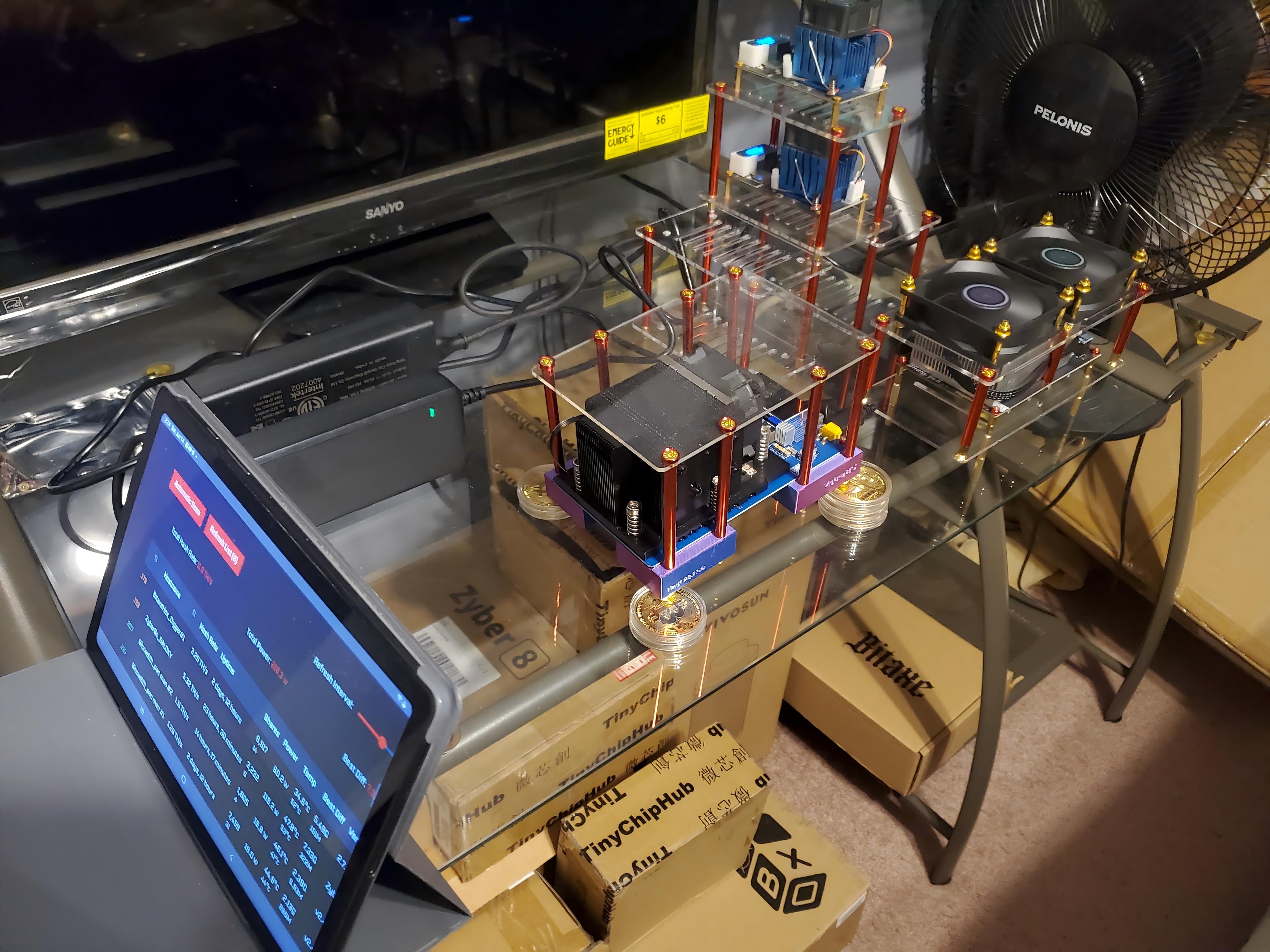
According to the 2024 peer miner firmware evaluation report, the overclocking functionality based on AxeOS is safer than many public version solutions. Although compared to Bitmain's firmware, its automation level as a small miner still has room for optimization. ❗ The biggest risk of overclocking is that if cooling cannot keep up, the chip Junction Temperature can rapidly exceed the 105°C safety threshold, triggering throttling protection, ultimately proving counterproductive. It is recommended to adjust only one parameter slightly at a time, observe for at least 24 hours, and then proceed with the next step.
Cool Down, Mine Faster!
Remember, a miner that doesn't overheat is one that has the chance for continuous, efficient output! The Zyber 8S's original copper-aluminum hybrid heatsink + dual-fan system is a significant advantage, but you can do better. The core goal is to keep the chip temperature as stable as possible below 70°C; for every 5°C reduction, its long-term operational reliability can theoretically improve by 3-5%.
Its cooling system utilizes copper's rapid heat conduction and aluminum's lightweight heat dissipation properties, with a graphene coating further optimizing thermal conduction efficiency. The two 4020 fans, running at full speed, can provide over 15 CFM of airflow, maintaining the temperature difference (ΔT) between the chip and the environment within 40°C at a 25°C room temperature. Compared to some older models using pure aluminum heatsinks, its cooling efficiency is improved by nearly 20%.
📄Practical Cooling Optimization Checklist:
-
Placement: Keep away from walls or other heat sources, leaving at least 20cm of clearance for air intake.
-
Environmental Assistance: During hot summers, consider using a common desk fan to assist with exhaust, which can additionally lower the core temperature by 2-3°C.
-
Regular Checks: Periodically review and optimize based on temperature fluctuations, trying to avoid the cooling efficiency being halved.
Although the Zyber 8S miner complies with authoritative certifications like ETL (based on UL standards) and CE, this does not mean it is immune to damage from water ingress or large amounts of dust; Therefore, absolutely avoid cleaning with water or corrosive liquids! The current industry consensus is that when the ambient temperature consistently exceeds 35°C, professional forced air cooling or even water cooling solutions should be considered; otherwise, the extra heat from overclocking might not be effectively dissipated.
| Operation Mode | Hashrate (TH/s) | Power (W) | Suggested Ambient Temp |
|---|---|---|---|
| Standard Mode | ~6.0 | ~120 | 20-40°C |
| OC Mode | 6.3±10% | 140 | 20-35°C |