💡 Tip: The following article data is for reference only. Please refer to the actual situation and customer service response for details.
Yes, if you want to mine Bitcoin now, ASIC miners are a more realistic choice. Don't be fooled by nostalgic stories of "mining with a laptop"—that's ancient history. Since the first ASIC miner (Avalon) was introduced in 2013, the game rules have completely changed. Today, even if you use the latest RTX 4090 graphics card, its hash rate (about 120 MH/s) is as tiny as a grain of sand compared to any mainstream ASIC (like the Antminer S19j Pro+ 122T, with a hash rate of 122 TH/s), a difference of a full 1 million times. Want to join this hash rate competition? You must go professional!!
🔀 General-Purpose => Specialized
The specialization of mining equipment is a physical law under the pursuit of efficiency, not a choice. It's like you can't use a kitchen knife for micro-engraving surgery. CPUs and GPUs are "general-purpose processors," designed to flexibly handle various tasks (gaming, rendering, office work). ASICs (Application-Specific Integrated Circuits) are "single-function beasts," where every transistor on the circuit board is optimized for performing the one task of SHA-256 hash calculation, with all other functions stripped away. This extreme focus brings an exponential difference in efficiency.
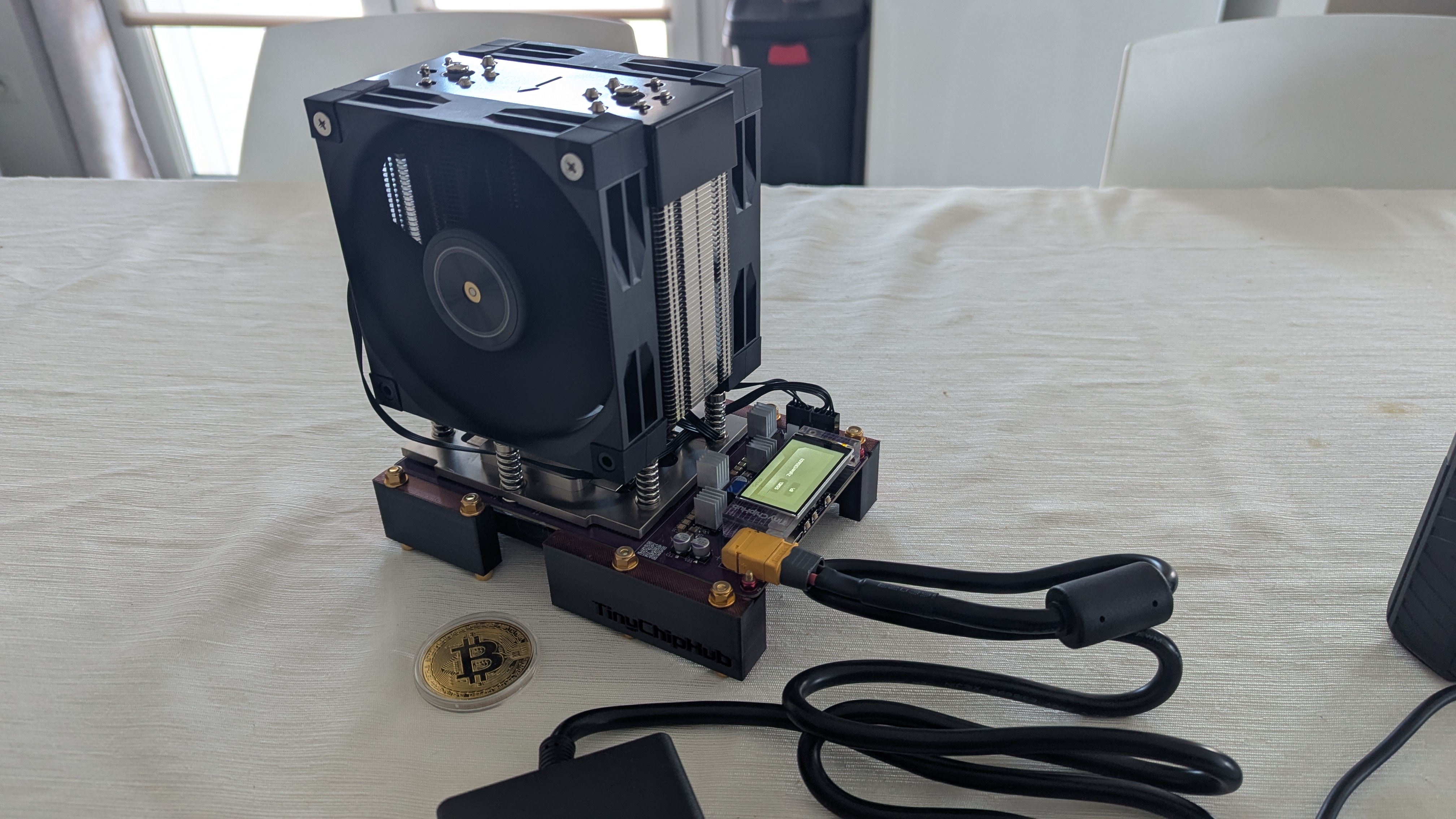
Let's look at a set of comparison data!!
| Device Type | Typical Hash Rate | Typical Power Consumption | Energy Efficiency Ratio (J/TH) | Equivalent to... |
|---|---|---|---|---|
| High-End Gaming Graphics Card (RTX 4090) | ~120 MH/s | ~450W | Approx. 3,750,000 | Using a fire hose to fill a syringe |
| 2016 ASIC Industrial Miner | 13.5 TH/s | ~1350W | Approx. 100 | Upgraded from a hose to a water gun |
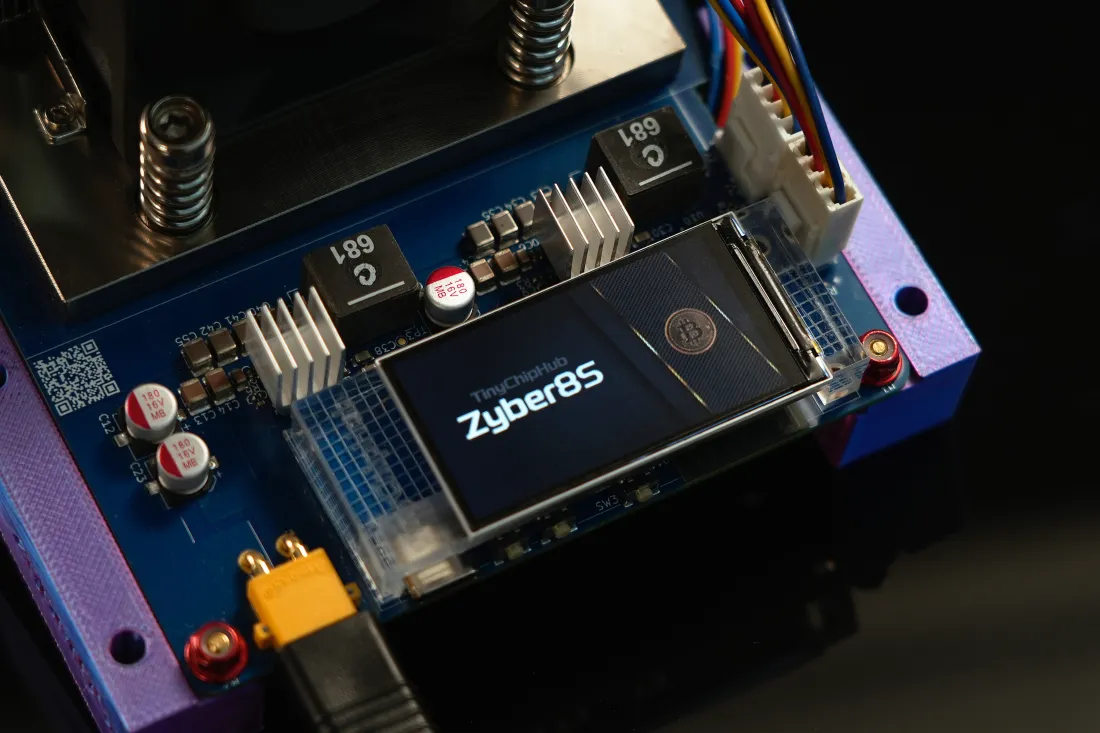
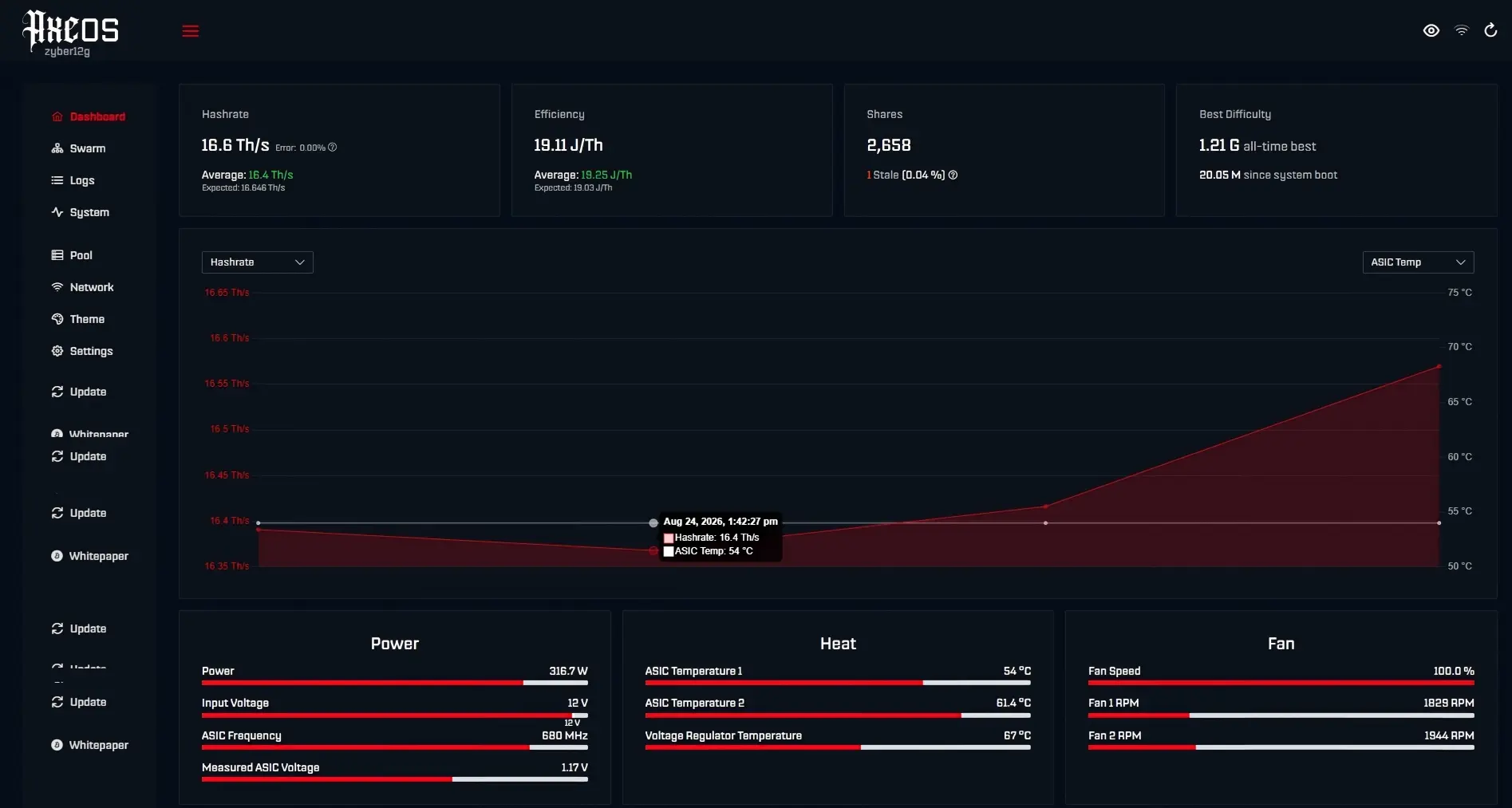
| 2026 Small ASIC Miner (Zyber 8G Premium) | 12 TH/s | ~154W | Approx. 13.32 | Precision high-pressure water jet |
According to BitMEX Research's 2024 mining industry report, ASICs account for over 99.99% of the network's total hash rate. The first principle behind this shift is simple: with fixed energy input, whoever outputs more effective hash rate survives. ASICs are the ultimate form born from this physical law. This is not a "recommendation," but a "survival threshold."
🔥 Key Tip: When considering "what to mine with," you're essentially asking, "How much electricity am I willing to pay per unit of hash rate?" ASIC miners provide the answer with high energy efficiency ratios.
Old Era: 📊Low Efficiency
The early inefficiency was the "primitive accumulation period" of Bitcoin's security and the last window for ordinary players. Satoshi Nakamoto initially mined with CPUs, when the network's total hash rate might have been less than that of a current Bitaxe Gamma Turbo. The efficiency was pitifully low, but competition was almost zero. In 2010, GPU mining became popular, with the famous case of Bitcoin developer Laszlo Hanyecz exchanging 10,000 BTC for two pizzas—those BTC were mined with a GPU.
The specific process was like this: he posted on the Bitcoin forum Bitcoin Talk, saying he was willing to exchange 10,000 Bitcoin (BTC) for two large pizzas and hoped someone could order and deliver them to his home. A few days later (May 22), another user named jercos accepted the deal, paid about $25 with a credit card to order two pizzas for Laszlo. Laszlo then transferred 10,000 BTC to jercos.
But why can't that era return? Let's break down the factors:
- Network difficulty is tied to total hash rate: As more people join with more efficient equipment, difficulty soars, and inefficient equipment is instantly disuse.
- Specialization of Moore's Law: Advances in chip manufacturing (from 28nm to 5nm) have almost entirely been absorbed by ASIC design, leaving general-purpose chips far behind.
- Economic balance is broken: When your electricity cost forever exceeds mining income, the mining device becomes an "electricity bill devourer."
Data from the Cambridge Centre for Alternative Finance (CCAF) shows that as of the end of 2023, Bitcoin's annual electricity consumption is about 121 TWh, most of which comes from high-efficiency ASIC mining farms. The contribution of inefficient equipment is statistically negligible. That romantic era is like a friendly small-town basketball game, while now it's the NBA playoffs, where amateurs can't even touch the ball.
❓ So, can you still mine for fun with old equipment? Yes, but understand it as an act of "mining for love" as behavioral art or an educational experiment, not a production activity. Like using candlelight to experience ancient life.
Mining! 🆚Competition Essence
The essence of mining is a globally unified, speed-only "hash race" that restarts every 10 minutes. Many misunderstand it as "higher hash rate is like buying more lottery tickets, increasing the chance of winning." This isn't accurate enough. A more fitting metaphor is: all miners worldwide are simultaneously brute-forcing a password lock (target hash) valid for 10 minutes. Whoever guesses it first wins the block reward (currently 3.125 BTC). Then, the lock resets immediately, and the next round begins.
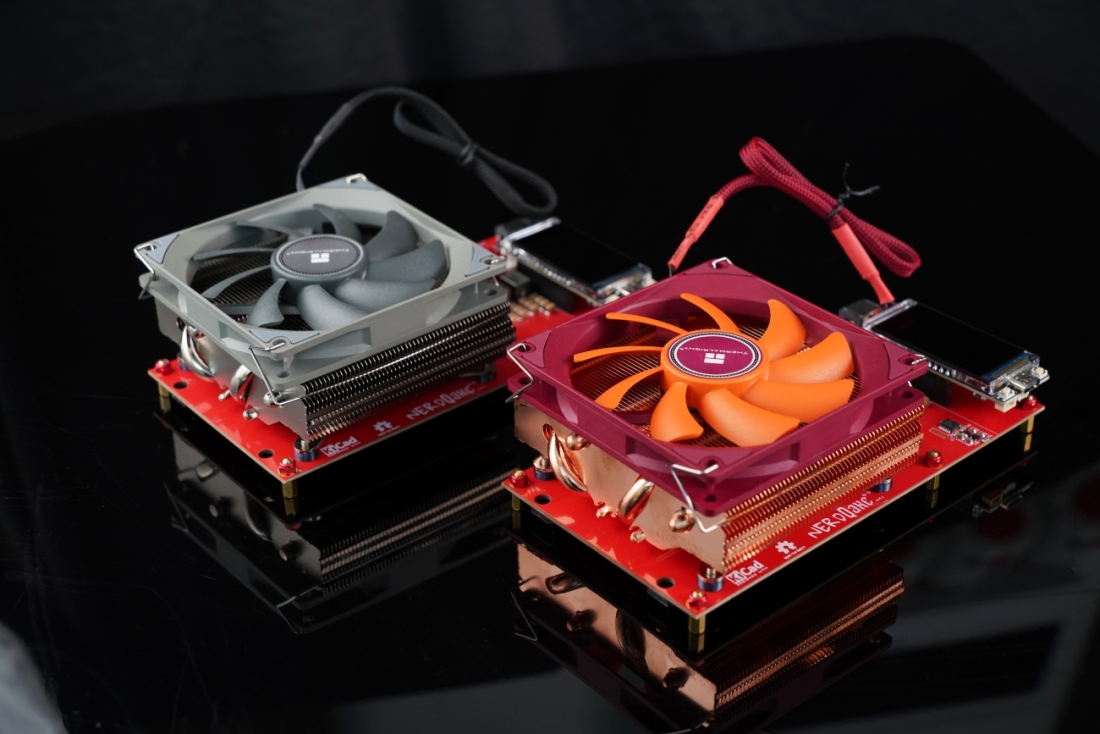
In this race, ASIC miners are the sum of professional running shoes, streamlined sportswear, and scientific training plans. Your "running speed" (hash rate) directly determines your probability of winning each round. Let's look at the situation of individual miners using the data support method:
- Assume you own a NerdQaxe++ Remastered, with a hash rate of 5.2 TH/s.
- The current network hash rate is about 1033.93 EH/s (i.e., 1,033,929,119.00 TH/s).
- Your probability of winning in 10 minutes is: 5.2 / 1,033,929,119 ≈ 0.000000503%.
- This means, on average, you would need about 3,782 years to luckily win once. This is why individual miners must join a mining pool: combine hash power, share rewards proportionally, turning the uncertain "jackpot" into a stable stream of small income.
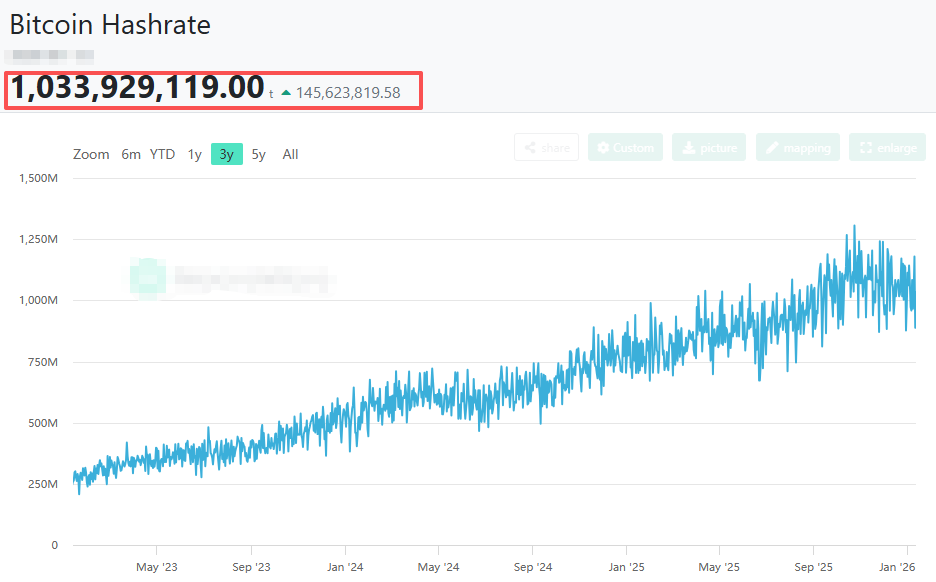
According to the Slush Pool 2024 Miner Guide, the expected time for a solo miner to mine a block, under current hash rates, could be years, making it impractical. Therefore, the essence of competition shifts from "individuals aiming for a jackpot" to "contributing hash power to a pool, earning stable shares." Your ASIC is your "work machine," and the stronger its performance, the higher your "wage."
💪 Sense of Control: Choosing the right pool, monitoring your miner's real-time status, optimizing network latency, these fine adjustments can maximize your "race efficiency." This is the fun of technical control.
📈 Dynamic Difficulty Adjustment
The "difficulty adjustment" mechanism built into the Bitcoin protocol is the ultimate referee ensuring the game is always fair (and always cruel). It automatically adjusts mining difficulty every 2016 blocks (about two weeks), aiming to keep block generation time stable at around 10 minutes. If the network hash rate surges, difficulty rises; if miners shut down on a large scale (e.g., bear market or regional policy strike), difficulty decreases.
This process is like a fully automatic thermostat. If the room (network) is too hot (hash rate too high), it cools (increases difficulty); if too cold (hash rate too low), it heats (decreases difficulty). This means any temporary efficiency advantage is quickly diluted. For miners, this means:
| Your Strategy | Impact of Difficulty Adjustment | Your Response |
|---|---|---|
| You upgrade to the latest BTC miner | Your share temporarily increases, but soon more people upgrade, difficulty rises, and your share drops back | Always pursue marginal efficiency improvements, staying ahead of the average |
| You find cheap electricity (e.g., $0.03/kWh) | Your profit margin increases, but difficulty doesn't care about your electricity cost, only total hash rate | Convert low cost into sustainable operational ability, weathering industry cycles |
| You shut down and wait | Difficulty slowly decreases, but you might miss the best window when restarting | Operate with precision, not simple on/off |
Blockware Solutions' 2022 mining insight report points out that the difficulty adjustment mechanism is the cornerstone of Bitcoin's security model, forcing the mining industry to continuously innovate and optimize costs. As an individual, you can't change this rule, only understand and adapt to it. Ultimately, the answer to the question "Do You Need ASIC?" has been given by the network itself through the difficulty adjustment mechanism: without ASIC, you don't even qualify to compete. This isn't about investment advice, but about whether you want to truly understand and participate in this unique decentralized computing experiment in human history. The choice is yours, but the rules are written in code.